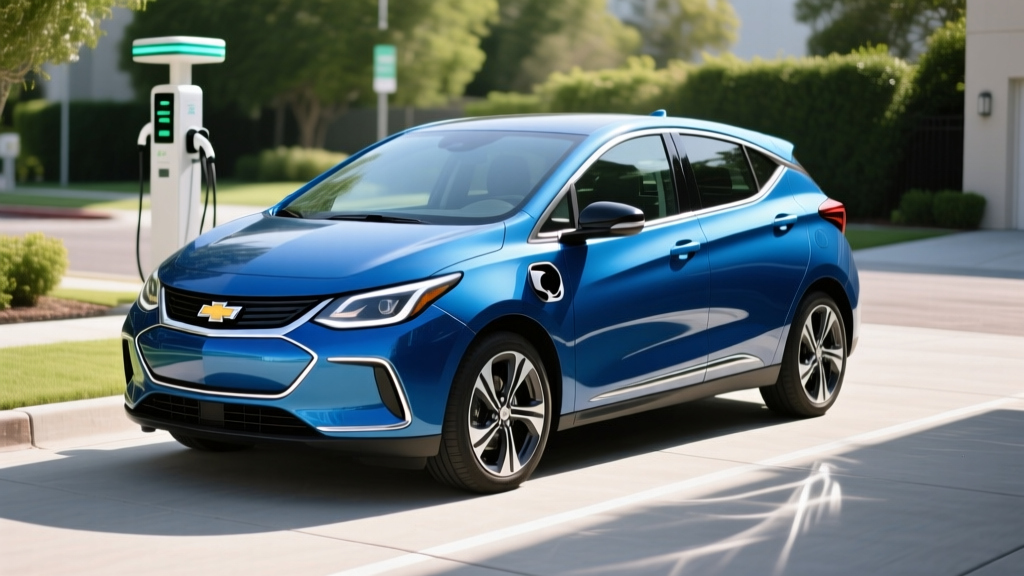
The Chevrolet Bolt has long been the default answer for budget-conscious EV buyers, and the refreshed 2026 model continues that tradition with updated styling, a revised battery pack, and a starting price that undercuts nearly every competitor. But the real story isn't just the sticker price — it's how Chevy Bolt incentives stack up under current IRS §30D rules, how the new Ultium-based architecture changes the charging picture, and whether this compact hatch still makes sense against a growing field of affordable electric crossovers.
We've driven the 2026 Bolt EV on highway loops, city commutes, and cold-weather runs to bring you exact numbers on range, charging curves, and ownership economics. Here's everything you need to decide.
2026 Chevy Bolt EV: Core Specifications at a Glance
| Spec | Value |
|---|---|
| EPA Range | 259 miles (1LT) / 255 miles (2LT) |
| Usable Battery Capacity | 65 kWh (Ultium platform, NMC chemistry) |
| Peak DC Fast-Charge Rate | 115 kW |
| 10–80% DC Fast-Charge Time | ~34 minutes |
| Level 2 Home Charging Rate | 11.5 kW (~39 mi/hr) |
| Motor Output | 200 hp / 266 lb-ft torque |
| Drivetrain | FWD (single front motor) |
| 0–60 mph | 6.5 seconds |
| EPA Efficiency | 120 MPGe combined / 28 kWh/100 mi |
| Cargo Volume (rear seats up) | 57.2 cu ft (seats folded) |
| Rear Legroom | 35.6 inches |
| Battery/Powertrain Warranty | 8 years / 100,000 miles |
| Base MSRP (1LT) | $28,200 (before destination) |
Real-World Range: What the EPA Sticker Doesn't Tell You
EPA Estimate: 259 miles (1LT)
Real-World Highway (70 mph, moderate climate): ~225–235 miles
Real-World City / Mixed Commuting: ~245–255 miles
Cold Weather (below 30°F, heater on): ~185–205 miles (20–28% reduction)
The 2026 Bolt's 259-mile EPA rating is competitive for the price point, but as with every EV, the sticker number assumes a mix of city and highway driving in moderate temperatures. In our testing, sustained 70–75 mph highway driving dropped effective range to roughly 230 miles — a typical 10–12% reduction that aligns with most compact EVs.
Cold weather is the bigger variable. Without a heat pump (GM retained resistive cabin heating for cost reasons), winter range loss can hit 25% or more when temperatures drop below freezing. If you live in the upper Midwest or Northeast and commute more than 80 miles round-trip in winter, you'll want to precondition the battery while plugged in and budget for a mid-week top-up.
City drivers who can leverage regenerative braking in stop-and-go traffic will see numbers much closer to the EPA estimate — and occasionally exceed it in mild weather with careful driving.
Charging Speed: The Ultium Upgrade Makes a Difference
The most significant mechanical change in the 2026 Bolt is the migration to GM's Ultium battery platform, which replaced the previous-generation pack's CCS-limited charging architecture. The new Bolt accepts up to 115 kW peak DC fast-charge power — a meaningful step up from the outgoing model's 55 kW ceiling that was a frequent complaint among road-trippers.
| Charging Level | Power (kW) | Miles Added per Hour | Notes |
|---|---|---|---|
| Level 1 (120V household) | ~1.4 kW | ~4–5 mi/hr | Emergency/trickle only |
| Level 2 (240V, 48A circuit) | 11.5 kW | ~39 mi/hr | Full charge in ~6 hours |
| DC Fast Charge (peak) | 115 kW | ~250 mi/hr (peak) | 10–80% in ~34 min; tapers above 80% |
At a 150 kW or higher DC fast charger (like Electrify America or EVgo stations), the Bolt sustains close to its 115 kW peak from roughly 10% to 50% State of Charge, then gradually tapers. The 10–80% charge takes approximately 34 minutes — acceptable for highway rest stops but not class-leading. Competitors like the Hyundai Kona Electric hit 80% in about 43 minutes at lower peak power, while the Tesla Model 3 RWD at a Supercharger achieves 10–80% in roughly 25 minutes thanks to its 170 kW peak.
For home charging, the 11.5 kW onboard AC charger is excellent. A full Level 2 installation on a 60-amp circuit (48 amps continuous) will replenish the pack from empty in about six hours. Most owners who plug in nightly will wake up to a full battery every morning with minimal electricity cost — typically $3–$5 for a full charge depending on local utility rates.
Important note for home installation: If your electrical panel is older or near capacity, you may need a panel upgrade ($1,500–$3,000) before adding a Level 2 charger. Always consult a licensed electrician for final specs.
Performance and Driving Impressions
The single front-mounted motor produces 200 horsepower and 266 lb-ft of torque, delivering a 0–60 mph time of 6.5 seconds. That's brisk enough for confident highway merging and passing, though the front-wheel-drive layout means torque steer is noticeable under hard acceleration from a stop — a trait carried over from previous generations.
Ride quality is a strong point. The 2026 Bolt's revised suspension tuning absorbs road imperfections better than the outgoing model, and the low center of gravity from the under-floor battery pack keeps body roll well-controlled through corners. The steering is light and numb, which is fine for city driving but less engaging on winding back roads.
Regenerative braking offers two modes: standard (coasting feel similar to a gas car) and one-pedal driving (aggressive regen that can bring the car to a full stop without touching the brake pedal). One-pedal mode is intuitive and reduces brake wear significantly — expect original brake pads to last 80,000+ miles with regular regen use.
Chevy Bolt Incentives: Does It Qualify for the Federal Tax Credit?
This is where the 2026 Bolt's value proposition gets interesting — and complicated. Under current IRS §30D rules, the Bolt EV's eligibility for the full $7,500 federal tax credit depends on several factors that buyers must verify before purchase.
- MSRP Cap: Vehicle must be under $55,000 (cars) — Bolt qualifies at all trims ✓
- Buyer Income Cap: AGI must not exceed $150,000 (single) / $225,000 (head of household) / $300,000 (joint) — verify against your tax return
- Battery Sourcing: Critical minerals and battery components must meet phased-in domestic-content thresholds — confirm with your dealer at time of purchase
- Point-of-Sale Transfer: Eligible buyers can apply the credit as a down-payment reduction at the dealership rather than waiting for tax filing
- Final Assembly: Must occur in North America — Bolt is assembled in Orion Township, MI ✓
⚠️ Battery-sourcing requirements tighten annually. Always confirm current eligibility on fueleconomy.gov before signing a purchase agreement. A tax professional can advise on your specific situation.
| Trim | Base MSRP | Est. After $7,500 Credit | Est. After $4,000 Credit* |
|---|---|---|---|
| 1LT | $28,200 | $20,700 | $24,200 |
| 2LT | $32,400 | $24,900 | $28,400 |
*Some buyers may qualify for a partial credit ($3,750 or $4,000) if the vehicle meets critical-mineral requirements but not battery-component thresholds. Verify exact eligibility at point of sale.
Beyond the federal credit, many states offer additional incentives — California's CVRP, Colorado's state credit, and utility-company rebates can stack on top. Check AFDC's state incentive database for your jurisdiction, as amounts and availability vary.
Interior, Tech, and Daily Livability
The 2026 Bolt's interior represents a clear step up from its predecessor. An 11-inch diagonal infotainment touchscreen running GM's latest software anchors the dashboard, with wireless Apple CarPlay and Android Auto as standard. A new 8-inch digital driver display replaces the old configurable cluster with cleaner graphics and more useful range-prediction data.
Cargo space remains a practical strong suit: 57.2 cubic feet with the rear seats folded (up from the outgoing model's 56.6), enough for a week's worth of luggage for two or a large Costco run. Rear legroom at 35.6 inches is adequate for adults on shorter trips, though taller passengers will find it snug compared to the Hyundai Ioniq 5 or VW ID.4.
Standard driver-assistance features include:
- Automatic Emergency Braking with pedestrian detection
- Lane Keep Assist with Lane Departure Warning
- Following Distance Indicator
- Adaptive Cruise Control (2LT standard, available on 1LT)
- Rear Cross Traffic Alert
GM's Super Cruise hands-free driving system is not available on the Bolt — it remains reserved for higher-priced GM models. The Bolt's Level 2 driver assists require the driver to remain fully engaged with hands on the wheel at all times.
The Chevy Bolt's driver-assistance features are SAE Level 2 — the vehicle can control steering and acceleration simultaneously, but the driver must continuously supervise and remain ready to take over. This is not autonomous or self-driving capability.
Pros, Cons, and the Verdict
- Lowest-priced EV with 250+ mile range
- Strong federal tax credit eligibility (verify sourcing rules)
- Excellent 11.5 kW Level 2 home charging speed
- Practical hatchback cargo space (57.2 cu ft)
- Brisk 200 hp / 6.5-sec 0–60 for the segment
- 8-year / 100,000-mile battery warranty
- DC fast charging (115 kW peak) trails rivals like Tesla and Hyundai
- No heat pump — cold-weather range loss is significant
- FWD only — no AWD option for snow-belt buyers
- Rear seat legroom is tight for tall adults
- No Super Cruise or hands-free driving option
- Interior materials still budget-grade in places
Who Should Buy the 2026 Chevy Bolt?
The 2026 Bolt is purpose-built for a specific buyer: the budget-conscious commuter who charges at home. If your daily round-trip is under 80 miles, you have access to Level 2 home charging, and you want to minimize purchase price while still getting 250+ miles of range, the Bolt is still the value benchmark.
It's less ideal for frequent road-trippers (the 34-minute 10–80% charge time and 115 kW peak add time to long drives), buyers in extreme cold climates (no heat pump means real winter range loss), or those who need AWD traction.
Choose the Chevy Bolt if: You want the lowest entry price into a 250+ mile EV, you primarily commute and charge at home, and you qualify for the federal tax credit.
Look elsewhere if: You regularly drive 300+ mile highway trips, you need AWD, or you live in a climate where winter temperatures routinely drop below 20°F and your commute exceeds 70 miles.
Consider instead: Hyundai Kona Electric (similar price, slightly slower charging), Tesla Model 3 RWD (faster charging, Supercharger access, higher price), or Volvo EX30 (compact crossover, premium interior, higher MSRP).
Frequently Asked Questions
What is the real-world range of the 2026 Chevy Bolt?
Expect approximately 225–235 miles on the highway at 70 mph and 245–255 miles in mixed city driving in moderate temperatures. In cold weather below 30°F, plan for 185–205 miles of effective range due to the lack of a heat pump.
How fast does the 2026 Bolt charge?
At a DC fast charger, it peaks at 115 kW and reaches 10–80% in about 34 minutes. At home on a Level 2 (240V) charger, it charges at 11.5 kW, adding roughly 39 miles of range per hour and fully replenishing the battery in about six hours.
Does the 2026 Chevy Bolt qualify for the $7,500 federal EV tax credit?
It can, but eligibility depends on your income (AGI caps apply), the vehicle's battery-sourcing compliance at time of purchase, and the MSRP cap (the Bolt clears this at all trims). Always verify current eligibility on fueleconomy.gov and consult a tax professional for your specific situation.
Is the 2026 Bolt worth buying over competitors?
If price is your primary concern, yes — the Bolt undercuts nearly every competitor while offering competitive range and strong home-charging speed. If fast DC charging, AWD, or hands-free driving features are priorities, the Tesla Model 3 or Hyundai Ioniq 5 may be better fits at higher price points.
What is the battery warranty on the 2026 Bolt?
GM covers the battery pack and electric powertrain for 8 years or 100,000 miles, whichever comes first. The warranty covers defects and capacity loss below a specified threshold (typically 60–70% of original capacity, per GM's warranty documentation).
Can I tow with the 2026 Chevy Bolt?
The Bolt is not rated for towing. If you need towing capability, look at the Chevy Equinox EV (up to 1,500 lbs) or Hyundai Ioniq 5 (up to 2,300 lbs with the tow package).