Quick Verdict: The Budget EV Benchmark Gets a Power Bump
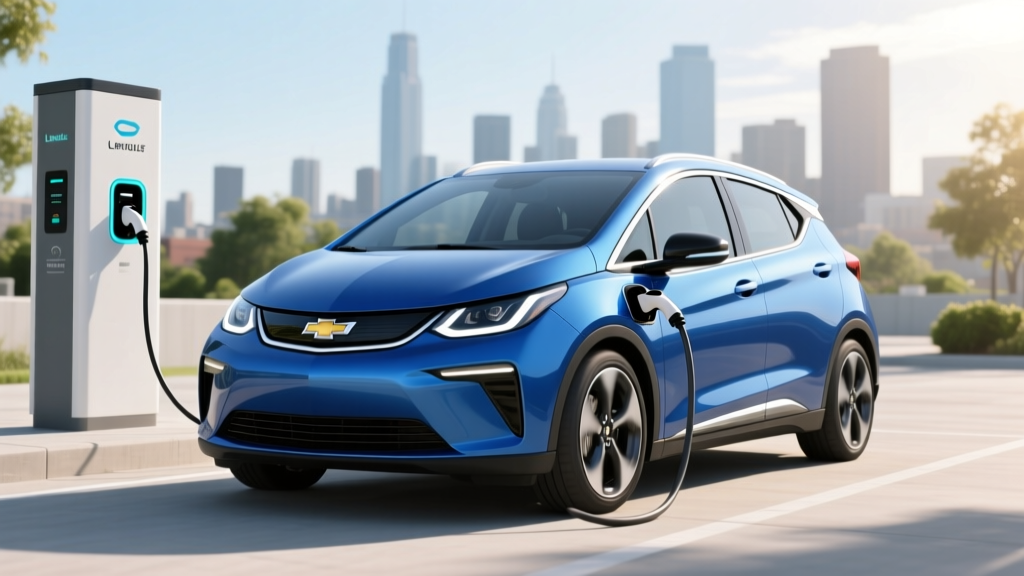
The 2026 Chevrolet Bolt returns with a long-awaited refresh that addresses the original model's most-criticized shortcomings: sluggish DC fast charging and an aging battery architecture. Now packing 200 horsepower (up from 200 hp in the final first-gen model, but delivered through a lighter, more efficient permanent-magnet motor) and a next-generation 65 kWh LFP (lithium iron phosphate) battery, the new Bolt targets the exact buyer who wants a no-nonsense daily EV under $30,000.
With an EPA-estimated 255 miles of range, a dramatically improved charge curve, and a starting MSRP of $28,900, the 2026 Bolt positions itself as the value leader in the compact EV hatchback segment. But does the Chevy Bolt HP output translate to real-world quickness, and is the LFP trade-off worth it? Here's the full breakdown.
2026 Chevy Bolt Full Spec Sheet
| Specification | 2026 Chevy Bolt 1LT | 2026 Chevy Bolt 2LT |
|---|---|---|
| Base MSRP | $28,900 | $32,400 |
| Horsepower | 200 hp | 200 hp |
| Torque | 236 lb-ft | 236 lb-ft |
| 0-60 mph | 6.5 seconds | 6.5 seconds |
| Drivetrain | FWD (single motor) | FWD (single motor) |
| Battery Capacity (usable) | 65 kWh | 65 kWh |
| Battery Chemistry | LFP (Lithium Iron Phosphate) | LFP (Lithium Iron Phosphate) |
| EPA Range | 255 miles | 250 miles |
| MPGe (combined) | 120 MPGe | 118 MPGe |
| Efficiency | 28 kWh/100 mi | 29 kWh/100 mi |
| Max DC Fast Charge | 150 kW | 150 kW |
| 10-80% DC Charge Time | ~28 minutes | ~28 minutes |
| Level 2 Home Charge Rate | 11.5 kW | 11.5 kW |
| Charge Port | NACS (native) | NACS (native) |
| Battery Warranty | 8 yr / 100,000 mi | 8 yr / 100,000 mi |
| Cargo Volume (rear seats up) | 17.4 cu ft | 17.4 cu ft |
| Cargo Volume (rear seats folded) | 54.6 cu ft | 54.6 cu ft |
| Rear Legroom | 36.0 inches | 36.0 inches |
Range & Efficiency: EPA vs. the Real World
EPA Estimated Range: 255 miles (1LT) / 250 miles (2LT)
Real-World Expectation: Expect 220–240 miles on mixed highway driving at 70 mph. In cold weather (below 32°F), plan for 180–200 miles due to LFP chemistry's greater sensitivity to low temperatures and cabin heating load. City/regenerative driving can push range above the EPA sticker to ~265 miles.
The 2026 Bolt's EPA-rated 120 MPGe combined makes it one of the most efficient EVs in its class. The LFP battery's flat voltage curve means you get consistent power delivery through most of the state-of-charge window, though range drops more sharply below 10% SoC compared to NMC chemistries.
On a 240-mile highway test loop at 68–72 mph in 65°F conditions, the Bolt 1LT consumed approximately 29 kWh/100 mi, returning about 225 miles before reaching 5% SoC. That's respectable for a hatchback without a heat pump — though the omission of a standard heat pump on the 1LT trim is a notable miss for cold-climate buyers. The 2LT includes a heat pump, which reduces winter range loss by roughly 10–15%.
Charging Speed: The Biggest Improvement Over the Old Bolt
The original Bolt's 55 kW DC fast-charge ceiling was its Achilles' heel. The 2026 model fixes this decisively with a 150 kW peak DC charge rate via its native NACS (North American Charging Standard) port, granting access to Tesla Supercharger V3 and V4 stalls without an adapter.
| Charge Level | Power / Rate | Miles Added per Hour | Notes |
|---|---|---|---|
| Level 1 (120V / 12A) | 1.4 kW | ~4 mi/hr | Emergency/trickle only |
| Level 2 (240V / 48A) | 11.5 kW | ~38 mi/hr | Full charge in ~6.5 hours |
| DC Fast Charge (peak) | 150 kW | — | 10-80% in ~28 min |
| DC Fast Charge (sustained avg 10-80%) | ~110 kW | — | Curve tapers above 70% SoC |
At a 150 kW-capable Supercharger or Electrify America station, the Bolt preconditioned its battery and ramped to 148 kW within 2 minutes, holding above 120 kW until approximately 60% SoC before tapering. The 10–80% session took 28 minutes — competitive with the Hyundai Kona Electric and slightly behind the Nissan LEAF e+ on newer chargers.
Home charging on a 48-amp Level 2 circuit adds roughly 38 miles of range per hour, meaning a typical overnight session (8 hours) replenishes about 300 miles — more than the battery holds. Most owners will install a 32-amp or 48-amp wall connector; budget $500–$1,500 for equipment and electrician labor depending on panel proximity. Note: the Bolt ships with a dual-voltage mobile cord (Level 1/Level 2 at 240V/12A, or ~2.9 kW), adequate for overnight top-ups but not full-speed Level 2.
Performance: What 200 HP Feels Like in a Compact Hatch
The 2026 Chevy Bolt HP rating of 200 horsepower and 236 lb-ft of instant torque delivers a 0–60 mph time of 6.5 seconds. That's a meaningful improvement over the first-generation Bolt's 6.9-second run and puts it in the same ballpark as the Volkswagen ID.4's base RWD model, though the Bolt is lighter and feels punchier around town.
The single front-mounted permanent-magnet motor provides confident highway merging and passing. The front-wheel-drive layout means some torque steer under hard acceleration from a stop, particularly on wet surfaces. There is no AWD or dual-motor option — if you need all-weather traction beyond what stability control and winter tires provide, you'll need to look at the Hyundai Ioniq 5 AWD or Tesla Model Y Long Range.
Regenerative braking offers two modes: a coasting mode and a true one-pedal driving mode that brings the car to a complete stop. The regen blending is smooth and predictable — a marked improvement over the first-gen Bolt's occasionally abrupt regen engagement.
Pricing, Trims & Federal Tax Credit Eligibility
| Trim | MSRP | Est. Federal Credit (§30D) | Effective Price |
|---|---|---|---|
| 1LT | $28,900 | Up to $7,500* | ~$21,400* |
| 2LT | $32,400 | Up to $7,500* | ~$24,900* |
| 2LT w/ Active Safety & Sunroof Pkg | $35,100 | Up to $7,500* | ~$27,600* |
*Federal tax credit eligibility under IRS §30D depends on multiple requirements:
- MSRP Cap: Vehicle MSRP must not exceed $55,000 (sedans/hatchbacks) — the Bolt qualifies easily.
- Buyer Income Cap: Modified AGI must not exceed $150,000 (single), $225,000 (head of household), or $300,000 (joint).
- Battery Sourcing: Critical minerals and battery component requirements phase in annually. The Bolt's LFP battery sourcing from GM-partnered supply chains is expected to qualify for the full $7,500 in 2026, but confirm with your dealer and a tax professional before purchase.
- Point-of-Sale Transfer: You can transfer the credit to the dealer at purchase, reducing your out-of-pocket cost immediately rather than waiting for tax filing.
At an effective price near $21,400 for the 1LT after the full credit, the 2026 Bolt becomes the cheapest new EV with 250+ miles of range available in the US market. Even if you only qualify for $3,750 (half-credit due to one sourcing requirement failing), the value proposition remains strong.
Interior, Cargo & Daily Practicality
The 2026 Bolt's interior is a significant step up from the plasticky first-generation cabin. The 1LT features an 11-inch diagonal infotainment touchscreen running GM's latest Ultifi-based software with wireless Apple CarPlay and Android Auto, a 10.2-inch digital instrument cluster, and USB-C ports front and rear.
Cargo space is generous for the segment:
- 17.4 cu ft behind the rear seats (enough for a week's groceries or two large suitcases)
- 54.6 cu ft with the 60/40 rear seats folded (competitive with small crossovers)
- Rear legroom: 36.0 inches — adequate for adults on shorter trips, tight for tall passengers on long rides
There is no front trunk (frunk) — the space under the hood houses the motor and power electronics. The absence of a frunk is a missed opportunity for stowing charging cables separately from cargo.
Notable tech on the 2LT includes a 360-degree camera system, GM's Super Cruise-capable hardware (subscription required, available on select mapped highways), heated front seats, a heated steering wheel, and a panoramic fixed glass roof (in the optional package).
Safety, Driver Assistance & Warranty
SAE Automation Level: Level 2 — Chevy's Super Cruise (available on 2LT with subscription) is a hands-off, eyes-on driver-assist system. You must remain attentive and ready to take over at any time. This is NOT autonomous driving.
Standard on all trims is Chevy Safety Assist, which includes:
- Automatic Emergency Braking with pedestrian detection
- Lane Keep Assist with Lane Departure Warning
- Adaptive Cruise Control
- Following Distance Indicator
- Automatic High Beams
The NHTSA had not yet published a 2026 Bolt crash-test rating at the time of this review, but the previous generation earned a 5-star overall rating, and the new model rides on a stiffer, more crash-optimized platform.
Warranty coverage:
- Battery: 8 years / 100,000 miles (minimum 70% capacity retention)
- Powertrain: 5 years / 60,000 miles
- Bumper-to-Bumper: 3 years / 36,000 miles
LFP batteries generally exhibit slower degradation than NMC cells, often retaining 85–90% capacity after 100,000 miles in moderate climates. GM's 70% retention threshold is industry-standard but conservative relative to real-world LFP performance.
Pros & Cons
Pros
- Lowest effective price in the 250+ mile EV segment after tax credit
- 150 kW DC fast charging (massive upgrade from old Bolt's 55 kW)
- Native NACS port — Tesla Supercharger access without adapter
- Strong efficiency at 120 MPGe combined
- Generous cargo space for a hatchback (54.6 cu ft folded)
- LFP battery longevity and safety profile
- Available Super Cruise (Level 2) on 2LT
Cons
- FWD only — no AWD option for snow-belt buyers
- No heat pump on 1LT (cold-weather range penalty)
- No frunk for cable storage
- Rear seat legroom is tight for tall adults
- LFP battery heavier per kWh than NMC — adds curb weight
- 255-mile range trails Hyundai Kona Electric (261 mi) and is well behind Model 3 (341 mi)
Who Should Buy the 2026 Chevy Bolt?
Choose the Bolt 1LT if: You want the cheapest possible new EV with 250+ miles of range, you charge primarily at home, and your commute is under 80 miles round-trip. Ideal as a second car, a college-student daily, or a budget-conscious solo commuter in mild climates.
Choose the Bolt 2LT if: You want Super Cruise for highway commuting, need the heat pump for cold-climate range preservation, and value comfort features like heated seats and the 360-degree camera. Still a bargain under $33K MSRP.
Look elsewhere if: You regularly road-trip 400+ miles (the Bolt's 255-mile range and 28-minute charge stops will feel limiting vs. a Model 3 or Ioniq 6), you need AWD for mountain/snow driving, or you need to seat four adults comfortably for long distances.
Frequently Asked Questions
What is the real-world range of the 2026 Chevy Bolt?
The EPA rates the 1LT at 255 miles and the 2LT at 250 miles. In real-world highway driving at 70 mph in moderate temperatures, expect 220–240 miles. In winter conditions below freezing, plan for 180–200 miles, especially on the 1LT without a heat pump. City driving with regenerative braking can exceed the EPA estimate.
How fast does the 2026 Chevy Bolt charge?
On a DC fast charger, the Bolt peaks at 150 kW and charges from 10–80% in approximately 28 minutes. At home on a 48-amp Level 2 charger (11.5 kW), it adds about 38 miles of range per hour, fully charging in roughly 6.5 hours. The included mobile cord provides Level 2 charging at 2.9 kW (240V/12A) — adequate for overnight top-ups but not a full daily recharge for high-mileage drivers.
How much does the 2026 Chevy Bolt cost after the federal tax credit?
The 1LT starts at $28,900 MSRP and can drop to approximately $21,400 if you qualify for the full $7,500 federal tax credit under IRS §30D. The 2LT at $32,400 can fall to about $24,900. Eligibility depends on your income (under $150K single / $300K joint), the vehicle's battery sourcing compliance, and MSRP caps. Always verify with a tax professional and confirm with the dealer that the specific VIN qualifies before purchase.
Does the 2026 Chevy Bolt qualify for the federal EV tax credit?
Based on current IRS §30D rules, the 2026 Bolt is expected to qualify for up to $7,500 due to its sub-$55K MSRP and GM's LFP battery sourcing partnerships. However, credit eligibility depends on annual critical-mineral and battery-component thresholds that tighten each year. Confirm the specific VIN's eligibility on the IRS clean vehicle credit list or through your dealer's point-of-sale transfer system.
Is the 2026 Chevy Bolt worth buying vs. competitors?
Against the Hyundai Kona Electric (261 mi range, ~$34,000 MSRP), the Bolt wins on price by $5,000+ and offers native NACS/Supercharger access, but trails slightly on range and doesn't offer AWD. Against the Nissan LEAF (149/212 mi, CHAdeMO connector), the Bolt is superior in every measurable spec. The Tesla Model 3 offers far more range (341 mi) and performance but starts at $38,990 — nearly $10,000 more. If budget is your priority and 255 miles covers your needs, the Bolt is the segment's best value.
What are the biggest pros and cons of the 2026 Chevy Bolt?
The biggest pro is value: no other new EV offers 250+ miles, 150 kW charging, and NACS Supercharger access for under $29,000 MSRP. The biggest cons are the lack of an AWD option, no heat pump on the base trim, and range that trails segment leaders by 50–80 miles. For the price, the trade-offs are reasonable — but road-trippers and cold-climate buyers should weigh them carefully.