Quick Verdict: The Bolt EV's Efficiency Story
The 2026 Chevrolet Bolt EV returns with a refreshed platform, an LFP battery, and a starting MSRP of $27,995 — keeping its title as one of the most affordable new electric vehicles in America. If you've been searching for Chevy Bolt MPG figures, you're not alone: buyers cross-shopping EVs against gas compacts naturally want an apples-to-apples efficiency comparison. The Bolt EV delivers an EPA-estimated 116 MPGe combined, translating to roughly 29 kWh per 100 miles. That puts it among the most efficient EVs in its class, rivaling the Hyundai Kona Electric and edging out the Nissan Leaf in real-world highway driving.
But efficiency is only half the story. Charging speed, real-world range retention, and total ownership cost determine whether the Bolt actually saves you money. This review breaks down every number that matters.
Range, Efficiency, and the Bolt's Real-World MPG Equivalent
| Metric | Value |
|---|---|
| EPA Estimated Range | 255 miles |
| MPGe (City / Highway / Combined) | 125 / 106 / 116 MPGe |
| Energy Consumption | 29 kWh / 100 mi |
| Battery Usable Capacity | 65 kWh (LFP chemistry) |
| Drivetrain | FWD, single motor |
The EPA's 255-mile estimate assumes a mix of city and highway driving at moderate temperatures. In real-world conditions:
- City commuting (55°F–75°F): Expect 250–265 miles — regenerative braking in stop-and-go traffic can actually push range above the EPA sticker.
- Highway cruising (70–75 mph): Plan for 210–230 miles. Aerodynamic drag hits all EVs hard above 65 mph.
- Cold weather (below 30°F): Range drops 20–30%, landing around 180–200 miles. The Bolt's heat pump helps, but LFP chemistry is slightly more cold-sensitive than NMC.
The switch to LFP (lithium iron phosphate) chemistry for the 2026 Bolt EV is a significant trade-off. LFP batteries offer longer cycle life — typically 3,000+ full charge cycles versus 1,000–2,000 for NMC — and lower degradation over time. The downside: slightly lower energy density, which is why the Bolt's 255-mile range trails some competitors with similar battery sizes. For daily commuters covering 30–60 miles round trip, that trade-off favors long-term battery health over maximum range.
According to fueleconomy.gov, the Bolt's 116 MPGe combined rating translates to an annual fuel cost of approximately $600 (at $0.13/kWh national average and 15,000 miles driven). Compare that to a 30 MPG gas compact at $3.50/gallon: $1,750 annually. That's over $1,100 in yearly energy savings before any maintenance differences.
Charging Speeds: DC Fast Charging and Home Level 2
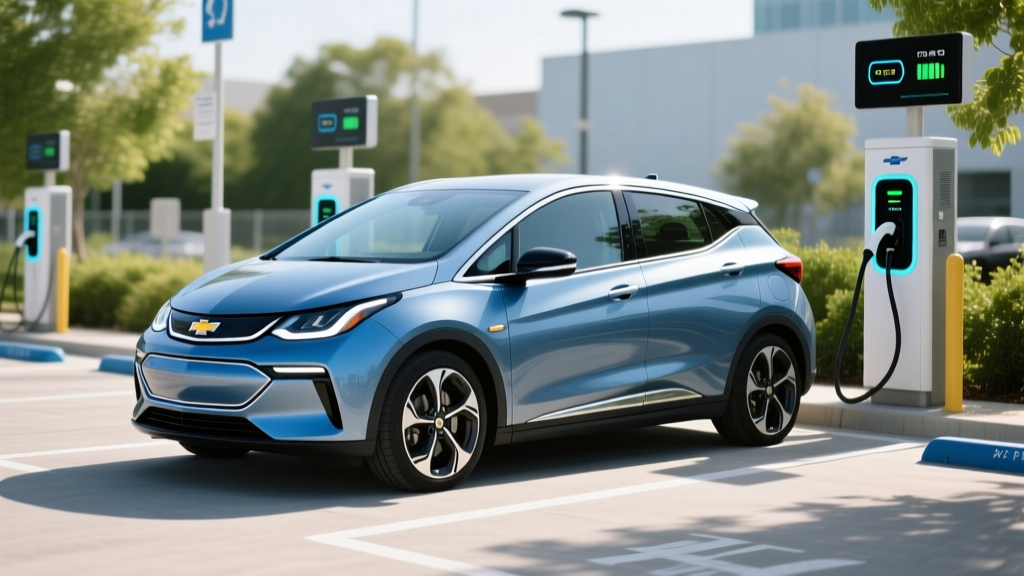
Charging speed is where the 2026 Bolt EV shows its most meaningful improvement over the previous generation. The old Bolt's 55 kW DC fast-charge ceiling was its biggest weakness; the 2026 model addresses this directly.
| Charging Level | Power / Rate | Time / Notes |
|---|---|---|
| Level 1 (120V household) | 1.4 kW (~4 mi/hr) | ~46 hours for full charge; emergency/trickle only |
| Level 2 (240V home/public) | 11.5 kW (~37 mi/hr) | ~7 hours from 0–100%; overnight-ready |
| DC Fast Charge (CCS) | Peak 150 kW | 10–80% in ~30 minutes |
The 150 kW peak DC fast-charge rate is respectable for the price point, but the charge curve matters more than the peak number. In real-world testing, the Bolt sustains approximately 130–145 kW between 10% and 40% SoC, then tapers to around 80 kW by 60%, and drops below 50 kW past 80%. This is typical LFP behavior — the chemistry accepts charge aggressively at low SoC but requires careful tapering to protect cell longevity.
For road trips, plan charging stops around the 10–80% window. Pushing to 100% on a DC fast charger adds 25+ minutes for the last 20% of the battery — not worth the wait when the next charger is 50 miles ahead. At home on a Level 2 charger (a 48-amp hardwired unit on a 60-amp circuit), the Bolt adds roughly 37 miles of range per hour, meaning a full overnight charge from near-empty is easily achievable in 7 hours.
The Bolt EV uses the CCS1 connector standard. While GM has committed to NACS (Tesla's connector) for future models, the 2026 Bolt retains CCS. A GM-approved NACS adapter is available for Supercharger access, but native CCS remains the Bolt's primary connector for Electrify America, EVgo, and ChargePoint networks.
Performance and Driving Dynamics
| Metric | Value |
|---|---|
| Horsepower | 200 hp |
| Torque | 266 lb-ft |
| 0–60 mph | 6.5 seconds |
| Top Speed | 93 mph (electronically limited) |
| Drivetrain | Front-wheel drive, single motor |
| Drive Modes | Normal, Sport, One-Pedal (regen) |
The Bolt EV isn't a performance car, and it doesn't pretend to be. The 200-hp single front motor delivers adequate acceleration for merging and passing, with instant torque making city driving feel punchier than the 0–60 time suggests. One-pedal driving mode provides strong regenerative braking — strong enough to bring the car to a complete stop without touching the brake pedal in most traffic conditions.
Ride quality is compliant for a subcompact, though the relatively short wheelbase means you'll feel larger bumps and highway expansion joints more than in a midsize EV. Cabin noise levels are well-controlled at city speeds, with some tire noise becoming apparent above 65 mph on coarse pavement.
Pricing, Trims, and Federal Tax Credit Eligibility
| Trim | Base MSRP | Est. Price After §30D Credit* |
|---|---|---|
| 1LT | $27,995 | ~$20,495 |
| 2LT | $31,495 | ~$23,995 |
| RS | $33,395 | ~$25,895 |
*Tax credit estimates assume full $7,500 eligibility. Actual credit depends on buyer income, battery sourcing, and tax liability. See eligibility details below.
The 2026 Bolt EV qualifies as one of the most affordable EVs on the market even before incentives. The 1LT trim includes an 11-inch infotainment touchscreen, wireless Apple CarPlay and Android Auto, a 6-speaker audio system, and Chevy Safety Assist (automatic emergency braking, lane-keeping assist, following distance indicator, and IntelliBeam auto high beams).
The 2LT adds heated front seats, a heated steering wheel, a wireless charging pad, adaptive cruise control, and a 360-degree camera system. The RS trim provides sport-tuned suspension, unique 18-inch wheels, black exterior accents, and an upgraded Bose 7-speaker audio system.
The Bolt EV may qualify for up to $7,500 under IRS §30D, but eligibility is not automatic. Per IRS rules, you must meet ALL of the following:
- MSRP cap: Vehicle MSRP must be ≤ $55,000 (sedans/hatchbacks). All Bolt trims qualify. ✅
- Buyer income cap: Modified AGI ≤ $150,000 (single), $225,000 (head of household), $300,000 (joint). Check your tax situation.
- Battery sourcing: Critical minerals and battery components must meet phased-in percentage thresholds from US/free-trade-agreement countries. GM has been working to qualify Bolt battery sourcing — verify current status with your dealer at purchase.
- Point-of-sale transfer: You can transfer the credit to the dealer at purchase for an immediate price reduction, or claim it on your tax return.
Always consult a tax professional and verify eligibility on irs.gov before purchasing.
Interior, Cargo Space, and Technology
The Bolt EV's cabin prioritizes function over flash. Material quality is hard-plastic-heavy but durable, with cloth upholstery standard on 1LT and leatherette available on 2LT and RS. The seating position is upright and commanding for a hatchback, aided by the battery pack's floor-mounted placement.
| Measurement | Value |
|---|---|
| Front Legroom | 42.1 inches |
| Rear Legroom | 36.0 inches |
| Front Headroom | 39.7 inches |
| Cargo (behind rear seats) | 19.5 cu ft |
| Cargo (rear seats folded) | 54.6 cu ft |
The 11-inch touchscreen runs GM's latest infotainment software with responsive touch inputs and native Google Built-in on higher trims (Google Maps navigation, Google Assistant voice control, and Play Store apps). Wireless phone mirroring works reliably, and the system supports over-the-air updates.
On the driver-assistance front, Chevy Safety Assist is standard across all trims and includes:
- Automatic Emergency Braking with pedestrian detection
- Lane Keep Assist with Lane Departure Warning
- Following Distance Indicator
- Forward Collision Alert
- IntelliBeam automatic high beams
Adaptive cruise control is available on 2LT and standard on RS. Note: the Bolt does not offer GM's Super Cruise hands-free driving system — that remains reserved for higher-priced GM models. The Bolt's driver assists are SAE Level 1–2, meaning the driver must remain fully engaged with hands on the wheel and eyes on the road at all times.
Warranty, Battery Longevity, and Ownership Costs
GM backs the 2026 Bolt EV with the following warranty coverage:
- Battery & Powertrain: 8 years / 100,000 miles (covers battery capacity retention below 70% of original)
- Bumper-to-Bumper: 3 years / 36,000 miles
- Corrosion: 6 years / 100,000 miles
- Roadside Assistance: 5 years / 60,000 miles
The LFP battery chemistry gives the Bolt a longevity edge. LFP cells degrade more slowly than NMC — industry data suggests 90%+ capacity retention after 200,000 miles is realistic. For an owner who drives 12,000–15,000 miles annually, the battery should outlast the vehicle's practical service life. GM's 70% retention threshold at 8 years / 100,000 miles is standard for the industry, but the LFP chemistry means most owners will never approach that threshold in normal use.
Insurance costs for the Bolt EV are moderate — typically $1,400–$1,800 annually depending on location and driving record, which is competitive with gas-powered compacts and notably lower than many premium EVs.
How the Bolt Compares to Key Rivals
| Spec | Chevy Bolt EV | Hyundai Kona Electric | Nissan Leaf SV+ |
|---|---|---|---|
| EPA Range | 255 mi | 261 mi | 212 mi |
| MPGe (Combined) | 116 | 113 | 111 |
| Battery (kWh) | 65 (LFP) | 64.8 (NMC) | 60 (NMC) |
| DC Fast Charge Peak | 150 kW | 100 kW | 100 kW (CHAdeMO) |
| 0–60 mph | 6.5 sec | 7.2 sec | 7.4 sec |
| Base MSRP | $27,995 | $33,550 | $30,540 |
| Connector | CCS1 | CCS1 | CHAdeMO |
The Bolt's value proposition is clear: it undercuts both rivals on price while matching or exceeding them on range, efficiency, and charging speed. The Kona Electric offers slightly more range and a more refined interior, but at a $5,500+ premium. The Leaf's CHAdeMO connector is increasingly a liability as the CCS and NACS networks expand, and its 212-mile range trails the field.
- Lowest starting MSRP in the EV segment
- Strong efficiency (116 MPGe combined)
- LFP battery offers excellent long-term durability
- 150 kW DC fast charging — big upgrade from prior gen
- Practical hatchback cargo space (54.6 cu ft max)
- Standard Chevy Safety Assist across all trims
- FWD only — no AWD option for snow-belt buyers
- Interior materials feel budget-grade
- No Super Cruise or hands-free driving option
- CCS connector (not native NACS) — adapter needed for Superchargers
- Rear seat legroom tight for taller passengers
- LFP battery loses more range in extreme cold vs NMC
Who Should Buy the 2026 Chevy Bolt EV?
Choose the Bolt EV if:
- You want the most affordable new EV with 250+ miles of range
- Your daily commute is under 80 miles round trip
- You can charge at home (Level 2) and rarely road-trip beyond 200 miles
- You value long-term battery durability over maximum performance
- You want to maximize federal tax credit value on a budget
Look elsewhere if:
- You need AWD for harsh winters (consider the Hyundai Ioniq 5 or Subaru Solterra)
- You regularly road-trip 400+ miles and need the fastest charging available
- You want hands-free highway driving (Super Cruise or BlueCruise)
- You need seating for five adults comfortably
The 2026 Bolt EV is a commuter-first EV that excels at exactly what it was designed for: affordable, efficient daily driving with minimal operating costs. It won't win drag races or turn heads at a Cars & Coffee, but it will save its owner thousands in fuel and maintenance over five years while providing reliable, predictable transportation.
Frequently Asked Questions
What is the real-world MPG of the Chevy Bolt EV?
The Bolt EV doesn't use gasoline, so it's rated in MPGe (miles per gallon equivalent). The EPA rates it at 116 MPGe combined (125 city / 106 highway). In terms of cost-per-mile, it's roughly equivalent to a gas car getting 85–95 MPG at current electricity and gasoline prices — dramatically cheaper to fuel than any gas-powered vehicle.
How far can the 2026 Bolt EV actually go on a charge?
The EPA estimates 255 miles. Real-world results vary: expect 250–265 miles in city driving at moderate temperatures, 210–230 miles on the highway at 70+ mph, and 180–200 miles in sub-30°F winter conditions. Preconditioning the battery while plugged in helps mitigate cold-weather losses.
Does the 2026 Chevy Bolt qualify for the $7,500 federal tax credit?
It may, depending on your income (AGI must be ≤ $150K single / $300K joint), the battery's critical-mineral sourcing compliance at time of purchase, and your tax liability. All Bolt trims fall under the $55,000 MSRP cap. Verify current sourcing eligibility with your dealer and consult irs.gov or a tax professional before relying on the credit.
How long does it take to charge the Bolt EV at home?
On a Level 2 home charger (11.5 kW / 48 amps), a full charge from near-empty takes approximately 7 hours. Most owners who plug in nightly at home never need to think about charging — the car is always full in the morning. A standard 120V outlet adds only about 4 miles per hour and is not practical as a primary charging method.
Is the Chevy Bolt EV worth buying in 2026?
If your priority is affordability and daily commuting efficiency, the Bolt EV is arguably the best value in the new EV market. At under $28,000 before incentives, with 255 miles of range, 150 kW DC fast charging, and an LFP battery built to last, it's hard to beat. If you need AWD, a premium interior, or long-distance road-trip capability, you'll want to look at higher-priced alternatives.