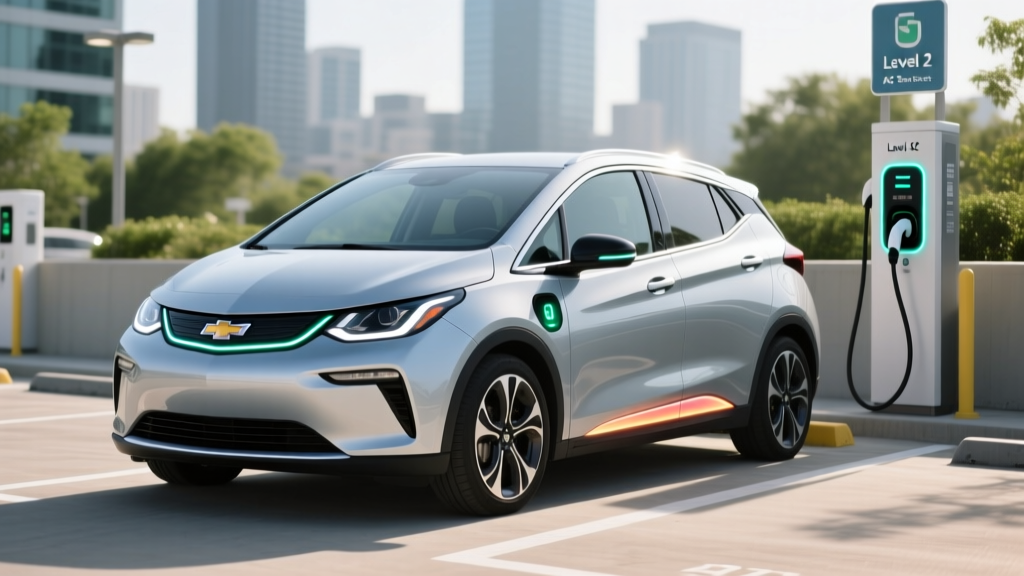
The original Chevrolet Bolt was the affordable EV that proved you didn't need to spend $50,000 to drive electric. After a one-year hiatus, the next-generation Bolt returns for 2026 on GM's updated Ultium-derived platform with a fresh battery, faster charging, and a slightly larger footprint. If you've been searching for 2026 Chevy Bolt dimensions, cargo specs, and real-world range data before pulling the trigger, this review covers every number that matters — from legroom to charge-curve taper.
EPA Estimated: 255 miles (1LT) / 243 miles (2LT with larger wheels)
Real-World Expectation: ~210–230 miles at sustained highway speeds (70–75 mph); ~175–195 miles in sub-30°F winter conditions with cabin heat. City/regenerative driving can match or slightly exceed the EPA sticker.
2026 Chevy Bolt Dimensions and Interior Space
The 2026 Bolt rides on a stretched version of GM's BEV3 architecture, adding roughly 1.6 inches of overall length and a 0.8-inch wheelbase stretch over the outgoing Bolt EV. That translates to meaningfully improved rear legroom — one of the old Bolt's most common complaints.
| Measurement | 2026 Bolt | Previous-Gen Bolt EV |
|---|---|---|
| Wheelbase | 102.4 in | 101.6 in |
| Overall Length | 165.1 in | 163.5 in |
| Overall Width (no mirrors) | 69.5 in | 69.5 in |
| Overall Height | 63.4 in | 62.8 in |
| Front Legroom | 42.1 in | 41.6 in |
| Rear Legroom | 36.5 in | 35.6 in |
| Cargo Volume (rear seats up) | 18.3 cu ft | 16.9 cu ft |
| Cargo Volume (rear seats folded) | 57.2 cu ft | 56.6 cu ft |
| Curb Weight (est.) | ~3,620 lbs | 3,563 lbs |
For context, the 2026 Bolt's 18.3 cu ft of cargo space behind the rear seats exceeds the Hyundai Kona Electric (17.4 cu ft) and sits close to the Nissan Leaf (23.6 cu ft). Fold the 60/40 split rear bench and you get a flat load floor at 57.2 cu ft — enough for a week's worth of camping gear or a full Costco run. The extra 0.9 inches of rear legroom won't turn it into a limousine, but it moves the Bolt from "tight for adults" to "acceptable for two adults on moderate trips."
Battery, Range, and Efficiency
The 2026 Bolt uses a 65 kWh usable LFP (lithium iron phosphate) battery pack — a deliberate pivot from the previous generation's 65 kWh NMC chemistry. LFP trades some energy density for dramatically better cycle life, thermal stability, and lower raw-material cost. For an affordable commuter EV, it's the right call.
What LFP means for you: LFP cells tolerate repeated 100% charges far better than NMC. GM actually recommends periodic full charges to help the battery management system recalibrate state of charge — something you'd avoid with NMC. The trade-off is reduced range per pound of battery, and slightly worse cold-weather performance (expect 30–40% range loss in sustained sub-20°F weather versus ~25% for NMC). Preconditioning the battery before DC fast charging is essential for optimal speeds.
| Spec | 2026 Bolt 1LT | 2026 Bolt 2LT |
|---|---|---|
| Battery Chemistry | LFP | LFP |
| Usable Capacity | 65 kWh | 65 kWh |
| EPA Range | 255 mi | 243 mi |
| MPGe (Combined) | 120 MPGe | 114 MPGe |
| Efficiency | 28 kWh/100 mi | 29 kWh/100 mi |
The 1LT's 120 MPGe combined rating translates to roughly 3.5 miles per kWh — competitive with the segment. On fueleconomy.gov, you can compare the Bolt directly against the Kona Electric, Leaf, and Mini Cooper SE to see how efficiency stacks up across your specific mix of city and highway driving.
Charging Speed: DC Fast, Level 2, and Level 1
The previous-generation Bolt's Achilles heel was DC fast charging — capped at 55 kW, a 10–80% session took over an hour. The 2026 Bolt fixes this with a significantly upgraded charge architecture.
| Charging Level | Power / Rate | Time / Miles Added |
|---|---|---|
| Level 1 (120V household) | ~1.4 kW | ~4 mi/hr (full charge ~46 hrs) |
| Level 2 (240V home/public) | 11.5 kW (48A) | ~37 mi/hr (10–100% in ~6.5 hrs) |
| DC Fast Charge (CCS/NACS) | Peak 150 kW | 10–80% in ~28 min |
Charging-curve reality check: The 150 kW peak is achieved between roughly 10–35% state of charge (SoC). Beyond 50%, the rate tapers to ~100 kW, and above 80% it drops sharply to protect the LFP cells — typical of all modern battery chemistries but worth noting if you plan road trips around quick top-ups. On a 300-mile highway drive, plan one 25–30-minute stop at a 150+ kW charger and you'll arrive with comfortable buffer.
The 2026 Bolt ships with a NACS (Tesla-style) charge port as standard, with access to Tesla Superchargers via GM's agreement with Tesla. A CCS adapter is available for Electrify America, EVgo, and other legacy networks. For home charging, a 48-amp Level 2 wall connector on a 60-amp circuit delivers the full 11.5 kW — enough to replenish a day's driving in roughly an hour.
Performance and Drivetrain
The 2026 Bolt keeps things simple: a single front-mounted permanent-magnet motor driving the front wheels. No AWD option, no dual-motor variant — this is a commuter EV, and that focus keeps weight and cost down.
| Performance Spec | Value |
|---|---|
| Drivetrain | FWD (single motor) |
| Horsepower | 200 hp |
| Torque | 236 lb-ft |
| 0–60 mph | ~6.8 seconds |
| Top Speed | 93 mph (electronically limited) |
| Regen Modes | One-pedal driving + paddle regen |
The 200 hp and instant electric torque make the Bolt genuinely quick off the line and confident in urban merging. It's not a Tesla Model 3 Performance, but it doesn't need to be — the 6.8-second 0–60 time outpaces most gas-powered compact crossovers. One-pedal driving with strong regenerative braking handles most stop-and-go traffic without touching the friction brake pedal.
Pricing, Trims, and Federal Tax Credit
GM has kept the Bolt's mission intact: the most affordable new EV with competitive range. Two trims are available for 2026.
| Trim | Base MSRP | After Est. §30D Credit | Key Features |
|---|---|---|---|
| 1LT | $26,900 | ~$19,400* | 11" touchscreen, 17" wheels, Super Cruise ready |
| 2LT | $31,400 | ~$23,900* | 19" wheels, heated seats/steering, Bose audio, adaptive cruise |
*Tax credit estimates assume full eligibility. See IRS §30D rules below.
- MSRP Cap: Vehicle must be under $55,000 (cars) — Bolt qualifies at both trims ✓
- Buyer Income Cap: AGI ≤ $150,000 (single) / $225,000 (head of household) / $300,000 (joint) — verify against your tax situation
- Battery Sourcing: Critical minerals and battery components must meet phased-in domestic-content thresholds per IRS guidelines — GM's LFP supply chain sourcing is subject to annual phase-up requirements
- Point-of-Sale Transfer: Eligible buyers can transfer the credit to the dealer at purchase, reducing the out-of-pocket price immediately
- Assembled in North America: Final assembly must be in the US, Canada, or Mexico — Bolt is assembled at Orion Assembly, MI ✓
Consult a tax professional for your specific eligibility. Credit amounts and sourcing rules update annually.
Tech, Safety, and Driver Assistance
The 2026 Bolt gets GM's latest Ultifi software platform with an 11-inch diagonal touchscreen running an updated infotainment system with wireless Apple CarPlay and Android Auto, Google built-in navigation, and over-the-air updates.
Driver assistance: The 2LT includes GM's Super Cruise compatibility — a hands-off-wheel, eyes-on-road Level 2 system operational on over 750,000 miles of mapped highways in North America. The 1LT is Super Cruise–ready but requires a subscription activation. Standard across both trims: Chevy Safety Assist with automatic emergency braking, lane-keep assist, following-distance indicator, and IntelliBeam auto high beams.
Super Cruise is an SAE Level 2 driver-assistance system. Despite hands-off capability on mapped roads, the driver must remain attentive, keep eyes on the road (monitored by an infrared camera), and be prepared to take over instantly. This is not autonomous or "self-driving" (Level 4+). You are always the responsible operator.
Warranty and Long-Term Ownership
GM backs the 2026 Bolt with a competitive warranty package, and the LFP chemistry choice adds a layer of long-term confidence.
| Coverage | Term |
|---|---|
| Bumper-to-Bumper | 3 years / 36,000 miles |
| Battery & Powertrain | 8 years / 100,000 miles |
| Battery Capacity Retention | ≥ 70% of original capacity over 8 yr / 100,000 mi |
| Roadside Assistance | 5 years / 60,000 miles |
LFP batteries typically show slower degradation than NMC — industry data from high-mileage LFP packs (taxis, fleet vehicles) suggests 85–90% capacity retention at 150,000 miles is achievable with normal use. The 70% retention warranty floor is standard for the segment, but real-world LFP longevity should comfortably exceed that threshold. For buyers planning to keep the Bolt 8–10 years, the chemistry is a genuine advantage.
Pros and Cons
- Lowest entry price in the 250+ mile EV segment at $26,900
- LFP battery offers superior cycle life and 100% charge tolerance
- NACS port with native Supercharger access
- 150 kW DC fast charging (massive improvement over prior gen)
- Improved rear legroom and cargo space vs. predecessor
- Super Cruise available on mapped highways (2LT)
- One-pedal driving with strong regen
- FWD only — no AWD option for snow-belt buyers
- LFP cold-weather range loss steeper than NMC (~35%+ below 20°F)
- 150 kW peak DC charge rate trails competitors at 200+ kW
- Rear seat still tight for tall adults on long trips
- No front trunk (frunk) — charge cable storage eats cargo space
- Super Cruise requires subscription after trial period
Who Should Buy the 2026 Chevy Bolt?
Choose the Bolt if: You're a daily commuter driving under 100 miles round-trip, you can charge at home (Level 2), you want the lowest possible new-EV price, and you mostly drive in moderate climates. It's ideal as a first EV for apartment-dwellers with workplace charging access, or as a household's second car for errands and commuting.
Look elsewhere if: You regularly drive 300+ mile highway routes in winter, you need AWD, you want a family-hauler with generous rear space, or you tow anything (Bolt is not rated for towing). For road-trip-heavy lifestyles, consider the Hyundai Ioniq 5 or Tesla Model Y with their 200+ kW charging and longer range options.
Frequently Asked Questions
What is the real-world range of the 2026 Chevy Bolt?
The EPA rates the 1LT at 255 miles and the 2LT at 243 miles (larger wheels increase rolling resistance). In real-world highway driving at 70–75 mph in moderate temperatures, expect 210–230 miles before needing to charge. In cold weather (below 30°F), range can drop to 175–195 miles due to cabin heating demands and reduced battery efficiency. City driving with regenerative braking can match or slightly exceed the EPA number.
How fast does the 2026 Bolt charge?
On a DC fast charger rated at 150+ kW, the Bolt charges from 10–80% in approximately 28 minutes, peaking at 150 kW in the lower portion of the battery and tapering as SoC rises. At home on a 240V Level 2 charger (11.5 kW), a full charge takes about 6.5 hours — easily replenishing overnight. On a standard 120V outlet, expect roughly 4 miles of range per hour of charging.
Does the 2026 Chevy Bolt qualify for the federal EV tax credit?
The Bolt meets the MSRP cap (under $55,000) and North American final assembly requirement. Eligibility for the full $7,500 credit depends on your adjusted gross income falling under IRS thresholds ($150K single / $300K joint) and the battery's critical-mineral and component sourcing meeting current-year phase-in rules. The credit can be transferred to the dealer at point of sale. Check the latest IRS §30D guidance and consult a tax professional before relying on a specific credit amount.
Is the 2026 Bolt worth buying vs. the Hyundai Kona Electric or Nissan Leaf?
Against the Kona Electric (~$33,000, 261-mile range, 100 kW DC charging), the Bolt wins on price and DC charge speed but gives up some cargo space. The Nissan Leaf (starting ~$28,500, up to 212-mile range, CHAdeMO connector) is a close price rival but has less range, slower charging, and a connector standard with shrinking public infrastructure. The Bolt's combination of price, NACS/Supercharger access, and LFP battery longevity gives it a strong value proposition in this segment.
What are the 2026 Chevy Bolt's key dimensions?
The 2026 Bolt measures 165.1 inches long, 69.5 inches wide, and 63.4 inches tall on a 102.4-inch wheelbase. It seats five with 42.1 inches of front legroom and 36.5 inches of rear legroom. Cargo volume is 18.3 cu ft behind the rear seats and 57.2 cu ft with seats folded — competitive for the subcompact EV hatchback class.
Does the Bolt have a frunk (front trunk)?
No. The 2026 Bolt does not include a front trunk. The space under the hood houses the motor, power electronics, and ancillary systems. Charge cables store in a bag in the rear cargo area.
Sources: EPA fueleconomy.gov, Chevrolet media specifications, IRS Clean Vehicle Credits. Specifications based on manufacturer data available at time of publication. Always verify current pricing and credit eligibility before purchase.