Quick Verdict: Built for the Job Site, Not the Car Show
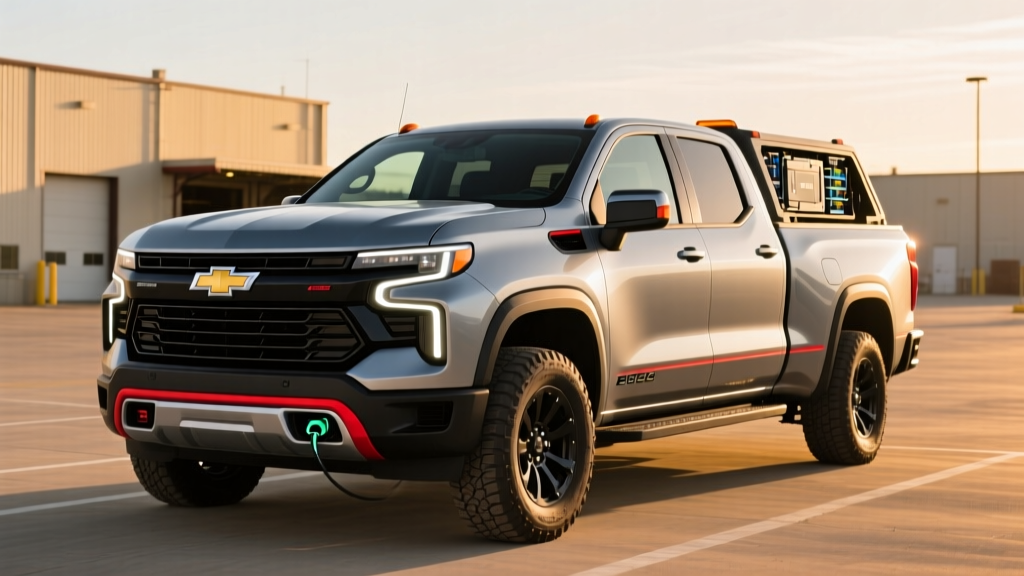
The 2026 Chevrolet Silverado EV Work Truck (WT) is General Motors' answer to a specific question: can a full-size electric pickup survive the daily abuse of commercial fleets and tradespeople? With an EPA-estimated range hovering around 380 miles on the larger battery pack, a maximum tow rating of 10,000 pounds, and a starting MSRP that undercuts the Rivian R1T and Tesla Cybertruck by a wide margin, the Silverado EV WT makes a compelling case as a work-first electric truck. It's not the most exciting EV on the market — the interior is spartan, the styling is conservative, and the Ultium platform's software has had its share of early growing pains. But if your priorities are payload, range, charging speed, and total cost of ownership, this truck deserves serious attention.
For 2026, Chevrolet has expanded the Silverado EV WT lineup with additional battery configurations and refined the Super Cruise hands-free driving system for highway commutes. The truck rides on GM's dedicated BT1 electric platform — not a converted Silverado ICE chassis — which gives it a flat floor, a front trunk (frunk), and structural battery integration that improves rigidity.
Range, Battery, and Efficiency: The Numbers That Matter
EPA Estimated: ~380 miles (larger pack, 2WD)
Expect in real-world highway driving (70+ mph): ~300–330 miles
Cold weather (below 32°F): ~250–280 miles
Heavy towing (8,000+ lbs): ~150–180 miles
The 2026 Silverado EV WT is available with two Ultium battery pack sizes. The standard pack provides approximately 200 kWh of usable capacity, while the extended pack pushes that to roughly 240 kWh. Both use GM's NCMA (nickel-cobalt-manganese-aluminum) cathode chemistry — an NMC variant optimized for energy density and cycle life. This is not an LFP (lithium iron phosphate) battery, which means you get more range per pound but should follow best practices for long-term State of Health: avoid routinely charging to 100% and try to keep daily State of Charge between 20% and 80%.
| Spec | Standard Pack (2WD) | Extended Pack (2WD) |
|---|---|---|
| Battery Capacity (usable) | ~200 kWh | ~240 kWh |
| Chemistry | NCMA (NMC variant) | NCMA (NMC variant) |
| EPA Range | ~280 mi | ~380 mi |
| Efficiency (MPGe) | ~68 MPGe | ~65 MPGe |
| Efficiency (kWh/100 mi) | ~49 kWh | ~52 kWh |
Efficiency is the tradeoff for capability. At roughly 49–52 kWh per 100 miles, the Silverado EV WT consumes significantly more energy per mile than a sedan or crossover EV. That's physics — a 9,000-pound truck pushing a brick-like frontal area will never rival a Hyundai Ioniq 6. For fleet managers calculating operating costs, this translates to approximately $0.13–$0.16 per mile on electricity (at $0.13/kWh national average), compared to $0.22–$0.28 per mile for a gas Silverado 1500 at $3.50/gallon and 18 MPG combined.
According to fueleconomy.gov, the Silverado EV's efficiency profile is typical for the full-size electric truck segment. The Ford F-150 Lightning posts similar numbers, while the lighter Rivian R1T achieves slightly better efficiency.
Charging Speed: DC Fast, Level 2, and Fleet Depot Setup
Charging speed is where the Silverado EV WT either wins or loses fleet buyers. GM equipped this truck with a maximum DC fast-charge rate of up to 200 kW on the extended pack and around 175 kW on the standard pack. That's competitive with the Ford F-150 Lightning's 150–155 kW peak but falls short of the Tesla Cybertruck's 800-voltage architecture and its 250+ kW capability.
| Charging Level | Power / Rate | Time / Miles Added |
|---|---|---|
| Level 1 (120V, 12A) | ~1.4 kW | ~3 mi/hr |
| Level 2 (240V, 48A) | ~11.5 kW | ~24 mi/hr |
| Level 2 (240V, 80A — optional) | ~19.2 kW | ~40 mi/hr |
| DC Fast Charge (peak) | 200 kW (extended) / 175 kW (standard) | 10–80% in ~35 min |
The 10–80% DC fast-charge time of approximately 35 minutes is acceptable for road trips but not class-leading. The charge curve on the Ultium platform holds near peak power up to about 50–60% State of Charge, then tapers progressively. Above 80%, charging slows dramatically to protect the battery — expect the final 20% to take as long as the first 50%. This is standard behavior for NMC chemistry and why we recommend planning fast-charge stops around the 10–80% window.
For home and depot charging, the Silverado EV WT comes standard with a dual-level portable charging cord that handles 120V (Level 1) and 240V (Level 2) outlets. The onboard charger accepts up to 11.5 kW on a standard 48-amp Level 2 circuit, which adds about 24 miles of range per hour — enough to fully recharge the standard pack overnight in about 17 hours. For fleet depots or owners who want faster turnaround, the optional 19.2 kW onboard charger (requiring an 80-amp circuit) cuts that time nearly in half. Note: an 80-amp circuit requires 100-amp breaker capacity and likely a panel upgrade in older homes or commercial buildings. Budget $1,500–$3,500 for professional Level 2 installation depending on your electrical panel's existing capacity.
The Silverado EV WT uses the NACS (North American Charging Standard) connector for 2026, giving it native access to Tesla's Supercharger network — a major advantage for road-trip charging reliability. A CCS adapter is available for legacy Electrify America and EVgo stations.
Performance, Towing, and Payload
The Work Truck trim prioritizes torque over track times, but the Silverado EV WT is no slouch. The dual-motor all-wheel-drive configuration produces approximately 510 horsepower and 615 lb-ft of torque, launching the truck from 0–60 mph in about 5.4 seconds. That's remarkably quick for a truck designed to haul lumber and tow equipment trailers, and it makes highway merging effortless even under load.
| Spec | Value |
|---|---|
| Drivetrain | Dual-motor AWD |
| Horsepower | ~510 hp |
| Torque | ~615 lb-ft |
| 0–60 mph | ~5.4 seconds |
| Max Towing Capacity | 10,000 lbs |
| Max Payload | ~1,800 lbs |
| Bed Length | 5'11" (standard) / 6'11" w/ Multi-Flex Midgate |
The 10,000-pound max tow rating is the headline figure, but real-world towing range is where electric trucks demand honest expectations. Towing an 8,000-pound enclosed trailer at highway speeds will cut range roughly in half — expect 150–180 miles from the extended pack before needing a charge stop. This is the single biggest limitation of electric pickups for commercial users who tow long distances daily. If your routes involve 200+ mile towing loops without charging infrastructure, a diesel or hybrid may still be the better tool.
The Multi-Flex Midgate is a standout feature for work use. It allows you to fold down the partition between the cab and bed, extending the load floor from just under 6 feet to nearly 7 feet while still maintaining a portion of the rear cabin. Combined with the available Multi-Flex Tailgate (six-position), the Silverado EV WT offers genuine job-site versatility. The front frunk adds approximately 10.7 cubic feet of lockable, weatherproof storage — ideal for tools, cords, or groceries.
Interior, Tech, and Driver Assistance
The Work Truck interior is exactly what you'd expect: durable, functional, and devoid of luxury pretension. Vinyl-trimmed seats, rubberized flooring, and hard plastics throughout make it easy to clean after a muddy site visit. The centerpiece is a 17.7-inch diagonal infotainment touchscreen running Google Built-In, which includes Google Maps navigation, Google Assistant voice control, and access to the Play Store for apps. An 11-inch digital driver cluster rounds out the display package.
On the driver-assistance front, the Silverado EV WT comes standard with Chevy Safety Assist (forward collision alert, automatic emergency braking, lane keep assist, following distance indicator, and IntelliBeam automatic high beams). Super Cruise — GM's hands-free Level 2 highway driving system — is available as an option on the WT trim and comes standard on higher trims. Super Cruise operates on over 750,000 miles of compatible highways in North America and includes driver attention monitoring via an infrared camera on the steering column.
Super Cruise is a Level 2 driver-assistance system per SAE International standards. The driver must remain attentive, keep eyes on the road (monitored by camera), and be prepared to take over at any time. This is not autonomous or "self-driving" capability. Only Level 4 systems (like Waymo's robotaxi service) operate without a human driver.
Additional tech features include:
- ProGrade Trailering System with trailer tire temperature and pressure monitoring
- Trailer camera integration (up to four cameras)
- Energy Assist route planning that factors in charging stops and elevation
- Vehicle-to-Load (V2L) capability — the truck can power tools or a campsite with up to 9.6 kW of exportable power via bed-mounted outlets
- Over-the-air (OTA) software updates
Notable drawbacks include the absence of a physical key fob on base WT trims (phone-as-key only, which can be unreliable in areas with poor cellular coverage), limited rear-seat legroom compared to crew-cab ICE Silverados, and the sheer size of the vehicle — at over 233 inches long, it won't fit in many standard parking garages.
Pricing, Trim Levels, and Federal Tax Credit
| Trim / Config | Base MSRP | Est. After §30D Credit |
|---|---|---|
| WT Standard Pack (AWD) | ~$55,000 | ~$47,500 |
| WT Extended Pack (AWD) | ~$65,000 | ~$57,500 |
| WT Extended Pack w/ Max Tow | ~$72,000 | ~$64,500 |
The Silverado EV WT starts around $55,000 for the standard battery pack with dual-motor AWD, making it one of the most affordable full-size electric pickups on the market. The extended-range pack pushes the price to roughly $65,000, and loading up the Max Tow package brings it near $72,000. All WT trims fall well below the IRS §30D MSRP cap of $80,000 for trucks, which is a key eligibility requirement.
- MSRP Cap: Truck MSRP must be ≤ $80,000 — all Silverado EV WT trims qualify ✓
- Buyer Income Cap: MAGI ≤ $150,000 (single), $225,000 (head of household), $300,000 (joint) — varies by filer
- Battery Sourcing: Critical minerals and battery components must meet phased-in percentage thresholds for 2026 — verify current-year compliance on irs.gov
- Point-of-Sale Transfer: Eligible buyers can transfer the up-to-$7,500 credit to the dealer at purchase, reducing the purchase price directly
- Assembly: Must be assembled in North America — Silverado EV is built at Factory ZERO in Michigan ✓
Note: Tax credit rules are subject to change. Always verify eligibility with a tax professional and the latest IRS guidance before purchasing.
For fleet buyers, the commercial clean vehicle credit (§45W) may apply instead of §30D, offering up to $7,500 for vehicles under 14,000 lbs GVWR or up to $40,000 for heavier vehicles. Consult your fleet accountant for applicability.
Warranty and Long-Term Ownership
GM backs the Silverado EV WT with a competitive warranty package:
- Battery & Drive Unit: 8 years / 100,000 miles (whichever comes first), with a minimum 70% capacity retention guarantee
- Bumper-to-Bumper: 3 years / 36,000 miles
- Powertrain (non-battery): 5 years / 60,000 miles
- Roadside Assistance: 5 years / 60,000 miles
The 70% battery capacity retention threshold is the industry standard — if your 240 kWh pack drops below 168 kWh usable within 8 years or 100,000 miles, GM will repair or replace it. Based on current Ultium degradation data from early Bolt EUV and Cadillac Lyriq owners, real-world degradation appears to be in the 5–8% range over the first 50,000 miles, which is well within the warranty buffer. For fleet managers planning 5–7 year ownership cycles, battery replacement cost is unlikely to be a factor, but for reference, a full Ultium pack replacement currently runs $20,000–$30,000 out of warranty.
Insurance costs tend to run 15–25% higher than equivalent ICE Silverados due to repair costs for the battery structure and specialized body panels. Fleet buyers should get insurance quotes before committing to a large order.
How It Stacks Up: Silverado EV WT vs. the Competition
The Silverado EV WT's direct competitors are the Ford F-150 Lightning (Pro trim), the Tesla Cybertruck (base AWD), and the Rivian R1T (Standard package). Here's how they compare on the specs that matter most to work-truck buyers:
| Spec | Silverado EV WT | F-150 Lightning Pro | Cybertruck AWD |
|---|---|---|---|
| Starting MSRP | ~$55,000 | ~$52,000 | ~$80,000 |
| EPA Range (max) | ~380 mi | ~320 mi | ~340 mi |
| Max Tow | 10,000 lbs | 10,000 lbs | 11,000 lbs |
| Peak DC Charge | 200 kW | 155 kW | 250+ kW |
| 10–80% DCFC Time | ~35 min | ~41 min | ~25 min |
| V2L / Pro Power | 9.6 kW | 9.6 kW | 11.5 kW |
- You need the longest EPA range in a work truck (380 mi)
- NACS native Supercharger access matters to you
- You want the Multi-Flex Midgate for long cargo
- Fleet TCO is your primary decision metric
- You need the fastest DC charging (Cybertruck wins)
- Interior luxury matters (try Rivian R1T)
- You need proven multi-year fleet reliability data (F-150 Lightning has more track record)
- You tow 200+ miles daily without charging access
Frequently Asked Questions
What is the real-world range of the 2026 Silverado EV Work Truck?
The EPA rates the extended-pack Silverado EV WT at approximately 380 miles. In real-world highway driving at 70–80 mph, expect 300–330 miles. In cold weather (below freezing), plan for 250–280 miles. Towing heavy trailers will cut range to roughly 150–180 miles.
How fast does the Silverado EV WT charge?
On a DC fast charger, the extended pack peaks at 200 kW and charges from 10–80% in approximately 35 minutes. At home on a 240V/48A Level 2 charger, you'll add about 24 miles of range per hour, fully recharging overnight. The optional 19.2 kW onboard charger nearly doubles home charging speed.
How much does it cost after the federal tax credit?
If you qualify for the full $7,500 §30D credit, the base WT Standard Pack drops from ~$55,000 to approximately $47,500. Eligibility depends on your income, the vehicle's battery sourcing compliance, and MSRP caps. The credit can be transferred to the dealer at point of sale, reducing your purchase price directly. Always verify current-year rules on irs.gov.
Does the Silverado EV WT qualify for the federal EV tax credit?
Yes — the Silverado EV WT meets the MSRP cap ($80,000 for trucks), is assembled in North America (Factory ZERO, Detroit-Hamtramck), and GM has worked to meet battery sourcing requirements. However, your personal eligibility depends on income limits (MAGI ≤ $150K single / $300K joint) and current-year critical mineral thresholds. Consult a tax professional before relying on the credit.
Is the Silverado EV WT worth buying vs. the F-150 Lightning?
It depends on your priorities. The Silverado EV WT offers significantly more EPA range (380 vs. 320 miles), native NACS/Supercharger access, and the unique Multi-Flex Midgate. The F-150 Lightning Pro starts slightly cheaper, has a longer track record in fleets, and offers a more conventional truck layout that some buyers prefer. Both are strong choices — the Silverado wins on range and charging network access; the Lightning wins on price and proven fleet deployment.
Can the Silverado EV WT power my tools or home?
Yes. The truck features Vehicle-to-Load (V2L) capability with up to 9.6 kW of exportable power through outlets in the bed and cabin. This is enough to run power tools, lighting, and appliances on a job site or during a home power outage. A separate V2H (Vehicle-to-Home) bidirectional charger is required for whole-home backup and must be professionally installed.
- Class-leading 380-mile EPA range (extended pack)
- Native NACS connector for Tesla Supercharger access
- Multi-Flex Midgate extends bed to nearly 7 feet
- 10,000-lb tow rating with integrated trailering tech
- 9.6 kW V2L for job-site power
- Competitive starting price for a full-size EV truck
- Spacious 10.7 cu ft frunk
- DC fast charging slower than Cybertruck (200 vs 250+ kW)
- Towing cuts range by 50%+ — a real operational constraint
- Spartan WT interior; luxury seekers should look at RST or Rivian
- Large footprint — won't fit many parking structures
- Phone-as-key can be unreliable in low-coverage areas
- Insurance premiums 15–25% higher than ICE Silverado
- Ultium software still maturing — expect OTA update friction
Who Should Buy the 2026 Silverado EV Work Truck?
The Silverado EV WT is purpose-built for three buyer profiles:
Fleet managers and commercial operators who want to reduce fuel and maintenance costs on trucks that return to a depot nightly. The math works best for routes under 250 miles with overnight Level 2 charging. The V2L capability turns each truck into a mobile generator, eliminating the need for separate portable units.
Tradespeople and contractors who drive 40–100 miles daily to job sites, carry tools and materials, and need a truck that works as hard as they do. The frunk, midgate, and bed power outlets make this a genuine tool, not just a commuter vehicle.
Cost-conscious truck buyers who want a full-size electric pickup without paying Rivian or Cybertruck premiums. At ~$47,500 after the federal credit, the WT Standard Pack is one of the most affordable ways into a 280+ mile, 10,000-lb-tow-rated electric truck.
If your daily routine involves long-distance towing, frequent travel to areas without charging infrastructure, or you simply need a truck that can go anywhere without route planning, a diesel or hybrid pickup may still be the more practical choice. The Silverado EV WT is a capable, honest work truck — but it's not a magic solution for every use case. Evaluate your actual routes, charging access, and towing needs before committing.