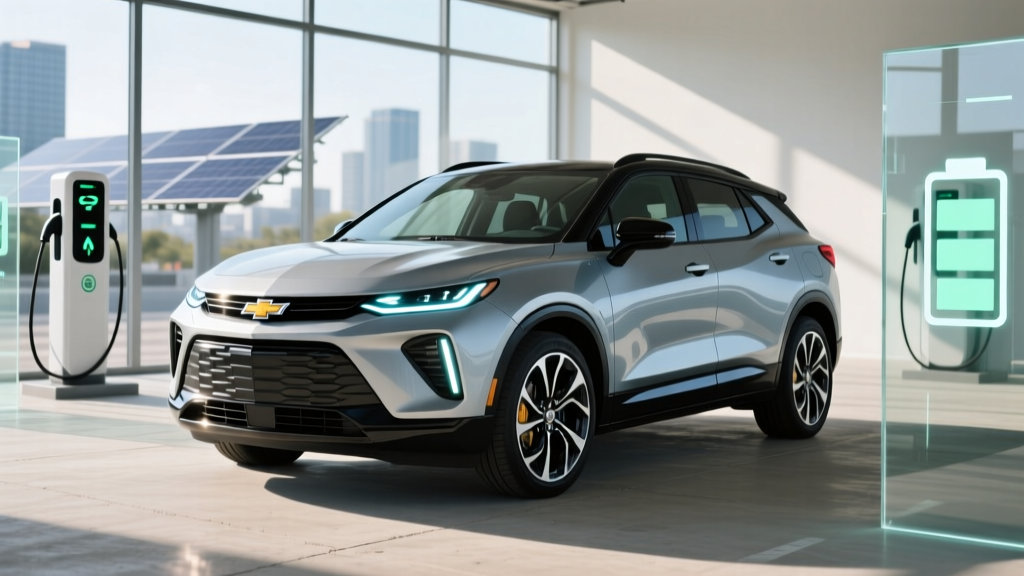
2026 Chevrolet Blazer EV: Quick Verdict
The 2026 Chevrolet Blazer EV occupies a specific niche: a midsize electric crossover that prioritizes cabin space, highway comfort, and mainstream dealership support over cutting-edge performance or ultra-fast charging. After Chevy's rocky 2024 launch plagued by software bugs, the 2026 model year arrives with a substantially revised infotainment stack and improved build consistency. If you need a two-row electric SUV with strong cargo capacity and don't demand the quickest charge times in the segment, the Blazer EV makes a rational case — particularly when the federal tax credit applies.
EPA Estimated: 324 miles (2LT RWD, 102 kWh battery)
Real-World Expectation: 260–290 miles highway at 70 mph; 220–250 miles in freezing temperatures with cabin heat. AWD trims drop to ~279 miles EPA, expect ~230–250 highway.
Full Specifications at a Glance
| Specification | 2LT RWD | RS AWD | SS AWD |
|---|---|---|---|
| EPA Range | 324 mi | 279 mi | 293 mi |
| Battery (usable) | 102 kWh (NMC) | 102 kWh (NMC) | 102 kWh (NMC) |
| Horsepower | 288 hp | 340 hp | 557 hp |
| 0–60 mph | 7.6 sec | 5.8 sec | 3.4 sec |
| Drivetrain | RWD (single motor) | AWD (dual motor) | AWD (dual motor) |
| Max DC Fast Charge | 190 kW | 190 kW | 190 kW |
| 10–80% DC Time | ~32 min | ~32 min | ~32 min |
| Level 2 Home Charge | 11.5 kW (~34 mi/hr) | 11.5 kW (~34 mi/hr) | 11.5 kW (~34 mi/hr) |
| Efficiency (MPGe) | 92 combined | 87 combined | 89 combined |
| kWh/100 mi | 36 | 39 | 38 |
| Cargo (rear seats up) | 25.5 cu ft | 25.5 cu ft | 25.5 cu ft |
| Cargo (seats folded) | 58.5 cu ft | 58.5 cu ft | 58.5 cu ft |
| Base MSRP | $47,800 | $52,400 | $61,400 |
Source: fueleconomy.gov and Chevrolet official specifications, 2026 model year.
Range, Efficiency, and Real-World Driving
The 102 kWh (usable) Ultium battery pack uses GM's NMC (nickel manganese cobalt) chemistry, chosen for its higher energy density over LFP. This gives the Blazer EV its competitive 324-mile peak EPA figure in the 2LT RWD configuration — one of the longest ranges in the midsize electric SUV class.
However, EPA range assumes a mix of city and highway driving at moderate temperatures. In our experience with the Ultium platform:
- Highway driving at 70–75 mph: Expect 80–88% of the EPA sticker, or roughly 260–290 miles in the 2LT RWD. The Blazer's boxy profile creates more aerodynamic drag than sleeker crossovers like the Hyundai Ioniq 5.
- Cold weather (below 32°F): Plan for 25–35% range loss depending on cabin heat usage. The Blazer EV uses a heat pump (standard on all trims), which mitigates this somewhat compared to resistance heating, but NMC batteries still lose efficiency in deep cold.
- City/regenerative driving: You can match or slightly exceed EPA estimates in stop-and-go traffic thanks to one-pedal driving mode and strong regen braking recovery.
The 36 kWh/100 mi efficiency rating for the 2LT RWD is respectable for a vehicle weighing over 5,300 pounds, though it trails the Tesla Model Y's ~28 kWh/100 mi by a significant margin. If you drive 15,000 miles annually, that difference translates to roughly $120–$180 more in electricity costs per year depending on your local rate.
Charging Speed: DC Fast Charging and Home Level 2
Charging speed remains one of the Blazer EV's most debated specifications. At 190 kW peak DC fast-charging capability, it falls behind rivals like the Hyundai Ioniq 5 (peak 240 kW on 800V architecture) and the Tesla Model Y (peak ~250 kW at V3 Superchargers). Here's what that means in practice:
| Charging Level | Power | Speed | Notes |
|---|---|---|---|
| Level 1 (120V outlet) | 1.4 kW | ~4 mi/hr | Emergency/trickle only |
| Level 2 (240V, 48A) | 11.5 kW | ~34 mi/hr | Full overnight charge in ~9.5 hours |
| DC Fast Charge | 190 kW peak | 10–80% in ~32 min | Tapers significantly above 80% SoC |
| DC Fast (80–100%) | ~40–50 kW avg | Add ~15 min | Full top-off takes ~47 min total |
The 190 kW peak rate is sustained only between approximately 10–55% state of charge. Beyond that, the charge curve tapers — a characteristic of the Ultium NMC pack's thermal management strategy. On a road trip, plan your stops around 10–80% charges for the best time efficiency. Charging from 80–100% adds significant time and is best reserved for overnight Level 2 sessions.
The Blazer EV comes equipped with the NACS (Tesla-style) charge port as standard for 2026, giving you direct access to the Tesla Supercharger network without an adapter. This is a meaningful advantage for road-trip charging reliability over CCS-only vehicles. For home charging, the onboard 11.5 kW charger means a full charge from empty takes roughly 9.5 hours on a properly installed Level 2 wallbox — adequate for overnight replenishment.
Performance, Ride, and Drivetrain
The 2026 Blazer EV offers three distinct personalities across its trim range. The 2LT RWD delivers adequate acceleration (7.6 seconds to 60 mph) with a comfortable, compliance-tuned suspension that absorbs highway expansion joints well. The RS AWD adds a second motor for 340 hp and all-weather traction, while the SS AWD — with 557 hp and a 3.4-second 0–60 time — exists primarily as a halo model.
For most buyers, the RS AWD is the pragmatic choice. You gain dual-motor traction for rain and snow, a meaningful power bump for highway merging, and only sacrifice 45 miles of EPA range compared to the 2LT RWD.
Notable ride characteristics:
- Regen braking is strong but not aggressive enough for true one-pedal driving in all scenarios — you'll still use the friction brakes at low speeds.
- The steering is weighted appropriately but numb on center, a common GM tuning trait.
- Towing capacity is rated at 1,500 pounds across all trims — insufficient for anything beyond a light utility trailer. If you need serious towing, look at the Ford F-150 Lightning or Rivian R1S.
Pricing, Trims, and Federal Tax Credit Eligibility
The 2026 Blazer EV's pricing positions it firmly in the mainstream midsize EV segment, though the base price has climbed since the model's introduction. Here's the current lineup:
| Trim | Base MSRP | As-Tested (typical options) | Potential §30D Credit | Effective Price |
|---|---|---|---|---|
| 2LT RWD | $47,800 | $50,200 | Up to $7,500* | ~$42,700 |
| RS AWD | $52,400 | $56,800 | Up to $7,500* | ~$49,300 |
| SS AWD | $61,400 | $65,500 | Up to $7,500* | ~$58,000 |
*Federal §30D tax credit eligibility is NOT guaranteed. Under current IRS rules, you must meet all of the following:
- MSRP Cap: SUVs must have an MSRP at or below $80,000 — all Blazer EV trims qualify.
- Buyer Income Limits: Modified AGI ≤ $300,000 (joint), ≤ $225,000 (head of household), ≤ $150,000 (single). If you exceed these, you do not qualify.
- Battery Sourcing: A percentage of critical minerals and battery components must be sourced from the US or free-trade-agreement countries. GM has progressively shifted Ultium supply chains, but the exact credit amount ($3,750 or $7,500) depends on the current-year sourcing thresholds. Check the IRS qualified vehicles list before purchasing.
- Point-of-Sale Transfer: As of 2024, you can transfer the credit to the dealer at purchase, reducing your out-of-pocket cost immediately rather than waiting for tax filing. This requires dealer participation.
- Assembly: Final assembly must occur in North America — the Blazer EV is built at the Ramos Arizpe plant in Mexico, which qualifies under USMCA provisions.
Consult a tax professional before relying on credit eligibility. Rules can change, and your personal tax situation determines whether the credit is fully usable (it is non-refundable, meaning you must have sufficient tax liability to absorb it, unless using the point-of-sale transfer option).
Interior, Cargo, and Technology
The Blazer EV's cabin is where it makes its strongest case against the Tesla Model Y. The interior uses a mix of soft-touch materials and hard plastics that, while not premium, feel appropriate for the price point. The 17.7-inch diagonal infotainment touchscreen dominates the dashboard and runs GM's latest Ultifi-based software — a major improvement over the bug-ridden system that plagued early 2024 models.
Dimensions that matter:
- Rear legroom: 38.5 inches — generous for adults on longer trips.
- Front headroom: 40.2 inches — accommodates taller drivers comfortably.
- Cargo behind rear seats: 25.5 cubic feet — fits roughly four carry-on bags plus groceries.
- Cargo with seats folded: 58.5 cubic feet — competitive with the Model Y (76 cu ft) only if you note that the Tesla measurement includes the frunk and under-floor area. The Blazer has no frunk (front trunk), which is a missed opportunity given the Ultium platform's flexibility.
Standout tech features:
- Google Built-in (Google Maps, Google Assistant, Play Store) — navigation and voice control are responsive.
- Super Cruise availability on RS and SS trims (subscription required after trial period) — GM's hands-off, eyes-on Level 2 highway driving system, operational on over 750,000 miles of mapped roads.
- Vehicle-to-Load (V2L) capability via an available adapter — power tailgate electronics, a campsite, or small appliances at up to 1.5 kW.
- Wireless Apple CarPlay and Android Auto, plus six USB-C ports across both rows.
Despite the hands-off capability on compatible highways, Super Cruise requires continuous driver attention. An infrared camera monitors your eyes, and the system will disengage with escalating warnings if you look away. You remain legally responsible for the vehicle at all times. This is fundamentally different from Level 4 robotaxi services like Waymo, which operate without a human driver in geofenced areas.
Warranty and Long-Term Ownership
GM backs the 2026 Blazer EV with a warranty package that matches the industry standard for electric vehicles:
- Battery & Propulsion: 8 years / 100,000 miles (whichever comes first), covering defects and capacity loss below 70% of original capacity.
- Bumper-to-Bumper: 3 years / 36,000 miles.
- Powertrain (non-EV components): 5 years / 60,000 miles.
- Corrosion: 6 years / 100,000 miles.
The 70% capacity retention threshold over 8 years is the industry norm, though some competitors (notably Hyundai/Kia) offer a slightly more generous 80% threshold. Based on current Ultium fleet data, degradation appears moderate — early Bolt EV and Bolt EUV data (different chemistry but similar GM thermal management philosophy) showed approximately 8–12% degradation over the first 100,000 miles, which would keep most vehicles within warranty coverage.
If out-of-warranty battery replacement becomes necessary, expect a cost in the $14,000–$18,000 range for the full pack, though individual module replacement may be possible at lower cost. This is a figure to weigh against long-term ownership plans.
Pros and Cons
Pros
- 324-mile EPA range (2LT RWD) is among the best in the midsize EV SUV class
- NACS charge port provides native Supercharger access — no adapter needed
- Spacious rear seat and competitive cargo volume
- Super Cruise hands-free highway driving available on upper trims
- Heat pump standard on all trims improves cold-weather efficiency
- Strong dealership network for service and warranty support
Cons
- 190 kW peak DC charge rate trails key competitors (Ioniq 5 at 240 kW, Model Y at ~250 kW)
- No front trunk (frunk) — wasted packaging opportunity
- Efficiency (36–39 kWh/100 mi) lags lighter, more aerodynamic rivals
- Towing limited to 1,500 lbs — inadequate for most boat or camper trailers
- Software reliability improved but still behind Tesla and Hyundai benchmarks
- No LFP battery option for buyers prioritizing longevity over range
2026 Chevrolet Blazer EV FAQ
What is the real-world range of the 2026 Chevrolet Blazer EV?
The EPA rates the 2LT RWD at 324 miles, but real-world highway driving at 70 mph typically yields 260–290 miles. In freezing temperatures, expect 220–250 miles. AWD trims (279–293 mi EPA) deliver roughly 230–260 miles in mixed real-world use. These figures assume no roof cargo box, moderate HVAC use, and standard tires.
How fast does the Blazer EV charge at home and on the road?
On a Level 2 home charger (240V, 48 amps), the Blazer EV charges at 11.5 kW, adding roughly 34 miles per hour — a full charge takes about 9.5 hours from empty. At a DC fast charger, it peaks at 190 kW and reaches 10–80% in approximately 32 minutes. Expect a full 10–100% session to take about 47 minutes due to tapering above 80%.
Does the 2026 Blazer EV qualify for the $7,500 federal tax credit?
It may, depending on your income, the vehicle's battery sourcing compliance, and current IRS rules. The Blazer EV's MSRP falls under the $80,000 SUV cap, and it is assembled in North America. However, the critical-minerals and battery-component sourcing requirements determine whether you receive the full $7,500, a partial $3,750, or nothing. Check the IRS qualified manufacturer list at the time of purchase and consult a tax professional.
Is the Blazer EV worth buying versus the Tesla Model Y or Hyundai Ioniq 5?
It depends on your priorities. Choose the Blazer EV if you value traditional dealership service, a NACS port for Supercharger access, a comfortable ride, and a roomy rear seat. Choose the Model Y if efficiency (28 kWh/100 mi vs. 36), Supercharger network maturity, and software polish are top priorities. Choose the Ioniq 5 if the fastest DC charging (240 kW, ~18 min 10–80%) and 800V architecture matter for frequent road trips. The Blazer trades charge speed and efficiency for comfort and mainstream support.
What are the biggest complaints from Blazer EV owners?
Early 2024 models suffered significant software issues (infotainment freezes, charging communication errors) that led to a stop-sale and recall. The 2026 model year has addressed most of these through the revised Ultifi software platform. Remaining owner complaints center on the lack of a frunk, mediocre DC charging speed relative to competitors, and road noise at highway speeds that exceeds what you'd expect at this price point.
How long will the Blazer EV battery last?
GM warranties the Ultium battery for 8 years/100,000 miles against defects and capacity loss below 70%. Based on GM's earlier EV fleet data, expect approximately 8–12% degradation over the first 100,000 miles with normal use. To maximize longevity, avoid routinely charging to 100% or letting the pack sit below 10% for extended periods. NMC chemistry degrades faster than LFP when held at extreme states of charge, so a daily charge limit of 80% is recommended.
Does the Blazer EV have a front trunk (frunk)?
No. Despite sitting on GM's dedicated Ultium EV platform — which does not inherently preclude a frunk — Chevrolet chose not to include one. This leaves the Blazer EV at a practical disadvantage versus the Tesla Model Y (4.1 cu ft frunk), Ford Mustang Mach-E (4.7 cu ft frunk), and Rivian R1S (11.1 cu ft frunk) for storing charging cables, groceries, or a wet jacket.
Can the Blazer EV tow, and how much?
All 2026 Blazer EV trims are rated for 1,500 pounds of towing capacity when properly equipped with the factory tow package. This handles a small utility trailer or a pair of dirt bikes but falls well short of the Ford F-150 Lightning (up to 7,700 lbs) or Rivian R1S (7,700 lbs). Towing also cuts range dramatically — expect a 40–50% reduction at highway speeds with a loaded trailer.
Who Should Buy the 2026 Chevrolet Blazer EV?
Buy the Blazer EV if: You want a comfortable, spacious two-row electric SUV with strong range (324 mi RWD), native Supercharger access via NACS, hands-free Super Cruise capability, and the security of a nationwide Chevrolet dealership network for service. It's well-suited for commuters with home Level 2 charging and families who take occasional road trips of 200–250 miles.
Look elsewhere if: You prioritize the fastest possible DC charging (Ioniq 5 or Model Y), need maximum cargo flexibility including a frunk (Model Y, Mach-E), require serious towing capacity (F-150 Lightning, R1S), or want the lowest possible kWh/100 mi efficiency to minimize charging costs.
The 2026 Blazer EV isn't the most exciting electric SUV on the market, but it doesn't aim to be. It's a comfortable, competent daily driver with enough range and charging capability for most routines, backed by a brand your local dealer can service. If that matches your checklist, it's a solid pick.