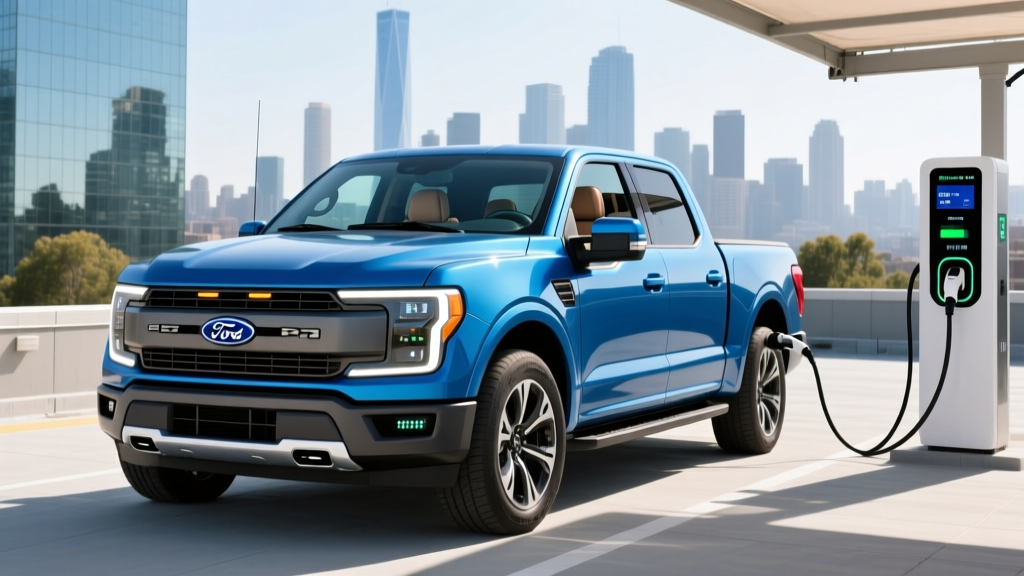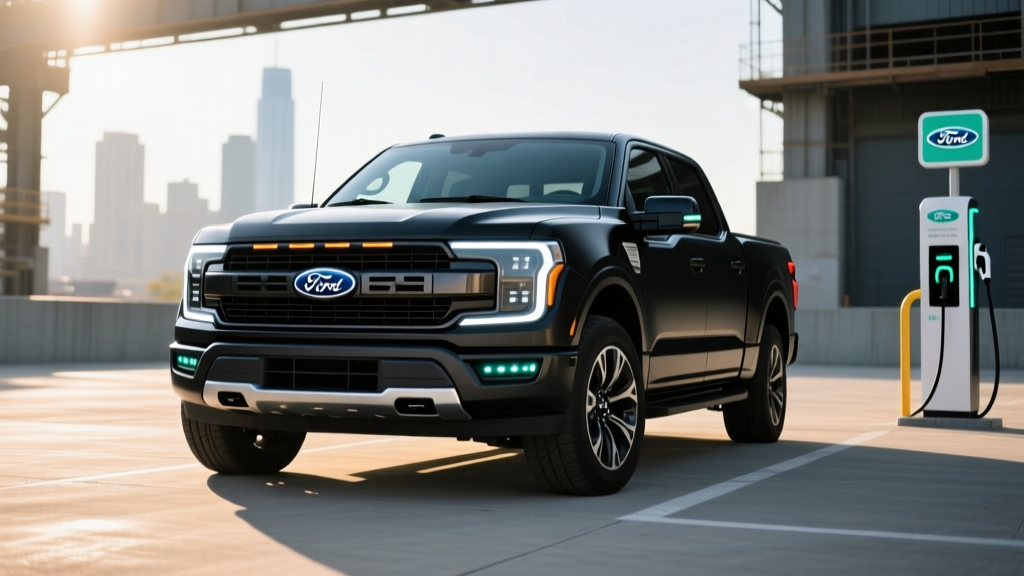
The Ford F-150 Lightning has been on sale for several model years now, and the question buyers still ask is whether an electric full-size pickup can truly deliver the performance and capability the F-150 nameplate promises. The short answer: the Lightning is genuinely quick in a straight line, surprisingly capable at a job site, and more practical as a daily driver than any gas F-150 — but its real-world range, charging logistics, and price demand a clear-eyed look before you sign.
This review covers the 2026 Ford F-150 Lightning lineup with exact EPA figures, real-world range reconciliation, charging-curve behavior, §30D tax-credit eligibility, and a direct comparison to the Rivian R1T and Chevrolet Silverado EV. If you've been searching for a fast and furious F-150 Lightning that can also haul a trailer and commute 40 miles round-trip, this is the data-driven breakdown you need.
Quick Verdict: Performance Meets Practicality
The F-150 Lightning's dual-motor AWD powertrain puts out up to 580 horsepower and 775 lb-ft of torque (Extended Range), launching this 6,500-pound truck to 60 mph in roughly 4.0 seconds. That is sports-car territory from a full-size pickup, and it never gets old. But the Lightning's real value proposition isn't just straight-line speed — it's the combination of a massive front trunk (frunk), Pro Power Onboard vehicle-to-load capability, BlueCruise hands-free highway driving, and zero tailpipe emissions on the daily commute. The trade-off is range that falls short of the EPA sticker on highway road trips, a price that climbs past $90,000 on loaded trims, and DC fast-charging speeds that lag behind the newest competition.
Range, Battery, and Real-World Efficiency
| Spec | Standard Range | Extended Range |
|---|---|---|
| Battery Chemistry | NMC (Nickel Manganese Cobalt) | NMC |
| Usable Capacity | ~98 kWh | ~131 kWh |
| EPA Range | ~240 miles | ~320 miles |
| MPGe (Combined) | ~76 MPGe | ~73 MPGe |
| Efficiency (kWh/100 mi) | ~44 kWh/100 mi | ~46 kWh/100 mi |
The EPA rates the Extended Range Lightning at approximately 320 miles, but expect 250–280 miles on sustained highway driving at 70–75 mph. In cold weather (below 30°F), range can drop an additional 20–30%, putting a winter highway figure closer to 200–230 miles for the Extended Range pack. The Standard Range model realistically delivers 180–210 miles on the highway. These numbers come from aggregated owner reports and independent testing — plan your road trips around the lower figure.
Efficiency in a full-size electric truck will never rival a sedan. At 44–46 kWh per 100 miles, the Lightning consumes roughly twice the energy of a Tesla Model Y per mile driven. That's physics — a 6,500-pound brick with the aerodynamics of a garden shed requires enormous energy to move. The heat pump (standard on higher trims) helps mitigate cold-weather losses, but it can't eliminate them.
For context on how the EPA arrives at its figures and what the testing methodology entails, see the official data at fueleconomy.gov.
Charging Speeds: DC Fast, Level 2, and Home Setup
| Charging Level | Max Rate | Speed / Time |
|---|---|---|
| Level 1 (120V household) | ~1.4 kW | ~2–3 miles per hour |
| Level 2 (240V home / public) | Up to 19.2 kW (80A) | ~25–30 miles per hour; full charge in ~10–14 hours |
| DC Fast Charge (CCS) | Peak 150 kW (Std Range) / 150 kW (Ext Range) | 15–80% in ~41 min (Ext Range); ~36 min (Std Range) |
The Lightning's DC fast-charging peak of 150 kW is its most significant competitive weakness in 2026. The Rivian R1T and Hyundai Ioniq 5 can accept 200+ kW, and the Silverado EV tops 350 kW on its largest pack. At 150 kW peak, the Lightning's charge curve tapers noticeably after 60% state of charge — you'll spend a disproportionate amount of time waiting for the final 20%.
For home charging, Ford offers the Ford Charge Station Pro, which delivers up to 19.2 kW on a hardwired 80-amp circuit. This is one of the fastest Level 2 solutions available for any EV and can fully replenish the Extended Range battery overnight (~10 hours). However, installing an 80-amp circuit typically requires a 200-amp (or larger) electrical panel, which can add $1,500–$3,500 to your installation cost if an upgrade is needed. Always get a quote from a licensed electrician before committing.
If you plan to rely on public charging networks, the Lightning uses the CCS1 connector. Ford has secured access to Tesla Superchargers via an included adapter (NACS), significantly expanding the available fast-charging network. Confirm adapter compatibility with your specific model year at the Ford EV homepage.
Performance: The Fast and Furious Part
| Spec | Standard Range (Dual-Motor AWD) | Extended Range (Dual-Motor AWD) |
|---|---|---|
| Horsepower | 452 hp | 580 hp |
| Torque | 775 lb-ft | 775 lb-ft |
| 0–60 mph | ~4.5 seconds | ~4.0 seconds |
| Drivetrain | Dual-motor AWD | Dual-motor AWD |
| Max Towing Capacity | ~7,700 lbs | ~10,000 lbs (with Max Trailer Tow Package) |
| Max Payload | ~2,235 lbs | ~1,800 lbs |
The 4.0-second 0–60 time in the Extended Range model makes the Lightning one of the quickest production pickups ever built. Instant torque delivery means there's no turbo lag, no gear-hunt, no drama — just a relentless, silent surge that pins you to the seat. It's the kind of acceleration that earns the "fast and furious" label legitimately, and it makes merging onto highways and overtaking effortless even when loaded.
Towing is where the Lightning asks you to manage expectations. The 10,000-pound max rating is competitive with half-ton gas trucks, but towing at capacity will slash your range by 40–50%. Expect roughly 130–160 miles of range when towing a heavy trailer on the Extended Range model. Ford's onboard scales and Intelligent Range estimation help you plan, but physics is unforgiving: hauling 10,000 pounds through the air at highway speed demands enormous energy.
Interior, Cargo, and Standout Technology
The Lightning retains the crew-cab layout of the gas F-150, offering generous interior space:
- Rear legroom: ~43.6 inches (class-leading)
- Front legroom: ~43.9 inches
- Bed length: 5.5 feet (standard on all Lightning trims)
- Mega Power Frunk: 14.1 cubic feet of lockable, weather-sealed front storage with 400 lbs of payload capacity — a genuine game-changer for secure cargo
- Bed cargo volume: ~52.8 cu ft
The frunk alone justifies the Lightning for many buyers. It replaces the engine bay with a powered, lockable compartment featuring four 120V outlets, USB ports, and a drain plug. It's the most practical front-trunk in any production vehicle.
Infotainment: The available 15.5-inch vertical touchscreen (SYNC 4A) is responsive and well-organized, with wireless Apple CarPlay and Android Auto. The digital gauge cluster is configurable and includes range-estimation and power-flow displays.
Driver Assistance: Ford's BlueCruise hands-free driving system is available on pre-qualified divided highways (over 130,000 miles of mapped roads). This is an SAE Level 2 system — you must remain attentive, and a driver-monitoring camera enforces this. It is not self-driving. BlueCruise works well on long highway stretches but disengages for construction zones, complex interchanges, and unmapped roads.
Pro Power Onboard: The available 9.6 kW vehicle-to-load system turns the Lightning into a mobile generator, powering tools at a job site, appliances during an outage, or a tailgate setup. This is a genuine differentiator that gas trucks cannot match without a separate generator.
BlueCruise is a Level 2 driver-assist system, not an autonomous driving feature. The driver must keep eyes on the road and hands available to take over at any time. It does not handle city streets, stoplights, or unmapped roads. For more on SAE automation levels, see SAE International's J3016 standard.
Pricing, Trims, and Federal Tax Credit Eligibility
| Trim | Battery | Base MSRP (est.) |
|---|---|---|
| Pro | Standard Range | ~$55,000 |
| XLT | Standard / Extended | ~$63,000–$78,000 |
| Lariat | Extended | ~$82,000 |
| Platinum | Extended | ~$96,000 |
As-tested pricing on a well-equipped Lariat or Platinum with the Extended Range battery, BlueCruise, and the Max Trailer Tow Package routinely exceeds $90,000–$100,000. The Pro trim offers the best value for fleet and work-truck buyers, though it's frequently allocated to commercial channels.
- The F-150 Lightning qualifies as a light-duty truck under the $80,000 MSRP cap for trucks/vans/SUVs (higher than the $55,000 sedan cap).
- Buyer income caps apply: ≤$150,000 single / ≤$300,000 joint filers (modified AGI).
- Battery component and critical-mineral sourcing requirements must be met for the full $7,500 credit — partial credits ($3,750) are possible if only one requirement is satisfied.
- The credit can be transferred to the dealer at point of sale as an immediate price reduction (effective 2024 onward).
- Always verify current eligibility at IRS.gov §30D page — sourcing rules tighten annually.
For buyers who qualify for the full $7,500 credit and negotiate a point-of-sale transfer, a Standard Range XLT could land in the mid-$50,000s — competitive with a well-equipped gas F-150 Lariat. The Platinum, however, is a luxury-truck price with a luxury-truck depreciation curve.
Pros, Cons, and Who Should Buy
Pros
- 4.0-sec 0–60 in Extended Range — genuinely thrilling
- Massive 14.1 cu ft Mega Power Frunk
- 9.6 kW Pro Power Onboard for job-site and backup power
- Class-leading rear-seat legroom
- BlueCruise hands-free highway driving
- Available 10,000-lb towing capacity
- 19.2 kW home Level 2 charging capability
- Tesla Supercharger access via NACS adapter
Cons
- 150 kW peak DC charging lags competitors (Silverado EV: 350 kW)
- Real-world highway range 20–25% below EPA sticker
- Cold-weather range loss significant (20–30%)
- Towing at max capacity cuts range by ~50%
- Platinum trim exceeds $95,000 — luxury pricing
- 5.5-foot bed only — no long-bed option
- Insurance premiums higher than gas F-150 equivalents
- §30D credit eligibility depends on sourcing rules and income
- Home-charging commuters: If you can install a Level 2 charger and your daily round trip is under 100 miles, the Lightning is the most refined daily-driver truck available. You'll fuel at home for roughly $0.12–0.15/kWh — about $5–7 per "fill-up."
- Job-site professionals: Pro Power Onboard eliminates the need for a separate generator. The frunk secures tools out of sight.
- Families who tow occasionally: Weekend boat or camper towing within 150 miles of home works well. Plan charging stops for longer tows.
- NOT ideal for: Long-distance towing, rural buyers without home charging access, or anyone whose daily driving exceeds 250 miles without a charging stop.
How It Compares: Lightning vs. Rivian R1T vs. Silverado EV
| Spec | Ford F-150 Lightning (Ext Range) | Rivian R1T (Dual-Motor Max) | Chevy Silverado EV (4WT) |
|---|---|---|---|
| EPA Range | ~320 mi | ~352 mi | ~380 mi (est.) |
| 0–60 mph | ~4.0 sec | ~3.5 sec | ~4.5 sec |
| Peak DC Charge | 150 kW | 200+ kW | 350 kW |
| Max Towing | 10,000 lbs | 11,000 lbs | 10,000 lbs |
| Bed Length | 5.5 ft | 4.5 ft (+ Gear Tunnel) | 5.5 ft (5'11" w/ midgate) |
| Starting MSRP | ~$55,000 | ~$75,000 | ~$60,000 (est. WT) |
| Frunk | 14.1 cu ft | 11 cu ft | 10.7 cu ft (eTrunk) |
The Lightning wins on value (lowest entry price), frunk volume, and Pro Power Onboard utility. The Rivian R1T is faster, offers more range, charges quicker, and has a more premium interior — but at a $20,000+ premium. The Silverado EV promises superior range and charging speed but has faced production ramp challenges and limited trim availability. For most buyers, the Lightning remains the default electric truck recommendation unless charging speed or maximum range are non-negotiable.
Warranty and Long-Term Ownership
Ford backs the Lightning's battery and electric powertrain with an 8-year / 100,000-mile warranty, with a capacity-retention threshold of 70% of original capacity. If the battery degrades below 70% within the warranty period, Ford will repair or replace it. The bumper-to-bumper warranty is 3 years / 36,000 miles.
NMC battery chemistry in the Lightning has shown modest degradation in early owner data — typically 5–8% loss over the first 50,000 miles, consistent with industry norms. Ford's thermal management system (liquid cooling and heating) helps preserve battery health, but frequent DC fast-charging to 100% and regular deep discharges will accelerate wear. Best practice: charge to 80% daily, use DC fast charging for road trips only, and precondition the battery before fast charging in cold weather.
For long-term battery health monitoring and best practices, refer to resources at NHTSA.gov and your owner's manual.
Frequently Asked Questions
What is the real-world range of the F-150 Lightning?
The EPA rates the Extended Range at ~320 miles, but real-world highway driving at 70+ mph typically yields 250–280 miles. In cold weather (below 30°F), expect 200–230 miles. The Standard Range delivers roughly 180–210 miles on the highway. Always plan trips around the lower figure.
How fast does the Lightning charge at home and on the road?
At home on a Level 2 Ford Charge Station Pro (19.2 kW, 80A), the Extended Range battery charges from empty to full in about 10 hours, adding roughly 25–30 miles of range per hour. On a DC fast charger, the Lightning peaks at 150 kW and charges from 15–80% in approximately 41 minutes (Extended Range). This is slower than the Rivian R1T and significantly slower than the Silverado EV.
How much does the F-150 Lightning cost after tax credits?
With the full $7,500 federal tax credit (if you meet income, MSRP, and battery-sourcing requirements under §30D), a Standard Range Pro drops from ~$55,000 to ~$47,500, and an XLT Standard Range falls to roughly $55,500. Extended Range and higher trims that stay under the $80,000 truck MSRP cap also qualify. The Platinum trim at ~$96,000 exceeds the cap and does not qualify. Verify current rules at IRS.gov.
Is the F-150 Lightning worth buying vs. the Rivian R1T or Silverado EV?
The Lightning is worth buying if you prioritize value, frunk space, Pro Power Onboard, and Ford's dealer/service network. Choose the Rivian R1T if you need more range, faster charging, and a more premium experience and are willing to pay $20,000+ more. The Silverado EV is worth considering if maximum range and 350 kW charging are your top priorities, though availability remains limited.
Does the F-150 Lightning qualify for the federal EV tax credit?
Yes — trims under the $80,000 MSRP cap for trucks qualify for up to $7,500 under §30D, subject to buyer income limits ($150K single / $300K joint), battery component sourcing requirements, and critical-mineral thresholds. The credit can be applied as a point-of-sale price reduction. Eligibility rules tighten annually, so confirm with your dealer and the IRS before purchasing.
Can I tow a trailer with the F-150 Lightning?
Yes — up to 10,000 pounds with the Extended Range and Max Trailer Tow Package. However, towing at capacity reduces range by approximately 40–50%, giving you roughly 130–160 miles per charge. For frequent long-distance towing, a diesel or gas truck remains more practical.