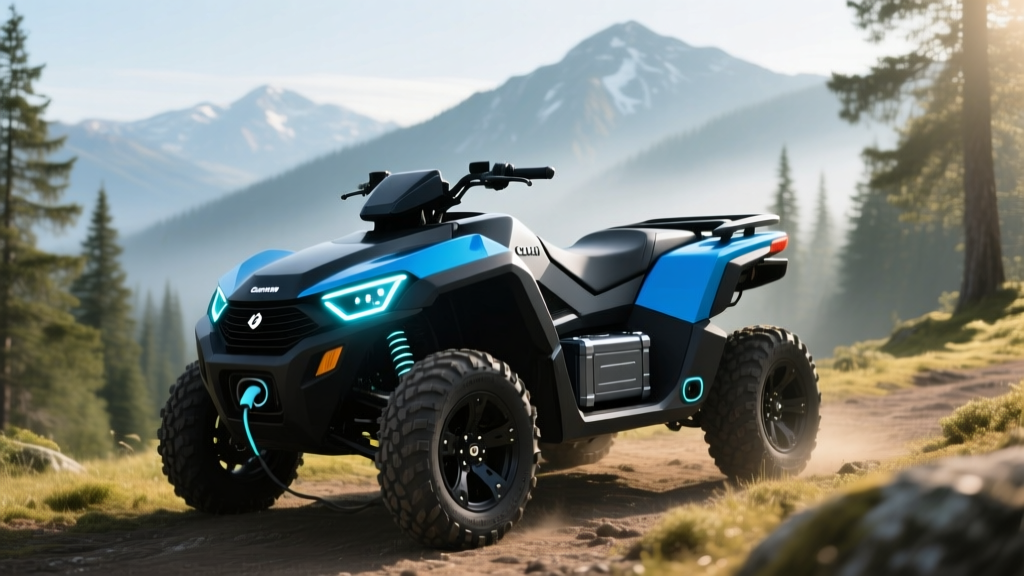
Quick Answer: What Is the 2026 Can-Am Outlander Electric?
The 2026 Can-Am Outlander Electric is BRP's announced battery-electric utility ATV, part of the company's broader commitment to offer electric models in every product line by 2026. As of early 2026, BRP has confirmed the Outlander Electric platform is in development but has not yet released final EPA-equivalent range figures, battery capacity, pricing, or a firm on-sale date. What we do know: it will use a proprietary electric powertrain (not shared with the Can-Am Origin/Rally electric motorcycles), target the same utility and recreational buyer as the gas Outlander 700, and charge via standard Level 2 (240V) equipment. Until BRP publishes official specs, everything below is based on confirmed announcements, BRP investor presentations, and informed estimates drawn from comparable electric off-road platforms.
Why BRP Is Going Electric on the Outlander
BRP's CEO José Boisjot has repeatedly stated that the company will introduce electric vehicles across all its product lines — side-by-sides, snowmobiles, personal watercraft, and ATVs — by the end of 2026. The Outlander, Can-Am's best-selling ATV platform, is a logical candidate. Utility ATV buyers are increasingly evaluating electric alternatives for specific use cases: farm and ranch work where low-speed torque matters, trail riding where noise restrictions apply, and property maintenance where zero tailpipe emissions are an advantage in enclosed or semi-enclosed spaces.
The electric Outlander also positions BRP against emerging competitors like Polaris Ranger XP Kinetic (an electric side-by-side already in production) and niche electric utility vehicles from companies like Electric Off-Road and Volcon. BRP's advantage is its existing dealer network, parts infrastructure, and brand loyalty among ATV buyers.
Estimated Specs: Battery, Range, and Power
BRP has not published a spec sheet for the Outlander Electric. However, based on the company's investor-day disclosures, patent filings, and the power requirements of comparable utility EVs, we can build a reasonable estimate profile:
| Specification | Estimated / Confirmed | Notes |
|---|---|---|
| Battery Chemistry | Likely NMC (nickel manganese cobalt) | Energy density critical for packaging in ATV frame |
| Battery Capacity (estimated) | 15–25 kWh usable | Based on comparable electric UTV/ATV platforms |
| Estimated Range | 45–80 miles (mixed terrain) | ATV range varies enormously by load, terrain, and speed — EPA-equivalent figures pending |
| Peak Motor Output | 60–90 HP equivalent | Gas Outlander 700 produces ~50 HP; electric torque delivery is fundamentally different |
| Level 2 Charging (240V) | ~3–6 kW expected | Full charge in roughly 3–6 hours depending on battery size |
| Level 1 Charging (120V) | ~1.4 kW | Overnight trickle charge from standard outlet — practical for farm/ranch use |
| Towing Capacity | 1,500+ lbs (target) | Gas Outlander 700 tows 1,830 lbs; electric motor torque favors towing |
| Top Speed | 60–65 mph (estimated) | Similar to gas Outlander; electronically governed |
Critical context on ATV range: Unlike highway EVs where range is measured at steady speed, ATV range depends heavily on terrain (mud, hills, sand), cargo load, and throttle style. A 20 kWh battery that delivers 70 miles on a flat gravel trail might deliver only 30–35 miles in hilly, muddy, or heavily loaded conditions. BRP will need to publish range data across multiple use scenarios for buyers to make informed comparisons.
EV ATV vs. Gas Outlander: Cost and Capability Comparison
The gas-powered Can-Am Outlander 700 (XT-P trim) remains the benchmark. Here's how an electric Outlander would compare across the metrics that matter to utility ATV buyers:
| Factor | Gas Outlander 700 (XT-P) | Outlander Electric (Estimated) |
|---|---|---|
| MSRP | ~$13,500–$15,200 | $16,000–$20,000 (est. based on EV premium in comparable segments) |
| Fuel / Energy Cost per Hour | ~$8–$12/hr (gasoline at $3.50/gal, 15–20 mpg off-road) | ~$1.50–$3.00/hr (at $0.14/kWh average US electricity) |
| Maintenance (Annual) | $300–$600 (oil, filters, spark plugs, belt) | $50–$150 (no engine oil, no spark plugs, brake wear reduced by regen) |
| Noise Level | 85–95 dB at full throttle | ~55–65 dB (motor whine only) — major advantage for noise-sensitive areas |
| Low-Speed Torque | Good (CVT-dependent) | Instant peak torque from 0 RPM — superior for crawling and towing from stop |
| Range (practical, mixed use) | 100–130 miles (5.3-gal tank) | 45–80 miles (terrain-dependent) |
| Refuel / Recharge Time | ~3 minutes (gas can or pump) | 3–6 hours (Level 2); 10–15+ hours (Level 1) |
| Cold-Weather Performance | Reduced (cold starts, thicker fluids) | 15–30% range loss in sub-freezing temps; no cold-start issues |
| Trail/Property Access | Restricted on some noise-limited trails | Access to noise-restricted and indoor/enclosed environments |
The gas Outlander wins on range and refueling speed — non-negotiable if you ride remote trails all day or need to refuel in the field. The electric Outlander wins on operating cost, noise, torque delivery, and maintenance. This is not a one-size-fits-all decision.
Real Ownership Costs: 5-Year Breakdown
Assuming 200 hours/year of use, here's a projected 5-year cost comparison. These estimates use current national averages and will vary by region and usage pattern.
| Cost Category | Gas Outlander 700 (5 yr) | Outlander Electric (5 yr, Est.) |
|---|---|---|
| Purchase Price | $14,500 | $18,000 |
| Fuel / Electricity | $6,000 (gasoline) | $1,200 (electricity) |
| Routine Maintenance | $2,500 | $500 |
| Insurance | $2,400 | $2,800 (higher replacement cost) |
| Estimated Resale Value (yr 5) | -$6,500 | -$7,500 (EV resale still uncertain in ATV segment) |
| Net 5-Year Cost | ~$18,900 | ~$15,000 |
The electric Outlander's lower operating costs partially offset its higher purchase price, but the breakeven point depends on how many hours you ride annually. Below ~100 hours/year, the gas model likely remains cheaper on a total-cost basis. Above ~250 hours/year, the electric model's fuel and maintenance savings become substantial.
Federal tax credit note: The IRS §30D clean vehicle credit applies to qualified plug-in electric vehicles, but ATVs and off-road vehicles have historically not qualified — the credit is structured for on-road, street-legal vehicles with four wheels and a GVWR under 14,000 lbs. Unless the Outlander Electric is homologated for street use (unlikely for a utility ATV), buyers should not expect the $7,500 federal credit. Always confirm eligibility with a tax professional and check current IRS guidance.
Charging at Home: What Utility EV Buyers Need to Know
One advantage electric ATVs have over electric cars: most utility ATV owners have property — a farm, ranch, or large lot — where charging infrastructure is straightforward.
Common Misconceptions About EV ATV Charging
| Myth | Fact |
|---|---|
| "I need a DC fast charger for my ATV" | Most ATV batteries are small enough (15–25 kWh) that Level 2 (240V, ~6 kW) charges them fully in 3–5 hours. DC fast charging adds cost and weight with diminishing returns for off-road use patterns. |
| "I can't charge in my barn or garage" | A standard 120V outlet provides ~1.4 kW, enough for an overnight top-up of 10–15 miles of range. A 240V outlet (like a dryer outlet) is ideal but not mandatory for light users. |
| "Cold weather makes electric ATVs useless" | Cold reduces range by 15–30%, but electric motors don't suffer cold-start issues. For short property-maintenance tasks in winter, an electric ATV may actually be more convenient than a gas model that needs to warm up. |
| "The battery will need replacing in 3 years" | Modern NMC and LFP packs are rated for 1,000–2,000+ charge cycles before significant degradation. At 200 hours/year of use, that's 10+ years of service before capacity drops meaningfully. BRP is expected to offer a battery warranty comparable to industry norms (3–5 years). |
Who Should Buy Electric — and Who Should Stick with Gas
The electric Outlander will not replace the gas model for every buyer. Here's a practical decision framework based on real usage patterns:
Choose the Electric Outlander If:
- You ride primarily on your own property — farm work, fence checking, trail maintenance, hunting plots — where range stays under 40–50 miles per outing and you can charge at home between sessions.
- Noise is a concern — you ride near neighbors, in noise-restricted trail systems, or need to operate early morning/late evening without disturbance.
- You value low maintenance — no oil changes, no carburetor issues, no belt replacements, no winterization fuel stabilizer.
- You tow or haul at low speeds — electric motors deliver peak torque instantly, making them superior for slow-speed towing, plowing, or dragging.
- You have access to 240V charging — a barn, garage, or workshop with a dryer-style outlet or dedicated EV circuit.
Stick with the Gas Outlander If:
- You ride remote, all-day trail systems — 80+ mile rides with no charging access make the gas model's 100+ mile range and 3-minute refueling essential.
- You ride competitively or aggressively — sustained high-speed, high-load riding drains EV batteries rapidly and generates heat that can throttle performance.
- You trailer your ATV to ride locations — if your riding always starts far from home base, field refueling is a practical necessity.
- Budget is the primary driver — the gas Outlander's lower MSRP matters if you ride fewer than ~100 hours per year and won't recoup the EV premium through fuel savings.
What First-Time EV ATV Buyers Should Know
If the Outlander Electric is your first electric vehicle of any kind, a few ownership realities differ from the gas ATV world:
- Range is use-dependent, not a fixed number. Unlike a gas tank gauge, your remaining range changes with terrain, load, temperature, and throttle aggression. Learn to read your state-of-charge (SoC) percentage and plan conservatively — especially in cold or hilly conditions.
- Preconditioning matters less for ATVs than cars, but battery temperature still affects performance. A cold-soaked battery (below 32°F) will deliver reduced power and accept charge more slowly. Store your ATV in a garage or barn when possible in winter.
- Regenerative braking changes your riding feel. Lifting off the throttle will slow the ATV more aggressively than a gas model's engine braking. Most electric ATVs offer adjustable regen levels — start on low and increase as you build familiarity.
- Battery degradation is real but slow. Expect 2–3% capacity loss per year under normal use. After 5 years, your 20 kWh pack might hold 17–18 kWh — still plenty for most utility tasks, but plan for it.
- Dealer service networks are evolving. BRP's Can-Am dealers are being trained on high-voltage systems, but not all locations may have certified EV technicians immediately at launch. Confirm your local dealer's readiness before purchasing.
Release Timeline and What to Watch For
BRP has committed to electric product launches across its lineup by end of 2026. The Can-Am Origin and Rally electric motorcycles (announced 2024) are the first to market, and the Outlander Electric is expected to follow. Key milestones to watch:
- Official spec sheet release — battery kWh, motor HP/kW, range data, and charge times. Without these, all comparisons remain speculative.
- Pricing announcement — the EV premium over the gas Outlander 700 will be the single biggest factor in adoption. A price above $20,000 will limit the buyer pool significantly; under $17,000 would be competitive.
- Dealer allocation and availability — initial production runs for new EV platforms are often limited. Expect potential wait lists in the first model year.
- Accessory and implement compatibility — winches, plows, sprayers, and cargo racks must be validated for the electric platform's power delivery and weight distribution.
Until BRP publishes confirmed specifications and pricing, treat all numbers in this guide as informed estimates based on comparable platforms and BRP's public disclosures. We will update this article as official data becomes available.
Will the 2026 Can-Am Outlander Electric qualify for the federal EV tax credit?
Almost certainly not. The IRS §30D credit requires a vehicle to be street-legal, have four wheels, and meet specific on-road use criteria. Utility ATVs are classified as off-road vehicles and do not qualify. Some states offer separate incentives for off-road electric equipment — check your state's energy or agriculture department for details.
How long will the battery last before needing replacement?
Based on current NMC battery cycle-life data, expect 1,000–2,000 full charge cycles before capacity drops below 80% of original. At typical ATV usage rates (100–300 hours/year), that translates to 8–15 years of service. BRP will likely offer a 3–5 year battery warranty. Full pack replacement cost, when eventually needed, is estimated at $3,000–$5,000 based on current battery pricing for this capacity range.
Can I charge the Outlander Electric from a standard household outlet?
Yes. A standard 120V / 15A outlet delivers approximately 1.4 kW, which will add roughly 5–8 miles of range per hour of charging. For a 20 kWh battery, a full Level 1 charge would take approximately 14–16 hours. This is practical for overnight charging between daily property-maintenance tasks but insufficient for same-day turnaround after a heavy riding session. A 240V Level 2 setup (similar to a dryer or welder outlet) is strongly recommended.
Is the electric Outlander suitable for hunting?
Yes — and this may be its strongest use case. The near-silent operation (55–65 dB vs. 85–95 dB for gas) is a significant advantage for approaching hunting areas without disturbing game. Range limitations are manageable if your hunt location is within 20–30 miles of your base or vehicle, and the instant torque is useful for hauling game out over rough terrain.
How does towing performance compare to the gas Outlander?
Electric motors produce maximum torque from zero RPM, meaning the Outlander Electric should match or exceed the gas Outlander 700's towing performance at low speeds. The gas model's advantage is sustained high-speed towing over long distances, where battery energy consumption increases significantly. For typical property-use towing (logs, feed, equipment), the electric platform is well-suited.