Quick Verdict: A Luxury Cruiser Built for Comfort, Not Track Days
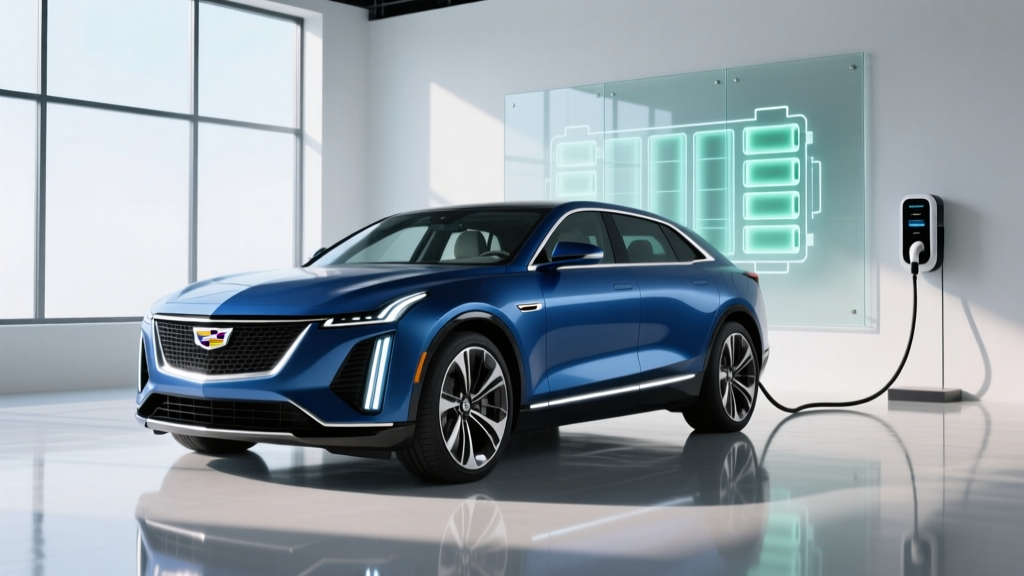
The 2026 Cadillac Lyriq slots into the midsize luxury EV SUV segment as a refined, technology-forward alternative to the Tesla Model X, BMW iX, and Audi Q8 e-tron. Built on GM's Ultium platform with a 102 kWh usable NMC battery, it delivers an EPA-estimated 314 miles of range in rear-wheel-drive form — enough for most commutes and weekend road trips without frequent charging stops. Where the Lyriq earns its keep is in ride quality, cabin materials, and a 33-inch curved LED display that outclasses nearly everything in its price bracket. However, its DC fast-charging speed peaks at 190 kW (not class-leading), and all-wheel-drive trims sacrifice 24 miles of EPA range for the extra traction. For shoppers evaluating a 2026 Cadillac Lyriq lease, the combination of competitive pricing, available federal incentives through lease structures, and a mature Super Cruise ADAS system make it a strong contender — provided you understand its charging and efficiency trade-offs.
Range and Efficiency: EPA Sticker vs. Real-World Driving
The Lyriq's range story depends heavily on which drivetrain you choose and how you drive it.
| Trim / Drivetrain | Battery (usable kWh) | EPA Range (mi) | MPGe (city/hwy/combined) | kWh/100 mi |
|---|---|---|---|---|
| Tech RWD | 102 kWh (NMC) | 314 | 97 / 82 / 90 | 37 |
| Luxury RWD | 102 kWh (NMC) | 314 | 97 / 82 / 90 | 37 |
| Sport RWD | 102 kWh (NMC) | 307 | 95 / 80 / 88 | 38 |
| Luxury AWD | 102 kWh (NMC) | 290 | 89 / 76 / 83 | 40 |
| Sport AWD | 102 kWh (NMC) | 290 | 89 / 76 / 83 | 40 |
The EPA's 314-mile figure for the RWD Lyriq assumes a mix of city and highway driving at moderate temperatures. In real-world testing, expect approximately 260–280 miles on sustained highway trips at 70–75 mph, where aerodynamic drag reduces efficiency to roughly 42–44 kWh/100 mi. In cold weather (below 30°F), range can drop 15–25% depending on cabin heating use and whether you precondition the battery — bringing usable range down to roughly 220–250 miles on the RWD trims. City driving with regenerative braking engaged typically matches or slightly exceeds the EPA sticker. The Lyriq's heat pump (standard on all trims) helps mitigate cold-weather losses compared to EVs relying solely on resistive heating.
The Lyriq's 37 kWh/100 mi combined efficiency (RWD) trails the BMW iX xDrive50 (roughly 35 kWh/100 mi) and the Tesla Model X Long Range (roughly 34 kWh/100 mi), but it outpaces the heavier Audi Q8 e-tron at 43 kWh/100 mi. For most owners charging at home, the difference translates to about $30–50 annually in electricity costs — a marginal gap.
Charging Speed: DC Fast, Level 2, and the Charge-Curve Reality
Charging is where the Lyriq is competent but not class-leading. Understanding the difference between peak power (kW) and sustained charging speed matters here — the Lyriq hits 190 kW briefly before tapering.
| Charging Level | Power / Rate | Time or Miles Added | Connector |
|---|---|---|---|
| Level 1 (120V household) | ~1.4 kW | ~3–4 mi/hr | J1772 / NACS (with adapter) |
| Level 2 (240V home) | 11.5 kW (onboard charger) | ~27–30 mi/hr; full charge in ~10.5 hr | J1772 or NACS |
| DC Fast Charge (peak) | 190 kW (peak) | 10–80% in ~34 min | CCS1 (2025 and earlier) / NACS (2026+) |
For 2026, the Lyriq adopts the NACS (Tesla-style) charge port natively, giving it direct access to Tesla's Supercharger network — a significant practical advantage over the CCS1 port on 2023–2025 models. At a V3 or V4 Supercharger, or at Electrify America and EVgo stations supporting 200+ kW, the Lyriq will peak near 190 kW. However, that peak is sustained only between roughly 10–35% state of charge (SoC). Between 35–60% SoC, the rate drops to approximately 130–150 kW, and above 80% it falls below 50 kW as the battery management system protects cell longevity. This charge-curve taper means a 10–80% session takes around 34 minutes — roughly 10–12 minutes slower than a Hyundai Ioniq 5 or Kia EV6 on an 800V architecture.
For home Level 2 charging, the 11.5 kW onboard charger is a strong point. With a 48-amp hardwired wall connector on a 60-amp circuit, you'll recover roughly 27–30 miles of range per hour — enough to fully replenish a depleted battery overnight. Cadillac partners with Qmerit for home installation estimates; expect $800–2,200 for a standard Level 2 install depending on panel capacity and conduit run length (source: Cadillac EV Charging).
Performance and Drivetrain: Smooth Power, Not Sports-Car Thrills
The Lyriq prioritizes effortless, quiet acceleration over Nürburgring lap times. Here's what the numbers look like across the lineup:
| Drivetrain | Horsepower | Torque (lb-ft) | 0–60 mph | Top Speed |
|---|---|---|---|---|
| RWD (single motor, rear) | 340 hp | 325 | 6.0 sec | 118 mph |
| AWD (dual motor) | 500 hp | 450 | 4.6 sec | 130 mph |
The RWD model's 340 hp is more than adequate for highway merging and passing, with smooth, linear torque delivery that never feels abrupt. The AWD dual-motor variant's 4.6-second 0–60 time puts it in quick territory, but competitors like the BMW iX M60 (3.6 seconds) and Tesla Model X Plaid (2.5 seconds) are firmly in a different performance bracket. The Lyriq's ride quality, however, is where it punches above its weight — the five-link rear suspension and available air suspension (standard on Sport trims) deliver a plush, isolated feel that absorbs highway imperfections better than the firmer-riding iX.
Towing capacity is rated at 1,500 pounds with the available trailering package — enough for a small utility trailer or a pair of jet skis, but well short of the Ford F-150 Lightning or Rivian R1S. This is a luxury cruiser, not a hauler.
Interior, Tech, and Cargo: Where the Lyriq Justifies Its Badge
The cabin is the Lyriq's strongest argument against German rivals. The centerpiece is a 33-inch diagonal curved LED display that merges the instrument cluster and infotainment into a single, driver-angled panel running Google Built-In (Google Maps, Google Assistant, Play Store). Wireless Apple CarPlay and Android Auto are standard. The available AKG Studio 19-speaker audio system delivers impressive clarity, and ambient lighting with 26 color options adds atmosphere.
Super Cruise — GM's hands-off-wheel Level 2 driver-assistance system — is available on Luxury and Sport trims. It operates on over 750,000 miles of LiDAR-mapped highways in the US and Canada, using a driver-attention camera to confirm you're watching the road. It's one of the most refined highway assist systems available, with smooth lane changes and natural speed management. However, it is strictly SAE Level 2: you must remain attentive and cannot disengage from the driving task. It does not handle city streets, construction zones, or unmapped roads.
Super Cruise is an SAE Level 2 driver-assist system. Despite the hands-off-wheel capability on mapped highways, the driver must remain engaged and ready to take over at any moment. This is not autonomous driving. Only Level 4 services (Waymo, Zoox) operate without a human driver in defined areas.
Cargo and passenger space:
- Cargo volume behind rear seats: 28.8 cu ft
- Cargo volume with rear seats folded: 60.9 cu ft
- Front legroom: 41.4 in
- Rear legroom: 39.6 in
- No front trunk (frunk) — the Ultium platform's under-hood space houses power electronics
The lack of a frunk is a notable omission in this segment — the BMW iX and Tesla Model X both offer one. The 28.8 cu ft behind the second row is adequate for groceries and luggage for a family of four, but falls short of the Model X's 37.1 cu ft. Rear-seat passengers enjoy generous legroom, and the flat floor (no transmission tunnel) makes the middle seat usable for adults on shorter trips.
Pricing, Trims, and Federal Tax Credit Eligibility
The 2026 Lyriq lineup starts at a compelling price point for the luxury EV segment. Here's the trim-by-trim breakdown:
| Trim | Drivetrain | Base MSRP | Key Standard Features |
|---|---|---|---|
| Tech | RWD | $58,590 | 33" display, Google Built-In, 19" wheels, Regen on Demand |
| Luxury | RWD | $62,590 | Super Cruise, 20" wheels, leather, AKG audio, heated/ventilated front seats |
| Luxury | AWD | $65,090 | Same as Luxury RWD + dual-motor AWD |
| Sport | RWD | $64,090 | 22" wheels, dark accent package, air suspension |
| Sport | AWD | $66,590 | Same as Sport RWD + dual-motor AWD |
All trims fall under the IRS §30D $80,000 MSRP cap for SUVs, meaning the Lyriq is potentially eligible for the full $7,500 federal tax credit — but eligibility is not automatic. The credit is subject to several conditions that change periodically:
- MSRP cap: Vehicle base price must not exceed $80,000 (SUVs/vans/pickups) — all Lyriq trims qualify.
- Buyer income cap: Adjusted gross income must not exceed $150,000 (single), $225,000 (head of household), or $300,000 (joint filing).
- Battery sourcing: A percentage of critical minerals and battery components must be sourced from the US or FTA-partner countries. These thresholds increase annually — verify current-year requirements at IRS.gov §30D.
- Point-of-sale transfer: Buyers can transfer the credit to the dealer at purchase, reducing the upfront price by up to $7,500 (effective since January 2024).
- Lease loophole: Vehicles leased (not purchased) may qualify for the commercial clean vehicle credit (§45W) claimed by the lessor, which is often passed through as a lower lease payment — this path does not have the same buyer income or battery-sourcing restrictions. Confirm with your dealer and tax professional.
For buyers specifically evaluating a 2026 Cadillac Lyriq lease, the lease structure can be financially advantageous. Many Cadillac dealerships advertise lease offers that factor in the $7,500 credit as a capitalized-cost reduction, lowering monthly payments. A typical 36-month lease on a Luxury RWD at $62,590 MSRP, with the credit applied and $4,500 due at signing, may land in the $550–$650/month range depending on money factor and residual value. Always request the full lease disclosure (money factor, residual, acquisition fee, disposition fee) before signing.
Warranty and Long-Term Ownership Costs
GM backs the Lyriq with competitive warranty coverage:
- Battery and propulsion warranty: 8 years / 100,000 miles (whichever comes first), covering defects and capacity loss below approximately 60–70% of original capacity (confirm specific threshold in your warranty booklet).
- Bumper-to-bumper: 4 years / 50,000 miles
- Powertrain (non-battery): 6 years / 70,000 miles
- Corrosion: 6 years / unlimited miles
- Roadside assistance: 6 years / 70,000 miles
The Ultium NMC battery pack has demonstrated modest degradation in early Lyriq models — owner reports and EPA data suggest roughly 3–5% capacity loss over the first 50,000 miles, consistent with industry norms for liquid-cooled NMC packs. Replacement cost for the full battery pack, if needed out of warranty, is estimated at $15,000–$20,000 based on current Ultium module pricing, though this is expected to decline as the platform matures.
Insurance costs for the Lyriq average approximately $2,200–$2,800 annually for a 40-year-old driver with a clean record, varying by state and coverage level. This is competitive with the BMW iX but roughly 15–20% higher than a comparable gas-powered Cadillac XT5, reflecting higher repair costs for EV-specific components.
Pros and Cons: The Honest Scorecard
✓ Pros
- 314-mile EPA range (RWD) — competitive for the segment
- Native NACS port on 2026 models — full Supercharger access
- 33-inch curved display and Google Built-In infotainment
- Super Cruise hands-off Level 2 on 750,000+ mapped miles
- Plush ride quality, especially with available air suspension
- All trims under $80K MSRP cap — tax credit eligible
- 11.5 kW Level 2 onboard charger — fast home replenishment
- Strong cabin materials and noise isolation
✗ Cons
- 190 kW DC peak — slower than 800V rivals (Ioniq 5, EV6, Taycan)
- No front trunk (frunk) — lost cargo utility
- 1,500-lb towing capacity — limited for an SUV
- AWD trims drop to 290 miles EPA — a 24-mile penalty
- Rear cargo space (28.8 cu ft) trails Model X and iX
- Regen on Demand paddle is not true one-pedal driving in all modes
- Super Cruise requires mapped highways — no city-street assist
- Insurance premiums 15–20% higher than gas XT5 equivalent
Who the 2026 Lyriq Suits Best (and Who Should Look Elsewhere)
Choose the Lyriq if:
- You want a luxury EV SUV with a compliant ride and premium cabin, not a sport-oriented handler.
- Your daily commute is under 80 miles round-trip and you have home Level 2 charging.
- You value Super Cruise for frequent highway travel on mapped interstates.
- You prefer the Tesla Supercharger network via native NACS but want a non-Tesla badge.
- You're considering a lease to take advantage of the $7,500 credit without battery-sourcing restrictions.
Look elsewhere if:
- You need fast DC charging for frequent 400+ mile road trips — the Ioniq 5 or EV6 recharge significantly faster.
- You regularly tow — consider the Rivian R1S or F-150 Lightning.
- Maximum cargo volume is a priority — the Tesla Model X offers 37+ cu ft behind the second row.
- You want spirited handling — the BMW iX or Porsche Macan EV deliver sharper dynamics.
Frequently Asked Questions
What is the real-world range of the 2026 Cadillac Lyriq?
The EPA rates the RWD Lyriq at 314 miles and the AWD at 290 miles. In real-world highway driving at 70–75 mph, expect roughly 260–280 miles (RWD) and 240–260 miles (AWD). In cold weather below 30°F, those figures can drop another 15–25%, landing around 220–250 miles for the RWD. Preconditioning the battery while plugged in helps preserve range in winter conditions.
How fast does the Lyriq charge at home and on the road?
At home on a 240V Level 2 charger, the Lyriq's 11.5 kW onboard charger adds roughly 27–30 miles per hour, fully recharging in about 10.5 hours. On a DC fast charger, it peaks at 190 kW and charges from 10–80% in approximately 34 minutes. The 2026 model's native NACS port grants direct access to Tesla Superchargers without an adapter.
Does the 2026 Cadillac Lyriq qualify for the $7,500 federal tax credit?
All Lyriq trims fall under the $80,000 MSRP cap for SUVs, making them potentially eligible. However, buyer income limits ($150K single / $300K joint), battery critical-mineral sourcing thresholds, and point-of-sale transfer rules all apply. Leasing may bypass some restrictions via the §45W commercial credit path. Always verify current rules at IRS.gov and consult a tax professional.
Is the Lyriq worth leasing vs. buying?
Leasing can be advantageous if you want to capture the $7,500 incentive without worrying about battery-sourcing requirements or income caps (the lessor claims the §45W credit and typically passes savings through). It also shields you from long-term battery depreciation risk. Buying makes more sense if you plan to keep the vehicle 6+ years, drive under 12,000 miles annually, and qualify for the §30D credit directly. Compare total out-of-pocket costs for both paths with your dealer.
How does the Lyriq compare to the BMW iX and Tesla Model X?
The Lyriq undercuts both on price (starting at $58,590 vs. ~$75,000 for the iX and ~$80,000 for the Model X). It offers comparable EPA range, superior ride comfort, and native Supercharger access (2026+). The BMW iX charges faster and handles better; the Tesla Model X offers more cargo room, a frunk, and available third-row seating. If value and comfort are your priorities, the Lyriq wins. If performance or cargo utility matter more, look to the Germans or Tesla.
Does Super Cruise work in all conditions?
No. Super Cruise is a Level 2 system that operates only on LiDAR-mapped divided highways (750,000+ miles in the US/Canada as of 2026). It does not function on city streets, rural two-lane roads, construction zones, or in severe weather that obscures sensors. You must remain attentive — the driver-monitoring camera will issue warnings and eventually disengage the system if you look away from the road.
Sources: EPA Fuel Economy, Cadillac Lyriq Official, IRS Clean Vehicle Credits