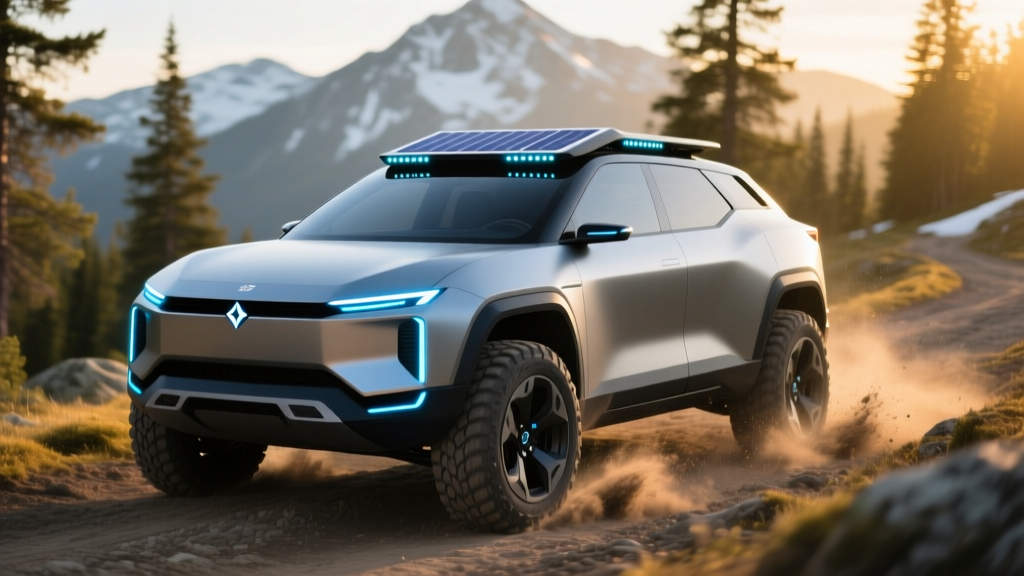
The 2026 Rivian R2 is the brand's long-awaited entry into the mainstream compact electric SUV segment, aimed squarely at buyers who want the capability and design of the R1S but at a more accessible price point. With production beginning in early 2026 at Rivian's Normal, Illinois facility (and later at the new Georgia plant), the R2 is positioned to compete with the Tesla Model Y, Ford Mustang Mach-E, and Hyundai Ioniq 5. Here's a comprehensive breakdown of every Rivian R2 trim level, with the exact numbers you need to make a purchase decision.
Rivian R2 Trim Levels and Pricing
Rivian has structured the R2 into three primary trim levels at launch, each available with different battery and drivetrain configurations. Pricing below reflects the base MSRP before any destination charges or applicable incentives.
| Trim | Drivetrain | Battery | EPA Range (Target) | 0-60 mph | MSRP |
|---|---|---|---|---|---|
| R2 Standard | Rear-Wheel Drive (RWD) | Standard (~72 kWh usable) | ~270 mi | ~6.5 sec | $45,000 |
| R2 Dual-Motor AWD | Dual-Motor AWD | Standard (~72 kWh usable) | ~260 mi | ~5.0 sec | $50,000 |
| R2 Dual-Motor AWD Large | Dual-Motor AWD | Large (~92 kWh usable) | ~330 mi | ~4.8 sec | $57,500 |
A Performance variant with tri-motor capability has been hinted at for a later release, potentially pushing output above 600 hp, but it is not part of the initial 2026 launch lineup. Rivian has confirmed that all R2 trims will feature the brand's latest generation of drive units, which are smaller, lighter, and more efficient than those in the R1 platform.
Battery Chemistry, Capacity, and Longevity
Rivian has confirmed that the R2's Standard battery pack will use LFP (lithium iron phosphate) chemistry, while the Large pack will use NMC (nickel manganese cobalt). This is a strategic split that mirrors industry best practices:
| Attribute | LFP (Standard Pack) | NMC (Large Pack) |
|---|---|---|
| Energy Density | Lower — heavier for same kWh | Higher — lighter, more range |
| Cycle Life | 3,000+ cycles to 80% SoH | 1,500–2,000 cycles to 80% SoH |
| Cold Performance | Moderate range loss in cold | Better low-temp discharge |
| Charging to 100% | Recommended periodically for calibration | Best kept at 80% daily; 100% for trips |
| Cost | Lower — enables $45K price point | Higher — justifies premium trim cost |
The LFP pack is a smart choice for the base R2: it's cheaper to produce, lasts longer in terms of charge cycles, and avoids cobalt sourcing concerns. The trade-off is lower energy density (meaning a slightly heavier pack for less range) and somewhat reduced efficiency in freezing temperatures. For buyers in mild climates who mostly commute, the LFP Standard pack is an excellent value proposition.
Battery Warranty: Rivian is expected to carry over its R1 warranty structure to the R2: 8 years / 175,000 miles for the battery pack and drive system, with a capacity retention threshold of 70%. This is among the most generous in the segment, though final R2 warranty terms will be confirmed at launch. (Source: Rivian)
Charging Speed: DC Fast, Level 2, and Connector Details
The R2 will ship with a native NACS (North American Charging Standard) port, giving it direct access to Tesla's Supercharger network — currently the most reliable and expansive DC fast-charging network in the U.S. This eliminates the need for a CCS-to-NACS adapter that current R1 owners require.
| Charging Level | Power | Speed / Notes |
|---|---|---|
| Level 1 (120V household) | ~1.4 kW | ~3–4 miles of range per hour |
| Level 2 (240V home) | 11.5 kW (48A) | ~28–33 miles of range per hour; full charge in ~8–10 hours |
| DC Fast Charge (peak) | ~200 kW (Large pack) / ~170 kW (Standard pack) | 10–80% in approximately 22–28 minutes depending on pack |
Charging curve reality: The peak 200 kW rate on the Large pack applies between roughly 10–40% state of charge. Beyond 60%, the rate tapers significantly — expect roughly 80–100 kW through the 60–80% range, and under 40 kW above 80%. This is standard behavior for lithium-ion packs managed by a thermal management system, but it means a 10–80% session is far more time-efficient than topping off to 100% at a public charger.
For home charging, Rivian recommends a hardwired Level 2 wall connector on a 60-amp circuit (delivering 48 amps continuous). Installation costs typically range from $800–$2,500 depending on your electrical panel capacity and the distance from the panel to the charger location. If your home has a 100-amp main panel, a panel upgrade to 200 amps may be required, adding $1,500–$3,000 to the project.
Performance and Drivetrain
The R2 Dual-Motor AWD delivers approximately 450 horsepower and an estimated 5.0-second 0–60 mph time, which places it squarely in competition with the Tesla Model Y Long Range and the Ford Mustang Mach-E Premium AWD. The RWD Standard trim, at roughly 300 hp, is tuned more for efficiency than outright acceleration, but still offers brisk performance by compact SUV standards.
Rivian's torque-vectoring AWD system — which can independently control front and rear motor output — is expected to carry over from the R1 platform, giving the R2 legitimate off-road capability despite its unibody crossover architecture. Ground clearance is targeted at approximately 8.0 inches, with approach and departure angles suitable for light trail use. The R2 will also feature Rivian's quad-motor-ready architecture, meaning the platform can accommodate a future tri- or quad-motor Performance variant.
Towing: Rivian targets a maximum towing capacity of 3,500 pounds for AWD trims when properly equipped. This is adequate for a small boat trailer, bike rack, or lightweight camper, but falls short of the R1T/R1S's 7,700-pound capability.
Interior, Cargo, and Technology
The R2 is a compact SUV, roughly the size of a Tesla Model Y or Porsche Macan. Rivian has confirmed a five-passenger seating configuration with the following approximate dimensions:
- Cargo volume (behind rear seats): ~28 cu ft
- Cargo volume (rear seats folded): ~65 cu ft
- Frunk (front trunk): ~10 cu ft — a Rivian signature feature
- Rear legroom: ~38 inches
The frunk is a genuine differentiator. Unlike the Model Y's relatively shallow front trunk, Rivian has designed the R2's frunk to accommodate a full carry-on suitcase or a week's worth of groceries, with a drain plug for use as a cooler.
Infotainment: The R2 features a 15.6-inch center touchscreen running Rivian's latest software stack, with wireless Apple CarPlay and Android Auto. A smaller driver display replaces a traditional instrument cluster. Rivian's software has consistently earned praise for its clean UI, OTA update cadence, and integrated trip planning with charger routing.
Driver Assistance (ADAS): The R2 ships with Rivian Driver+, a Level 2 driver-assistance system (per SAE classification) that includes adaptive cruise control, lane centering, and automatic emergency steering. This is not a self-driving system — the driver must remain engaged with hands on the wheel and eyes on the road at all times. A hands-free highway driving feature (similar to GM's Super Cruise or Ford's BlueCruise) has been announced for a future OTA update but is not available at launch.
Federal Tax Credit Eligibility (IRS §30D)
The R2's eligibility for the $7,500 federal EV tax credit under IRS §30D depends on several factors that buyers must verify before purchase. As of 2026, the following rules apply:
- MSRP cap: SUVs must have an MSRP at or below $80,000. All announced R2 trims clear this threshold comfortably.
- Buyer income cap: Adjusted gross income must not exceed $150,000 (single), $225,000 (head of household), or $300,000 (joint filers).
- Battery sourcing: A percentage of critical minerals and battery components must be sourced from the U.S. or free-trade-agreement partners. These thresholds increase annually. Rivian has been working to secure compliant supply chains, but final eligibility for specific R2 trims will be confirmed on the IRS approved-vehicles list at launch.
- Point-of-sale transfer: Eligible buyers can transfer the credit to the dealer at purchase, reducing the out-of-pocket cost immediately rather than waiting for a tax refund. (Source: IRS)
| Trim | MSRP | With $7,500 Credit | Effective Price |
|---|---|---|---|
| R2 Standard RWD | $45,000 | –$7,500 | $37,500* |
| R2 Dual-Motor AWD | $50,000 | –$7,500 | $42,500* |
| R2 Dual-Motor Large AWD | $57,500 | –$7,500 | $50,000* |
*Effective price assumes full §30D eligibility. Verify your specific eligibility on the IRS approved-vehicle list and consult a tax professional. State and local incentives (e.g., California's CVRP, Colorado's state credit) may further reduce cost but vary by jurisdiction.
Efficiency: MPGe and Real-World Consumption
Official EPA efficiency ratings for the R2 are pending final certification, but Rivian targets the following figures based on pre-production testing:
- R2 Standard RWD: ~115 MPGe combined / ~29 kWh per 100 miles
- R2 Dual-Motor AWD (Standard): ~105 MPGe combined / ~32 kWh per 100 miles
- R2 Dual-Motor AWD (Large): ~100 MPGe combined / ~34 kWh per 100 miles
For context, the 2025 Tesla Model Y Long Range AWD achieves approximately 117 MPGe combined. The R2's slightly lower efficiency is the trade-off for its boxier design (more frontal area = more aerodynamic drag), heavier build, and off-road-oriented tire options. In real-world highway driving at 75 mph, expect efficiency to drop to roughly 35–38 kWh/100mi for AWD trims.
Who Should Buy the Rivian R2?
Choose the R2 Standard RWD ($45K) if: You're a commuter in a mild climate who wants the lowest entry price, LFP battery longevity, and doesn't need AWD. At ~$37,500 after the federal credit, it's one of the most compelling value propositions in the EV market.
Choose the R2 Dual-Motor AWD ($50K) if: You need all-weather capability, live in a region with snow or rain, and want strong acceleration without paying for the Large battery. Best all-around trim for most buyers.
Choose the R2 Dual-Motor Large ($57.5K) if: You regularly take road trips exceeding 250 miles, tow occasionally, or live in a cold climate where range loss is a concern. The 330-mile EPA target gives genuine peace of mind on long drives.
The R2 is best suited for active families, outdoor enthusiasts, and tech-forward commuters who want a premium-feeling EV with genuine utility (frunk, towing, light off-road) without stepping up to the $75K+ R1S. It is not the right choice if you need three rows of seating, require 7,000+ pound towing, or want a hands-free highway driving system at launch.
Pros and Cons
- Native NACS port — direct Supercharger access
- Generous frunk + competitive cargo space
- LFP option for long cycle life and lower cost
- Class-leading 8-yr/175K-mi battery warranty (expected)
- Strong off-road capability for a unibody SUV
- Clean, well-regarded software and OTA updates
- Hands-free ADAS not available at launch
- Efficiency trails Model Y due to boxy aero
- 3,500-lb towing cap limits utility vs. trucks
- No three-row option
- Initial production may face wait times and build-quality variability
- Final §30D credit eligibility unconfirmed per trim
Frequently Asked Questions
What is the real-world range of the Rivian R2?
The Large-battery Dual-Motor AWD targets 330 miles EPA. In real-world highway driving at 70 mph, expect 265–290 miles. In cold weather (below 32°F), reduce that by an additional 15–25%, yielding roughly 200–245 miles depending on conditions and use of cabin heating. The Standard pack targets ~270 miles EPA, with real-world highway range around 215–240 miles.
How fast does the R2 charge at home and on the road?
At home on a Level 2 (240V, 48A) charger, the R2 adds roughly 28–33 miles of range per hour, with a full charge taking 8–10 hours. On DC fast chargers, the Large pack peaks at ~200 kW, achieving a 10–80% charge in approximately 22–25 minutes. The Standard pack peaks at ~170 kW, with 10–80% in roughly 25–28 minutes.
How much does the Rivian R2 cost after tax credits?
If you qualify for the full $7,500 federal tax credit under §30D (income and sourcing requirements met), the R2 Standard RWD drops to an effective $37,500, the Dual-Motor AWD to $42,500, and the Large AWD to $50,000. State incentives may reduce this further. Always verify eligibility on the IRS clean vehicle credits page before purchasing.
Is the Rivian R2 worth buying over the Tesla Model Y?
The R2 offers a more distinctive design, a larger frunk, better off-road capability, and LFP battery longevity at the base trim. The Model Y still leads in efficiency, charging speed (via V4 Superchargers), and has a more mature hands-free ADAS option (FSD Supervised, still Level 2). If you prioritize adventure utility and build quality, the R2 is compelling. If efficiency and software maturity matter most, the Model Y remains the benchmark.
Does the Rivian R2 qualify for the federal EV tax credit?
All R2 trims fall under the $80,000 MSRP cap for SUVs. However, full $7,500 credit eligibility depends on battery component and critical mineral sourcing requirements that tighten annually. Rivian has been actively building U.S.-compliant supply chains, but buyers should check the IRS approved-vehicle list at the time of purchase to confirm their specific trim qualifies. Income caps also apply.
When can I buy the Rivian R2?
Rivian began production of the R2 in the first half of 2026 at its Normal, Illinois facility. Reservation holders are receiving deliveries first, with general availability expected to expand through mid-to-late 2026. Production at the new Georgia plant will follow, significantly increasing output capacity.