Why the 2026 Cadillac Lyriq Deserves a Second Look
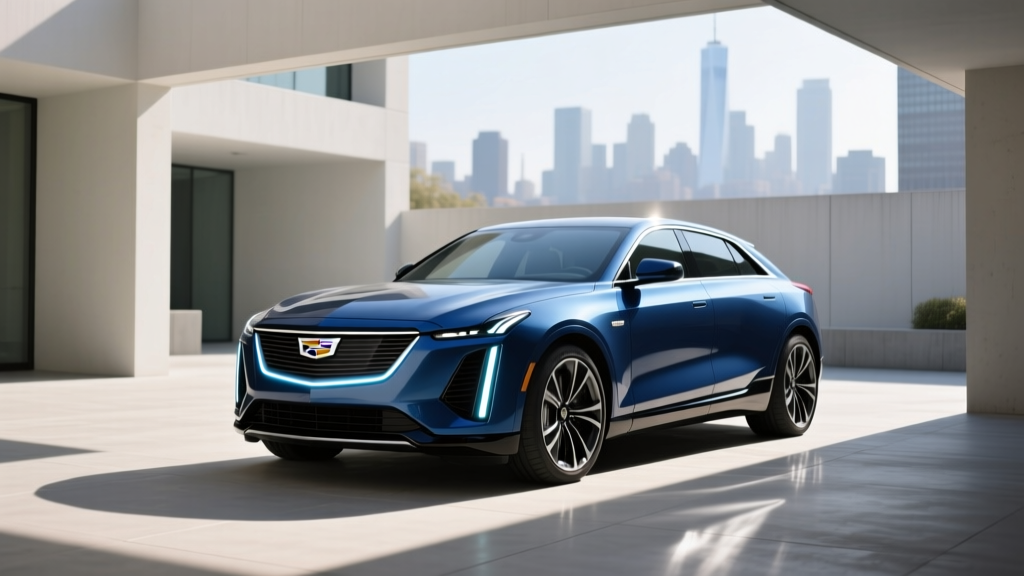
The 2026 Cadillac Lyriq enters its fourth model year on GM's Ultium platform with meaningful updates: a refreshed AWD powertrain pushing 500 horsepower, a standard 33-inch curved LED display, and expanded Super Cruise coverage across North America. For luxury EV shoppers weighing a lease versus purchase, the Lyriq occupies a specific niche — it undercuts the BMW iX and Mercedes EQE SUV on price while delivering competitive range and a genuinely quiet, well-appointed cabin. But the question most buyers actually ask is whether the 2026 Cadillac Lyriq lease deals make financial sense once you factor in the federal EV tax credit, real-world range, and charging infrastructure.
This review dissects the numbers that matter: what you'll actually drive on a charge, what charging looks like at home and on the road, which trims qualify for the §30D credit, and how the Lyriq stacks up against the Genesis Electrified GV70, BMW iX, and Tesla Model X. Every figure below is drawn from EPA data on fueleconomy.gov, Cadillac's official specifications, and current IRS §30D guidelines.
Spec Snapshot: 2026 Cadillac Lyriq at a Glance
| Attribute | 2026 Lyriq Luxury (RWD) | 2026 Lyriq Sport (AWD) |
|---|---|---|
| EPA Range | 314 miles | 307 miles |
| Battery (usable) | 102 kWh, NMC (Ultium) | 102 kWh, NMC (Ultium) |
| Horsepower | 340 hp / 325 lb-ft | 500 hp / 450 lb-ft |
| 0-60 mph | 6.0 sec | 4.4 sec |
| Max DC Fast Charge | 190 kW | 190 kW |
| 10-80% DC Time | ~32 minutes | ~32 minutes |
| Level 2 Home Charge | 19.2 kW (52 mi/hr) | 19.2 kW (52 mi/hr) |
| MPGe (combined) | 89 MPGe | 88 MPGe |
| Efficiency | 38 kWh/100 mi | 38 kWh/100 mi |
| Base MSRP | $58,590 | $63,990 |
| Battery Warranty | 8 yr / 100,000 mi | 8 yr / 100,000 mi |
Real-World Range: What the EPA Number Doesn't Tell You
Real-World Highway (70 mph, moderate temps): ~260-280 miles
Cold Weather (below 32°F, highway): ~210-240 miles
City / Commuter Driving: 290-310 miles (regen braking recovers energy)
The Lyriq's 102 kWh usable NMC battery is one of the largest in its class, and that capacity shows up most clearly in city and suburban driving where regenerative braking extends range closer to the EPA sticker. Highway driving at sustained 70-75 mph tells a different story: aerodynamic drag on a 5,700-pound SUV consumes energy faster, and you should budget roughly 260-280 miles before needing a charger on a warm day.
Cold weather compounds the loss. NMC chemistry loses roughly 15-25% capacity in sub-freezing temperatures, and the Lyriq's heat pump — standard on 2026 models — mitigates but doesn't eliminate cabin-heating draw. On a January road trip through the Midwest at 25°F with the cabin at 70°F, expect closer to 210-240 miles of usable range. That's adequate for most daily driving and manageable on road trips if you plan stops around 200-mile intervals, but it's a genuine limitation for northern-climate buyers who regularly drive 300+ miles in winter.
The Lyriq's efficiency of 38 kWh/100 miles is average for a luxury midsize SUV. The BMW iX xDrive50 achieves roughly 35 kWh/100 mi with a slightly smaller, more aerodynamic package, while the heavier Tesla Model X sits around 40 kWh/100 mi. For context, at a national average electricity rate of $0.16/kWh, the Lyriq costs approximately $6.08 per 100 miles to charge at home — roughly one-third the fuel cost of a comparable gas SUV at $3.50/gallon.
Charging Speed: DC Fast, Level 2, and the Charge-Curve Reality
| Charging Level | Power (kW) | Miles Added per Hour | Notes |
|---|---|---|---|
| Level 1 (120V standard outlet) | 1.4 kW | ~4 mi/hr | Emergency/trickle only |
| Level 2 (240V, 48A home charger) | 11.5 kW | ~31 mi/hr | Standard home setup |
| Level 2 (240V, 80A hardwired) | 19.2 kW | ~52 mi/hr | Requires 100A circuit, max onboard |
| DC Fast Charge (peak) | 190 kW | ~500 mi/hr (peak) | 10-80% in ~32 min |
The Lyriq's 190 kW peak DC fast-charging rate is respectable but not class-leading. The Hyundai Ioniq 5 and Kia EV9 both accept 235-350 kW on 800V architectures, reaching 10-80% in 18-25 minutes. The Lyriq's 400V Ultium architecture caps at 190 kW, and like all EVs, it doesn't sustain peak rate throughout the session. Expect the charge curve to taper significantly above 80% State of Charge — a 10-90% session takes closer to 45-50 minutes. On a road trip, plan your stops around the 10-80% window where charging is fastest, then move on.
At home, the Lyriq's 19.2 kW onboard charger is among the fastest available, but it demands serious electrical infrastructure. A full 80-amp hardwired Level 2 station requires a dedicated 100-amp circuit, which typically costs $1,200-$2,500 to install depending on your panel capacity and run length. Most Lyriq owners will install a 48-amp charger on a 60-amp circuit for $600-$1,200, gaining roughly 31 miles of range per hour — enough to fully replenish overnight. The Lyriq uses the NACS (Tesla-style) connector natively for 2026, giving direct access to Tesla Superchargers without an adapter, which is a significant advantage over CCS-only competitors as the Supercharger network continues to expand.
Performance and Driving Impressions
The rear-wheel-drive Lyriq Luxury delivers 340 horsepower and a 6.0-second 0-60 time — adequate for highway merging and confident passing, though it won't win drag races against the BMW iX or Tesla Model X. The ride quality is where the RWD Lyriq earns its luxury badge: GM's five-link rear suspension and standard continuous damping control absorb road imperfections with genuine composure, and the cabin isolation at highway speeds is among the quietest in the segment.
The AWD Sport trim's 500-horsepower dual-motor setup transforms the character entirely. The 4.4-second 0-60 time puts it in genuine performance-SUV territory, and the instant torque delivery makes the Lyriq Sport feel lighter on its feet than its 5,900-pound curb weight suggests. The trade-off is a modest 7-mile range reduction and a $5,400 price premium. For buyers in snow-belt states, the AWD traction and performance bump justify the cost; for Sun Belt commuters, the RWD offers better range and a lower lease payment.
Both trims feature GM's Super Cruise hands-free driver assistance on over 750,000 miles of mapped highways in the US and Canada. Super Cruise is an SAE Level 2 system — it handles steering, acceleration, and braking on compatible highways, but the driver must remain attentive and the system monitors engagement via a driver-facing camera. It is not autonomous driving. Where Super Cruise excels is long-distance highway comfort: lane centering is precise, lane changes are smooth, and the system handles moderate curves and traffic slowdowns with confidence. It does not operate on unmapped roads, in construction zones with shifted lanes, or in severe weather.
Pricing, Lease Deals, and Federal Tax Credit Eligibility
| Trim | Base MSRP | Est. Monthly Lease (36 mo, $5k down) | §30D Credit Eligibility |
|---|---|---|---|
| Luxury RWD | $58,590 | $650-$750 | Likely eligible (check sourcing) |
| Luxury AWD | $62,590 | $700-$800 | Likely eligible (check sourcing) |
| Sport AWD | $63,990 | $725-$825 | Likely eligible (check sourcing) |
| Sport AWD (fully loaded) | ~$73,000 | $850-$950 | Likely eligible (check sourcing) |
The 2026 Lyriq's pricing places it below the BMW iX ($87,100 base) and Mercedes EQE SUV ($77,900 base) while undercutting the Tesla Model X ($79,990 base) significantly. Lease deals in early 2026 typically range from $650-$750/month for the RWD Luxury trim with $5,000 due at signing on a 36-month term, though GM Financial periodically offers subvented rates or loyalty cash that can reduce payments by $50-$100/month. Always ask the dealer about current GM incentives, conquest bonuses, and whether the lease includes maintenance or Super Cruise subscriptions.
Federal tax credit eligibility under IRS §30D requires meeting several conditions simultaneously:
- MSRP cap: SUVs must have an MSRP at or below $80,000 — all Lyriq trims qualify
- Buyer income cap: Modified AGI must not exceed $150,000 (single), $225,000 (head of household), or $300,000 (joint) — verify against your tax situation
- Battery sourcing: A percentage of critical minerals and battery components must be sourced from the US or free-trade-agreement countries — GM has progressively increased North American sourcing for the Ultium platform, but exact 2026 compliance percentages should be verified at the point of sale
- Point-of-sale transfer: As of 2024, you can transfer the credit to the dealer to reduce the purchase price at sale — for leases, the credit typically goes to the lessor (GM Financial) and may or may not be passed through as a capitalized-cost reduction
Lease-specific note: When you lease an EV, the §30D credit technically belongs to the lessor, not you. GM Financial has historically passed the full $7,500 through as a cap-cost reduction on Lyriq leases, effectively lowering your monthly payment by roughly $200-$225/month compared to an equivalent lease without the credit. Confirm this pass-through with your dealer before signing — it is not legally required and policies can change.
Interior, Cargo, and Technology
The Lyriq's cabin is where Cadillac makes its strongest luxury statement. The 33-inch curved LED display spans the driver cluster and infotainment screen in a single seamless panel, running Google Built-in with native Google Maps, Google Assistant, and Play Store apps. Wireless Apple CarPlay and Android Auto are standard. The AKG 19-speaker audio system is standard on Luxury and upgraded to a 23-speaker AKG Studio on Sport trims. Build quality, material selection, and seat comfort are competitive with the BMW iX and a clear step above the Tesla Model X interior.
Cargo space measures 28.0 cubic feet behind the second row and 60.9 cubic feet with the rear seats folded — competitive with the Genesis Electrified GV70 (28.7 / 56.9 cu ft) and slightly less than the BMW iX (35.5 / 77.9 cu ft). Rear legroom is generous at 39.6 inches, making the Lyriq a comfortable family hauler. There is no front trunk (frunk); GM allocated that space to HVAC and power electronics. The Lyriq is rated to tow 3,500 pounds — adequate for a small boat or light utility trailer, but below the BMW iX's 3,500-pound rating and well below the Tesla Model X's 5,000-pound capacity.
Who Should Lease the 2026 Lyriq — and Who Shouldn't
- You prioritize cabin quietness and ride comfort over outright performance
- You want Super Cruise hands-free highway driving on long commutes or road trips
- You need NACS native charging for Supercharger access without an adapter
- You want a luxury SUV under $65,000 that qualifies for the §30D credit
- You need the fastest DC charging in the segment (see Ioniq 5, EV9, or Porsche Macan EV)
- You regularly tow more than 3,500 pounds (consider Model X or Rivian R1S)
- You need three rows of seating (see Kia EV9 or Tesla Model X)
- You live in a cold climate and need maximum winter range (LFP competitors or PHEVs may suit better)
The Lyriq is best suited for luxury-minded commuters and small families who value comfort, technology, and brand prestige over cutting-edge charging speed or three-row utility. The RWD Luxury trim offers the strongest range-per-dollar proposition; the AWD Sport is the enthusiast choice. If your daily drive is under 60 miles and you can charge at home, the Lyriq's real-world range is a non-issue. If you road-trip frequently in winter or need to tow heavy loads, a different vehicle may serve you better.
Pros, Cons, and the Competitive Picture
- Class-leading cabin quietness and ride quality
- Super Cruise on 750,000+ miles of highways
- Native NACS connector for Supercharger access
- 314-mile EPA range (RWD) is competitive
- Undercuts BMW iX, Mercedes EQE, and Model X on price
- Strong §30D credit eligibility across all trims
- 190 kW peak charge rate trails 800V competitors (235-350 kW)
- No front trunk (frunk)
- Cargo space trails BMW iX by ~7 cu ft
- 3,500-lb tow rating is modest for the class
- Cold-weather range loss is significant (15-25%)
- Lease credit pass-through is at lessor's discretion
Against the Genesis Electrified GV70, the Lyriq offers more range (314 vs 236 miles EPA) and faster home charging, though the Genesis has a more traditional luxury interior aesthetic. The BMW iX offers superior cargo space and a slightly more efficient powertrain but costs $25,000+ more. The Tesla Model X delivers faster charging, three-row seating, and the strongest Supercharger integration, but its interior quality and ride comfort don't match the Cadillac. For buyers specifically evaluating 2026 Cadillac Lyriq lease deals, the value proposition is strongest against the iX and EQE SUV — you're getting 90% of the luxury experience for 70% of the price.
Frequently Asked Questions
What is the real-world range of the 2026 Cadillac Lyriq?
The EPA rates the RWD Lyriq at 314 miles and the AWD at 307 miles. In real-world highway driving at 70 mph in moderate temperatures, expect 260-280 miles. In cold weather below 32°F, budget 210-240 miles. City driving with regenerative braking can approach the EPA sticker.
How fast does the Lyriq charge at home and on DC fast chargers?
On a DC fast charger, the Lyriq peaks at 190 kW and reaches 10-80% in approximately 32 minutes. At home on a 48-amp Level 2 charger, it adds about 31 miles per hour, fully recharging overnight. On an 80-amp hardwired Level 2 (requiring a 100-amp circuit), it adds 52 miles per hour.
How much does the 2026 Lyriq cost after tax credits?
The base RWD Luxury starts at $58,590. If you qualify for the full $7,500 §30D federal credit, the effective price drops to $51,090. On a lease, the credit typically passes through as a cap-cost reduction, lowering monthly payments by roughly $200-$225/month. State incentives (like California's CVRP or Colorado's innovative motor vehicle credit) may stack on top — check your state's current programs.
Does the 2026 Lyriq qualify for the federal EV tax credit?
All Lyriq trims fall under the $80,000 SUV MSRP cap. Eligibility also depends on your income (must not exceed $150K single / $300K joint), and the battery must meet critical-mineral and component sourcing thresholds. GM's Ultium batteries have progressively increased North American sourcing, but verify compliance at the point of sale. Consult a tax professional or check IRS §30D guidance for your specific situation.
Is the Lyriq worth leasing vs. buying?
Leasing makes sense if you want to upgrade every 3 years, avoid battery-degradation risk, and benefit from GM Financial's historical pass-through of the §30D credit. Buying makes sense if you drive high annual miles (lease penalties apply above 10-15K miles/year), plan to keep the vehicle 5+ years, and want to claim the credit directly on your tax return. Run both scenarios with your dealer and compare total cost over your intended ownership period.
What are the biggest competitors to the 2026 Lyriq?
Direct competitors include the BMW iX (more cargo, higher price), Genesis Electrified GV70 (less range, traditional luxury), Mercedes EQE SUV (similar price, different aesthetic), and Tesla Model X (faster charging, three rows, lower interior quality). The Lyriq's strongest argument is luxury-per-dollar with Super Cruise and native NACS charging.
What is the Lyriq's battery warranty?
GM covers the Lyriq's Ultium battery for 8 years or 100,000 miles, whichever comes first, against defects and capacity loss below 70% of original capacity. The powertrain (motors, power electronics) carries the same 8-year/100,000-mile coverage. The vehicle limited warranty is 4 years / 50,000 miles.