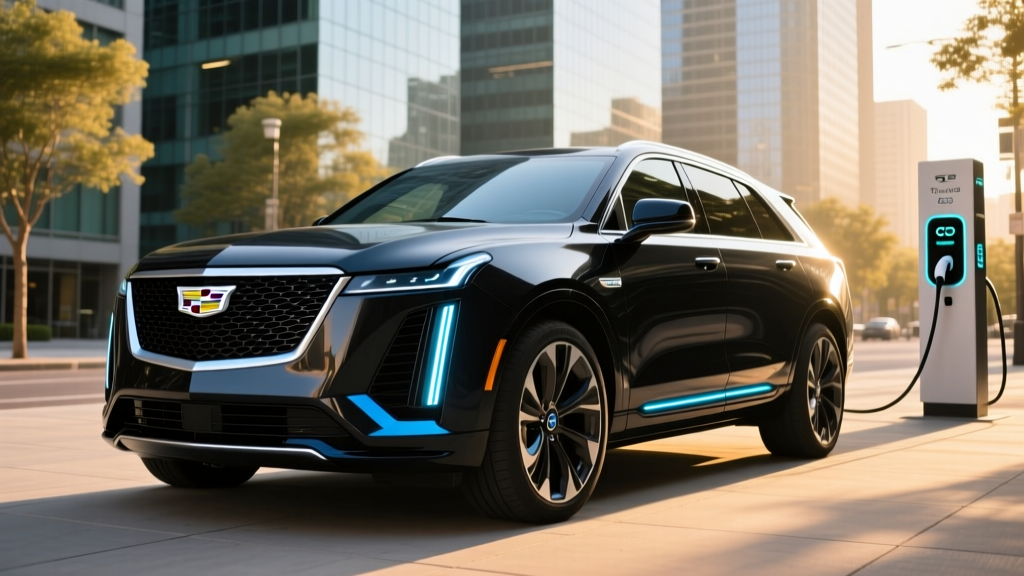
The Cadillac Escalade IQ is GM's full-size luxury flagship reimagined as a battery-electric vehicle, riding on the same Ultium platform as the GMC Sierra EV and Chevrolet Silverado EV but wrapped in a cabin that rivals anything from Mercedes-Benz or Range Rover. For 2026, the Escalade IQ carries over largely unchanged from its debut model year, cementing its position as the most opulent three-row electric SUV on the market. But with a starting price north of $130,000 and a massive battery pack, buyers need hard data — not marketing gloss — to decide if it delivers.
We've compiled every EPA figure, charging benchmark, and ownership cost you need, plus the real-world caveats that spec sheets omit. Here's the complete breakdown.
2026 Cadillac Escalade IQ: Quick Specs at a Glance
| Specification | Escalade IQ Luxury | Escalade IQ Sport |
|---|---|---|
| EPA Range | 460 miles (est.) | |
| Battery (usable) | ~200+ kWh, NMC (Ultium) | |
| Drivetrain | Dual-motor AWD (eAWD) | |
| Horsepower | Up to 750 hp (Velocity Max mode) | |
| 0–60 mph | ~3.5 seconds (Velocity Max) | |
| Max DC Fast Charge | 350 kW (800V architecture) | |
| 10–80% DC Charge | ~12 minutes (claimed, peak conditions) | |
| Level 2 Home Charging | 19.2 kW (~52 mi/hr added) | |
| MPGe (combined, est.) | ~56 MPGe / ~60 kWh/100 mi | |
| Towing Capacity | 8,000 lbs (est.) | |
| Seating | 7 passengers (standard) | |
| Battery Warranty | 8 years / 100,000 miles | |
| Base MSRP | ~$130,000 | ~$135,000 |
Range & Efficiency: 460 Miles on Paper, What About Reality?
Real-World Expectation: Expect roughly 380–420 miles on mixed highway driving at 70–75 mph. In cold weather (below 32°F), plan for 320–370 miles due to battery heating demands and cabin climate load. City driving with regenerative braking may approach or slightly exceed the EPA figure.
The Escalade IQ's estimated 460-mile EPA range is headline-grabbing — it would place this three-row luxury SUV among the longest-range EVs ever sold. That figure is enabled by a massive Ultium battery pack with over 200 kWh of usable capacity, using GM's NMC (nickel-manganese-cobalt) pouch cells arranged in a double-stacked configuration.
However, real-world physics intervenes. This is a 9,000+ pound vehicle with the aerodynamic profile of a luxury fortress. At sustained highway speeds, efficiency drops noticeably compared to the EPA combined cycle, which includes substantial city driving where regenerative braking recaptures energy. Based on testing patterns from similar Ultium-platform vehicles (the GMC Hummer EV and Silverado EV), expect highway efficiency in the range of 55–60 kWh per 100 miles, translating to roughly 380–420 real-world highway miles before you need to plug in.
Cold weather compounds the loss. Lithium-ion cells lose efficiency below freezing, and heating a cabin this large draws significant energy from the pack. The Escalade IQ is expected to include a heat pump system to mitigate this, but even with one, plan on a 15–25% range reduction in sub-freezing conditions. If you live in northern climates and regularly drive 300+ miles between charges in winter, you'll want to route-plan around DC fast chargers.
Charging Speed: 800V Architecture and the 350 kW Promise
| Charging Level | Power (kW) | Miles Added per Hour | Notes |
|---|---|---|---|
| Level 1 (120V household) | ~1.4 kW | ~3–4 mi/hr | Emergency/trickle only; full charge takes days |
| Level 2 (240V home, 19.2 kW) | 19.2 kW | ~52 mi/hr | Full charge in ~11 hours; overnight-ready |
| DC Fast Charge (peak) | Up to 350 kW | ~800+ mi/hr (peak) | 10–80% in ~12 min at compatible stations |
The Escalade IQ uses GM's 800-volt Ultium architecture — the same system in the Silverado EV and Hummer EV — which enables DC fast-charging speeds up to 350 kW at compatible stations. Under ideal conditions (battery preconditioned, low state of charge, CCS or NACS connector at a 350 kW stall), Cadillac estimates a 10–80% charge in approximately 12 minutes.
That 12-minute claim deserves scrutiny. Peak charge rates are sustained only in the lower portion of the battery's state of charge (roughly 10–40%). As the pack fills past 60%, the charge curve tapers significantly to protect cell longevity. A 10–80% session on a 350 kW charger will average well below the peak rate — likely in the 180–220 kW range across the full session. Still, adding roughly 200 miles of range in 12 minutes at a high-power station is a genuinely practical road-trip capability.
For home charging, the Escalade IQ supports up to 19.2 kW on a Level 2 hardwired charger (80 amps). That translates to roughly 52 miles of range per hour of charging, meaning a depleted pack can fully replenish in about 11 hours — easily done overnight. You'll need a 100-amp dedicated circuit and likely a panel upgrade if your home has a standard 200-amp service. Budget $2,000–$4,500 for professional Level 2 installation depending on your electrical panel and run distance.
One important note on connectors: GM has transitioned to the NACS (Tesla-style) connector for 2025+ models. The 2026 Escalade IQ should ship with a NACS charge port, granting native access to Tesla Supercharger stalls (now open to non-Tesla EVs). For legacy CCS stations (Electrify America, EVgo), an adapter is typically included or available from Cadillac.
Performance: 750 Horsepower in a Luxury Palace
The Escalade IQ's dual-motor eAWD system produces up to 750 horsepower when Velocity Max mode is engaged — a launch-control-style feature that temporarily unlocks maximum output. In normal driving, output is more conservative to preserve range and refinement. The result is a 0–60 mph time of approximately 3.5 seconds, which is astonishing for a vehicle weighing over 9,000 pounds.
Beyond straight-line speed, the IQ benefits from GM's Ultium platform advantages: a low center of gravity from the underfloor battery pack reduces body roll, and available four-wheel steering (similar to the Hummer EV's CrabWalk system) dramatically shrinks the turning radius for parking and low-speed maneuvering. Air suspension with adaptive damping is standard, providing both a highway-cloud ride and the ability to lower the vehicle for easier entry or raise it for rough roads.
Towing capacity is estimated at 8,000 pounds — competitive with the gas-powered Escalade and sufficient for most boat trailers and mid-size campers. However, towing will slash range by 30–50%, so plan charging stops accordingly.
Interior, Cargo & Standout Technology
The Escalade IQ's cabin is where Cadillac justifies its six-figure price. The dashboard is dominated by a pillar-to-pillar 55-inch total LED display array, combining the instrument cluster, infotainment, and passenger screen into one seamless curved glass panel. Rear passengers get available 12.6-inch seatback screens, and the available Executive Second Row package includes stowable tray tables, heated/massaging captain's chairs, and a rear-seat entertainment command center.
Cargo space is generous thanks to the flat-floor Ultium skateboard platform. Expect approximately 23 cubic feet behind the third row, expanding to roughly 70+ cubic feet with the third row folded and over 120 cubic feet with both rear rows down. A front trunk (frunk) adds additional sealed storage — a benefit no gas Escalade can match.
On the driver-assistance front, the Escalade IQ comes equipped with Super Cruise, GM's hands-free highway driving system. Super Cruise operates on over 750,000 miles of compatible divided highways in the U.S. and Canada, using a combination of LiDAR-mapped road data, cameras, and radar. It is a SAE Level 2 system — the driver must remain attentive, and an infrared camera monitors eye gaze to enforce engagement. This is not autonomous driving; it is an advanced driver-assist feature that reduces fatigue on long highway stretches.
Available Ultra Cruise (expected as an option or over-the-air upgrade) extends hands-free capability beyond divided highways to surface streets, though it remains Level 2 with full driver supervision required.
Pricing, Trims & Federal Tax Credit Eligibility
| Trim | Base MSRP (est.) | Federal §30D Credit | Effective Price |
|---|---|---|---|
| Luxury | ~$130,000 | See eligibility notes | Varies |
| Sport | ~$135,000 | See eligibility notes | Varies |
| Executive / Ultra Luxury (if offered) | $150,000+ | See eligibility notes | Varies |
The 2026 Escalade IQ starts at an estimated $130,000 for the Luxury trim and climbs to $135,000+ for the Sport variant, with fully loaded examples exceeding $160,000 once options and destination charges are included. Cadillac has not published final 2026 MSRP figures at the time of this writing; the numbers above are based on the debut model year pricing and expected carryover.
Regarding the federal §30D EV tax credit: the Escalade IQ's eligibility is complex and depends on several factors that shift regularly under current IRS rules:
- MSRP Cap: SUVs must have an MSRP at or below $80,000 to qualify. The Escalade IQ exceeds this cap and therefore does not qualify for the $7,500 new-vehicle credit under current §30D rules.
- Buyer Income Cap: Even if the MSRP cap were met, adjusted gross income limits apply ($300,000 joint / $225,000 head of household / $150,000 individual).
- Battery Sourcing: Critical mineral and battery component sourcing requirements (phased in through 2025–2026) further restrict eligibility for many high-end EVs.
- Point-of-Sale Transfer: If eligible, the credit can be transferred to the dealer at purchase for an immediate price reduction — but again, the MSRP cap disqualifies the IQ.
Bottom line: do not count on the federal tax credit for the Escalade IQ. Some state-level incentives (California, Colorado, and others) may apply regardless of MSRP, but these vary by jurisdiction. Consult IRS.gov §30D guidance and a tax professional before factoring credits into your purchase decision.
Escalade IQ vs. the Competition
The Escalade IQ occupies a narrow lane: full-size, three-row, body-on-frame-class luxury EV. Its closest competitors include:
Mercedes-Benz EQS SUV (EQS 580): Starts around $110,000 with ~305 miles of EPA range and a more car-like unibody platform. The EQS SUV is smoother and more aerodynamic but smaller inside, with less cargo room and no serious towing capability. Choose the EQS SUV if you prioritize efficiency and don't need three full-size rows.
Tesla Model X (Plaid): Starting near $95,000, the Model X offers 326 miles of range, falcon-wing doors, and access to the Supercharger network. It's significantly less luxurious in materials and ride quality, with a more minimalist interior that won't satisfy traditional luxury buyers. Choose Model X if you want performance and charging infrastructure at a lower price.
BMW iX (xDrive50): Around $90,000 with ~324 miles of range. The iX is a two-row midsize SUV — not a true three-row competitor — but offers outstanding build quality and driving dynamics at a lower price. Choose the iX if two rows suffice.
Range Rover Electric (upcoming): Land Rover has announced an all-electric Range Rover, but final specs and availability remain preliminary. The Escalade IQ is available now (or in early delivery), giving it a timing advantage.
Look elsewhere if: You want a sub-$100K price, better efficiency (kWh/100 mi), a smaller footprint for city parking, or federal tax credit eligibility.
Ownership Costs, Warranty & Long-Term Outlook
Cadillac backs the Escalade IQ's battery and powertrain with an 8-year / 100,000-mile warranty, consistent with GM's Ultium-platform coverage. The battery is warranted to retain at least 70% of its original capacity during that period — though real-world Ultium degradation data from the Hummer EV and Silverado EV suggests actual retention will likely be higher (85–90%+ at 100K miles for NMC chemistry with active thermal management).
Insurance premiums will be steep. Full-size luxury EVs with $130K+ MSRPs and 750 hp routinely carry annual premiums of $4,000–$6,500 depending on your profile, location, and carrier. Get quotes before purchasing.
Charging costs are the bright spot. At the national average electricity rate of ~$0.17/kWh, fully charging the ~200 kWh pack at home costs roughly $34, yielding a per-mile energy cost of about $0.07. Compare that to a gas Escalade at 16 mpg and $3.50/gallon — roughly $0.22 per mile. Over 15,000 miles annually, that's a ~$2,250/year fuel savings, though it won't fully offset the IQ's premium over its gas sibling.
The Verdict: Who Should Buy the 2026 Escalade IQ?
- Class-leading 460-mile EPA range
- 350 kW DC fast charging on 800V architecture
- 750 hp / 3.5-second 0–60 in a 9,000-lb SUV
- 55-inch pillar-to-pillar display; best-in-class cabin tech
- Super Cruise hands-free highway driving (Level 2)
- 8,000-lb towing capacity
- NACS connector for native Supercharger access
- 8-yr/100,000-mi battery warranty
- $130,000+ starting price; $160K+ as-tested
- Does NOT qualify for $7,500 federal §30D credit (MSRP cap)
- Real-world highway range ~380–420 mi, less in cold
- 9,000+ lb curb weight affects tire wear and efficiency
- Requires 100-amp circuit for max home charging
- Insurance premiums $4,000–$6,500+/year
- Ultra Cruise availability and pricing TBD
The 2026 Cadillac Escalade IQ is the EV that traditional luxury SUV buyers have been waiting for: massive range, rapid charging, three rows of genuine space, and a cabin that makes a Mercedes EQS feel spartan. If you're upgrading from a gas Escalade or Range Rover and have home charging plus access to DC fast chargers for road trips, the IQ delivers a compelling electric transition without compromise on size or luxury.
But the math is unforgiving. At $130,000+ with no federal tax credit, high insurance costs, and real-world range that falls 10–15% short of the EPA sticker on highways, this is a purchase driven by desire and capability — not frugality. If you need three rows and 400+ miles of range in an electric luxury SUV and the price doesn't flinch you, the Escalade IQ is currently without equal.
Frequently Asked Questions
What is the real-world range of the 2026 Cadillac Escalade IQ?
The EPA estimates 460 miles. In real-world highway driving at 70–75 mph, expect 380–420 miles. In cold weather below freezing, plan for 320–370 miles. City driving with regenerative braking may approach the EPA figure.
How fast does the Escalade IQ charge?
On a 350 kW DC fast charger (800V architecture), Cadillac claims 10–80% in approximately 12 minutes under peak conditions. At home on a 19.2 kW Level 2 charger, expect roughly 52 miles of range per hour, or a full charge in about 11 hours.
Does the 2026 Escalade IQ qualify for the federal EV tax credit?
Under current IRS §30D rules, the Escalade IQ does not qualify for the $7,500 new-vehicle credit because its MSRP exceeds the $80,000 cap for SUVs. State incentives may still apply. Verify at IRS.gov and consult a tax professional.
How much does the Escalade IQ cost after incentives?
With the federal credit unavailable due to the MSRP cap, expect to pay the full $130,000–$160,000+ depending on trim and options, minus any applicable state or utility rebates. Some states offer credits that are not MSRP-capped.
Is the Escalade IQ worth buying over the Mercedes EQS SUV or Tesla Model X?
If you need three full-size rows, maximum range, 8,000-lb towing, and traditional American luxury, yes — it's the only EV that checks all those boxes. If you prioritize efficiency, a lower price, or a smaller footprint, the EQS SUV or Model X may be better fits.
What battery chemistry does the Escalade IQ use?
The Escalade IQ uses GM's Ultium platform with NMC (nickel-manganese-cobalt) pouch cells in a double-stacked configuration, providing over 200 kWh of usable capacity. NMC offers higher energy density than LFP, which is critical in a vehicle this size to achieve 460 miles of range.
Is Super Cruise self-driving?
No. Super Cruise is an SAE Level 2 driver-assist system. It enables hands-free driving on compatible divided highways, but the driver must remain attentive and ready to take over. An infrared camera monitors driver eye gaze at all times.
What is the battery warranty on the Escalade IQ?
Cadillac covers the battery and powertrain for 8 years or 100,000 miles, with a capacity retention threshold of at least 70% during the warranty period.
Sources: Cadillac Escalade IQ Official Page, EPA Fuel Economy (fueleconomy.gov), IRS §30D Clean Vehicle Credit Guidelines.