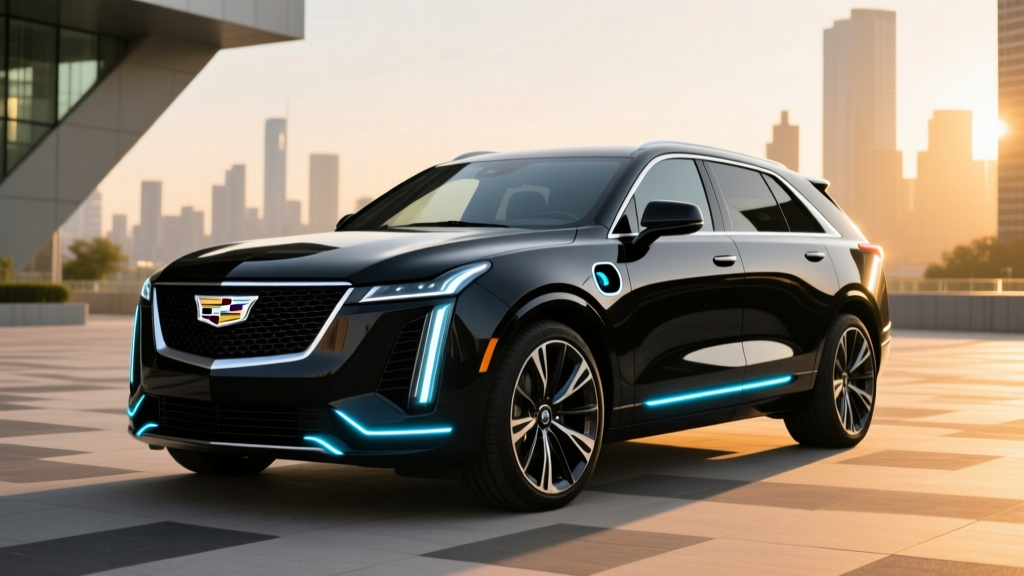
Quick Answer: Is the 2026 Cadillac Escalade Electric Worth It?
The 2026 Cadillac Escalade Electric (Escalade IQ) pairs a ~200 kWh Ultium battery with an EPA-estimated range near 450 miles and 750 hp, starting around $130,000. It is not eligible for the federal §30D new-EV tax credit because it exceeds the $80,000 SUV MSRP cap. Buyers who can charge at home and drive primarily in urban/suburban corridors will see meaningful fuel and maintenance savings versus the gas Escalade, but the upfront premium is steep. If you tow frequently, live in a charging desert, or regularly drive below freezing, the gas or hybrid Escalade may still fit better.
Range, Battery, and Charging: The Numbers That Matter
The Escalade IQ rides on GM's Ultium platform with a dual-motor AWD powertrain producing up to 750 horsepower and 785 lb-ft of torque in Velocity mode. The battery pack is a massive ~200 kWh (usable) NMC (nickel manganese cobalt) chemistry, chosen for the energy density required to push a 9,000+ lb SUV past 400 miles.
EPA-estimated range: ~450 miles (preliminary, based on GM's announced targets and GM Authority reporting for the IQ platform).
Real-world expectation: Plan for 370–400 miles in mixed highway driving at 70 mph. In cold weather (below 32°F), expect a 20–30% reduction, dropping effective range to roughly 300–340 miles. Towing a 5,000-lb trailer can halve range to ~220 miles.
| Specification | 2026 Escalade IQ (Preliminary) |
|---|---|
| Battery (usable) | ~200 kWh, NMC |
| EPA Range | ~450 mi (est.) |
| Motor Config | Dual-motor AWD |
| Horsepower | 750 hp (Velocity mode) |
| 0-60 mph | ~4.0 sec (est.) |
| Max DC Fast Charge | ~350 kW (peak) |
| 10-80% DC Charge | ~20 min (est. under ideal conditions) |
| Level 2 (AC) Charge Rate | ~19.2 kW |
| Level 2 Full Charge Time | ~10-11 hours (0-100%) |
| Towing Capacity | ~8,000 lbs (est.) |
Charging Curve Reality
GM's 800-volt Ultium architecture enables peak charge rates near 350 kW on compatible CCS/NACS stations. However, that peak is sustained only between roughly 10–40% State of Charge (SoC). Above 60%, the curve tapers significantly — from 80–100% you'll see rates drop below 50 kW. For road trips, plan stops around the 10–80% window to minimize time at the charger. Preconditioning the battery (via navigation-routed charging) is essential to hit peak rates; arriving cold can double your charge time.
How Does the Electric Escalade Compare to the Gas Version?
The internal-combustion Escalade with the 6.2L V8 and the Escalade IQ serve the same luxury-full-size mission but diverge sharply in operating economics and driving feel.
| Metric | 2026 Escalade IQ (Electric) | 2026 Escalade 6.2L V8 (Gas) |
|---|---|---|
| Starting MSRP | ~$130,000 | ~$85,000 |
| EPA Range / Tank | ~450 mi | ~440 mi (24-gal tank, 14/18 mpg) |
| Energy Cost per Mile | ~$0.05 (home L2, $0.14/kWh) | ~$0.24 ($3.50/gal, 16 mpg combined) |
| Annual Fuel/Energy (15k mi) | ~$750 | ~$3,280 |
| Horsepower | 750 hp | 420 hp |
| 0-60 mph | ~4.0 sec | ~5.9 sec |
| Maintenance (Annual Avg) | ~$400 | ~$1,200 |
| Towing Capacity | ~8,000 lbs | ~8,000 lbs |
| Federal Tax Credit (§30D) | $0 (MSRP exceeds $80k cap) | N/A |
The gas Escalade starts roughly $45,000 lower and matches the IQ on towing, but the IQ's instant torque, one-pedal driving, and cabin silence transform the driving experience in ways a V8 cannot. Over five years and 75,000 miles, the IQ saves approximately $12,650 in fuel and $4,000 in maintenance — roughly $16,650 total — narrowing the purchase-price gap but not closing it entirely.
Total Cost of Ownership: 5-Year Breakdown
Below is a realistic 5-year / 75,000-mile ownership projection. Insurance for a $130,000 electric SUV is a significant line item.
| Cost Category | Escalade IQ (Electric) | Escalade V8 (Gas) |
|---|---|---|
| Purchase Price (base MSRP) | $130,000 | $85,000 |
| Federal Tax Credit | $0 | $0 |
| State Incentives (varies) | $0–$2,000 | $0 |
| Home Charger Install (L2) | $1,500–$3,500 | $0 |
| Energy/Fuel (5 yrs, 75k mi) | $3,750 | $16,400 |
| Maintenance (5 yrs) | $2,000 | $6,000 |
| Insurance (5 yrs, est.) | $18,000 | $14,000 |
| Estimated Depreciation (5 yrs) | $52,000 (40%) | $38,000 (45%) |
| 5-Year Total Cost | ~$205,250–$207,250 | ~$159,400 |
Notes: Electricity cost assumes 70% home charging at $0.14/kWh and 30% public DC at $0.40/kWh. Insurance estimates are averages — your rate will vary by state, driving record, and insurer. Depreciation on luxury EVs is volatile; the IQ's residual value is unproven. Consult IRS §30D guidelines for any tax-credit changes and a tax professional for personal eligibility.
Tax Credit and Incentive Reality Check
The most common misconception about the Escalade IQ is that it qualifies for the $7,500 federal EV tax credit. It does not. Under current IRS §30D rules, new clean-vehicle credits cap at $80,000 MSRP for SUVs, vans, and pickup trucks. The Escalade IQ's ~$130,000 starting price disqualifies it outright, regardless of battery sourcing, buyer income, or point-of-sale transfer provisions.
| Myth | Fact |
|---|---|
| "All EVs get a $7,500 tax credit." | Only EVs under the MSRP cap ($55k cars, $80k SUVs/trucks) with qualifying battery sourcing and buyer income under $150k single / $300k joint. |
| "The Escalade IQ saves $7,500 at the dealer." | Its MSRP exceeds the SUV cap — no §30D credit applies. Some states offer separate rebates; check your state energy office. |
| "Electric means no maintenance ever." | Tires (heavy EVs wear them faster), cabin air filters, brake fluid, coolant loops, and wiper systems still require service. Budget ~$400/year. |
| "450 miles of range means 450 miles in all conditions." | Cold weather, highway speeds, and towing reduce range 20–50%. Always plan trips using 70–80% of EPA range as your practical ceiling. |
Real-World Ownership: What First-Time EV Buyers Need to Know
Home Charging Is Non-Negotiable for This Vehicle
A 200 kWh battery on a standard 120V outlet (Level 1) adds roughly 3 miles of range per hour — a full charge would take over 60 hours. You need a Level 2 home charger (240V, 48-amp minimum) to make the IQ practical. Budget $1,500–$3,500 for a quality Level 2 unit and professional installation. If your home has a 100-amp electrical panel, a panel upgrade to 200 amps may add $2,000–$4,000. Always get a licensed electrician's assessment before purchase — do not assume your panel has capacity.
Public Charging for Road Trips
The IQ's NACS (Tesla Supercharger-compatible) connector, via GM's transition to NACS, grants access to the Supercharger network — currently the most reliable DC fast-charging infrastructure in the US. On a 350 kW-capable Supercharger V4 or Electrify America station, a 10–80% session takes roughly 20 minutes under ideal conditions. Plan road-trip stops every 250–300 miles (accounting for real-world range and a buffer) to keep sessions short and within the optimal charge-curve window.
Cold Climate Considerations
If you live in the Upper Midwest, Northeast, or mountain states where temperatures regularly drop below 20°F, expect 25–30% range loss. The IQ's heat pump and battery thermal management system help mitigate this, but physics wins: a 450-mile EPA rating becomes roughly 315–340 miles in a Minnesota January. Garage parking and preconditioning while plugged in are essential strategies to preserve range and reduce charge times.
Driving Patterns That Favor the IQ
The Escalade IQ shines for owners who: (1) commute under 100 miles round-trip and charge nightly at home, (2) take road trips no more than 3–4 times per year on well-served corridors (I-5, I-95, I-70), and (3) value silent, vibration-free luxury driving. If your weekly routine includes 500+ miles of remote rural driving or regular heavy towing, the gas Escalade's refueling speed and proven range consistency still hold advantages.
Decision Framework: Should You Buy the Escalade IQ?
Choose the 2026 Escalade IQ if:
- You have reliable home Level 2 charging (or can install it)
- Your daily driving is under 100 miles and you road-trip on major corridors
- You prioritize acceleration, silence, and tech over lowest purchase price
- You understand the ~$130k starting price carries no federal tax credit offset
- You live in a mild-to-moderate climate or can garage the vehicle
Stick with the gas Escalade if:
- You cannot install home charging (apartment, street parking, older electrical panel)
- You tow heavy loads frequently and need maximum range consistency
- You regularly drive in extreme cold or remote areas with sparse charging
- The $45,000 price gap is a dealbreaker regardless of long-term savings
- You plan to keep the vehicle only 2–3 years (depreciation risk on new luxury EVs is high)
FAQ: Common 2026 Escalade Electric Questions
Does the 2026 Cadillac Escalade Electric qualify for any federal tax credit?
No. The Escalade IQ's MSRP exceeds the §30D cap of $80,000 for SUVs. You may qualify for state-level incentives depending on where you live — check your state's energy or DMV website, and consult a tax professional for specifics.
How long does it take to charge the Escalade IQ at home?
On a 19.2 kW Level 2 home charger, a full 0–100% charge takes approximately 10–11 hours. Most owners who plug in nightly with a 20–30% remaining charge will reach 80–90% by morning in 5–6 hours. We recommend setting a charge limit of 80–90% daily to preserve long-term NMC battery health.
Can the Escalade IQ use Tesla Superchargers?
Yes. GM has transitioned to the NACS connector for its EVs, and the Escalade IQ features a native NACS charge port (or uses the GM-provided adapter for older CCS stations). This grants access to Tesla's Supercharger network via the MyCadillac app for authentication and routing.
What is the battery warranty on the Escalade IQ?
GM covers Ultium battery packs with an 8-year / 100,000-mile warranty against defects and excessive capacity loss (typically defined as dropping below 60–70% of original capacity). Exact retention thresholds for the IQ should be confirmed in the owner's manual at delivery, as GM has historically used 60% as the warranty trigger for Ultium packs.
How does the Escalade IQ handle towing compared to the gas Escalade?
The IQ matches the gas Escalade's ~8,000-lb towing capacity, and electric motors deliver maximum torque from zero RPM, making initial acceleration with a trailer effortless. However, towing drastically increases energy consumption — expect range to drop to roughly 200–250 miles with a heavy trailer. Plan charging stops every 150–180 miles when towing to stay within comfortable SoC margins.
Is the Escalade IQ self-driving?
No. The IQ offers GM's Super Cruise, which is an SAE Level 2 driver-assistance system. It provides hands-free driving on pre-mapped divided highways (over 750,000 miles of compatible roads in North America), but the driver must remain attentive, and the system uses a camera to monitor eye gaze. It does not handle city streets, construction zones, or unmapped roads autonomously. Level 2 means you are always the responsible driver.
Final Ownership Verdict
The 2026 Cadillac Escalade Electric is a legitimate luxury flagship that eliminates fuel stops for daily driving and delivers supercar-rivaling acceleration in a three-row SUV. Its ~450-mile EPA range is genuinely road-trip-capable, and NACS/Supercharger access solves much of the public-charging friction that plagued earlier luxury EVs. But at ~$130,000 with no federal tax credit, higher insurance premiums, and unproven long-term depreciation, it remains a premium purchase for buyers who value the experience over pure economics. Run your own numbers — especially your local electricity rate, annual mileage, and home-charging feasibility — before signing. For buyers whose lifestyle aligns, the IQ is the most refined full-size electric SUV available. For everyone else, the gas Escalade's lower entry price and refueling flexibility still make a strong case.
Sources: Cadillac Escalade IQ Official Page, IRS Clean Vehicle Credits (§30D), EPA Fuel Economy.