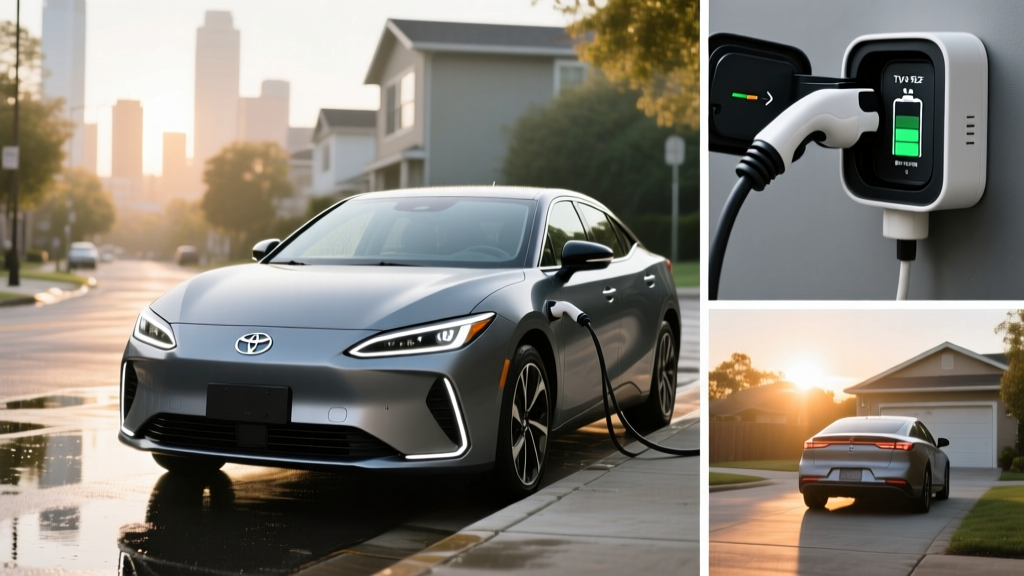
The Toyota bZ3 represents Toyota's dedicated electric sedan strategy for the Chinese market — a vehicle co-developed with BYD that signals how the world's largest automaker approaches battery-electric competition in the most aggressive EV market on Earth. For US-based shoppers researching the bZ3, understanding its specs, availability, and how it compares to the bZ4X crossover or upcoming North American sedans is essential context before drawing conclusions about Toyota's EV roadmap.
Toyota bZ3 Specifications at a Glance
| Specification | Standard Range | Long Range |
|---|---|---|
| EPA-Equivalent Range (CLTC) | ~338 mi (550 km) | ~376 mi (616 km) |
| Battery Capacity | 49.92 kWh (LFP) | 71.04 kWh (LFP) |
| Battery Chemistry | Lithium Iron Phosphate (LFP) | Lithium Iron Phosphate (LFP) |
| Motor Output | 181 kW (243 hp) | 181 kW (243 hp) |
| Drivetrain | Rear-Wheel Drive | Rear-Wheel Drive |
| 0-60 mph (est.) | ~7.5 seconds | ~7.5 seconds |
| DC Fast Charge (peak) | ~90 kW | ~120 kW |
| 10-80% DC Charge Time | ~27 minutes | ~27 minutes |
| Level 2 Charge Rate | ~6.6 kW | ~6.6 kW |
| Length / Width / Height | 187.4" / 72.8" / 57.5" (4,725 / 1,835 / 1,475 mm) | |
| Wheelbase | 110.2" (2,850 mm) | |
| Base MSRP (China) | ~¥169,800 – ¥199,800 (~$23,500 – $27,700 USD) | |
Range, Efficiency, and Real-World Expectations
The Toyota bZ3 uses China's CLTC testing cycle, which tends to overstate range compared to the US EPA standard by roughly 15-20%. The Long Range variant's 616 km (383 miles) CLTC figure likely translates to an EPA-equivalent estimate of approximately 310-330 miles if the vehicle were certified for US sale. The Standard Range model's 550 km CLTC rating equates to roughly 275-290 EPA miles.
Both variants use BYD's Blade Battery in LFP (lithium iron phosphate) chemistry. LFP cells sacrifice some energy density compared to NMC (nickel manganese cobalt) but gain substantial advantages in cycle life, thermal stability, and cost. For daily-driven commuters who charge to 100% regularly, LFP is the more pragmatic chemistry — Toyota and BYD explicitly recommend full charges for LFP packs, unlike NMC batteries where 80% daily limits prolong longevity.
Real-world highway driving at 70-75 mph will reduce range by 15-25% versus city use, consistent with most EVs. In cold-weather conditions (below freezing), expect 20-30% range reduction due to cabin heating demands and reduced battery efficiency. The bZ3 uses a heat pump for climate control, which mitigates but does not eliminate cold-weather losses.
Charging Speed and Infrastructure Compatibility
| Charging Level | Power (kW) | Time / Rate | Miles Added per Hour |
|---|---|---|---|
| Level 1 (120V household) | ~1.4 kW | ~3-4 mi/hr | ~3-4 |
| Level 2 (240V home/public) | ~6.6 kW | ~22-25 mi/hr | ~22-25 |
| DC Fast Charge (peak) | 90-120 kW | 10-80% in ~27 min | ~150-200 mi in 30 min |
The bZ3's DC fast-charging capability peaks between 90 kW (Standard Range) and 120 kW (Long Range). These figures place it behind competitors like the Hyundai Ioniq 6 (up to 240 kW on 800V architecture) and Tesla Model 3 (up to 250 kW on V3 Superchargers). The 10-80% charge time of approximately 27 minutes is adequate but not class-leading.
Charging curves matter more than peak numbers. LFP batteries typically sustain a flatter charge curve through the mid-SoC range before tapering sharply above 80%. For road-trip planning, plan 20-25 minute stops at 150+ kW chargers to move from 15% to 75% SoC — the sweet spot where the bZ3 charges most efficiently. Pushing past 80% adds significant time with diminishing range returns.
China-market bZ3 vehicles use the GB/T charging standard, which differs from North America's NACS (Tesla) or CCS1 connectors. Any future North American variant would require CCS or NACS compatibility.
Performance and Driving Dynamics
The bZ3's single rear-mounted motor produces 181 kW (243 horsepower) and approximately 221 lb-ft of torque. This configuration delivers a 0-60 mph time in the 7.0-7.5 second range — respectable for a midsize sedan but not performance-oriented. The RWD layout provides balanced weight distribution and avoids the efficiency penalties of AWD dual-motor setups.
Toyota tuned the bZ3's suspension for comfort over sportiness, with compliant ride quality suited to urban commuting and highway cruising. Regenerative braking offers adjustable levels, though the bZ3 does not provide true one-pedal driving with complete stop-hold capability — drivers still need the brake pedal for final stops, unlike some competitors.
The vehicle's 110.2-inch wheelbase (longer than a Camry) translates to generous rear-seat legroom, approximately 38-40 inches, making it viable for family use. Cargo space in the trunk is estimated at 15-17 cubic feet, typical for the sedan segment, though the absence of a frunk (front trunk) limits total utility compared to hatchback EVs.
Pricing, Tax Credits, and Ownership Costs
In China, the Toyota bZ3 starts at approximately ¥169,800 (~$23,500 USD) for the Standard Range trim and tops out near ¥199,800 (~$27,700 USD) for Long Range variants. This pricing positions it against the BYD Seal, Tesla Model 3, and Nio ET5 in one of the world's most competitive EV markets.
| Cost Factor | Details |
|---|---|
| Base MSRP (China) | ~$23,500 – $27,700 USD equivalent |
| US Federal Tax Credit (§30D) | Not applicable — vehicle not sold in US |
| Estimated US Price (if offered) | $32,000 – $38,000 (projected, with US safety/charging compliance) |
| Battery Warranty (China) | 8 years / 150,000 km (~93,000 miles) |
| Powertrain Warranty | 8 years / 150,000 km |
For US buyers wondering about federal tax credit eligibility: the bZ3 is not currently eligible because it is not sold in North America. If Toyota introduces a US-spec variant, eligibility for the IRS §30D credit would depend on meeting MSRP caps ($55,000 for sedans), buyer income limits ($150,000 single / $300,000 joint), and battery component/critical mineral sourcing requirements. The BYD-sourced Blade Battery would face substantial hurdles under current US content rules, making credit qualification uncertain even if the vehicle launched stateside.
Tech Features, Safety, and Drawbacks
The bZ3's interior centers on a 12.8-inch vertical touchscreen running Toyota's latest infotainment system with wireless Apple CarPlay and Android Auto. A 12.3-inch digital instrument cluster provides driver information. The center console uses a rotary dial shifter rather than a traditional lever, freeing up storage space.
Toyota Safety Sense (TSS) 3.0 includes adaptive cruise control, lane-keeping assist, automatic emergency braking, and blind-spot monitoring. These are SAE Level 2 driver-assistance features — the driver must remain engaged with hands on the wheel and eyes on the road. This is not autonomous driving.
Pros
- LFP Blade Battery offers excellent cycle life and thermal safety
- Spacious rear seat with 38+ inches of legroom
- Competitive pricing in Chinese market
- Heat pump standard for cold-weather efficiency
- Toyota's reputation for long-term reliability
Cons
- DC fast-charging speed (90-120 kW) lags competitors
- No AWD or dual-motor option available
- Not available in North America or Europe
- No frunk (front trunk) for additional cargo
- Regenerative braking lacks true one-pedal mode
- GB/T connector incompatible with US/EU infrastructure
Who Should Consider the Toyota bZ3?
The bZ3 suits urban and suburban commuters in China who prioritize rear-seat space, LFP battery longevity, and Toyota brand trust over cutting-edge charging speeds or performance. It's a practical family sedan that trades acceleration thrills for efficiency and comfort.
For US-based buyers, the bZ3 is a research subject rather than a purchase option. Its existence signals Toyota's willingness to partner with BYD on competitive EVs — technology and lessons that may eventually reach North American models like the bZ4X successor or a future electric Camry equivalent. Until then, US shoppers should evaluate the Tesla Model 3, Hyundai Ioniq 6, or upcoming Toyota EVs confirmed for American sale.
Frequently Asked Questions
What is the real-world range of the Toyota bZ3?
The Long Range bZ3 achieves approximately 310-330 EPA-equivalent miles (converted from 616 km CLTC). Real-world highway driving at 70+ mph reduces this to 250-280 miles. Cold weather (below freezing) can drop range by 20-30%, yielding 220-250 miles in winter conditions. The heat pump helps but cannot eliminate cold-weather losses entirely.
How fast does the Toyota bZ3 charge?
DC fast charging peaks at 90-120 kW depending on battery size, achieving 10-80% in approximately 27 minutes at compatible stations. Home Level 2 charging at 6.6 kW adds roughly 22-25 miles per hour, requiring 10-12 hours for a full charge from near-empty. These speeds are adequate but slower than 800V competitors like the Hyundai Ioniq 6 (18-minute 10-80% times).
Does the Toyota bZ3 qualify for the US federal EV tax credit?
No. The bZ3 is not sold in the United States and therefore cannot qualify for the IRS §30D federal tax credit. Even if Toyota introduced a US variant, the BYD-sourced LFP battery would face challenges meeting the critical minerals and battery component sourcing requirements under current rules. Always verify current-year eligibility on IRS.gov before assuming credit qualification.
Is the Toyota bZ3 worth buying vs competitors?
In China, the bZ3 competes directly with the BYD Seal, Tesla Model 3, and Nio ET5. It offers Toyota reliability and LFP battery longevity but trails in charging speed and tech features. For US buyers, the bZ3 is not an option. Consider the Tesla Model 3 (faster charging, Supercharger network), Hyundai Ioniq 6 (800V architecture, 300+ mile range), or wait for Toyota's North American EV sedan announcements.
What is the bZ3's battery warranty?
Toyota provides an 8-year / 150,000 km (~93,000 miles) warranty on the battery pack and electric powertrain in China. This is shorter than the US-standard 8-year / 100,000-mile warranties typical for American-market EVs, reflecting different regional regulations. LFP chemistry typically degrades more slowly than NMC, with 80%+ capacity retention expected well beyond 150,000 miles under normal use.
Will Toyota sell the bZ3 in the United States?
As of 2026, Toyota has not announced plans to sell the bZ3 in North America. The vehicle was designed specifically for the Chinese market in partnership with BYD. Toyota's US EV strategy currently focuses on the bZ4X crossover and upcoming models built on the e-TNGA platform. A future electric sedan for North America is plausible but unconfirmed.
Sources: Toyota China official specifications, fueleconomy.gov for EPA testing methodology, IRS.gov for §30D tax credit rules.