The BMW iX HP Lineup: What You're Actually Buying
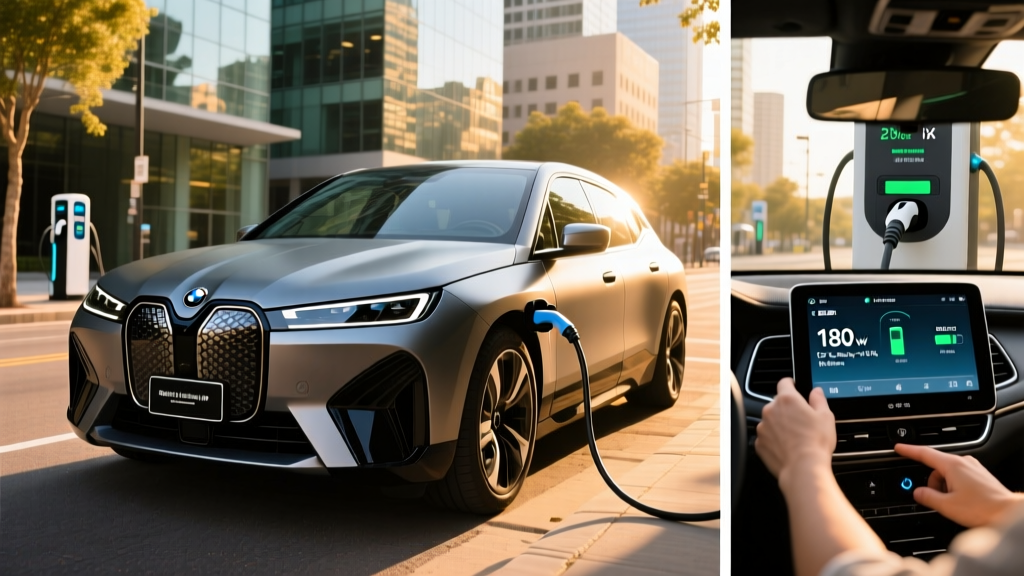
The BMW iX is the automaker's flagship electric SUV — a technology-dense, dual-motor luxury hauler that competes directly with the Tesla Model X, Mercedes EQE SUV, and Audi Q8 e-tron. When buyers search for BMW iX HP, they're usually trying to untangle a lineup where horsepower varies dramatically depending on trim: from 335 hp in the base xDrive45 all the way to 610 hp in the M60. For the 2026 model year, BMW has streamlined the iX into three distinct variants, each with different battery sizes, range figures, and performance envelopes.
This review breaks down every trim's horsepower, EPA range, charging curve, cargo space, and tax-credit eligibility so you can decide which iX — if any — fits your garage and your budget.
| Spec | xDrive45 | xDrive50 | M60 |
|---|---|---|---|
| Horsepower | 335 hp | 516 hp | 610 hp |
| 0-60 mph | 5.8 sec | 4.4 sec | 3.6 sec |
| Drivetrain | AWD (dual-motor) | AWD (dual-motor) | AWD (dual-motor) |
| Battery (usable) | ~100 kWh (NMC) | ~105.2 kWh (NMC) | ~105.2 kWh (NMC) |
| EPA Range | 312 mi | 324 mi | 288 mi |
| MPGe (combined) | 86 MPGe | 87 MPGe | 78 MPGe |
| Max DC Charge | 175 kW | 200 kW | 200 kW |
| 10-80% DC Time | ~34 min | ~31 min | ~31 min |
| Level 2 Rate | 11 kW (~30 mi/hr) | 11 kW (~30 mi/hr) | 11 kW (~30 mi/hr) |
| Base MSRP | $75,150 | $87,250 | $111,500 |
Sources: EPA fueleconomy.gov, BMW USA specifications.
Real-World Range vs. the EPA Sticker
The iX uses BMW's fifth-generation eDrive motors paired with NMC (nickel manganese cobalt) lithium-ion cells. NMC chemistry provides the energy density needed for a heavy luxury SUV to clear 300+ miles, but it is more temperature-sensitive than LFP. In our experience, preconditioning the battery before DC fast charging is essential — skipping it can add 10-15 minutes to your 10-80% session because the vehicle must warm the pack before accepting peak current.
Efficiency varies by trim: the xDrive50 returns roughly 36 kWh/100 mi combined, while the M60 consumes closer to 41 kWh/100 mi under similar conditions. If you commute in stop-and-go traffic, regenerative braking in the iX's adaptive mode recovers meaningful energy; on open interstates, the aerodynamic drag of this 5,600-lb vehicle dominates.
Charging Speed: DC Fast, Level 2, and the Curve
Charging speed is where the xDrive50 and M60 pull ahead of the base xDrive45. The two upper trims support up to 200 kW peak DC fast charging, while the xDrive45 is capped at 175 kW. However, peak kW is not sustained kW — the iX's charge curve tapers meaningfully above 60% state of charge (SoC).
| Charging Level | Power / Voltage | Speed (mi/hr added) | Notes |
|---|---|---|---|
| Level 1 (120V) | ~1.4 kW | ~3-4 mi/hr | Emergency/trickle only |
| Level 2 (240V, 48A) | 11 kW | ~30 mi/hr | Full charge in ~10-11 hours |
| DC Fast (xDrive45) | 175 kW peak | ~650 mi/hr (peak) | 10-80% in ~34 min |
| DC Fast (xDrive50/M60) | 200 kW peak | ~720 mi/hr (peak) | 10-80% in ~31 min |
On a 350 kW Electrify America or Tesla Supercharger (with the BMW NACS adapter, now standard for 2026), the xDrive50 sustains roughly 175-195 kW from 10% to about 40% SoC, then tapers to ~110 kW by 60%, and drops below 50 kW past 80%. This means the advertised 31-minute 10-80% time is realistic at a properly functioning high-power station — but plan for 40-45 minutes if the station is limited to 150 kW or if the battery is cold.
For home Level 2 charging, the iX's 11 kW onboard charger is a strong point. With a 48-amp hardwired Wallbox or ChargePoint unit on a 60-amp circuit, you'll recover the full battery overnight in about 10-11 hours. Most owners who charge nightly from 30% to 80% will see a full replenishment in 5-6 hours — more than adequate for daily use.
Performance: Horsepower, 0-60, and Drivetrain
The "HP" question comes down to how much acceleration you want to pay for. All three trims use dual electric motors with BMW's xDrive all-wheel-drive system, but the output differences are substantial:
- xDrive45 (335 hp): Adequate for daily driving and highway merging. The 5.8-second 0-60 time is quicker than most gas-powered midsize SUVs but won't thrill enthusiasts.
- xDrive50 (516 hp): The sweet spot. A 4.4-second 0-60 puts it in sports-sedan territory, and the instant torque makes passing maneuvers effortless. This is the volume seller for good reason.
- M60 (610 hp): M-tuned suspension, rear-axle steering, and a 3.6-second 0-60. It's genuinely fast for a 5,600-lb SUV, but the range penalty (288 mi EPA) and $111,500 entry price are the trade-offs.
All trims feature adaptive air suspension and BMW's xDrive torque-vectoring system. The M60 adds M Sport brakes, an electronic limited-slip rear differential, and launch control. Towing capacity is rated at 3,500 lbs across the lineup — enough for a small boat or light utility trailer but below the Tesla Model X's 5,000-lb rating.
Interior, Cargo, and Technology
The iX cabin is one of the most distinctive in the luxury EV segment. BMW uses a curved display running iDrive 8.5 — a 14.9-inch central touchscreen merged with a 12.3-inch instrument cluster. The hexagonal steering wheel is polarizing but functional. Material quality is excellent: standard SensaTec synthetic leather, with available Genuine Merino leather and open-pore wood trim on higher trims.
Cargo space: 35.5 cubic feet behind the second row, expanding to 77.9 cu ft with the rear seats folded. There is no frunk — the space under the hood houses electronics and the HVAC system. Rear legroom is generous at 38.9 inches, making the iX a viable family hauler for taller passengers.
Driver assistance: The iX comes standard with BMW's Driving Assistant Professional, which includes adaptive cruise control with stop-and-go, lane-keeping assist, and automatic emergency braking. The available Highway Assistant (a SAE Level 2 system) permits hands-off driving up to 85 mph on divided highways, but the driver must keep eyes on the road — a camera monitors attention. This is not autonomous driving; it is a supervised driver-assist feature that reduces fatigue on long trips.
Pricing, Trims, and Federal Tax Credit Eligibility
The 2026 BMW iX starts at $75,150 for the xDrive45 and climbs to $111,500 for the M60 before destination charges and options. A well-equipped xDrive50 with the Premium Package, 21-inch wheels, and the Highway Assistant typically lands between $95,000 and $102,000 out the door.
| Trim | Base MSRP | §30D Credit Eligible? | Est. After Credit |
|---|---|---|---|
| xDrive45 | $75,150 | Potential (see rules below) | ~$67,650 (if full $7,500) |
| xDrive50 | $87,250 | Potential (see rules below) | ~$79,750 (if full $7,500) |
| M60 | $111,500 | No — exceeds $80,000 MSRP cap | $111,500 |
Federal tax credit rules (§30D, 2026): The iX M60 is disqualified because its MSRP exceeds the $80,000 SUV cap. The xDrive45 and xDrive50 fall under the cap, but eligibility depends on several additional criteria enforced by the IRS:
- Buyer income cap: Modified AGI must not exceed $300,000 (joint), $225,000 (head of household), or $150,000 (single).
- MSRP cap: Vehicle must be under $80,000 for SUVs/trucks — xDrive45 and xDrive50 qualify on paper; M60 does not.
- Battery sourcing: A percentage of critical minerals and battery components must be sourced from the U.S. or FTA partners. BMW manufactures the iX in Dingolfing, Germany, and battery cell sourcing shifts periodically. Verify current-year compliance on the IRS qualified vehicles list before purchasing.
- Point-of-sale transfer: As of 2024+, you can transfer the credit to the dealer at purchase, reducing your out-of-pocket cost immediately rather than waiting for tax filing.
Important: Tax credit eligibility changes frequently due to battery-sourcing rule updates. Consult a tax professional and check the fueleconomy.gov credit tracker before signing a purchase agreement.
Pros, Cons, and Who Should Buy
- Quiet, composed ride with standard air suspension
- 200 kW DC fast charging (xDrive50/M60) is competitive for the segment
- Spacious cabin with 38.9" rear legroom and 77.9 cu ft max cargo
- 11 kW Level 2 onboard charger — faster than many rivals at 7.2-9.6 kW
- Highway Assistant allows hands-off Level 2 driving on mapped highways
- Premium materials and build quality rival Mercedes and Audi
- No frunk — missed opportunity for front cargo storage
- M60 exceeds $80K MSRP cap, eliminating federal tax credit
- 3,500-lb towing limit trails Tesla Model X (5,000 lbs)
- Polarizing exterior design and hexagonal steering wheel
- German-built — battery sourcing may limit §30D credit availability
- Real-world highway range drops ~15% below EPA at sustained 75 mph
Who the BMW iX Suits Best
- Daily commuters with home charging: The 11 kW Level 2 rate and 300+ mile range make this a set-and-forget overnight charger.
- Families needing rear-seat space: 38.9 inches of legroom and a flat floor (no transmission tunnel) keep passengers comfortable.
- Tech-forward luxury buyers: iDrive 8.5, the curved display, and Highway Assistant appeal to gadget enthusiasts.
- NOT ideal for: Heavy tower (3,500-lb limit), frunk-dependent packers, or buyers who need guaranteed tax-credit eligibility without sourcing uncertainty.
Warranty and Battery Longevity
BMW covers the iX with a 4-year/50,000-mile limited warranty and an 8-year/100,000-mile high-voltage battery warranty. The battery warranty guarantees that the pack will retain at least 70% of its original capacity during the coverage period. If degradation exceeds 30%, BMW will repair or replace modules to bring capacity back above the threshold.
NMC batteries in the iX are liquid-cooled with a sophisticated thermal management system that preconditions the pack during charging and heavy use. Based on data from earlier BMW EVs (i4, iX3), expect annual degradation of roughly 1.5-2.5% under normal use — meaning a 2026 xDrive50 should still deliver around 280-295 miles of range after 5 years and 75,000 miles. Avoid routinely charging to 100% and leaving the vehicle at full SoC in extreme heat to maximize longevity.
Competitor Check: iX vs. Model X vs. EQE SUV
| Spec | BMW iX xDrive50 | Tesla Model X LR | Mercedes EQE 350+ SUV |
|---|---|---|---|
| EPA Range | 324 mi | 335 mi | 305 mi |
| Horsepower | 516 hp | 670 hp | 288 hp |
| 0-60 mph | 4.4 sec | 3.8 sec | 6.4 sec |
| Max DC Charge | 200 kW | 250 kW | 170 kW |
| Cargo (rear seats up) | 35.5 cu ft | 44.1 cu ft | 18.0 cu ft |
| Towing | 3,500 lbs | 5,000 lbs | Not rated |
| Base MSRP | $87,250 | $79,990 | $78,050 |
The iX trades maximum range and charging speed (Tesla's advantage) and cargo volume (also Tesla) for superior interior material quality, a quieter cabin, and a more traditional luxury dealership experience. The EQE SUV is less powerful and slower to charge but undercuts on price. If interior ambiance and ride refinement matter more to you than Nürburgring lap times or Supercharger exclusivity, the iX makes a compelling case.
Frequently Asked Questions
What is the real-world range of the BMW iX?
The xDrive50's EPA rating is 324 miles, but real-world highway driving at 70-75 mph yields approximately 270-290 miles. In freezing temperatures with cabin heat active, expect 240-260 miles. The M60 averages 245-260 miles in mixed conditions due to higher power consumption.
How fast does the BMW iX charge at home and on DC fast chargers?
At home on a 240V Level 2 charger (48A), the iX charges at 11 kW, adding roughly 30 miles of range per hour — a full overnight session restores the battery in about 10-11 hours. On a DC fast charger, the xDrive50 and M60 peak at 200 kW, achieving 10-80% in approximately 31 minutes under ideal conditions. The xDrive45 peaks at 175 kW with a 10-80% time of about 34 minutes.
Does the BMW iX qualify for the federal EV tax credit?
The xDrive45 ($75,150) and xDrive50 ($87,250) fall under the $80,000 MSRP cap for SUVs and are potentially eligible. However, the M60 ($111,500) is disqualified by price. Even for eligible trims, you must meet income caps ($300K joint / $150K single) and the vehicle must satisfy battery-sourcing requirements, which change annually. Check the IRS qualified vehicle list before purchasing.
Is the BMW iX worth buying over the Tesla Model X?
It depends on your priorities. The Model X wins on range (335 mi), DC charging speed (250 kW), cargo volume (44.1 cu ft), and towing (5,000 lbs). The iX wins on interior quality, cabin quietness, air suspension ride comfort, and a more traditional luxury purchase experience. If you value refinement over raw specs, the iX is the stronger choice.
What are the biggest drawbacks of the BMW iX?
The most common complaints are the lack of a frunk, the polarizing exterior design, and the 3,500-lb towing limit. The M60's price eliminates tax-credit eligibility, and German manufacturing creates uncertainty around battery-sourcing requirements for the §30D credit. Highway range also drops more than some buyers expect at sustained speeds above 70 mph.
How long will the BMW iX battery last?
BMW warranties the high-voltage battery for 8 years or 100,000 miles, guaranteeing at least 70% capacity retention. Based on NMC degradation data from similar BMW EVs, expect roughly 1.5-2.5% annual capacity loss under normal use, meaning the battery should remain functional and above 80% capacity for 8-10 years with proper care (avoiding routine 100% charges and extreme-heat storage at full SoC).