Quick Verdict: The Electric Flagship That Drives Like a BMW
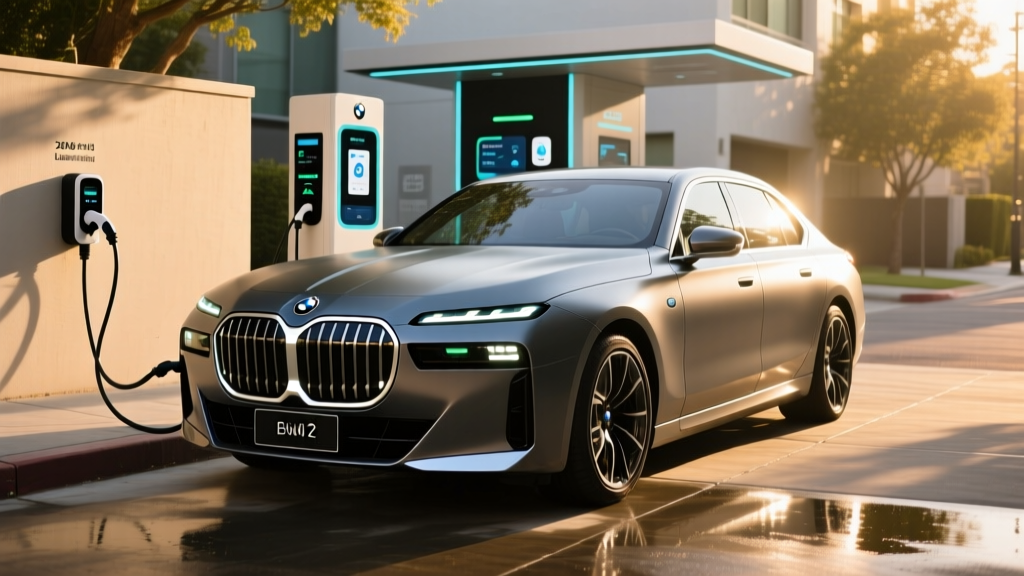
The 2026 BMW i7 is a full-size luxury electric sedan that refuses to feel like a compromise. Built on the same CLAR platform as the 7 Series, it pairs a 101.7 kWh (usable) battery pack with dual-motor all-wheel drive across all trims, delivering between 536 and 650 horsepower depending on configuration. EPA range tops out at 318 miles for the xDrive50, while the performance-oriented M70 sacrifices roughly 35 miles for a 3.5-second 0-60 sprint.
This isn't an EV for budget-conscious buyers — the i7 starts at $106,675 before destination. But for those shopping in the six-figure electric luxury sedan segment against the Mercedes-Benz EQS, Porsche Taycan, and Lucid Air, the i7 makes a compelling case through its blend of driving dynamics, interior technology, and charging capability. It also faces a critical tax-credit hurdle that buyers need to understand before signing a purchase agreement.
Range, Battery, and Efficiency: Real Numbers From the EPA
| Spec | xDrive50 | M70 xDrive |
|---|---|---|
| EPA Range | 318 miles | 283 miles |
| Battery (usable) | 101.7 kWh | 101.7 kWh |
| Chemistry | NMC (Nickel Manganese Cobalt) | NMC |
| MPGe (combined) | 82 MPGe | 77 MPGe |
| kWh/100 mi | 41 | 44 |
| Horsepower | 536 hp | 650 hp |
| 0-60 mph | 4.5 sec | 3.5 sec |
| Drivetrain | Dual-motor AWD | Dual-motor AWD |
| Curb Weight | ~6,070 lbs | ~6,270 lbs |
The 101.7 kWh usable battery uses NMC (nickel manganese cobalt) chemistry, which offers higher energy density than LFP (lithium iron phosphate) at the cost of slightly faster long-term degradation and higher raw-material sourcing complexity. BMW has not published a switch to LFP for the i7, consistent with its positioning as a performance-luxury flagship where energy density matters for packaging a large pack under a sedan floor.
Efficiency at 41 kWh/100 mi (xDrive50) is competitive for a 6,000+ pound luxury sedan but trails lighter competitors. The Lucid Air Grand Touring achieves 131 MPGe combined thanks to its lower weight and more aerodynamic profile. The Mercedes-Benz EQS 580 sits at 85 MPGe combined — close to the i7 but with slightly less range due to a smaller battery.
Charging Speed: DC Fast Charging and Home Level 2
| Charging Method | Power | Speed / Time |
|---|---|---|
| DC Fast Charge (peak) | 195 kW | 10–80% in ~34 minutes |
| DC Fast Charge (sustained avg) | ~140–150 kW | ~190 mi added in 30 min |
| Level 2 (240V, 48A) | 11.5 kW | ~28 mi/hr of charging |
| Level 2 (full 0–100%) | 11.5 kW | ~10.5 hours |
| Level 1 (120V, 12A) | ~1.4 kW | ~3.5 mi/hr |
The i7's 195 kW peak DC fast-charging rate is respectable but not class-leading. The Porsche Taycan and Hyundai Ioniq 5 both accept over 230–350 kW at peak, filling their packs faster on capable chargers. Where the i7 earns points is its charge-curve management: BMW's thermal preconditioning system ramps the battery to optimal temperature when a DC fast-charger is set as the navigation destination, allowing the car to sustain higher average power through the middle of the charge session.
The charge curve tapers significantly above 80% state of charge (SoC). Expect the final 80–100% to take nearly as long as the 10–80% session — a common characteristic of large NMC packs. For road trips, plan to charge to 80% and go; topping off is only worth the time if your next leg demands the full range.
At home, the i7 accepts up to 11.5 kW on a Level 2 charger (240V, 48 amps). A full charge from near-empty takes roughly 10.5 hours, meaning overnight charging on a home wallbox easily refills the pack. BMW includes the Flexible Charger with the vehicle, which can handle both 120V and 240V outlets. For dedicated Level 2 installation, budget $800–$2,500 for a quality wallbox (ChargePoint Home Flex, BMW Wallbox, or Enel X JuiceBox) plus $500–$2,000 for electrician labor, depending on panel proximity and local permitting. A 200-amp electrical panel is generally sufficient; older homes may need a panel upgrade ($1,500–$3,500).
Performance, Ride, and Driving Dynamics
The xDrive50's 536 horsepower and 4.5-second 0-60 time make it brisk for a sedan that weighs over three tons. Sport mode sharpens throttle response and firms the standard adaptive air suspension, but this is fundamentally a grand-touring car, not a sports sedan. The M70 variant, with 650 hp and a 3.5-second sprint, closes the gap to the Porsche Taycan Turbo while retaining the i7's ride comfort.
Regenerative braking is adjustable through three levels, including an adaptive mode that uses radar and navigation data to modulate regen based on traffic and upcoming stops. One-pedal driving is available at the maximum regen setting but isn't as aggressive as the one-pedal feel in a Nissan Leaf or Chevrolet Bolt — BMW clearly tunes for luxury passengers who don't want to be pitched forward at every lift-off.
The air suspension and rear-wheel steering (standard on the i7) give this 17-foot sedan a surprisingly tight turning circle and composed highway manners. At 80 mph, the cabin is whisper-quiet, aided by acoustic laminated glass and BMW's active noise cancellation through the audio system.
Interior, Technology, and Cargo
The i7's cabin is dominated by BMW's Curved Display — a 12.3-inch digital instrument cluster seamlessly joined to a 14.9-inch infotainment touchscreen running iDrive 8.5. The system supports wireless Apple CarPlay and Android Auto, over-the-air updates, and BMW's Intelligent Personal Assistant voice control. A 31-inch 8K Theater Screen folds down from the ceiling for rear-seat passengers (standard on M70, optional on xDrive50), turning the back row into a mobile cinema with Amazon Fire TV integration.
Passenger and cargo dimensions:
- Front legroom: 41.1 inches
- Rear legroom: 40.2 inches
- Front headroom: 40.0 inches
- Rear headroom: 38.2 inches
- Trunk volume: 17.7 cu ft (sedans don't offer hatchback versatility, a real limitation vs the EQS liftback)
- No front trunk (frunk) — the space is occupied by HVAC and electronics
The trunk is power-operated and deep, but the sedan's fixed rear parcel shelf limits what you can load compared to a hatchback or SUV. For a car at this price point, the 17.7 cu ft figure is adequate for luggage for four on a week-long trip, but bulky items will require creative packing.
Pricing, Trims, and Federal Tax Credit Eligibility
| Trim | Base MSRP | Federal Tax Credit (§30D) | Effective Price* |
|---|---|---|---|
| i7 xDrive50 | $106,675 | $0 (MSRP cap exceeded) | $106,675 |
| i7 M70 xDrive | $143,475 | $0 (MSRP cap exceeded) | $143,475 |
*Destination charge (~$995) not included. Effective price assumes no state/local incentives.
Here is the critical detail for i7 shoppers: the 2026 BMW i7 does not qualify for the federal §30D new clean vehicle tax credit. IRS rules cap eligible sedans at an MSRP of $55,000 — and the i7 starts nearly double that threshold. This is not a sourcing or income issue; it's a hard price cap. The credit's MSRP limits are $55,000 for sedans and $80,000 for SUVs, vans, and pickups, as outlined on irs.gov.
State-level incentives may partially offset the cost. California's Clean Vehicle Rebate has been restructured, but some states offer point-of-sale rebates or reduced registration fees for EVs. Consult your state's energy or DMV website for current programs. A tax professional can advise on whether any state credits are refundable or stackable.
Popular options that push the as-tested price higher include the Executive Package ($5,500), Bowers & Wilkins Diamond surround sound ($3,650), the Theater Screen ($2,000 on xDrive50), and 21-inch wheels ($1,500). A well-equipped xDrive50 easily reaches $120,000+ before taxes.
Driver Assistance and Safety
The i7 comes standard with BMW's Active Driving Assistant, which includes forward collision warning, automatic emergency braking, blind-spot monitoring, rear cross-traffic alert, and lane departure warning. The optional Driving Assistant Professional adds Highway Assistant (hands-free driving up to 85 mph on divided highways with eyes-on monitoring via an interior camera), automatic lane change, and evasive steering assist.
BMW has also introduced Parking Assistant Professional with Remote Parking, allowing the driver to maneuver the i7 into tight spaces using the smartphone app while standing outside the car — useful given the sedan's 206-inch length.
Safety ratings: The i7 earned a 5-star overall rating from NHTSA and was named an IIHS Top Safety Pick+ (when equipped with specific headlights), reflecting BMW's structural engineering and comprehensive airbag suite.
Competitive Landscape: i7 vs EQS vs Lucid Air vs Taycan
The i7 competes in a narrow but fierce segment. Here's how it stacks up on the metrics that matter:
- Mercedes-Benz EQS 580: 371 miles EPA range, 85 MPGe, 200 kW DC charging, ~$105,550. The EQS wins on range and offers a liftback body style for better cargo versatility. Its ride is comparably plush, but driving dynamics feel less connected than the i7.
- Lucid Air Grand Touring: 516 miles EPA range, 131 MPGe, 300+ kW DC charging, ~$127,000. The Air dominates on efficiency and range. Interior materials and software polish lag behind BMW, but the powertrain is best-in-class.
- Porsche Taycan Turbo S: 283 miles EPA range, 205 kW DC charging (320 kW peak on Turbo GT), 0-60 in 2.4 sec, ~$190,000+. The Taycan wins on performance and charging speed but costs significantly more and seats four instead of five.
Choose the Lucid Air if: Range and efficiency are your top priorities, and you can accept a less established service network.
Choose the Mercedes EQS if: You want more range, hatchback cargo flexibility, and a slightly softer ride, and don't mind less engaging steering feedback.
Warranty, Ownership Costs, and Who the i7 Suits
Warranty coverage:
- Basic vehicle: 4 years / 50,000 miles
- Battery: 8 years / 100,000 miles (retention threshold: 70% of original capacity)
- Powertrain: 4 years / 50,000 miles
- Corrosion: 12 years / unlimited miles
- Complimentary maintenance: 3 years / 36,000 miles
The battery warranty aligns with the industry standard for luxury EVs. BMW guarantees the pack will retain at least 70% of its original capacity over 8 years or 100,000 miles. NMC chemistry typically degrades 10–15% over the first 100,000 miles under normal use, meaning most owners will remain well within the warranty threshold. Avoiding frequent DC fast-charging to 100% and minimizing prolonged storage at extreme SoC levels (above 90% or below 10%) will help preserve long-term health.
Who this EV suits best:
- Executive commuters who want a serene, tech-rich daily driver with enough range for a 60-mile round trip without nightly charging anxiety.
- Luxury sedan loyalists transitioning from a 7 Series or S-Class who want electric propulsion without sacrificing interior quality or brand familiarity.
- Families who prioritize rear-seat comfort — the i7's rear legroom and optional Theater Screen make it one of the best EVs for chauffeured passengers.
Who should look elsewhere: Road-trippers who need 350+ miles between stops (consider the Lucid Air), buyers who need hatchback cargo space (EQS or an electric SUV), or anyone expecting the federal tax credit to meaningfully offset the price.
Pros and Cons
- Excellent ride quality with adaptive air suspension and rear-wheel steering
- Top-tier interior materials and build quality
- 318-mile EPA range is competitive for the segment
- Theater Screen is a standout rear-seat feature
- Strong driving dynamics for a full-size luxury sedan
- Comprehensive standard safety suite
- No federal tax credit eligibility (MSRP exceeds $55K sedan cap)
- 195 kW peak DC charging trails Porsche/Hyundai/Kia platforms
- Sedan trunk limits cargo versatility vs liftback competitors
- No frunk for additional storage
- Real-world highway range drops to ~260 miles
- Options quickly push price past $130,000
Frequently Asked Questions
What is the real-world range of the 2026 BMW i7?
The EPA rates the i7 xDrive50 at 318 miles. In real-world highway driving at 70–80 mph, expect 255–275 miles. Cold weather (below 30°F) reduces that further to approximately 220–255 miles. City driving with regenerative braking can approach or slightly exceed the EPA estimate.
How fast does the i7 charge at home and on DC fast chargers?
On a DC fast charger, the i7 peaks at 195 kW and charges from 10–80% in approximately 34 minutes. At home on a Level 2 charger (240V, 48A, 11.5 kW), a full charge takes about 10.5 hours, adding roughly 28 miles of range per hour of charging.
Does the 2026 BMW i7 qualify for the $7,500 federal EV tax credit?
No. The IRS §30D credit caps eligible sedans at $55,000 MSRP. The i7 starts at $106,675, which exceeds the cap regardless of battery sourcing or buyer income. State incentives may apply — check your state's energy office for current programs.
Is the BMW i7 worth buying vs the Mercedes EQS or Lucid Air?
The i7 wins on driving dynamics, interior build quality, and brand/service familiarity. The EQS offers more range and hatchback cargo space. The Lucid Air delivers far superior efficiency and range (516 mi EPA) but with a less polished interior and a smaller service network. Your priority — range, driving feel, or tech — determines the best pick.
What battery chemistry does the i7 use and how long will it last?
The i7 uses NMC (nickel manganese cobalt) chemistry in its 101.7 kWh usable battery. NMC offers high energy density suited to a large luxury sedan. BMW warrants the battery for 8 years/100,000 miles at a 70% capacity retention threshold. Typical NMC degradation is 10–15% over 100,000 miles under normal charging habits.
How much does it cost to charge the i7 at home?
At the US average electricity rate of ~$0.17/kWh, fully charging the 101.7 kWh battery costs approximately $17.30. That translates to roughly $0.07 per mile — compared to $0.15–$0.20 per mile for a comparable gasoline 7 Series on premium fuel at $4.00/gallon.