The BMW i7 at a Glance: Quick Verdict for Lease Shoppers
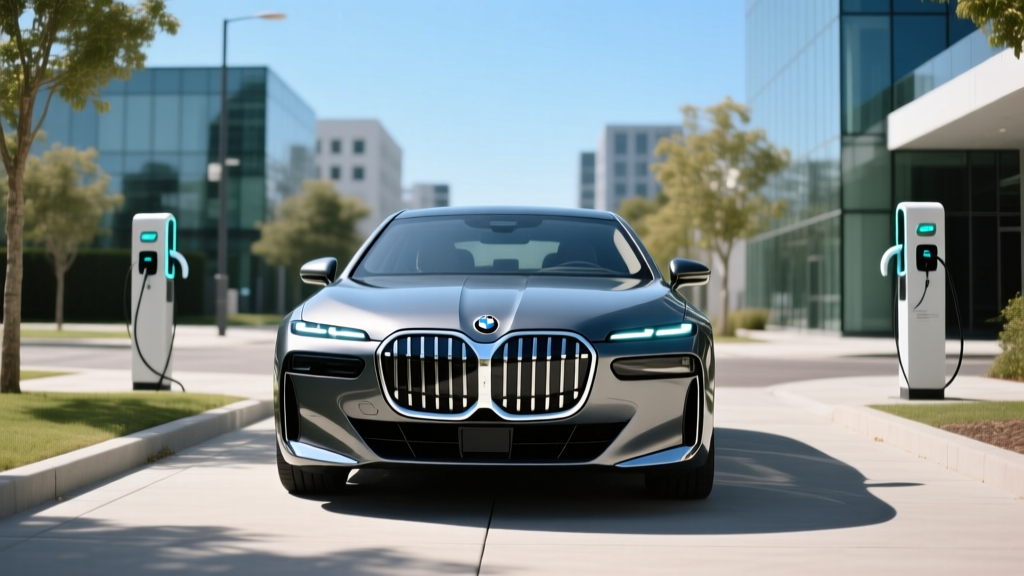
The BMW i7 is the automaker's flagship electric luxury sedan — a full-size, tech-laden executive hauler that competes directly with the Mercedes-Benz EQS, Lucid Air, and Tesla Model S. For buyers weighing a BMW i7 lease, the proposition centers on first-class ride comfort, cutting-edge infotainment (including BMW's Curved Display and available 31-inch Theater Screen), and effortless dual-motor power — all without the long-term depreciation risk that accompanies six-figure EVs.
But the i7 isn't without trade-offs. Its EPA range falls short of rivals like the Lucid Air, its curb weight exceeds 5,800 pounds, and its starting price pushes well past the federal tax credit's MSRP cap. This review dissects the real numbers — range, charging, cost, and practicality — so you can decide whether a 2026 BMW i7 lease makes financial and lifestyle sense.
Range and Efficiency: EPA Numbers vs. Real-World Reality
The 2026 BMW i7 is offered in two primary trims, each with distinct range and performance profiles:
| Trim | EPA Range | Battery (Usable) | Chemistry | MPGe (Combined) | kWh/100 mi |
|---|---|---|---|---|---|
| i7 xDrive60 | 318 mi | 101.7 kWh | NMC (Nickel Manganese Cobalt) | 82 MPGe | 41 |
| i7 M70 xDrive | 300 mi | 101.7 kWh | NMC | 74 MPGe | 45 |
According to fueleconomy.gov, the xDrive60 returns 82 MPGe combined (85 city / 79 highway). For a luxury flagship, that's respectable but trails the Lucid Air Grand Touring's 131 MPGe. The i7's heft — over 5,800 lbs — and tall frontal area work against highway efficiency. Drivers who commute mostly in stop-and-go city traffic will see better real-world results, where regenerative braking recaptures energy that would otherwise be lost.
Charging Speed: DC Fast, Level 2, and What You'll Actually See
Charging infrastructure access and speed are make-or-break for luxury EV ownership. The i7 uses the CCS1 connector (though BMW has signaled NACS adoption for future models) and supports the following charge rates:
| Charging Level | Power / Voltage | Speed | Estimated Time |
|---|---|---|---|
| Level 1 (120V household) | 1.4 kW | ~3 mi/hr | 36+ hours (0–100%) |
| Level 2 (240V home) | 11 kW (48A) | ~25 mi/hr | ~12 hours (0–100%) |
| DC Fast Charge | Peak 195 kW (CCS1) | ~180 mi in 10 min (peak) | 10–80% in ~34 min |
The i7's peak DC fast-charge rate of 195 kW is adequate but not class-leading. The Mercedes EQS peaks at 200 kW, and the Lucid Air at 300+ kW on compatible chargers. More importantly, the i7's charge curve tapers noticeably above 50% state of charge (SoC). Expect sustained rates of 140–160 kW between 10–50%, dropping to under 80 kW above 80%. This means a 10–80% session takes approximately 34 minutes at a 200+ kW charger — and longer on 150 kW units common in many networks.
For home Level 2 charging, the i7's onboard 11 kW AC charger is a strong point. On a 48-amp, 240V circuit, you'll add roughly 25 miles of range per hour — enough to fully replenish overnight. Note that a 48-amp charger requires a 60-amp dedicated circuit; panel upgrades may add $1,500–$4,000 to installation costs if your home's electrical service is already near capacity.
Performance: Dual-Motor Powertrain and Driving Dynamics
Both i7 trims use BMW's fifth-generation eDrive system with dual permanent-magnet motors and standard xDrive all-wheel drive.
| Specification | i7 xDrive60 | i7 M70 xDrive |
|---|---|---|
| Horsepower | 536 hp | 650 hp |
| Torque | 549 lb-ft | 749 lb-ft (with M Launch Control) |
| 0–60 mph | 4.5 seconds | 3.5 seconds |
| Drivetrain | Dual-motor AWD | Dual-motor AWD (rear-biased) |
| Top Speed | 149 mph (electronically limited) | 155 mph |
Even the "base" xDrive60 delivers supercar-rivaling acceleration from a stop — 536 horsepower in a luxury sedan is genuinely effortless. The M70 adds a sportier rear-motor bias, adaptive M suspension, and launch control for 3.5-second sprints. However, the i7's 5,800+ pound curb weight is noticeable in corners. This is a grand tourer, not a sports sedan; the steering is precise but light, and body control prioritizes isolation over engagement. For buyers who want a driver-focused BMW, the i7 M70 is impressive but still no M5.
The adaptive air suspension deserves special mention. It absorbs highway imperfections with remarkable composure, and the cabin isolation — aided by acoustic glass and active noise cancellation — makes the i7 one of the quietest EVs on the road at 80 mph.
Pricing, Lease Considerations, and Federal Tax Credit Eligibility
The 2026 BMW i7's pricing positions it firmly in the ultra-luxury segment. Here's what lease shoppers and buyers need to know:
| Trim | Base MSRP | Typical As-Tested (with options) | Est. Monthly Lease (36 mo, $10K down) |
|---|---|---|---|
| i7 xDrive60 | $96,395 | $108,000–$118,000 | $1,350–$1,550 |
| i7 M70 xDrive | $142,995 | $155,000–$168,000 | $1,950–$2,250 |
Lease estimates vary by region, dealer, money factor, and residual value. BMW Financial Services typically sets 36-month residuals for the i7 around 48–52% of MSRP — lower than some luxury competitors due to the rapid depreciation trend in high-end EVs.
For lessees, the §30D credit is unavailable anyway — it applies only to purchasers. However, the commercial clean vehicle credit (§45W) can sometimes be passed through by leasing companies, though BMW Financial Services has not historically applied this to i7 leases. Always confirm with your dealer and a tax professional before assuming any credit offset.
Interior, Technology, and Practicality
The i7's cabin is where it most convincingly justifies its price. BMW's Curved Display combines a 12.3-inch instrument cluster and a 14.9-inch infotainment touchscreen running iDrive 8.5. The available 31.3-inch 8K Theater Screen folds down from the ceiling for rear passengers — a genuinely impressive feature that transforms the back seat into a mobile cinema with Amazon Fire TV integration.
Dimensions and Cargo
| Measurement | Specification |
|---|---|
| Front Legroom | 41.2 inches |
| Rear Legroom | 40.1 inches |
| Front Headroom | 39.8 inches |
| Rear Headroom | 38.1 inches |
| Trunk Cargo Volume | 17.7 cu ft |
| Frunk (Front Trunk) | Not available |
| Wheelbase | 126.6 inches |
| Overall Length | 210.8 inches |
The 17.7 cu ft trunk is competitive with the Mercedes EQS (22 cu ft) but smaller than the Lucid Air's 32 cu ft combined cargo area. There is no frunk — the space under the hood houses electronics and the HVAC system. Rear-seat space is genuinely limousine-like, especially with the available Executive Lounge package (reclining rear seats, massage, heated/cooled cupholders).
Driver Assistance (SAE Level 2)
The i7 comes standard with BMW's Driving Assistant Professional, which includes adaptive cruise control with stop-and-go, lane-centering steering assist, and automatic lane change on highways. This is an SAE Level 2 system — the driver must remain attentive, with hands on or near the wheel at all times. BMW does not currently offer a hands-free driving system comparable to GM's Super Cruise or Ford's BlueCruise on the i7, though Highway Assistant allows brief hands-off periods on compatible divided highways at speeds below 85 mph (with driver monitoring via interior camera).
Warranty, Battery Longevity, and Maintenance
BMW provides the following warranty coverage for the 2026 i7:
- Limited Vehicle Warranty: 4 years / 50,000 miles
- High-Voltage Battery Warranty: 8 years / 100,000 miles (guarantees minimum 70% capacity retention)
- Powertrain Warranty: 8 years / 100,000 miles (covers eDrive motors and power electronics)
- Corrosion Perforation: 12 years / unlimited miles
- Complimentary Maintenance: 3 years / 36,000 miles (includes brake fluid, cabin filters, wiper inserts)
The 8-year/100,000-mile battery warranty with a 70% capacity-retention floor is standard for the luxury EV segment and aligns with Mercedes, Audi, and Porsche. BMW's NMC cells have demonstrated moderate degradation in the iX (which shares the same eDrive platform), with most owners reporting 92–95% state of health after 30,000 miles. The i7's larger battery and similar thermal management suggest comparable longevity.
For lease shoppers, the 3-year complimentary maintenance program is a meaningful perk — it covers routine items that would otherwise cost $800–$1,200 over three years. Tire replacement is not included, and the i7's 20–22-inch performance tires typically cost $350–$500 each and may need replacement at 25,000–35,000 miles given the vehicle's weight and torque.
Pros and Cons: The Honest Summary
Pros
- Exceptional ride comfort and cabin isolation
- 536+ hp standard — effortless acceleration
- Best-in-class rear-seat luxury (available Theater Screen, Executive Lounge)
- 11 kW onboard AC charger for fast home replenishment
- iDrive 8.5 is responsive and well-organized
- Air suspension with adaptive damping is standard
Cons
- EPA range (300–318 mi) trails Lucid Air and Tesla Model S
- 195 kW peak DC charge rate is unremarkable for the price
- No frunk — cargo space limited to 17.7 cu ft trunk
- Does not qualify for §30D federal tax credit (MSRP + sourcing)
- Curb weight over 5,800 lbs impacts tire wear and handling agility
- No true hands-free driving system (unlike Super Cruise/BlueCruise)
Who Should Lease the BMW i7 — and Who Shouldn't
Choose the BMW i7 Lease If:
- You prioritize ride comfort, cabin quietness, and rear-seat luxury over maximum range
- You have reliable home Level 2 charging and your daily commute is under 80 miles
- You want flagship BMW prestige without assuming long-term EV depreciation risk
- You value BMW's build quality, dealer network, and complimentary maintenance program
- Road trips are occasional, not weekly — you're willing to plan 30-minute DC fast-charge stops
Look Elsewhere If:
- Range is your top priority — the Lucid Air Grand Touring (516 mi EPA) or Tesla Model S (402 mi) are significantly more efficient
- You need a true hands-free highway driving system (GM Super Cruise or Ford BlueCruise)
- You want to claim the $7,500 federal tax credit — no luxury sedan above $55K qualifies
- You frequently drive in extreme cold and need maximum range buffer
- Cargo flexibility matters — the i7's trunk is modest and there's no frunk or folding rear seats
Frequently Asked Questions
What is the real-world range of the 2026 BMW i7?
The EPA rates the i7 xDrive60 at 318 miles and the M70 at 300 miles. In real-world highway driving at 70–75 mph, expect 260–280 miles. In sub-freezing temperatures, range can drop to 220–250 miles. Preconditioning the battery and using seat/steering wheel heaters instead of cabin heat can help mitigate cold-weather losses.
How fast does the BMW i7 charge at home and on the road?
At home on a 240V Level 2 charger (48 amps), the i7 charges at up to 11 kW, adding roughly 25 miles of range per hour — a full charge takes about 12 hours. On DC fast chargers, it peaks at 195 kW (CCS1), reaching 10–80% in approximately 34 minutes on a 200+ kW station. The charge rate tapers significantly above 80% SoC.
Does the BMW i7 qualify for the federal EV tax credit?
No. The §30D clean vehicle credit has a $55,000 MSRP cap for sedans, and the i7 starts at $96,395. Additionally, the i7 is assembled in Germany and its battery does not meet the North American critical-mineral and component sourcing requirements. Even if purchased outright, the i7 is ineligible. Lessees cannot claim §30D regardless of vehicle eligibility. Consult a tax professional and the IRS for your specific situation.
Is leasing the BMW i7 a better deal than buying?
For most buyers, leasing the i7 is the more financially prudent choice. High-end EVs have experienced significant depreciation (40–55% over 3 years for comparable models like the iX and EQS). A lease transfers that residual-value risk to BMW Financial Services. However, you forfeit any potential tax credit benefit and are limited by annual mileage caps (typically 10,000–15,000 miles). If you drive more than 15,000 miles annually or want to keep the car long-term, purchasing may make more sense despite the depreciation risk.
How does the BMW i7 compare to the Mercedes EQS and Lucid Air?
The i7 prioritizes traditional luxury — build quality, ride comfort, and brand prestige — over efficiency. The Mercedes EQS offers slightly more cargo space (22 cu ft) and a comparable range (350 mi EPA for EQS 450+), but its interior materials and ride quality have drawn criticism. The Lucid Air Grand Touring dominates on range (516 mi EPA) and efficiency (131 MPGe) with a lower starting price, but its dealer network and service infrastructure are far less established than BMW's. The i7 wins on rear-seat luxury and cabin refinement; the Lucid Air wins on efficiency and value.
What does it cost to maintain a BMW i7 after the lease?
EVs have fewer moving parts than ICE vehicles, but the i7's weight and performance tires mean tire replacement every 25,000–35,000 miles ($1,400–$2,000 for a set). Brake pads last 80,000+ miles thanks to regenerative braking. Cabin air filters, brake fluid, and wiper inserts are covered during the 3-year complimentary maintenance period. After that, expect $600–$900 annually for routine service. Insurance premiums for the i7 average $2,800–$3,600 per year depending on region and driving history.