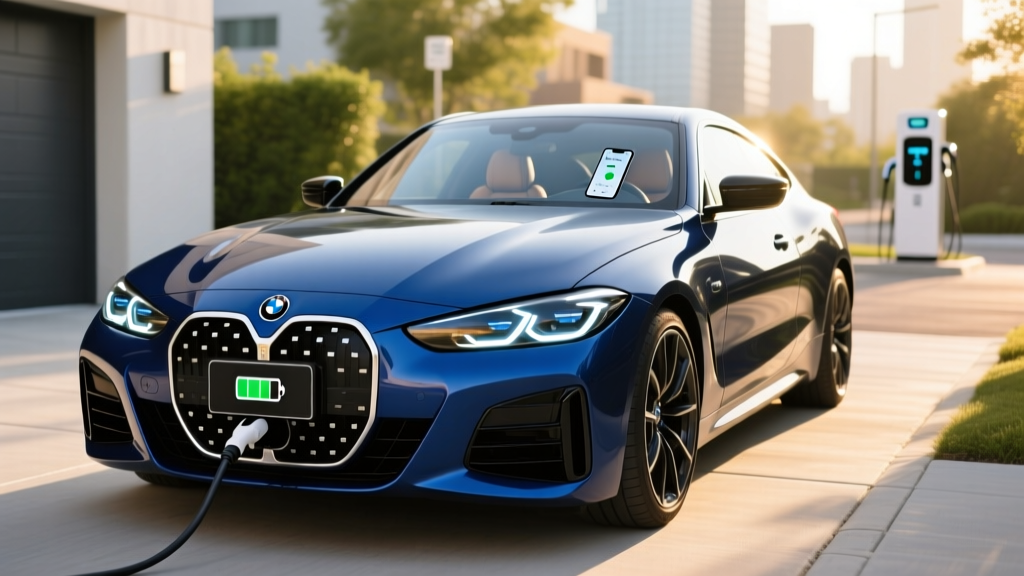
The BMW i4 has always occupied a specific niche: the electric sport sedan for buyers who want something that drives like a BMW first and happens to be electric second. For 2026, the i4 receives meaningful updates that address its most-criticized shortcomings — most notably a bump in battery capacity, faster DC charging, and the latest iDrive 8.5 software. But with the Tesla Model 3 Highland, Hyundai Ioniq 6, and Polestar 2 all aggressively competing in this segment, the 2026 BMW i4 needs to justify its premium pricing with substance, not just a badge.
After examining the specs, real-world efficiency data, charging curves, and ownership economics, here's what every prospective i4 buyer needs to know before signing a purchase agreement.
2026 BMW i4 at a Glance: Full Spec Breakdown
| Specification | eDrive40 | xDrive40 | M50 |
|---|---|---|---|
| Drivetrain | RWD (single motor) | AWD (dual motor) | AWD (dual motor) |
| Horsepower | 335 hp | 396 hp | 593 hp |
| 0–60 mph | 5.5 sec | 4.6 sec | 3.7 sec |
| Battery (usable) | 84.3 kWh | 84.3 kWh | 84.3 kWh |
| Battery Chemistry | NMC | NMC | NMC |
| EPA Range | 307 mi (19" wheels) | 287 mi (19" wheels) | 268 mi (19" wheels) |
| MPGe (combined) | 109 MPGe | 102 MPGe | 93 MPGe |
| Efficiency | 31 kWh/100mi | 33 kWh/100mi | 36 kWh/100mi |
| Max DC Charge Rate | 205 kW | 205 kW | 205 kW |
| 10–80% DC Charge | ~28 min | ~28 min | ~28 min |
| Level 2 Charge Rate | 11 kW (AC) | 11 kW (AC) | 11 kW (AC) |
| Base MSRP | $52,200 | $58,200 | $68,300 |
All trims share BMW's fifth-generation eDrive architecture. The 84.3 kWh usable battery (90.4 kWh gross) is a Nickel Manganese Cobalt (NMC) pack — chosen for its higher energy density versus LFP, which matters in a sedan with limited floor space. The trade-off is that NMC batteries benefit more from staying between 20–80% state of charge for daily use, whereas LFP packs tolerate 100% charges more gracefully.
Real-World Range: What You'll Actually See
EPA Sticker: 307 miles (eDrive40, 19" wheels)
Real-World Expectation: 255–280 miles on mixed highway driving; 230–250 miles in sustained cold weather (below 32°F); up to 295 miles in city/regen-heavy commuting.
The EPA number is useful for comparison, but real-world range depends heavily on how and where you drive. The eDrive40's 307-mile EPA figure assumes a mix of city and highway cycles. On a sustained 75 mph highway run in moderate temperatures (60–80°F), expect to see roughly 260–280 miles before the battery hits 10% state of charge. The i4's aerodynamic profile (0.25 Cd) helps it on the highway compared to SUV-shaped competitors, but the 4,600-pound curb weight still demands energy at speed.
Cold weather is where NMC chemistry and BMW's heat pump system are tested. In sub-freezing conditions, plan on a 15–25% range reduction. The i4 includes a standard heat pump (not an upcharge item, unlike some competitors), which mitigates cabin-heating energy draw. Preconditioning the battery while plugged in — using the departure timer in iDrive — is essential for preserving range and enabling fast DC charging in cold weather.
The xDrive40 and M50 sacrifice range for grip and power. The M50's 268-mile EPA figure drops to roughly 220–240 miles real-world highway, which means road trips require more charging stops. For M50 buyers, this is typically an acceptable trade-off; for efficiency-focused commuters, the eDrive40 is the clear choice.
Wheel size matters significantly. Equipping the optional 20-inch wheels reduces EPA range by 15–20 miles across all trims due to increased rolling resistance and weight. If range is your priority, stick with the standard 19-inch aero wheels.
Charging Speed: DC Fast Charging and Home Level 2
| Charging Level | Power | Speed (approx.) | Use Case |
|---|---|---|---|
| Level 1 (120V household) | 1.4 kW | ~4 miles/hour | Emergency / trickle |
| Level 2 (240V home/public) | 11 kW | ~33 miles/hour | Daily overnight charging |
| DC Fast Charge (peak) | 205 kW | 10–80% in ~28 min | Road trips |
| DC Fast Charge (sustained avg.) | ~140 kW avg (10–80%) | ~200 miles in 28 min | Real-world road-trip pace |
The 2026 i4's 205 kW peak DC charge rate is a meaningful step up from the outgoing model's 200 kW ceiling. At a 350 kW-capable Electrify America or EVgo station, the i4 will ramp quickly to its peak rate, holding above 175 kW through roughly 40% state of charge before tapering. The charge curve is BMW-typical: strong in the mid-range (30–60% SoC) with a pronounced taper above 80%. Charging from 80–100% can add another 25–30 minutes — plan your road-trip stops to charge only to 80% and move on.
At home on a Level 2 charger, the i4's 11 kW onboard charger is a standout. Most competitors in this price range still use 9.6 kW or 10 kW AC chargers. At 11 kW, a full 10–100% charge takes roughly 8.5 hours, meaning you can arrive home at 10 PM with a depleted battery and wake up fully charged at 6:30 AM. This requires a 48-amp or 60-amp dedicated circuit — budget $800–$2,500 for a professional Level 2 home installation, depending on your panel capacity and run length from breaker to garage.
The i4 uses a CCS1 connector for DC fast charging in North America. BMW has confirmed that 2026 i4 models will include a NACS adapter in the trunk for Tesla Supercharger access, expanding the usable fast-charging network substantially. This adapter supports up to 150 kW at V3 Superchargers — slightly below the i4's native CCS peak but still practical for road trips.
Performance and Driving Dynamics
The eDrive40's single rear motor producing 335 hp and 317 lb-ft of torque delivers the kind of smooth, instant acceleration that defines the EV experience. The 5.5-second 0–60 mph time is quick enough for confident highway merging without being excessive. More importantly, the rear-wheel-drive layout gives the eDrive40 a distinctly BMW character — neutral turn-in, progressive power delivery, and a chassis that communicates through the steering wheel in a way that's become rare in electrified vehicles.
The xDrive40 adds a front motor for 396 hp combined and all-wheel-drive traction. The 4.6-second 0–60 time is meaningfully quicker, and the dual-motor setup provides better launch control in wet conditions. The trade-off is 20 fewer miles of EPA range and roughly $6,000 in additional MSRP.
The M50 is the performance flagship: 593 hp, 586 lb-ft, and a 3.7-second 0–60 mph sprint. BMW's M division tuned the adaptive dampers, steering weight, and regen mapping specifically for this variant. It includes an M-specific sport differential, larger brakes, and the controversial IconicSounds Electric (a synthetic driving sound). In Sport mode, the M50 is genuinely thrilling. In Comfort mode, it's a competent grand tourer. The question is whether 593 hp justifies a $68,300 starting price when a well-optioned eDrive40 can be had for $10,000 less.
Regenerative braking in the i4 is adjustable through three levels via steering-wheel paddles, plus an adaptive mode that uses radar and navigation data to modulate regen based on traffic and upcoming turns. BMW does not offer true one-pedal driving (full stop via regen alone) in the i4 — the car creeps at low speeds even in maximum regen. This is a deliberate engineering choice that frustrates some EV veterans but feels natural to drivers transitioning from ICE vehicles.
Pricing, Tax Credits, and Ownership Economics
| Trim | Base MSRP | Destination | As-Tested (typical) | Est. After §30D Credit* |
|---|---|---|---|---|
| eDrive40 | $52,200 | $995 | $58,000–$62,000 | $44,700–$54,500 |
| xDrive40 | $58,200 | $995 | $64,000–$68,000 | $50,700–$60,500 |
| M50 | $68,300 | $995 | $74,000–$80,000 | $60,700–$72,500 |
*Federal §30D tax credit estimates assume full eligibility. Actual credit depends on battery sourcing, buyer income, and tax liability. See eligibility details below.
The 2026 BMW i4 qualifies for the IRS §30D federal EV tax credit, but eligibility is not automatic. Under current rules, several conditions must be met:
- MSRP cap: The i4 is classified as a sedan, subject to a $55,000 MSRP cap. The base eDrive40 at $52,200 clears this. The xDrive40 at $58,200 and M50 at $68,300 exceed it and do not qualify for the new-vehicle credit.
- Buyer income cap: Modified adjusted gross income must not exceed $150,000 (single), $225,000 (head of household), or $300,000 (joint filing).
- Battery sourcing: A percentage of critical minerals and battery components must be sourced from the US or free-trade-agreement countries. BMW has been working to meet these thresholds, but the exact credit amount (up to $7,500) varies by build date and supply chain compliance. Check the fueleconomy.gov tax credit tracker for the latest eligibility status.
- Point-of-sale transfer: As of 2024, buyers can transfer the credit to the dealer at purchase, reducing the out-of-pocket price immediately rather than waiting for a tax refund.
This MSRP cap reality is the single most important pricing factor for i4 shoppers. Only the base eDrive40 qualifies, and only if kept below $55,000 MSRP before options. Adding the Premium Package, larger wheels, or the M Sport Package can push the MSRP above the cap and eliminate credit eligibility. Work with your dealer to confirm the MSRP on your specific build sheet before committing.
On a 5-year total cost of ownership basis, the eDrive40 (with tax credit) compares favorably to a BMW 330i gasoline sedan. Electricity at $0.14/kWh costs roughly $0.045 per mile versus $0.15 per mile for premium gasoline. Over 60,000 miles, that's approximately $6,300 in fuel savings. BMW's scheduled maintenance costs are lower on the i4 (no oil changes, fewer brake replacements due to regen), partially offsetting the higher insurance premiums typical of EVs.
Interior, Technology, and Cargo Space
The 2026 i4 cabin is built around BMW's Curved Display — a 12.3-inch instrument cluster seamlessly joined to a 14.9-inch central touchscreen running iDrive 8.5. The system is responsive, supports wireless Apple CarPlay and Android Auto, and includes a natural-language voice assistant. Physical climate controls have been replaced by touchscreen sliders, which remains a divisive choice. The center console does retain a tactile iDrive rotary controller, which is excellent for menu navigation without looking away from the road.
Driver assistance comes via BMW's Driving Assistant Professional package (optional on eDrive40, standard on M50). This includes adaptive cruise control with stop-and-go, lane-keeping assist, and automated lane changes on highways. This is an SAE Level 2 system — the driver must remain attentive with hands on or near the wheel at all times. It is not autonomous driving. BMW does not currently offer a hands-free system comparable to GM's Super Cruise or Ford's BlueCruise in the i4 lineup.
Cargo and passenger dimensions:
- Cargo volume (rear seats up): 16.6 cu ft (trunk)
- Cargo volume (rear seats folded): 45.7 cu ft
- Front legroom: 41.5 inches
- Rear legroom: 34.5 inches
- Front headroom: 39.2 inches
- Rear headroom: 36.6 inches
The Gran Coupe liftback design gives the i4 a practical advantage over traditional sedans. The rear hatch opens wide, and the 45.7 cu ft of space with seats folded is enough for two full-size suitcases and several carry-ons. Rear legroom at 34.5 inches is tight for taller passengers on long trips — the Tesla Model 3 offers 35.3 inches in back. The i4 has no front trunk (frunk); the space under the hood is occupied by power electronics and the HVAC system.
Battery Warranty, Degradation, and Longevity
BMW covers the i4's high-voltage battery with an 8-year / 100,000-mile warranty that guarantees at least 70% of original capacity retention. This is industry-standard and matches the federal minimum mandate. BMW's powertrain warranty covers the electric motors and associated components for 4 years / 50,000 miles.
NMC battery degradation in the i4 has been moderate based on data from 2022–2025 model-year vehicles. Most owners report 3–5% capacity loss after the first 30,000 miles, with the degradation curve flattening significantly after year two. To maximize longevity:
- Set daily charge limit to 80% (configurable in iDrive)
- Avoid repeated DC fast charging when Level 2 is available
- Use preconditioning in extreme temperatures
- Minimize time spent at 100% state of charge — charge to full only when departing for a road trip
Full battery replacement on the i4, should it ever be needed out of warranty, is estimated at $15,000–$20,000 based on current BMW parts pricing. However, module-level repair (replacing individual degraded cells or modules) may be possible at lower cost. Battery failures within the warranty period are covered at no charge.
Pros and Cons: The Honest Assessment
Pros
- Genuine BMW driving dynamics — RWD eDrive40 handles like a proper sport sedan
- 307-mile EPA range (eDrive40) is competitive with Model 3 Long Range
- 11 kW Level 2 onboard charger is best-in-class for overnight home charging
- Liftback cargo versatility with 45.7 cu ft seats-folded space
- Heat pump standard (no-cost option) for cold-weather efficiency
- NACS adapter included for Tesla Supercharger access
- Premium interior materials and build quality exceed Tesla/Polestar
Cons
- xDrive40 and M50 exceed the $55,000 MSRP cap — no federal tax credit
- Rear legroom (34.5") is tight for a vehicle in this price range
- No frunk — lost cargo opportunity
- No hands-free Level 2+ driving system (no Super Cruise/BlueCruise competitor)
- Touchscreen-only climate controls are distracting while driving
- Options packages quickly push eDrive40 above the tax-credit MSRP cap
- CCS peak charge rate (205 kW) trails Hyundai Ioniq 6's 350 kW capability
Who Should Buy the 2026 BMW i4?
The 2026 BMW i4 is best suited for:
- Premium commuters who value driving engagement and want a sport sedan that happens to be electric. The eDrive40 with the $7,500 tax credit is the value play.
- BMW loyalists transitioning from a 3 Series or 4 Series Gran Coupe who want a familiar form factor with zero tailpipe emissions and lower running costs.
- Road-trip-capable EV buyers who need 300+ miles of range and access to both CCS and Tesla Supercharger networks via the included NACS adapter.
The i4 is not ideal for:
- Family buyers needing rear-seat space — the 34.5-inch rear legroom is tight, and a midsize electric SUV (BMW iX, Tesla Model Y) serves this use case better.
- Budget-conscious shoppers — even the base eDrive40 starts at $52,200, and the Hyundai Ioniq 6 delivers 361 miles of EPA range for $10,000 less.
- Performance buyers on a budget — the M50's $68,300 starting price and tax-credit ineligibility make it difficult to justify versus a Tesla Model 3 Performance ($54,990, tax-credit eligible) that hits 60 mph in 2.9 seconds.
Frequently Asked Questions
What is the real-world range of the 2026 BMW i4?
The eDrive40 delivers an EPA-estimated 307 miles. In real-world mixed highway driving at 70–75 mph, expect 255–280 miles. In cold weather below 32°F, plan for 230–250 miles. City driving with regenerative braking can yield up to 295 miles.
How fast does the 2026 BMW i4 charge?
On a DC fast charger, the i4 peaks at 205 kW and charges from 10–80% in approximately 28 minutes. At home on a Level 2 charger (11 kW), a full charge takes about 8.5 hours, adding roughly 33 miles of range per hour.
Does the 2026 BMW i4 qualify for the federal EV tax credit?
Only the base eDrive40 (MSRP $52,200) qualifies, as the §30D credit has a $55,000 MSRP cap for sedans. The xDrive40 and M50 exceed this cap and are ineligible. Buyer income limits ($150K single / $300K joint) and battery-sourcing requirements also apply. Verify current eligibility at fueleconomy.gov.
Is the 2026 BMW i4 worth buying vs. the Tesla Model 3 or Hyundai Ioniq 6?
The i4 wins on interior quality, driving dynamics, and liftback practicality. The Tesla Model 3 Long Range offers more range (341 mi EPA), faster Supercharger access, and a lower starting price. The Hyundai Ioniq 6 leads on range (361 mi) and DC charging speed (350 kW peak) at a significantly lower price. If premium build quality and BMW driving feel matter most, the i4 earns its premium. If value and maximum range are priorities, the Ioniq 6 or Model 3 are stronger choices.
What are the biggest drawbacks of the 2026 BMW i4?
The most significant cons are the MSRP-cap limitation on tax credits (only base eDrive40 qualifies), tight rear-seat legroom, lack of a frunk, no hands-free highway driving system, and a 205 kW DC charge rate that trails some competitors. The touchscreen-only climate controls also frustrate many drivers.
Does the 2026 BMW i4 have a heat pump?
Yes. A heat pump is standard equipment on all 2026 i4 trims at no additional cost. This improves cold-weather range by using ambient heat for cabin warming rather than drawing heavily from the traction battery.
What is the battery warranty on the 2026 BMW i4?
BMW provides an 8-year / 100,000-mile battery warranty guaranteeing at least 70% capacity retention. The general powertrain warranty covers electric motors and related components for 4 years / 50,000 miles.
Sources: fueleconomy.gov (EPA range and efficiency data), IRS §30D Clean Vehicle Credit, BMW USA official specifications.