Quick Verdict: Is the 2026 BMW i4 Worth Leasing?
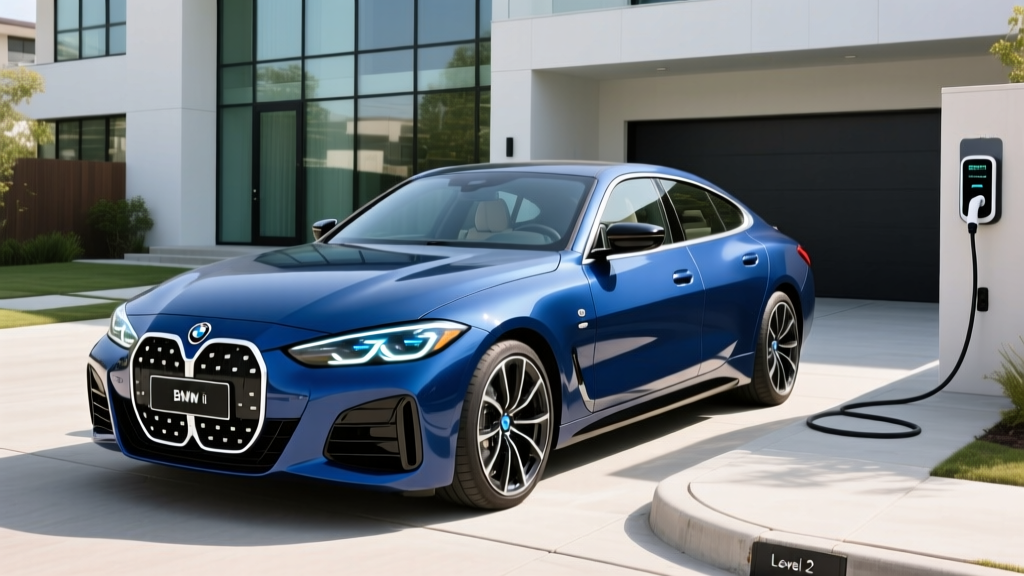
The 2026 BMW i4 remains one of the most compelling electric sport sedans on the market, blending the familiar 4 Series Gran Coupe silhouette with a refined electric powertrain. If you're searching for 2026 BMW i4 lease deals, you're likely weighing this car against the Tesla Model 3, Hyundai Ioniq 6, and Polestar 2. The i4's advantage is driving dynamics and build quality; its trade-off is a higher starting price and a battery architecture that doesn't quite match the latest 800V competitors on charging speed.
For 2026, BMW has carried over the core powertrain lineup — the single-motor eDrive40, the dual-motor xDrive40, and the high-performance M50 — while introducing minor tech and packaging updates. The critical question for lessees is whether the monthly payment, combined with available federal incentives, makes the i4 a smarter financial move than buying or choosing a rival.
eDrive40: EPA 318 miles (81.5 kWh usable) — expect ~270–285 miles in mixed highway driving, dropping to ~235–250 miles in sub-freezing winter conditions.
xDrive40: EPA 287 miles — expect ~245–260 miles real-world highway.
M50: EPA 271 miles — expect ~230–245 miles real-world highway; aggressive driving drops this further.
BMW uses NMC (nickel manganese cobalt) lithium-ion chemistry across the i4 lineup, prioritizing energy density over the cycle-life advantages of LFP cells found in some competitors.
2026 BMW i4 Specs at a Glance
| Spec | eDrive40 | xDrive40 | M50 |
|---|---|---|---|
| Drivetrain | RWD (single motor) | AWD (dual motor) | AWD (dual motor) |
| Horsepower | 335 hp | 396 hp | 536 hp |
| 0–60 mph | 5.5 sec | 4.6 sec | 3.7 sec |
| Battery (usable) | 81.5 kWh NMC | 81.5 kWh NMC | 81.5 kWh NMC |
| EPA Range | 318 mi | 287 mi | 271 mi |
| MPGe (combined) | 99 MPGe | 91 MPGe | 86 MPGe |
| Efficiency | 34 kWh/100mi | 37 kWh/100mi | 39 kWh/100mi |
| Max DC Fast Charge | 205 kW | 205 kW | 205 kW |
| 10–80% DCFC Time | ~31 min | ~31 min | ~31 min |
| Level 2 Home Charge | 11 kW (~36 mi/hr) | 11 kW (~36 mi/hr) | 11 kW (~36 mi/hr) |
| Base MSRP | $52,200 | $56,200 | $69,900 |
| Battery Warranty | 8 years / 100,000 miles (min 70% capacity retention) | ||
Sources: EPA fueleconomy.gov, BMW USA press materials.
Charging Speed: DC Fast Charging and Home Setup
The i4's 400V architecture limits peak DC fast charging to 205 kW — respectable but behind 800V rivals like the Hyundai Ioniq 6 (peak 235+ kW) and Porsche Taycan. Here's what that means in practice:
| Charging Level | Power | Speed | Use Case |
|---|---|---|---|
| Level 1 (120V) | ~1.4 kW | ~5 mi/hr | Emergency/trickle only |
| Level 2 (240V, 48A) | 11 kW | ~36 mi/hr | Home overnight (full charge ~9 hrs) |
| DC Fast Charge | Peak 205 kW | 10–80% in ~31 min | Road trips; tapers significantly above 80% |
Charging curve reality check: The i4 hits peak 205 kW only between roughly 10–30% State of Charge. Above 50%, the rate tapers to ~120 kW, and above 80% it drops below 50 kW to protect the NMC cells. If you're road-tripping, plan your stops around 10–80% windows rather than filling to 100%.
The i4 uses the CCS1 connector for DC fast charging and J1772 for Level 2 AC. BMW has confirmed NACS (Tesla Supercharger) adapter compatibility for 2026 models, enabling access to Tesla's network — a significant practical advantage for long-distance travel.
Lease Pricing, MSRP, and the Federal Tax Credit
Understanding 2026 BMW i4 lease deals requires untangling MSRP, dealer adjustments, and how the federal EV tax credit applies to leases versus purchases.
| Trim | Base MSRP | As-Tested (typical) | §30D Credit Eligible? | Lease Credit Advantage |
|---|---|---|---|---|
| eDrive40 | $52,200 | $58,000–$62,000 | Yes (MSRP under $55K cap, check sourcing) | Lessor may pass through $7,500 |
| xDrive40 | $56,200 | $63,000–$68,000 | Yes (MSRP under $55K cap for sedans — borderline) | Lessor may pass through $7,500 |
| M50 | $69,900 | $78,000–$85,000 | No — exceeds $55K sedan MSRP cap | Commercial credit (45W) may apply via lessor |
The lease loophole explained: Under current IRS §30D rules, the $7,500 federal tax credit is subject to MSRP caps ($55,000 for sedans), buyer income limits ($150K single / $300K joint), and critical-mineral/battery-sourcing requirements. However, when a vehicle is leased, the leasing company (not the consumer) is the legal purchaser. Many automakers — BMW included — have structured leases so the lessor claims the commercial clean vehicle credit (IRC §45W) and passes the savings as a "lease cash" reduction, effectively bypassing the MSRP and income caps. This means even the i4 M50 can sometimes benefit from a $7,500 lease incentive.
Important caveat: Lease credit passthrough is at the automaker's discretion, not guaranteed. Always confirm with your BMW dealer whether the current lease program includes the $7,500 credit applied as capitalized cost reduction. BMW Financial Services has been competitive with this in recent quarters, but programs change monthly.
- Vehicle MSRP must not exceed $55,000 (sedans like i4) or $80,000 (SUVs/trucks)
- Buyer AGI: ≤ $150,000 single / $225,000 head of household / $300,000 joint
- Battery must meet critical minerals and component sourcing thresholds (phased in annually)
- Credit can be transferred to dealer at point of sale as a price reduction
- Vehicle must be assembled in North America (the i4 is built in Munich, Germany — this disqualifies it from §30D on purchase)
Key takeaway: Because the i4 is assembled in Germany, it does not qualify for the §30D purchase credit. However, leasing bypasses this restriction via the §45W commercial credit path. This makes leasing the financially superior route for the i4 in 2026.
Interior, Tech, and Daily Livability
The i4's cabin mirrors the 4 Series Gran Coupe — a driver-focused cockpit with BMW's Curved Display (12.3" instrument cluster + 14.9" infotainment) running iDrive 8.5. Wireless Apple CarPlay and Android Auto are standard, as is the BMW Intelligent Personal Assistant voice control.
Passenger and cargo dimensions:
- Front legroom: 42.3 inches
- Rear legroom: 35.3 inches (tight for tall passengers on long trips)
- Cargo volume: 16.6 cu ft (rear seats up) / 45.6 cu ft (rear seats folded)
- Frunk: None — the i4 uses BMW's CLAR platform adapted for EV, so no front trunk
Driver assistance (SAE Level 2): The i4 offers BMW Driving Assistant Professional, which includes adaptive cruise control with stop-and-go, lane-keeping assist, and highway lane-change assist. This is a Level 2 system — you must keep your hands on the wheel and eyes on the road at all times. It is not autonomous driving. The optional Parking Assistant Professional handles tight spaces competently with surround-view cameras and automated steering.
BMW Driving Assistant Professional is an SAE Level 2 driver-assist system. It does NOT drive the car autonomously. The driver must remain fully engaged, monitor surroundings, and be prepared to take over instantly. Hands-off operation is not supported and is unsafe. No production BMW currently offers Level 3+ autonomy in the US market.
How the 2026 i4 Stacks Up Against Key Rivals
If you're cross-shopping lease deals, here's how the i4 compares to its most direct competitors:
| Spec | BMW i4 eDrive40 | Tesla Model 3 LR | Hyundai Ioniq 6 SEL | Polestar 2 LR SM |
|---|---|---|---|---|
| EPA Range | 318 mi | 363 mi | 361 mi | 320 mi |
| Battery | 81.5 kWh NMC | ~79 kWh NMC | 77.4 kWh NMC | 82 kWh NMC |
| Peak DCFC | 205 kW | 250 kW | 235 kW (800V) | 205 kW |
| 10–80% Time | ~31 min | ~25 min | ~18 min | ~30 min |
| 0–60 mph | 5.5 sec | 4.2 sec | 5.1 sec | 5.9 sec |
| Base MSRP | $52,200 | $42,490 | $42,450 | $49,900 |
| Assembly | Germany | USA (Texas) | South Korea | China |
| §30D Purchase Credit | No (foreign assembly) | Yes (partial/full) | No | No |
Where the i4 wins: Build quality, ride refinement, steering feel, and brand prestige. BMW's chassis tuning is noticeably more polished than the Tesla or Hyundai, and the interior materials are a tier above.
Where the i4 loses: Price-to-range ratio. The Model 3 Long Range delivers 45 more EPA miles for ~$10,000 less. The Ioniq 6 charges dramatically faster thanks to its 800V architecture. If road-trip charging speed is your priority, the i4 isn't the segment leader.
Pros and Cons
- Engaging, refined driving experience uncommon in EVs at this price
- Premium interior with excellent fit and finish
- Strong real-world range (270+ mi highway for eDrive40)
- Lease structure can bypass §30D purchase restrictions
- NACS adapter support for Tesla Supercharger access
- 8-year/100,000-mile battery warranty
- 400V architecture — DC charging slower than 800V rivals
- No frunk; cargo space is sedan-limited (16.6 cu ft)
- Rear seat legroom tight for adults on long trips
- Higher MSRP than Model 3 and Ioniq 6 with less EPA range
- German assembly disqualifies from §30D purchase credit
- M50 trim is expensive and range drops significantly
Who Should Lease the 2026 BMW i4?
Choose the i4 eDrive40 if: You commute 30–60 miles daily, value driving refinement over outright acceleration, and can charge at home overnight. The 318-mile EPA range covers most weekly driving without mid-week charging.
Choose the i4 xDrive40 if: You need all-wheel drive for snow-belt winters and want the extra power, accepting ~30 miles of range loss.
Choose the i4 M50 if: Performance is your priority and budget is flexible. The 536 hp and 3.7-second 0–60 are thrilling, but the $70K+ MSRP and 271-mile range are steep trade-offs.
Look elsewhere if: You road-trip frequently and need the fastest possible charging (consider Ioniq 6), you need maximum range per dollar (Model 3 LR), or you need family-friendly rear-seat space and cargo volume (consider the iX or Model Y).
Frequently Asked Questions
What is the real-world range of the 2026 BMW i4?
The eDrive40's EPA estimate is 318 miles, but expect ~270–285 miles in real-world highway driving at 70 mph. In cold weather (below 32°F), range drops to approximately 235–250 miles due to battery heating demands and cabin HVAC load. The M50's real-world range is closer to 230–245 miles highway.
How fast does the 2026 BMW i4 charge?
On a DC fast charger, the i4 peaks at 205 kW and charges from 10–80% in approximately 31 minutes. Above 80%, the charge rate tapers significantly to protect the NMC battery. At home on a Level 2 charger (240V, 48A), the i4 charges at 11 kW, adding roughly 36 miles of range per hour — a full charge takes about 9 hours.
Does the 2026 BMW i4 qualify for the federal EV tax credit?
For outright purchase, no — the i4 is assembled in Munich, Germany, which disqualifies it from the IRS §30D new clean vehicle credit regardless of price or buyer income. However, leasing the i4 may allow the leasing company to claim the §45W commercial clean vehicle credit and pass $7,500 in savings to you as a lease incentive. Confirm with your BMW dealer whether the current lease program includes this passthrough.
Is it better to buy or lease the 2026 BMW i4?
For most buyers, leasing is the smarter financial move in 2026. Because the i4 doesn't qualify for the §30D purchase credit (foreign assembly), buying means paying full MSRP. Leasing can unlock the $7,500 commercial credit passthrough, reducing your effective monthly payment. Leasing also protects you from EV depreciation risk as battery technology evolves rapidly.
Is the BMW i4 worth it over a Tesla Model 3 or Hyundai Ioniq 6?
If driving refinement, build quality, and brand experience matter to you, yes — the i4 delivers a more premium, engaging drive than either rival. If you prioritize lowest cost, longest range, or fastest charging, the Model 3 LR and Ioniq 6 are stronger choices. The i4 is the pick for buyers who want an EV that feels like a BMW first.
What is the battery warranty on the 2026 BMW i4?
BMW covers the i4's high-voltage battery for 8 years or 100,000 miles (whichever comes first), guaranteeing a minimum of 70% capacity retention. If the battery degrades below that threshold within the warranty period, BMW will repair or replace it. The basic vehicle warranty is 4 years / 50,000 miles.
Always verify current lease terms, incentive availability, and tax credit eligibility with your local BMW dealer and a qualified tax professional. IRS rules referenced are current as of the 2026 tax year and subject to legislative change. For official credit guidance, consult IRS.gov.