The Quick Verdict on the 2026 BMW i4
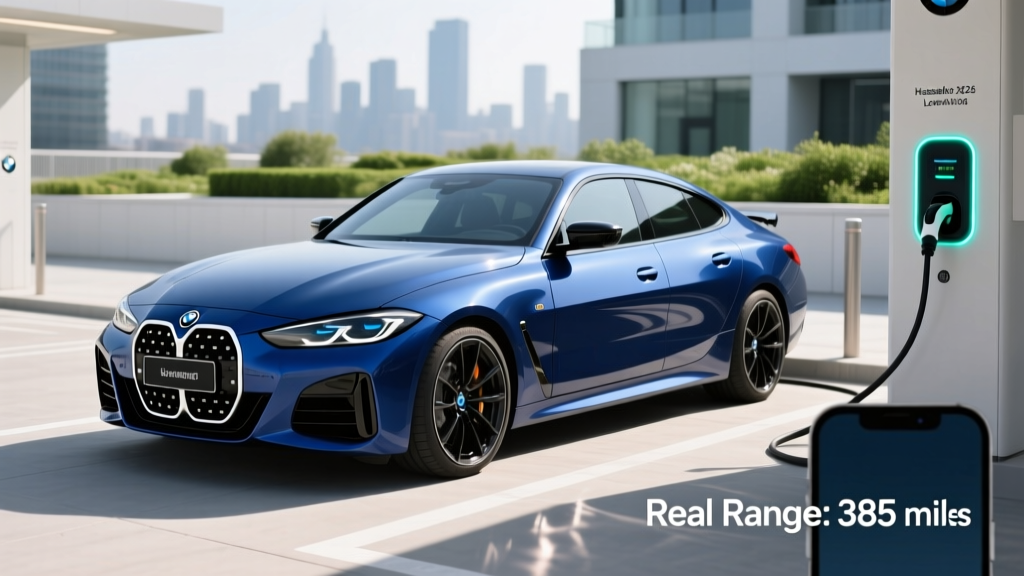
If you've been typing "BMW i4 lease deals near me" into your browser at midnight, you're not alone. The i4 occupies a rare sweet spot in the EV sedan market: it drives like a proper BMW 4 Series Gran Coupe, packs a usable 307-mile EPA range in the eDrive40 trim, and avoids the crossover tax that inflates competitors like the Tesla Model 3 and Hyundai Ioniq 6. For 2026, BMW has refined the i4's infotainment to iDrive 8.5, bumped standard equipment on the xDrive40, and kept pricing just inside the federal tax credit MSRP cap — making lease structures particularly attractive.
But before you sign anything, you need to know what you're actually getting: the real-world range when the thermometer drops, the charging curve behavior at a 350 kW Electrify America station, and whether the §30D credit actually applies to your tax situation. Let's break it down with numbers, not marketing.
Range, Battery, and Real-World Efficiency
The 2026 BMW i4 is offered with two battery configurations. The eDrive40 and xDrive40 share an 83.9 kWh usable battery pack (gross capacity approximately 86.4 kWh) using NMC (nickel manganese cobalt) chemistry — BMW has not switched to LFP for the i4, prioritizing energy density over cycle-life longevity.
- i4 eDrive40 (RWD): EPA 307 miles. Expect ~265-280 miles on a 70-mph highway run in mild weather; ~220-240 miles in sub-30°F winter conditions.
- i4 xDrive40 (AWD): EPA 282 miles. Highway real-world ~245-260 miles; winter ~200-220 miles.
- i4 M50 (Performance AWD): EPA 269 miles. Highway real-world ~230-245 miles; aggressive driving drops this further.
Why the gap? The EPA test cycle includes substantial low-speed and regenerative-braking segments. Sustained highway driving at 75+ mph, cold-soaked battery starts, and cabin heating (the i4 uses a heat pump on 2026 models, which helps) all compress range. Plan charging stops using the lower real-world figure.
Efficiency on the eDrive40 rates at 105 MPGe combined per fueleconomy.gov, or roughly 32 kWh/100 miles. The xDrive40 drops to approximately 98 MPGe combined, and the M50 falls further to around 91 MPGe. These figures put the i4 eDrive40 in the same efficiency tier as the Tesla Model 3 Long Range and ahead of the Mercedes-Benz EQB.
| Specification | eDrive40 | xDrive40 | M50 |
|---|---|---|---|
| EPA Range | 307 mi | 282 mi | 269 mi |
| Battery (usable kWh) | 83.9 kWh NMC | 83.9 kWh NMC | 83.9 kWh NMC |
| Drivetrain | RWD (single motor) | AWD (dual motor) | AWD (dual motor) |
| Horsepower | 335 hp | 402 hp | 593 hp |
| 0-60 mph | 5.5 sec | 4.6 sec | 3.7 sec |
| Max DC Charge Rate | 205 kW | 205 kW | 205 kW |
| 10-80% DC Time | ~31 min | ~31 min | ~31 min |
| Level 2 Home Rate | 11 kW (~33 mi/hr) | 11 kW (~33 mi/hr) | 11 kW (~33 mi/hr) |
| Efficiency (MPGe combined) | 105 MPGe | 98 MPGe | 91 MPGe |
| Base MSRP | $52,200 | $57,900 | $67,900 |
Charging Speed: DC Fast and Home Level 2
The i4's charging architecture uses a 400-volt system (not the 800V architecture found in the Hyundai Ioniq 5 or Porsche Taycan). This caps its peak DC fast-charge rate at 205 kW via the CCS1 connector — or NACS on Tesla Superchargers with BMW's included adapter for 2026 models.
| Charging Level | Power (kW) | Miles Added per Hour | Typical Use Case |
|---|---|---|---|
| Level 1 (120V household) | ~1.4 kW | ~4 mi/hr | Emergency/trickle only |
| Level 2 (240V, 48A home) | 11 kW | ~33 mi/hr | Daily overnight charging |
| DC Fast Charge (peak) | 205 kW | ~195 mi in 10 min | Road trip stops |
The charging curve reality: The i4 will hit its 205 kW peak only between roughly 10-30% state of charge (SoC) at a charger capable of 350 kW (such as Electrify America's latest stalls). From 30-60%, the rate tapers to approximately 150 kW, and above 80% SoC, it drops sharply to under 50 kW to protect the NMC cells. This is why BMW quotes 31 minutes for 10-80% — not 0-100%. Charging from 80-100% can add another 35-40 minutes. On road trips, plan to charge to 80% and move on.
Home charging: With a 48-amp Level 2 wallbox (such as the BMW Wallbox Professional or a ChargePoint Home Flex), expect a full overnight charge from 10-100% in about 8.5 hours. If your home electrical panel supports a 60-amp circuit, this is the optimal setup. Installation costs for a Level 2 home charger typically range from $500-$2,500 depending on panel proximity and local permitting — always get a quote from a licensed electrician before committing.
Pricing, Lease Deals, and Federal Tax Credit
The 2026 BMW i4 eDrive40 starts at a base MSRP of $52,200 (including destination), which places it under the IRS §30D federal tax credit MSRP cap of $55,000 for sedans. However, qualifying for the full $7,500 credit involves multiple hurdles beyond MSRP:
- MSRP cap: Vehicle must be ≤$55,000 for sedans (i4 eDrive40 qualifies at base; options can push it over)
- Buyer income cap: AGI ≤$150,000 (single), ≤$225,000 (head of household), ≤$300,000 (joint)
- Battery sourcing: Critical minerals and battery components must meet phased-in domestic/FTA-country thresholds — verify current-year compliance on the DOE/IRS eligible vehicle list
- Point-of-sale transfer: As of 2024, the credit can be transferred to the dealer at purchase, reducing the sale price directly — this applies to purchases, not leases
- Lease loophole (§45W): Commercial credit rules mean leased EVs may pass through a $7,500 benefit to the lessee regardless of sourcing/income caps — this is why i4 lease deals can be aggressively priced
This last point is critical for your search. BMW Financial Services typically structures i4 leases so the lessor (BMW) captures the commercial clean vehicle credit under §45W and passes the savings as a lease capital cost reduction. This is why you'll see i4 lease deals advertised with effective monthly payments lower than a direct purchase calculation would suggest — often in the $450-$650/month range for 36 months with $3,000-$5,000 due at signing, depending on region and dealer.
| Scenario | eDrive40 | xDrive40 |
|---|---|---|
| Base MSRP | $52,200 | $57,900 |
| As-Tested (typical options) | $57,500 | $63,200 |
| Purchase w/ §30D (if eligible) | ~$49,700 | Not eligible (over $55k cap) |
| Typical Lease (36 mo, $4k down) | ~$520/mo | ~$620/mo |
Caveat: Lease terms vary significantly by region, dealer, money factor, and residual value. Always request the full lease disclosure (capitalized cost, residual, money factor, all fees) before signing. Consult a tax professional regarding your specific eligibility — rules at IRS.gov change and have nuanced requirements.
Performance and Driving Dynamics
The i4 eDrive40 produces 335 horsepower from its single rear motor, hitting 0-60 mph in 5.5 seconds. That's brisk for daily driving — merging onto highways and passing maneuvers feel effortless without the neck-snap intensity of the M50. The rear-wheel-drive layout gives the eDrive40 a more traditional BMW feel: slight oversteer on throttle lift-off, balanced weight distribution (close to 50/50), and precise steering feedback that the Tesla Model 3 still can't match.
The xDrive40 adds a front motor for 402 hp total and all-wheel-drive traction, dropping 0-60 to 4.6 seconds. The M50 cranks output to 593 hp and 3.7 seconds — firmly sports-sedan territory, rivaling the old M3 in straight-line acceleration but with 4,800+ pounds of curb weight to manage through corners.
Regenerative braking in the i4 is adjustable through three levels via steering-wheel paddles (including a one-pedal-driving mode at maximum regen). It's not as aggressive as Nissan LEAF's e-Pedal but offers enough deceleration for most stop-and-go traffic without touching the friction brakes.
Interior, Cargo, and Technology
The i4's cabin is essentially a 4 Series Gran Coupe interior with an EV powertrain. The curved display running iDrive 8.5 pairs a 12.3-inch instrument cluster with a 14.9-inch touchscreen, angled toward the driver. Wireless Apple CarPlay and Android Auto are standard, along with a Wi-Fi hotspot and BMW's Intelligent Personal Assistant voice control.
Passenger and cargo space:
- Front legroom: 41.5 inches
- Rear legroom: 34.7 inches (tight for tall adults on long trips)
- Cargo volume: 16.6 cu ft (liftback hatch makes loading easier than a traditional trunk)
- With rear seats folded: 45.7 cu ft
The liftback design is a genuine advantage over the Tesla Model 3's conventional trunk opening. However, rear-seat headroom is compromised by the coupe roofline — anyone over 6 feet will notice the hair-brush on longer trips. There is no frunk (front trunk); BMW uses that space for power electronics.
Driver assistance: The i4 comes standard with Active Driving Assistant, which includes adaptive cruise control, lane-keeping assist, and blind-spot monitoring — all SAE Level 2 systems requiring continuous driver engagement. The optional Driving Assistance Professional Package adds hands-off driving up to 85 mph on divided highways (similar to GM's Super Cruise in concept but requiring periodic eye-confirmation via interior camera). This is not autonomous driving; it is an advanced driver-assist system.
Warranty and Long-Term Ownership
BMW covers the i4 with a 4-year/50,000-mile limited warranty and an 8-year/100,000-mile battery and powertrain warranty. The battery warranty guarantees that the high-voltage pack will retain at least 70% of its original capacity during the coverage period. If degradation exceeds 30% within those parameters, BMW will repair or replace the battery at no cost.
For context, NMC batteries in BMW's current generation typically show 8-12% degradation over the first 100,000 miles based on fleet data from earlier i4 and iX models. This is within industry norms and means most owners will see 270-280 miles of real-world range at 100,000 miles — still highly usable.
BMW includes 3 years of complimentary scheduled maintenance and 4 years of roadside assistance. For public charging, BMW has partnerships with Electrify America offering varying levels of complimentary charging credits on new i4 purchases/leases — check current promotions at time of purchase.
Pros, Cons, and Who the i4 Suits Best
- 307-mile EPA range (eDrive40) is genuinely road-trip capable
- Driving dynamics and steering feel exceed Tesla Model 3 and Ioniq 6
- Liftback cargo design is more practical than sedan trunks
- Heat pump standard for cold-weather efficiency
- Lease deals often pass through $7,500 credit benefit without sourcing/income restrictions
- Build quality and cabin materials are a tier above volume-brand EVs
- 205 kW peak charge rate is slower than 800V competitors (Ioniq 5 at 240 kW, Taycan at 270 kW)
- Rear headroom is tight for tall passengers
- No front trunk (frunk) for additional storage
- xDrive40 and M50 exceed $55,000 MSRP cap for §30D purchase credit
- iDrive 8.5 removes some physical controls — climate is touchscreen-dependent
- Real-world winter range drops 25-30% in cold climates
Who the i4 is for: The BMW i4 eDrive40 is ideal for a professional commuter or couple who values driving engagement, needs a real 250+ mile highway range for regional road trips, and can charge at home overnight. It's not the best choice for large families (rear seat is snug), for those who frequently tow (no tow rating), or for those in extreme cold climates without garage parking where the range penalty compounds. If you need maximum charge speed for frequent 500+ mile trips, the Hyundai Ioniq 5 or Kia EV6 with 800V architecture will save you 10-15 minutes per stop.
Frequently Asked Questions
What is the real-world range of the BMW i4?
The EPA rates the i4 eDrive40 at 307 miles, but sustained highway driving at 70-75 mph yields approximately 265-280 miles in mild weather and 220-240 miles in sub-30°F winter conditions. The AWD xDrive40 drops to roughly 245-260 highway miles. Always plan charging stops using the conservative figure.
How fast does the BMW i4 charge at home and on the road?
At home on a 48-amp Level 2 charger (240V), the i4 charges at 11 kW, adding about 33 miles per hour — a full overnight charge in roughly 8.5 hours. On DC fast chargers, it peaks at 205 kW and charges from 10-80% in approximately 31 minutes, though the rate tapers significantly above 80% SoC.
Does the 2026 BMW i4 qualify for the federal EV tax credit?
The i4 eDrive40 at base MSRP ($52,200) is under the $55,000 sedan cap, but eligibility depends on buyer income limits, battery-sourcing compliance (check the current DOE list), and whether you purchase or lease. Leased i4s often benefit from the §45W commercial credit passed through by BMW Financial Services, which bypasses buyer income and sourcing restrictions.
Is the BMW i4 worth it vs. the Tesla Model 3 or Hyundai Ioniq 6?
The i4 wins on driving dynamics, build quality, and cabin refinement. The Tesla Model 3 Highland offers superior Supercharger network access and slightly better efficiency. The Hyundai Ioniq 6 charges faster (800V architecture) but has a less premium interior. If driving feel and build quality are your priorities, the i4 justifies its premium; if charging speed and software are paramount, look at the Ioniq 6 or Model 3.
What are the biggest drawbacks of the BMW i4?
The main compromises are its 205 kW peak charge rate (slower than 800V rivals), tight rear headroom due to the coupe roofline, lack of a frunk, and the xDrive40/M50 trims exceeding the federal purchase tax credit MSRP cap. Cold-weather range loss of 25-30% is also a factor in northern climates.
How long will the BMW i4 battery last?
BMW warranties the high-voltage NMC battery for 8 years or 100,000 miles with a 70% capacity retention guarantee. Fleet data from early i4 models suggests typical degradation of 8-12% over the first 100,000 miles, meaning the battery should remain highly functional well beyond the warranty period with proper care (avoiding frequent DC fast-charging to 100% and prolonged storage at extreme SoC levels).