Quick Verdict: Is the 2026 Model Y Still the Default EV?
The 2026 Tesla Model Y remains the best-selling electric vehicle in the United States for good reason: strong efficiency, access to the most reliable DC fast-charging network, and a starting price that undercuts most rivals after incentives. The Juniper refresh brought a quieter cabin, ventilated seats, ambient lighting, and a slightly larger battery. But the competition has closed the gap — Hyundai's Ioniq 5, Ford's Mustang Mach-E, and the redesigned Nissan Ariana all offer compelling alternatives. For existing Tesla owners, the calculus often hinges on Tesla loyalty benefits — referral credits, trade-in bonuses, and FSD transferability — which can shift the value equation by several thousand dollars.
Long Range AWD: EPA 320 miles | Rear-Wheel Drive: EPA 300 miles
Real-world expectation: 260–290 miles on mixed highway driving at 70+ mph; 200–230 miles in sub-freezing winter conditions with cabin heat. The heat pump helps, but cold still bites 20–30% off range.
Spec Sheet: 2026 Tesla Model Y at a Glance
| Spec | Rear-Wheel Drive | Long Range AWD | Performance |
|---|---|---|---|
| EPA Range | 300 mi | 320 mi | 295 mi |
| Battery (usable) | ~60 kWh (LFP) | ~79 kWh (NMC) | ~79 kWh (NMC) |
| 0–60 mph | 6.6 sec | 4.8 sec | 3.5 sec |
| Horsepower | 295 hp | 384 hp | 456 hp |
| Drivetrain | RWD single motor | AWD dual motor | AWD dual motor |
| Max DC Fast Charge | 170 kW | 250 kW | 250 kW |
| 10–80% DC Time | ~28 min | ~24 min | ~24 min |
| Level 2 Home Rate | 11.5 kW (~44 mi/hr) | 11.5 kW (~44 mi/hr) | 11.5 kW (~44 mi/hr) |
| MPGe (combined) | 128 MPGe | 122 MPGe | 115 MPGe |
| Efficiency | 26 kWh/100mi | 28 kWh/100mi | 30 kWh/100mi |
| Cargo (rear seats up) | 34.3 cu ft (76.2 cu ft folded) | ||
| Rear Legroom | 40.5 in | ||
| Base MSRP | $44,990 | $48,990 | $53,990 |
| Battery Warranty | 8 yr / 100,000 mi | 8 yr / 120,000 mi | 8 yr / 120,000 mi |
Sources: EPA fueleconomy.gov, Tesla.com
Charging Speed: DC Fast, Level 2, and the Supercharger Advantage
Charging speed is where Tesla still holds a structural advantage. The Long Range and Performance trims peak at 250 kW on V3 Superchargers, adding roughly 200 miles in 15 minutes under ideal conditions. However, the charge curve tapers sharply above 60% State of Charge (SoC) — expect the final 20% (60→80%) to take nearly as long as the first 50%. This is normal for NMC chemistry but worth planning around on road trips: charge to 80% and move on rather than wait for a full battery.
The base RWD trim uses an LFP (lithium iron phosphate) battery limited to 170 kW peak. LFP tolerates regular 100% charging without accelerated degradation, so daily charging to full is fine — a practical advantage for commuters who can charge at home overnight.
| Charging Method | Power (kW) | Speed | Use Case |
|---|---|---|---|
| Level 1 (120V outlet) | ~1.4 kW | ~5 mi/hr | Emergency / trickle top-up |
| Level 2 (240V, 48A Wall Connector) | 11.5 kW | ~44 mi/hr | Daily home charging |
| DC Fast (V3 Supercharger, LR/Perf) | 250 kW peak | ~200 mi in 15 min | Road trips |
| DC Fast (V3 Supercharger, RWD LFP) | 170 kW peak | ~150 mi in 15 min | Road trips |
With the North American market fully transitioning to NACS, non-Tesla EVs can now access Superchargers via adapter or native NACS port. However, Tesla owners still benefit from the most seamless plug-and-charge experience — no app activation, no payment fumbling. For apartment dwellers without home charging, this network reliability is a decisive factor.
What Are Tesla Loyalty Benefits Worth in 2026?
Existing Tesla owners evaluating a 2026 Model Y upgrade should weigh several loyalty-related programs that can meaningfully reduce out-of-pocket cost:
- Referral credits: Tesla's referral program periodically offers $500–$1,000 in credit toward a new purchase or accessories when buying through an existing owner's referral link. Availability and amounts change quarterly — check Tesla's current referral page at purchase time.
- FSD (Supervised) transfer: In select promotional windows, Tesla has allowed owners to transfer a paid Full Self-Driving (Supervised) license from a trade-in to a new vehicle. FSD costs $8,000 as a one-time purchase (or $99/month). Transferring rather than repurchasing saves thousands — but Tesla restricts this to limited-time offers, not a standing policy.
- Trade-in value: Tesla's in-house trade-in tends to be convenient but often $1,000–$3,000 below private-party or Carvana offers. Get competitive quotes before committing. The trade-in value does reduce taxable purchase price in most states, partially offsetting the gap.
- Loyalty insurance discounts: Tesla Insurance (available in select states) offers rates based on real-time driving behavior via the vehicle's telemetry. Safe drivers can see premiums 10–20% below market, though aggressive drivers may pay more.
Combined, a referral credit plus an FSD transfer during a promotional window could save a returning owner $8,500–$9,000 — enough to make upgrading from a 2022 or 2023 Model Y financially compelling even before fuel savings.
Pricing, Tax Credits, and True Cost
The 2026 Model Y lineup starts at $44,990 for the RWD base model and reaches $53,990 for the Performance trim before options. All trims fall under the IRS §30D MSRP cap of $80,000 for SUVs, making them potentially eligible for the $7,500 federal tax credit — but eligibility is not automatic.
| Trim | MSRP | Est. Destination | Potential §30D Credit | Effective Price |
|---|---|---|---|---|
| Rear-Wheel Drive | $44,990 | $1,390 | Up to $7,500 | ~$38,880 |
| Long Range AWD | $48,990 | $1,390 | Up to $7,500 | ~$42,880 |
| Performance | $53,990 | $1,390 | Up to $7,500 | ~$47,880 |
Critical caveats for §30D eligibility (per IRS.gov):
- Income caps: Modified AGI must not exceed $150,000 (single), $225,000 (head of household), or $300,000 (joint filing).
- Battery sourcing: The $7,500 credit splits into two halves — $3,750 for critical-minerals sourcing and $3,750 for battery-component manufacturing. Sourcing requirements tighten annually; verify current-year compliance on Tesla's website or IRS guidance before purchasing.
- Point-of-sale transfer: As of 2024, buyers can transfer the credit to the dealer at purchase, reducing the upfront price rather than waiting for a tax refund. This effectively lowers your drive-off cost.
Always consult a tax professional for your specific situation. State incentives (California's CVRP, Colorado's innovative motor vehicle credit, etc.) may stack on top but vary by jurisdiction.
Interior, Tech, and Driver Assistance
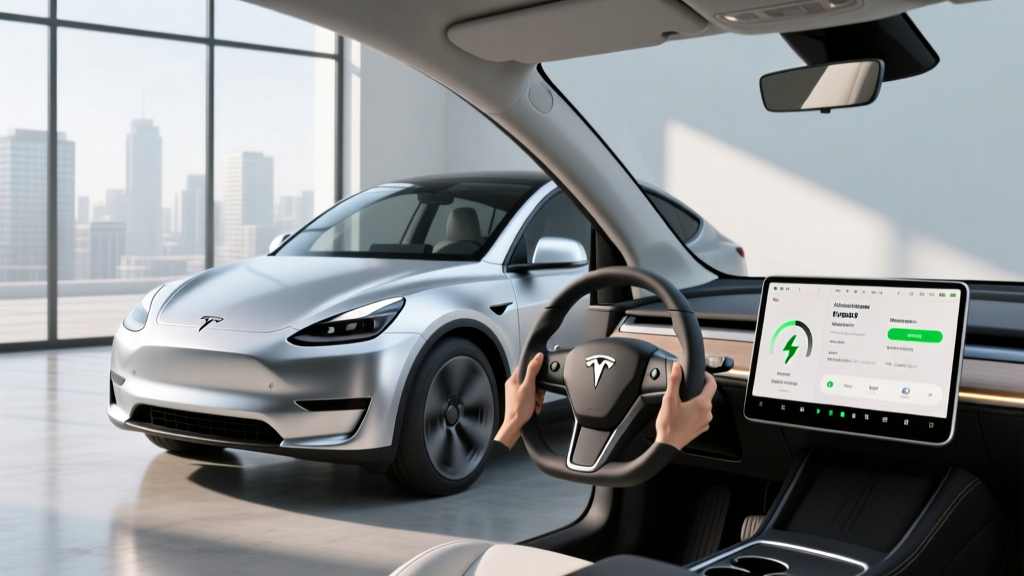
The Juniper refresh addressed the most common complaint about pre-2025 Model Y interiors: noise. Acoustic glass, improved door seals, and redesigned suspension bushings make the 2026 cabin noticeably quieter at highway speed. Ventilated front seats, ambient lighting strips, and a rear-seat touchscreen are now standard on Long Range and Performance trims.
Infotainment: The 15.4-inch center touchscreen handles navigation, media, climate, and vehicle settings. There is no Apple CarPlay or Android Auto — Tesla's native system is the only option. It's responsive and well-integrated with Supercharger routing and battery preconditioning, but smartphone-mirroring loyalists will notice the absence.
Driver assistance: Basic Autopilot (adaptive cruise + lane centering) is standard. Enhanced Autopilot ($6,000) adds auto lane-change, navigate-on-autopilot, and smart summon. Full Self-Driving (Supervised) at $8,000 or $99/month adds traffic-light recognition and city-street autosteer.
All Tesla driver-assist features, including FSD (Supervised), are SAE Level 2 systems. The driver must remain fully engaged, hands on or near the wheel, eyes on the road, and ready to take over instantly. Tesla's cabin camera monitors attention. This is not Level 4 autonomous driving — no consumer vehicle currently sold is.
Pros and Cons: The Honest Take
Pros
- Supercharger network remains the most reliable DC fast-charging ecosystem in North America
- Class-leading efficiency (26–30 kWh/100mi) keeps per-mile electricity cost low
- Strong cargo volume (76.2 cu ft folded) with usable frunk space
- Over-the-air updates continuously add features post-purchase
- LFP battery on base trim allows daily 100% charging without degradation worry
- Loyalty benefits (FSD transfer, referral credits) can save $1,000–$9,000 for returning owners
Cons
- No Apple CarPlay or Android Auto — Tesla-only infotainment
- Minimalist interior lacks physical controls for climate, wipers, and glovebox (all screen-based)
- High insurance premiums in many markets — $200–$350/month is common
- Ride quality on 20-inch wheels is firm over broken pavement
- Rear visibility is limited; relies heavily on backup camera
- FSD (Supervised) remains Level 2 despite the "self-driving" branding — manage expectations
Who Should Buy the 2026 Model Y?
Best for: Daily commuters with home Level 2 charging, tech-forward buyers who value OTA updates, and road-trippers who want dependable DC fast-charging infrastructure coast to coast. The Long Range AWD at ~$42,880 after the federal credit is the sweet spot — 320 EPA miles covers nearly all daily use with margin for weekend trips.
Consider alternatives if: You need Apple CarPlay (Hyundai Ioniq 5, Kia EV6), want a more traditional interior with physical buttons (Ford Mustang Mach-E), or prioritize ride comfort over sportiness (Genesis Electrified GV70).
Upgrading from an older Tesla? Check for active FSD transfer promotions and referral credits before purchasing — these Tesla loyalty benefits can meaningfully improve the upgrade economics, especially if you paid $8,000+ for FSD on your current vehicle.
Frequently Asked Questions
What is the real-world range of the 2026 Tesla Model Y?
The EPA rates the Long Range AWD at 320 miles and the RWD at 300 miles. In real-world mixed highway driving at 70–75 mph, expect 260–290 miles. In cold weather (below 32°F), range drops to roughly 200–230 miles due to battery resistance and cabin heating demand. Preconditioning the battery while plugged in mitigates some of this loss.
How fast does the 2026 Model Y charge at home and on the road?
At home on a 240V Level 2 Wall Connector (48A), the Model Y charges at 11.5 kW, adding roughly 44 miles of range per hour — a full overnight session replenishes the battery completely. On DC fast chargers, the Long Range and Performance peak at 250 kW (10–80% in ~24 minutes), while the RWD LFP peaks at 170 kW (10–80% in ~28 minutes). Charging slows significantly above 80% SoC.
Does the 2026 Model Y qualify for the $7,500 federal EV tax credit?
All Model Y trims are under the $80,000 SUV MSRP cap and are potentially eligible for up to $7,500 under IRS §30D. However, you must meet income caps ($150K single / $300K joint), and the vehicle must satisfy battery-component and critical-mineral sourcing requirements, which tighten annually. The credit can be transferred at point of sale to reduce your upfront cost. Verify current-year eligibility at IRS.gov and with your tax professional.
Are Tesla loyalty benefits actually worth it?
They can be — but availability varies. Referral credits ($500–$1,000) are relatively consistent. FSD transfer is a limited-time promotional offer, not a standing policy; when available, it saves $8,000. Trade-in convenience is real but often below market value. The combined value of active loyalty programs can reach $9,000+ for a returning owner with FSD, making the upgrade math work even against aggressive competitors.
How does the Model Y compare to the Hyundai Ioniq 5 or Ford Mach-E?
The Ioniq 5 charges faster on compatible 350 kW chargers (10–80% in ~18 min) and offers Apple CarPlay, but has fewer public fast-charger options. The Mach-E has a more conventional interior and strong handling, but lower efficiency. The Model Y's advantages remain the Supercharger network, cargo volume, and software ecosystem. If charging access at home is reliable, the competitors are compelling; if you rely on public charging, Tesla's network edge matters.
What's the warranty coverage on the 2026 Model Y battery?
The RWD trim carries an 8-year/100,000-mile battery and drive-unit warranty. Long Range and Performance trims extend to 8 years/120,000 miles. Tesla warrants that the battery will retain at least 70% of its original capacity during the warranty period. Real-world degradation data from Tesla's fleet suggests most packs retain 85–90% capacity at 100,000 miles — well above the warranty threshold.