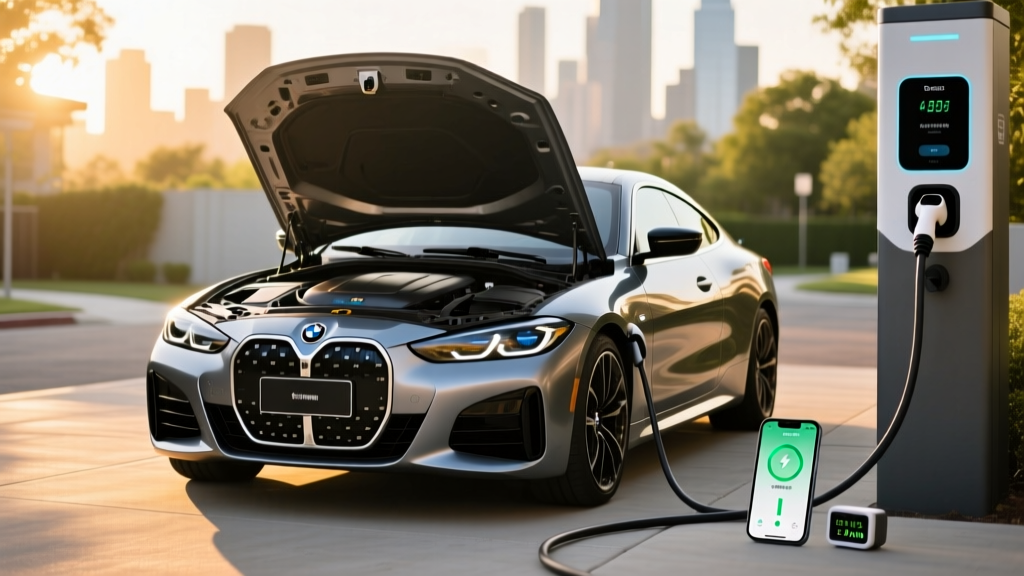
If you have been browsing luxury EV listings, you have likely spotted a BMW i4 lease deal that looks almost too good to pass up. BMW has aggressively positioned the i4 as a gateway into the brand's electric lineup, and leasing is often the most cost-effective way to get behind the wheel. But before you sign on the dotted line, you need to know exactly what you are getting: real-world range, charging reality, tax credit eligibility, and how the i4 stacks up against rivals like the Tesla Model 3 and Polestar 2.
This profile covers the 2026 BMW i4 in full — specs, ownership economics, and whether the current lease incentives actually make sense for your driving life.
2026 BMW i4 Quick Specs at a Glance
| Spec | eDrive40 | xDrive40 | M50 |
|---|---|---|---|
| EPA Range | 307 mi | 282 mi | 263 mi |
| Usable Battery | 81.5 kWh (NMC) | 81.5 kWh (NMC) | 81.5 kWh (NMC) |
| Horsepower | 335 hp | 396 hp | 536 hp |
| 0-60 mph | 5.5 sec | 4.6 sec | 3.7 sec |
| Drivetrain | RWD (single motor) | AWD (dual motor) | AWD (dual motor) |
| Max DC Fast Charge | 205 kW | 205 kW | 205 kW |
| 10-80% DCFC Time | ~31 min | ~31 min | ~31 min |
| Level 2 Home Charge | 11 kW (~30 mi/hr) | 11 kW (~30 mi/hr) | 11 kW (~30 mi/hr) |
| Combined MPGe | 97 MPGe | 91 MPGe | 86 MPGe |
| Base MSRP | $57,900 | $62,900 | $69,900 |
Source: fueleconomy.gov, BMW USA 2026 spec sheets.
Real-World Range: What to Actually Expect
EPA Estimate: 307 miles (eDrive40)
Real-World Highway (70 mph, moderate climate): ~255-275 miles
Cold Weather (below 32°F, highway): ~210-240 miles
City/Commuter (mild weather, regen-heavy): ~290-310 miles
The BMW i4 eDrive40 carries an EPA-estimated 307 miles of range, which is genuinely competitive in the luxury electric sedan segment. However, as with every EV, the sticker number is a best-case composite. On a sustained 70-mph highway run in 65-75°F weather, expect to extract roughly 255 to 275 miles before you need to find a charger. The i4's aerodynamic sedan shape helps it on the highway compared to boxier SUV rivals, but it still loses efficiency at sustained high speeds.
Cold weather is the bigger hit. The i4 uses an NMC (nickel manganese cobalt) battery pack, and like all lithium-ion chemistries, it experiences increased internal resistance in freezing temperatures. Without preconditioning, you can lose 20-30% of your range. Fortunately, the i4's iDrive 8.5 system includes a battery preconditioning feature tied to navigation — if you route to a DC fast charger, the car will warm the pack en route, mitigating some of the cold-weather charging slowdown.
For city commuters who can lean on regenerative braking (the i4 offers adjustable regen levels and an adaptive mode), getting close to or even slightly above the EPA number is realistic in mild weather.
Charging Speed: DC Fast Charging and Home Setup
| Charging Level | Power | Speed | Notes |
|---|---|---|---|
| Level 1 (120V household) | ~1.4 kW | ~3-4 mi/hr | Emergency/trickle only; 80+ hours for full charge |
| Level 2 (240V home/public) | 11 kW (max onboard) | ~30 mi/hr | Full charge in ~9 hours; requires 48A circuit |
| DC Fast Charge (CCS) | 205 kW peak | 10-80% in ~31 min | Peak rate not sustained; tapers significantly above 80% |
The i4's 205 kW peak DC fast-charge rate is respectable but not class-leading — the Hyundai Ioniq 5 and Porsche Taycan both exceed it. In practice, the i4 holds strong charging speeds through the 20-60% state-of-charge window, then begins a noticeable taper. From 80% to 100%, the rate drops to under 50 kW, so plan your road trips around 10-80% sessions for the best time efficiency.
At home, the i4's 11 kW onboard charger means you will want a Level 2 wallbox on a 60-amp breaker (delivering 48 amps continuous). A full overnight charge from near-empty takes roughly 9 hours — easily manageable for daily driving. If your home electrical panel supports it, a BMW Wallbox or a third-party unit like the ChargePoint Home Flex or Emporia Vue works well. Expect a home Level 2 installation to cost between $800 and $2,500 depending on your panel capacity and wiring distance, per typical licensed electrician rates.
The i4 uses the CCS1 connector standard for DC fast charging in North America. As of 2026, BMW has not yet transitioned to the NACS (Tesla-style) connector on the i4, though adapters for Tesla Supercharger access are available through BMW and third-party suppliers. Verify adapter compatibility with your specific model year before relying on Supercharger access for road trips.
Performance and Driving Dynamics
The i4 is built on BMW's CLAR platform — the same architecture underpinning the 4 Series Gran Coupe — which gives it a driving feel that is distinctly BMW. The eDrive40's single rear motor delivers 335 hp and a 5.5-second 0-60 mph time, which is brisk for daily driving and highway merging. The xDrive40 adds a front motor for all-wheel drive and 396 hp (4.6 seconds to 60), while the M50 cranks output to 536 hp and drops the sprint to 3.7 seconds.
What sets the i4 apart from rivals is chassis tuning. The steering is communicative, body control is firm but compliant, and the low center of gravity from the floor-mounted 81.5 kWh battery pack keeps the car planted through corners. The M50 adds an adaptive M suspension, M Sport brakes, and BMW's IconicSounds Electric (a Hans Zimmer-composed drive soundtrack — love it or mute it).
All trims feature one-pedal driving capability via the strongest regen setting, though BMW's adaptive regen mode — which uses radar and navigation data to modulate braking force — is arguably the more refined daily-driving choice.
Pricing, Lease Deals, and Tax Credit Eligibility
| Trim | Base MSRP | Est. Monthly Lease (36 mo, $3,500 down) | Federal §30D Credit Eligibility |
|---|---|---|---|
| eDrive40 | $57,900 | ~$550-$650/mo | See eligibility notes below |
| xDrive40 | $62,900 | ~$625-$725/mo | See eligibility notes below |
| M50 | $69,900 | ~$750-$875/mo | See eligibility notes below |
Lease estimates are approximate and vary by region, dealer, credit tier, and current BMW Financial Services incentives. Always confirm with your local dealer.
The BMW i4 lease deal landscape in 2026 is shaped heavily by BMW Financial Services' promotional rates and the interaction with federal tax incentives. Here is what you need to know about the IRS §30D clean vehicle credit:
- MSRP Cap: Sedans must have an MSRP at or below $55,000 to qualify. The i4 eDrive40 starts at $57,900, which exceeds the cap. However, certain dealer-applied adjustments or fleet/lease structures may shift classification — consult your tax professional.
- Income Limits: Modified adjusted gross income must not exceed $150,000 (single), $225,000 (head of household), or $300,000 (joint filers).
- Battery Sourcing: Critical mineral and battery component requirements phase in more strictly each year. BMW's battery supply chain for the i4 has been progressively qualifying, but exact eligibility depends on the specific VIN and build date. Always verify via the fueleconomy.gov tax credit lookup tool.
- Point-of-Sale Transfer: If eligible, the credit can be transferred to the dealer at purchase, reducing the sale price directly — or in some lease structures, the lessor (BMW Financial) captures the credit and may pass savings through as a capitalized cost reduction.
When you lease an EV, the federal §30D tax credit technically goes to the lessor (BMW Financial Services), not you. BMW may choose to pass this savings on as a "lease cash" incentive that lowers your monthly payment — but this is not guaranteed and varies by promotion period. Some manufacturers also qualify for a separate commercial clean vehicle credit (§45W) on leased vehicles, which can create additional lease-side incentives. Ask your dealer exactly how the current BMW lease incentive is structured and whether a tax credit is baked into the advertised monthly payment.
Interior, Cargo, and Daily Practicality
The i4 is a five-door liftback (Gran Coupe body style), which gives it a practical edge over traditional sedans. Cargo volume is 16.6 cubic feet behind the rear seats and 45.6 cubic feet with the 40/20/40 split rear seats folded — competitive with the Tesla Model 3's trunk but with a more usable hatch opening.
Front legroom measures 42.3 inches, which is generous. Rear legroom is 35.2 inches — adequate for adults on shorter trips but tighter than a midsize sedan like the Hyundai Ioniq 6. The rear floor hump (a CLAR-platform carryover from ICE variants) slightly compromises the middle rear seat.
The i4 runs BMW's iDrive 8.5 infotainment system on a curved display panel (14.9-inch central touchscreen merged with a 12.3-inch digital instrument cluster). Wireless Apple CarPlay and Android Auto are standard, along with a head-up display, Harman Kardon surround sound (optional), and over-the-air software updates. The system is responsive and feature-rich, though the heavy reliance on touchscreen controls for climate and vehicle settings draws mixed reviews from owners who prefer physical buttons.
Driver Assistance and Safety Technology
The 2026 i4 comes equipped with BMW's Driving Assistant Professional package (standard on xDrive40 and M50, optional on eDrive40). This includes:
- Adaptive cruise control with stop-and-go
- Lane keeping assist with active side collision avoidance
- Highway Assistant (hands-off-capable up to 85 mph on divided highways — eyes-on supervision required at all times)
- Parking Assistant Plus with 360-degree camera and Reversing Assistant
Despite the impressive feature set, the BMW i4's driver-assistance suite is classified as SAE Level 2 — partial automation. The driver must remain attentive, keep hands near the wheel (or eyes on the road for Highway Assistant), and be ready to take over instantly. This is not a self-driving system. For context, only dedicated robotaxi services like Waymo operate at Level 4 (full automation in defined areas).
The i4 earned strong safety ratings, with standard automatic emergency braking, blind-spot monitoring, and rear cross-traffic alert across all trims. Check IIHS and NHTSA for the latest crash-test scores.
BMW i4 vs. Key Competitors: Is It the Right Lease?
| Category | BMW i4 eDrive40 | Tesla Model 3 LR | Polestar 2 LRSM |
|---|---|---|---|
| EPA Range | 307 mi | 363 mi | 276 mi |
| Base MSRP | $57,900 | $44,990 | $54,300 |
| DCFC Peak | 205 kW | 250 kW | 205 kW |
| 0-60 mph | 5.5 sec | 4.2 sec | 4.3 sec |
| Cargo (rear seats up) | 16.6 cu ft | 23 cu ft | 14.4 cu ft |
| Build Quality | Premium luxury | Minimalist/moderate | Scandinavian premium |
| Dealer Network | Extensive | Direct-sales only | Limited |
- You prioritize driving dynamics and chassis refinement
- You want a luxury badge with a strong dealer/service network
- You prefer a liftback body style with a premium interior
- Lease incentives bring the monthly cost below a Model 3
- Maximum range is your top priority (Model 3 Long Range wins)
- You need the lowest purchase price (Model 3 undercuts by ~$13K)
- You want Supercharger network access without an adapter
- Rear-seat space is critical (i4 is tighter than midsize options)
Warranty Coverage and Long-Term Battery Outlook
BMW backs the i4 with a solid warranty package:
- New Vehicle Limited Warranty: 4 years / 50,000 miles
- High-Voltage Battery Warranty: 8 years / 100,000 miles (covers capacity below 70% of original)
- Maintenance Program: 3 years / 36,000 miles of factory-scheduled maintenance included
- Roadside Assistance: 4 years / unlimited miles
The 70% capacity retention threshold on the battery warranty is industry-standard (matching Tesla, Hyundai, and most others). NMC chemistry in the i4 has shown moderate degradation rates in early model-year data — expect roughly 8-12% capacity loss over the first 100,000 miles under normal use patterns. Avoiding habitual DC fast charging and keeping the battery between 20-80% for daily use will help preserve long-term State of Health (SoH).
Pros and Cons
- Engaging driving dynamics rare among EVs
- Premium interior with excellent build quality
- Competitive 307-mile EPA range (eDrive40)
- Liftback versatility with 45.6 cu ft max cargo
- Strong dealer and service network
- Complimentary maintenance program
- MSRP exceeds §30D sedan cap ($55,000)
- 205 kW peak DCFC trails class leaders
- Rear-seat legroom is tight for the class
- Heavy reliance on touchscreen for basic controls
- CCS connector requires adapter for Supercharger access
- Floor hump compromises middle rear seat comfort
Frequently Asked Questions
What is the real-world range of the BMW i4?
The eDrive40 is EPA-rated at 307 miles, but expect roughly 255-275 miles on sustained highway driving and 210-240 miles in freezing weather. City commuters using regenerative braking can approach or slightly exceed the EPA figure in mild conditions.
How fast does the BMW i4 charge?
On a DC fast charger, the i4 peaks at 205 kW and charges from 10-80% in approximately 31 minutes, with notable tapering above 80%. At home on a Level 2 charger (11 kW), you gain roughly 30 miles of range per hour, with a full charge taking about 9 hours.
Does the BMW i4 qualify for the federal EV tax credit?
Eligibility is complicated. The i4's MSRP exceeds the $55,000 sedan cap for the IRS §30D credit in most trims and configurations. However, when leased, the lessor (BMW Financial Services) may capture a commercial vehicle credit and pass savings through as lease cash. Always verify your specific VIN on fueleconomy.gov and consult a tax professional.
Is it better to lease or buy the BMW i4?
Leasing is often the smarter financial play for the i4 in 2026. BMW's lease incentives frequently include "lease cash" that lowers the effective capitalized cost, and you avoid the risk of long-term depreciation on a luxury EV. If you drive under 10,000-12,000 miles per year and prefer swapping cars every 36 months, leasing also shields you from battery degradation concerns.
How does the BMW i4 compare to the Tesla Model 3?
The Model 3 Long Range wins on range (363 vs. 307 miles), charging speed (250 vs. 205 kW), price ($44,990 vs. $57,900), and Supercharger network access. The i4 wins on interior quality, driving dynamics, dealer service access, and liftback cargo versatility. It comes down to whether you value premium luxury execution or maximum efficiency per dollar.
What is the BMW i4's battery chemistry?
The i4 uses NMC (nickel manganese cobalt) lithium-ion cells supplied by CATL and Samsung SDI, depending on the production batch. NMC offers high energy density, which is why the i4 achieves competitive range from its 81.5 kWh usable pack. The trade-off versus LFP chemistry is slightly faster long-term degradation and a recommendation to charge to 80% for daily use rather than 100%.