Quick Verdict: The Driver's EV That Doesn't Shout About It
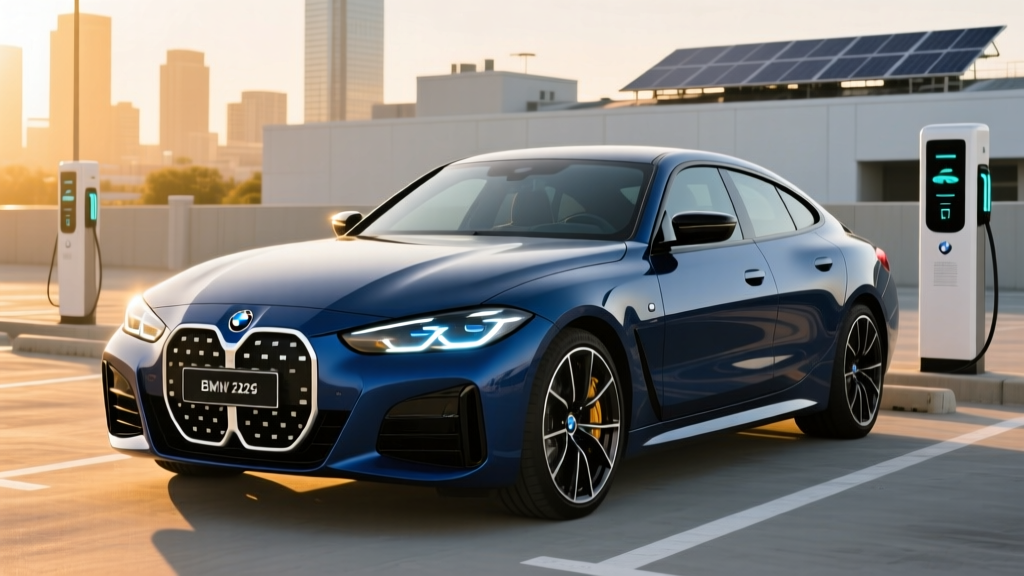
The 2026 BMW i4 remains one of the most convincing electric vehicles for buyers who want a premium sport sedan without the polarizing design or tech-bro cachet of a Tesla. Built on BMW's CLAR platform — shared with the gasoline 4 Series Gran Coupe — the i4 delivers a near-50/50 weight distribution, rear-biased driving dynamics, and a cabin that feels genuinely luxurious rather than minimalist-for-minimalism's-sake. For 2026, BMW has refined the battery thermal management system and slightly bumped usable capacity, helping the eDrive40 trim achieve an EPA-estimated 318 miles of range — putting it squarely among the longest-range luxury EVs in its class.
But the i4 isn't perfect. Its CLAR underpinnings mean a transmission tunnel hump eats into rear floor space, DC fast-charging peaks below some rivals, and the federal tax credit picture is complicated by battery-sourcing rules. This review breaks down every number that matters — from real-world highway range to 10–80% charging minutes — so you can decide if the i4 earns a spot in your garage.
Range and Efficiency: EPA Sticker vs. the Real World
The 2026 i4 lineup offers three trims, each with a different range and efficiency profile. The rear-wheel-drive eDrive40 maximizes distance per charge, while the dual-motor M50 trades some range for 536 horsepower and all-wheel grip. The new xDrive40 slots between them with AWD and competitive range.
| Trim | Drivetrain | Battery (Usable kWh) | EPA Range | MPGe (Combined) | kWh/100 mi |
|---|---|---|---|---|---|
| eDrive40 | RWD | 84.0 kWh (NMC) | 318 mi | 109 MPGe | 30 |
| xDrive40 | AWD | 84.0 kWh (NMC) | 287 mi | 98 MPGe | 34 |
| M50 | AWD | 84.0 kWh (NMC) | 257 mi | 89 MPGe | 38 |
Real-World Range Reality Check
EPA sticker: 318 miles (eDrive40)
Expect on the highway at 75 mph: ~260–275 miles
Cold weather (below 30°F): ~220–245 miles (20–30% reduction typical for NMC chemistry without aggressive preconditioning)
Mixed city/suburban driving: ~290–310 miles — regenerative braking in stop-and-go traffic helps recover energy.
The i4's heat pump (standard on all 2026 trims) mitigates cold-weather cabin-heating losses, but battery chemistry still suffers in deep cold. Plan charging stops conservatively on winter road trips.
Efficiency-wise, the eDrive40's 30 kWh/100 mi is respectable for a 4,700-pound sedan, though the Hyundai Ioniq 6 and Tesla Model 3 Highland still edge it out thanks to lighter platforms and more aggressive aero. The M50's 38 kWh/100 mi reflects the cost of 536 hp and AWD — if you're choosing that trim, range was never the priority.
Charging Speed: DC Fast, Level 2, and the Curve That Matters
Charging speed is where the i4's CLAR-platform compromises become most visible. BMW rates the i4 at a peak 205 kW on DC fast chargers — adequate but noticeably below the Hyundai/Kia E-GMP platform's 350 kW capability or the Lucid Air's 300 kW+.
| Charging Level | Power | Speed / Time | Connector |
|---|---|---|---|
| Level 1 (120V household) | 1.4 kW | ~4 mi/hr added | J1772 / NACS adapter |
| Level 2 (240V home) | 11 kW (max onboard) | ~35 mi/hr; 0–100% in ~8.5 hr | J1772 or NACS |
| DC Fast Charge | 205 kW peak | 10–80% in ~31 min | CCS1 (or NACS on newer builds) |
Understanding the charge curve: The 205 kW peak only holds between roughly 10–40% state of charge. Above 50%, the rate tapers to ~120 kW, and above 80% it drops below 50 kW to protect the NMC cells. This means a 10–80% session takes about 31 minutes at a capable 350 kW Electrify America or Tesla Supercharger station — but a 10–95% session can stretch past 55 minutes. On road trips, plan to charge to 80% and go; the time penalty for that last 20% is rarely worth it.
For home charging, the i4's 11 kW onboard charger is a strong point. On a 48-amp Level 2 circuit (the most common home installation), you'll see the full 11 kW, adding roughly 35 miles of range per hour. A full overnight charge from 20% to 100% takes about 7 hours — easily manageable with a BMW Wallbox or any quality Level 2 unit like a ChargePoint Home Flex or Emporia Level 2.
Performance: The BMW DNA Shows Through
This is where the i4 separates itself from comfort-oriented EVs. BMW tuned the i4's adaptive M suspension and rear-biased torque distribution to reward drivers who enjoy corners — something you can actually feel from behind the wheel, not just read on a spec sheet.
| Trim | Powertrain | Horsepower | Torque (lb-ft) | 0–60 mph | Top Speed |
|---|---|---|---|---|---|
| eDrive40 | Single motor, RWD | 335 hp | 317 | 5.5 sec | 118 mph |
| xDrive40 | Dual motor, AWD | 396 hp | 435 | 4.6 sec | 130 mph |
| M50 | Dual motor, AWD | 536 hp | 586 | 3.7 sec | 140 mph |
The eDrive40's 5.5-second 0–60 time won't win drag races against a Tesla Model 3 Performance (3.1 seconds), but the BMW's chassis composure at speed is noticeably more settled. The M50's 3.7-second sprint puts it in serious performance territory, and BMW's M-tuned adaptive dampers and variable sport steering give it cornering confidence that heavier EVs can't match.
Regenerative braking offers adjustable levels via steering-wheel paddles, including a true one-pedal-driving mode with up to 0.20g of deceleration. The adaptive mode — which reads traffic and GPS data to modulate regen — works well in practice and reduces brake wear substantially.
Interior, Tech, and Daily Practicality
The i4's cabin is where BMW's traditional luxury expertise shows. The BMW Curved Display (a 12.3-inch instrument cluster fused with a 14.9-inch infotainment touchscreen) runs iDrive 8.5, which supports wireless Apple CarPlay and Android Auto, over-the-air updates, and a natural-language voice assistant. Build quality is a clear step above the Tesla Model 3, with soft-touch materials, real aluminum trim options, and well-bolstered sport seats standard on most trims.
Cargo and passenger space is where the Gran Coupe hatchback body style pays dividends:
- Cargo volume: 16.6 cu ft behind rear seats; 45.6 cu ft with rear seats folded (hatchback opening makes loading easier than a traditional sedan trunk)
- Front legroom: 42.1 inches
- Rear legroom: 34.5 inches — adequate for adults on shorter trips, tight for anyone over 6 feet on long drives
- Rear headroom: 36.6 inches — the sloping roofline cuts into space compared to the boxier iX SUV
The center transmission tunnel hump — a CLAR platform artifact from its ICE-sharing architecture — intrudes on rear middle-seat foot space. This effectively makes the i4 a comfortable four-seater rather than a true five-seater, a meaningful trade-off for family buyers.
Driver-assistance technology: The i4 comes with BMW's Driving Assistant Professional, a Level 2 system per SAE classification. This includes adaptive cruise control with stop-and-go, lane-centering steering assist, and automatic lane-change confirmation on highways. It is not a self-driving system — the driver must maintain hands-on-wheel awareness at all times. BMW does not currently offer a hands-free highway system comparable to GM's Super Cruise or Ford's BlueCruise on the i4, which is a notable omission in this price bracket.
Pricing, Trims, and the Tax Credit Question
The 2026 i4 starts at a premium but remains competitive against the Mercedes EQB, Audi Q4 e-tron sedan, and Tesla Model S (which has climbed significantly in price). Here's the trim-level breakdown before options and destination charges:
| Trim | Base MSRP | As-Tested (Typical Options) | §30D Federal Credit Eligibility |
|---|---|---|---|
| eDrive40 | $57,900 | $63,000–$67,000 | Partial — see sourcing rules below |
| xDrive40 | $62,900 | $68,000–$73,000 | Partial — see sourcing rules below |
| M50 | $70,700 | $78,000–$85,000 | Not eligible — exceeds MSRP cap |
Federal tax credit (§30D) — the details that matter: Under current IRS rules, the §30D credit offers up to $7,500 for qualifying new EVs. However, eligibility depends on several factors that affect the i4 specifically:
- MSRP cap: Sedans must be priced at or below $55,000 to qualify. The i4's base MSRP of $57,900 (eDrive40) exceeds this cap, meaning the standard §30D purchase credit does not apply to most new i4 purchases.
- Lease loophole (commercial credit): If you lease the i4 through BMW Financial Services, the $7,500 commercial clean-vehicle credit (§45W) may be passed through as a lease incentive. This has been a common strategy for luxury EVs above the MSRP cap. Confirm current lease terms with your dealer.
- Income limits: For buyers who do find a qualifying path, modified adjusted gross income must not exceed $150,000 (single) or $300,000 (joint filing).
- Battery sourcing: The credit requires escalating percentages of critical minerals and battery components sourced from the US or free-trade-agreement countries. BMW sources cells from Samsung SDI and CATL; specific 2026 compliance percentages should be verified at the point of sale.
Bottom line: Most new i4 buyers will not qualify for the $7,500 purchase credit due to the MSRP cap. Leasing is the most reliable path to capturing the incentive. Always consult a tax professional and verify current rules at irs.gov before committing.
Battery Warranty, Longevity, and Ownership Costs
BMW provides an 8-year/100,000-mile high-voltage battery warranty, covering the pack if it degrades below 70% of original capacity. This is industry-standard — matching Tesla, Hyundai, and Ford — though some competitors like Rivian offer 8-year/175,000-mile coverage.
The i4 uses NMC (nickel-manganese-cobalt) lithium-ion cells, which offer higher energy density than LFP (lithium iron phosphate) chemistry but are more sensitive to sustained high state-of-charge and extreme heat. For maximum longevity:
- Set daily charge limit to 80% (configurable in iDrive)
- Avoid repeated DC fast-charging sessions above 150 kW when Level 2 is available
- Use preconditioning before fast-charging sessions (the i4 does this automatically when a DC charger is set as a navigation destination)
Five-year estimated total cost of ownership (eDrive40, 15,000 miles/year, $0.14/kWh home electricity, no tax credit):
| Category | 5-Year Cost |
|---|---|
| Purchase price (after incentives) | ~$59,900 (with destination) |
| Electricity (home charging) | ~$3,150 |
| Insurance (avg. premium) | ~$12,500 |
| Maintenance (tires, cabin filter, fluid top-offs) | ~$2,200 |
| Depreciation (estimated) | ~$24,000 |
| Total 5-year cost | ~$101,750 |
Insurance premiums for the i4 run 15–25% higher than a comparable gas-powered 4 Series due to repair costs for high-voltage components and aluminum body panels. Get quotes from multiple carriers before purchasing.
How the i4 Stacks Up Against Key Competitors
| Spec | BMW i4 eDrive40 | Tesla Model 3 LR | Hyundai Ioniq 6 SEL | Mercedes EQB 350 |
|---|---|---|---|---|
| EPA Range | 318 mi | 341 mi | 361 mi | 251 mi |
| DC Fast Charge (peak) | 205 kW | 250 kW | 350 kW | 100 kW |
| 10–80% DC Time | ~31 min | ~25 min | ~18 min | ~32 min |
| 0–60 mph | 5.5 sec | 4.2 sec | 5.1 sec | 6.2 sec |
| Base MSRP | $57,900 | $42,380 | $42,715 | $54,350 |
| Cargo (rear seats up) | 16.6 cu ft | 23 cu ft | 12.3 cu ft | 22.0 cu ft |
Who Should Buy the BMW i4?
Choose the i4 if: You want a premium sport sedan with genuine driving dynamics, a high-quality interior, strong brand cachet, and don't need maximum range or the fastest charging in the segment. Ideal for executive commuters and weekend canyon-carvers who charge at home.
Look elsewhere if: Maximum range and lowest cost are priorities (Tesla Model 3 or Ioniq 6), you need fast road-trip charging (Hyundai/Kia E-GMP platform), you need hands-free highway driving (GM Super Cruise vehicles), or you need genuine five-seat family space (BMW iX or Hyundai Ioniq 5).
Pros, Cons, and the Bottom Line
Pros
- Class-leading ride and handling balance for an EV sedan
- Premium interior with excellent build quality and materials
- 318-mile EPA range (eDrive40) covers most commutes and road trips
- 11 kW onboard Level 2 charger enables fast home charging
- Hatchback cargo versatility (45.6 cu ft max)
- iDrive 8.5 is responsive, logical, and supports wireless phone integration
Cons
- MSRP exceeds $55,000 §30D cap — purchase tax credit unavailable
- 205 kW DC fast-charging peak trails Hyundai/Kia and Tesla
- CLAR platform tunnel hump compromises rear middle-seat comfort
- No hands-free Level 2+ system (no Super Cruise/BlueCruise competitor)
- Insurance premiums run higher than gas 4 Series equivalents
- Rear headroom limited by sloping roofline for taller passengers
Frequently Asked Questions
What is the real-world range of the 2026 BMW i4?
The eDrive40's EPA estimate is 318 miles, but expect 260–275 miles at sustained highway speeds (75 mph) and 220–245 miles in cold weather below 30°F. Mixed city driving with regenerative braking can approach the EPA figure.
Does the BMW i4 qualify for the $7,500 federal EV tax credit?
Not for most new purchases. The §30D credit caps sedan eligibility at $55,000 MSRP, and the i4 starts at $57,900. Leasing through BMW Financial may allow the $7,500 commercial credit to pass through as a lease incentive — confirm with your dealer and a tax professional.
How fast does the BMW i4 charge at home and on the road?
At home on a 48-amp Level 2 charger, the i4 accepts up to 11 kW, adding ~35 miles per hour (full charge in ~8.5 hours). On DC fast chargers, it peaks at 205 kW and reaches 10–80% in about 31 minutes, though charging tapers significantly above 80%.
Is the BMW i4 worth buying over a Tesla Model 3 or Hyundai Ioniq 6?
If interior quality, driving dynamics, and brand prestige matter more than lowest price or fastest charging, yes. The Model 3 offers more range and Supercharger access for ~$15,000 less; the Ioniq 6 charges dramatically faster. The i4 wins on chassis refinement and cabin luxury.
What is the battery warranty on the BMW i4?
BMW covers the high-voltage battery for 8 years or 100,000 miles, whichever comes first, against degradation below 70% of original capacity. The basic vehicle warranty is 4 years/50,000 miles.
Can the BMW i4 tow?
The i4 is not rated for towing by BMW. If towing capacity is a requirement, consider the BMW iX (up to 3,500 lbs) or the Rivian R1S.