Quick Answer: Which BMW Electric Car Should You Buy?
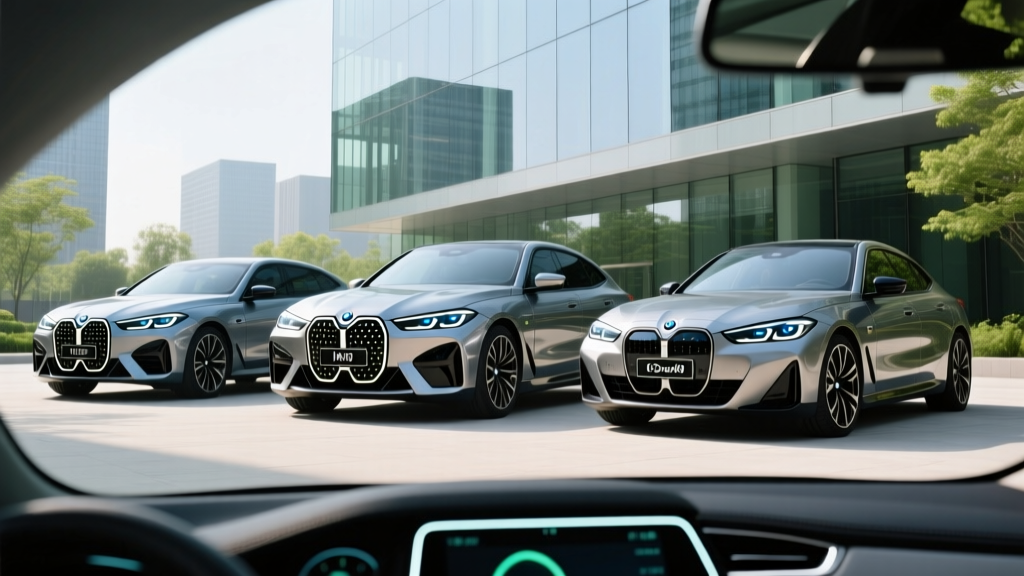
BMW's 2026 electric lineup spans four core models: the i4 (sport sedan, up to 307 mi EPA, from ~$52,200), the i5 (executive sedan, up to 295 mi, from ~$66,800), the i7 (flagship luxury sedan, up to 318 mi, from ~$105,700), and the iX (midsize SUV, up to 324 mi, from ~$87,250). The i4 eDrive40 offers the best value-to-range ratio. None currently qualify for the full $7,500 federal §30D credit due to battery-sourcing rules, though state incentives and lease pass-throughs may apply. Expect real-world highway range 10–15% below EPA stickers, and plan for a home Level 2 charger (~$1,200–$2,500 installed) to make ownership practical.
The 2026 BMW EV Lineup at a Glance
BMW has committed to its "Neue Klasse" architecture transition, but for the 2026 model year, the current generation of i-badged vehicles continues with incremental battery and software refinements. Here's how the core models stack up on the numbers that matter most.
| Model | Trim | Battery (kWh usable) | Chemistry | EPA Range | Peak DC Charge | 10–80% Time | 0–60 mph | Base MSRP |
|---|---|---|---|---|---|---|---|---|
| i4 | eDrive40 | 81.5 | NMC | 307 mi | 205 kW | ~31 min | 5.5 sec | $52,200 |
| i4 | M50 | 81.5 | NMC | 270 mi | 205 kW | ~31 min | 3.7 sec | $66,200 |
| i5 | eDrive40 | 81.2 | NMC | 295 mi | 205 kW | ~30 min | 5.7 sec | $66,800 |
| i5 | M60 | 81.2 | NMC | 256 mi | 205 kW | ~30 min | 3.7 sec | $84,100 |
| i7 | eDrive50 | 101.7 | NMC | 318 mi | 195 kW | ~34 min | 5.5 sec | $105,700 |
| iX | xDrive50 | 111.5 | NMC | 324 mi | 195 kW | ~35 min | 4.4 sec | $87,250 |
| iX | M60 | 111.5 | NMC | 296 mi | 195 kW | ~35 min | 3.6 sec | $111,500 |
Sources: fueleconomy.gov, BMW USA specifications. MSRP excludes $995 destination. Specs subject to final EPA certification.
Real-World Range Reality Check
EPA estimates assume a mix of city and highway driving at moderate temperatures. In our experience and consistent with third-party testing:
- Highway-only at 70 mph: Expect 85–90% of EPA range (e.g., i4 eDrive40 drops from 307 to ~260–275 mi)
- Cold weather (below 32°F): Plan for 20–30% range reduction without preconditioning; 15–20% with cabin and battery preconditioning active
- DC fast charging taper: All BMW i-models slow significantly above 80% SoC — the last 20% can take as long as the first 80%
The iX xDrive50's 111.5 kWh battery provides the largest buffer, making it the most road-trip-capable BMW EV for multi-state drives where charging stations may be 100+ miles apart.
BMW EVs vs. Gas Equivalents: What You Actually Save
The purchase-price premium of a BMW electric car over its gas counterpart is real. But total cost of ownership over five years tells a different story — especially if you charge at home on residential electricity rates.
| Category | i4 eDrive40 (EV) | 430i Gran Coupe (Gas) |
|---|---|---|
| Base MSRP | $52,200 | $48,300 |
| Federal Tax Credit (§30D) | $0 (sourcing rules) | $0 |
| Estimated State Incentive | $1,000–$2,000 (varies) | $0 |
| Fuel/Energy (15k mi/yr × 5 yrs) | $4,500 ($0.13/kWh avg) | $10,500 ($3.50/gal, 28 MPG) |
| Maintenance (5 yrs) | $1,800 | $3,500 |
| Insurance (5 yrs) | $9,500 | $8,200 |
| Estimated Depreciation | $22,000 | $19,500 |
| 5-Year Total Cost | ~$67,000 | ~$71,000 |
Assumptions: 15,000 miles/year, $0.13/kWh home charging, $3.50/gal premium fuel, 28 MPG combined for 430i. Insurance estimates from industry averages for luxury compacts. Your actuals will vary — run your local utility rate through the DOE's fuel cost calculator.
The i4 breaks even or saves money over five years primarily through fuel and maintenance savings. EVs eliminate oil changes, spark plugs, and transmission fluid. Regenerative braking extends pad life to 80,000+ miles in typical driving. However, BMW EV insurance premiums run 10–18% higher than gas equivalents — get quotes before committing.
Charging BMW Electric Cars: Home and Public
Every 2026 BMW i-model uses the NACS (Tesla-style) connector for DC fast charging and Level 2 AC charging, following BMW's adoption of the North American Charging Standard. This gives you access to Tesla Supercharger stalls (via native NACS port, no adapter needed) alongside Electrify America, EVgo, and other networks.
| Level | Power | Connector | Miles of Range per Hour | Best For |
|---|---|---|---|---|
| Level 1 | 1.4 kW (120V) | NACS | 3–5 mi/hr | Overnight top-ups, emergencies |
| Level 2 (Home) | 7.7–11.5 kW (240V) | NACS | 20–35 mi/hr | Daily charging, full overnight refill |
| DC Fast | Up to 205 kW | NACS | Up to 650 mi/hr (peak) | Road trips, 10–80% in ~31 min |
Home charging installation is the make-or-break factor for BMW EV ownership. Budget $1,200–$2,500 for a professional Level 2 install (40-amp circuit, NACS-compatible wall connector). Older homes may need a $1,500–$3,500 electrical panel upgrade to support a dedicated 240V circuit. Always get a quote from a licensed electrician before purchasing — don't assume your panel has capacity.
On public DC fast chargers, BMW's charge curve is conservative compared to Hyundai/Kia's E-GMP platform. The i4 and i5 peak near 205 kW but taper to ~100 kW by 60% SoC, and below 50 kW above 80%. This means a 10–80% session takes roughly 31 minutes, while a 10–90% session can stretch to 50+ minutes. Plan road-trip stops accordingly.
Federal Tax Credits and Incentives: The Honest Picture
Here's where many BMW EV buyers face disappointment. Under the current IRS §30D clean vehicle credit rules, eligibility requires meeting both critical-mineral and battery-component sourcing thresholds. As of 2026, BMW's battery supply chain (cells sourced primarily from CATL and Samsung SDI with Chinese-processed minerals) does not meet the thresholds for the full $7,500 credit on any i-model purchased outright.
§30D Tax Credit Requirements (2026)
- ✗ Battery sourcing: BMW i-models currently do NOT meet critical-mineral or battery-component thresholds
- ✓ MSRP cap: i4 qualifies (sedan cap: $55,000); i5, i7, iX exceed SUV/sedan caps depending on trim classification
- ✓ Buyer income cap: $150K single / $300K joint (AGI)
- ✓ Assembly: Some BMW EVs are assembled in the U.S. (iX at Spartanburg, SC) — but sourcing rules still block credit
- ⚠ Lease loophole: Commercial clean vehicle credit (§45W) may allow dealerships to pass $7,500 through as a lease incentive — ask your dealer explicitly
The lease pass-through is the most realistic path to a federal incentive on a BMW EV. If you prefer to buy, check your state's EV rebate programs — California, Colorado, New York, and others offer $1,000–$4,000 in point-of-sale rebates that stack regardless of federal eligibility.
Common BMW EV Misconceptions, Corrected
| Myth | Fact |
|---|---|
| "BMW EVs are just converted gas cars" | The i4, i5, and i7 share platforms with gas BMWs (CLAR architecture), but BMW engineered dedicated EV subframes, battery enclosures, and thermal management. The iX was EV-only from inception. Performance and packaging are purpose-designed, not afterthoughts. |
| "The battery will need replacing in 5 years" | BMW warrants its high-voltage batteries for 8 years / 80,000 miles against defects and capacity loss below 70% of original. NMC chemistry in BMW's pack design typically degrades 8–12% over 100,000 miles based on industry fleet data. Replacement cost, if ever needed out of warranty: $15,000–$22,000. |
| "I can charge on any public station" | With native NACS ports, 2026 BMW EVs access Tesla Superchargers directly. However, older Electrify America and some ChargePoint stalls still have CCS1 cables only — you'll need BMW's CCS-to-NACS adapter ($200–$250) for those stations. Verify connector type in your charging app before driving to a station. |
| "M Performance EVs have terrible range" | The i4 M50 (270 mi EPA) and iX M60 (296 mi EPA) sacrifice 37 and 28 miles respectively versus their efficiency-oriented trims. That's meaningful for road trips but still sufficient for most daily driving and single-stop 400-mile journeys. |
Decision Framework: Which BMW Electric Car Is Right for You?
Choose Based on Your Situation
Choose the i4 eDrive40 if:
- You want the most range per dollar in the BMW lineup (307 mi, ~$52K)
- Your daily commute is under 80 miles round-trip
- You prioritize driving dynamics over rear-seat space
- You want a sport sedan that rivals the Tesla Model 3 and Hyundai Ioniq 6 on value
Choose the i5 eDrive40 if:
- You need more rear-seat room and trunk space than the i4 (executive-sedan proportions)
- You want a 5 Series experience without the gas-engine maintenance
- Price sensitivity is secondary to comfort and technology
- 295 miles of EPA range covers your typical weekly driving without mid-week charging
Choose the iX xDrive50 if:
- You need SUV cargo space (35.5 cu ft rear, 77.9 cu ft folded) and all-wheel drive
- You take regular road trips and want the largest battery (111.5 kWh) for charging-desert buffer
- You have family hauling needs but don't need three rows (look at the Rivian R1S or Tesla Model X for that)
- You can absorb the ~$87K starting price and higher insurance tier
Choose the i7 eDrive50 if:
- You're cross-shopping a Mercedes EQS or Tesla Model S and want BMW's luxury execution
- Rear-seat comfort and the available 31-inch Theater Screen are priorities
- Budget is flexible ($105K+ before options)
- You value the 318-mile EPA range — the longest of any BMW sedan
Consider a BMW plug-in hybrid (PHEV) instead if:
- You lack reliable home charging access (apartment, street parking)
- You regularly drive 400+ mile routes through charging-sparse regions
- The BMW 330e or 550e PHEV (20–40 mi electric-only range, then gas) better fits your infrastructure reality
First-Time BMW EV Buyer Checklist
Before you sign a purchase or lease agreement, work through these practical items:
- Get an electrician quote for a 240V/40-amp circuit near your parking spot. If the quote exceeds $3,000 (panel upgrade needed), factor that into your total cost.
- Pull insurance quotes for the specific trim you're considering. BMW EV premiums vary significantly between the i4 eDrive40 and iX M60.
- Ask the dealer about lease incentives. The §45W commercial credit pass-through can knock $7,500 off a lease — but it's dealer-discretionary, not guaranteed.
- Download BMW's charging app and plug in your address to see Level 2 and DC fast chargers within your daily routes. Confirm NACS connector availability at your most-used stations.
- Test-charge at a DC fast station before buying. Experience the 10–80% wait time and the BMW iDrive charging interface firsthand.
- Verify your state incentives at AFDC's state law database — some states offer rebates that stack with utility company discounts.
Frequently Asked Questions
Do any 2026 BMW electric cars qualify for the $7,500 federal tax credit?
Not when purchased outright. BMW's battery supply chain does not currently meet the §30D critical-mineral and battery-component sourcing requirements. However, leasing a BMW EV may unlock a $7,500 pass-through incentive via the §45W commercial clean vehicle credit — confirm with your dealer whether they apply this as a capitalized-cost reduction.
How long does it take to charge a BMW i4 at home?
On a Level 2 home charger delivering 11.5 kW (48 amps, 240V), the i4's 81.5 kWh battery charges from 0–100% in roughly 8.5 hours. Most owners plug in overnight and wake to a full battery. On a standard 120V outlet (Level 1, 1.4 kW), a full charge takes over 55 hours — practical only for emergency trickle charging or very low daily mileage.
Is BMW's EV battery warranty competitive?
BMW covers the high-voltage battery for 8 years or 80,000 miles against defects and capacity loss below 70% of original capacity. This matches the industry standard set by most automakers (Hyundai/Kia offer 10/100,000). Real-world degradation data from BMW i3 and iX fleets suggests most packs retain 88–92% capacity at 100,000 miles under normal use.
Can I use Tesla Superchargers with a 2026 BMW EV?
Yes. All 2026 BMW i-models come with a native NACS charge port, granting direct access to Tesla's Supercharger network without an adapter. For older CCS-only public chargers (some Electrify America and ChargePoint locations), BMW offers a CCS-to-NACS adapter for approximately $200–$250.
What's the real-world range of the BMW iX on a road trip?
The iX xDrive50 carries an EPA rating of 324 miles. On a highway road trip at 70–75 mph in moderate temperatures, expect 270–290 miles of usable range before needing to charge. In winter conditions (below freezing), plan for 225–255 miles. With its 111.5 kWh battery and 195 kW peak charging, you'll add roughly 180 miles of range in a 20-minute DC fast-charge stop.