Quick Verdict: The 2026 Black Model 3 at a Glance
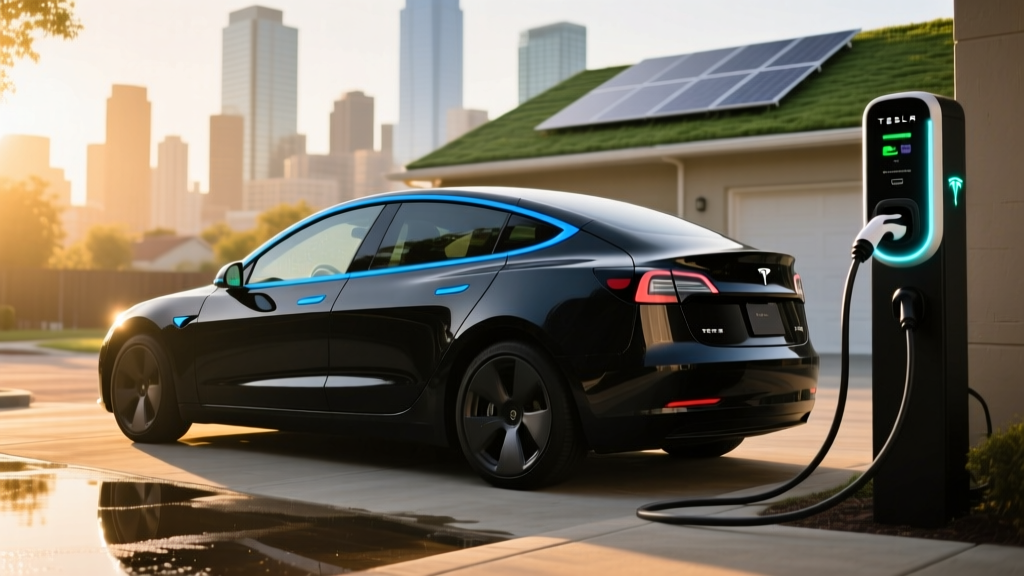
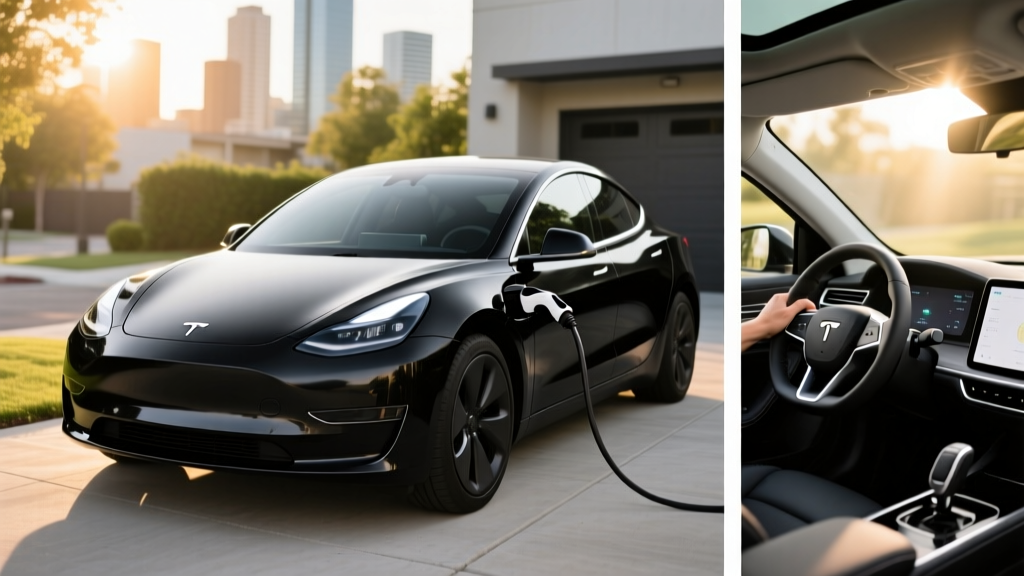
The 2026 Tesla Model 3 remains the benchmark compact electric sedan, and the Solid Black paint option continues to be one of its most popular configurations. Beyond aesthetics, the current-generation Model 3 (internally known as the "Highland" refresh and subsequent updates) delivers meaningful improvements in ride comfort, cabin noise reduction, and charging speed over its predecessors. For buyers researching a black Model 3, the core questions center on real-world range, charging practicality, and whether federal tax incentives still apply.
This review covers every spec that matters — from battery chemistry and DC fast-charge curves to cargo dimensions and IRS §30D credit eligibility — based on the latest 2026 model-year data.
| Trim | Long Range RWD | Long Range AWD | Performance |
| EPA Range | 363 mi | 341 mi | 315 mi |
| Battery (usable) | ~75 kWh (NMC) | ~75 kWh (NMC) | ~75 kWh (NMC) |
| 0-60 mph | 4.9 sec | 4.2 sec | 2.9 sec |
| Horsepower | ~295 hp | ~384 hp | ~510 hp |
| Peak DC Charge | 250 kW | 250 kW | 250 kW |
| Base MSRP | $42,380 | $47,380 | $54,380 |
| Solid Black Paint | +$2,000 premium (all trims) | ||
Source: fueleconomy.gov & Tesla.com. Prices exclude destination fee.
Real-World Range: EPA Sticker vs. What You'll Actually Get
The 2026 Model 3 Long Range RWD carries an EPA-estimated 363 miles of range — among the highest in the compact EV sedan segment. The AWD variant drops to 341 miles, and the Performance trim sits at 315 miles, largely due to stickier tires, larger 20-inch wheels, and more aggressive power delivery.
EPA Estimate: 363 mi (Long Range RWD) / 341 mi (AWD)
Expected Highway (70-80 mph): ~280-310 mi (Long Range RWD) — sustained high-speed driving increases consumption by 15-25%.
Cold Weather (below 32°F): ~240-280 mi — LFP and NMC batteries both lose 20-30% range in freezing temps, though the Model 3's heat pump and battery preconditioning mitigate this better than many competitors.
Mixed Commuting (city + suburban): ~330-355 mi — closest to EPA, since regenerative braking recaptures energy in stop-and-go traffic.
Efficiency on the Long Range AWD is rated at 25 kWh/100 mi (combined), which translates to roughly 134 MPGe. The RWD variant is slightly more efficient at around 24 kWh/100 mi. These figures make the Model 3 one of the most energy-efficient EVs in its class — a direct result of Tesla's thermal management system, low drag coefficient (~0.219 Cd), and lightweight engineering relative to heavier crossovers.
For context, a daily 40-mile round-trip commute means most owners will charge at home every 5-7 days, even in winter. Road trippers should plan for a charge stop every 220-250 miles on the interstate to stay in the battery's optimal charging zone (10-80% SoC).
Charging Speed: DC Fast, Level 2, and the Charge Curve
Tesla's Supercharger network remains a key ownership advantage, and the 2026 Model 3 supports peak DC fast-charging rates up to 250 kW at V3 and V4 Supercharger stalls. Here's how that translates into real charging times:
| Charging Level | Power | Speed | Typical Use |
|---|---|---|---|
| Level 1 (120V) | ~1.4 kW | ~3-5 mi/hr | Emergency/trickle |
| Level 2 (240V, 48A) | 11.5 kW | ~44 mi/hr | Home overnight |
| DC Fast (V3 Supercharger) | Up to 250 kW | 10-80% in ~25 min | Road trips |
| DC Fast (V4 Supercharger) | Up to 250 kW* | 10-80% in ~22 min | Road trips (newer stalls) |
*The Model 3's onboard architecture caps at 250 kW. V4 Supercharger posts may deliver higher rates to compatible vehicles (e.g., Cybertruck), but the Model 3 will not exceed its 250 kW ceiling.
Understanding the charge curve: The 250 kW figure is a peak, not a sustained rate. In practice, the Model 3 pulls maximum power between roughly 10-45% State of Charge (SoC), then progressively tapers. From 80-100%, charging slows dramatically to protect battery health — expect the final 20% to add 15-20 minutes. This is why road-trip strategy centers on 10-80% charges: you gain ~230 miles of range in about 25 minutes, then move on.
For home charging, the onboard 11.5 kW AC charger (48 amps) is the practical workhorse. A full 0-100% charge takes roughly 7-8 hours on a Wall Connector or equivalent Level 2 station. Most owners set a daily charge limit to 80% (recommended for NMC chemistry longevity) and only charge to 100% before long trips.
The Model 3 uses the NACS (North American Charging Standard) connector natively — no adapter needed at Tesla Superchargers. With the broader industry's 2025-2026 adoption of NACS across Ford, GM, Rivian, and others, the Model 3 now shares Supercharger access with a growing number of non-Tesla EVs, though Tesla's network still offers superior reliability and plug-and-charge seamlessness for its own vehicles.
Battery Chemistry, Warranty, and Long-Term Degradation
The 2026 Model 3 Long Range and Performance trims use NMC (nickel manganese cobalt) lithium-ion battery packs with approximately 75 kWh of usable capacity. Tesla's NMC packs prioritize energy density — critical for achieving 340+ miles of range in a relatively compact sedan footprint.
Note that the base Model 3 RWD (when available in certain markets) has historically used LFP (lithium iron phosphate) chemistry, which trades some energy density for longer cycle life and the ability to charge to 100% daily without accelerated degradation. However, for the 2026 US-market Long Range lineup, NMC is the standard chemistry.
| Factor | LFP | NMC |
|---|---|---|
| Energy Density | Lower | Higher |
| Cycle Life | 3,000+ cycles | 1,500-2,000 cycles |
| Daily Charge to 100% | Recommended | Limit to 80% |
| Cold Performance | Moderately worse | Better |
| Typical Use in Model 3 | Base RWD (select markets) | Long Range / Performance |
Warranty coverage: Tesla provides an 8-year/120,000-mile battery and drive unit warranty for the Long Range and Performance trims (8 years/100,000 miles for the base RWD). The warranty guarantees at least 70% battery capacity retention over the coverage period. Real-world data from Tesla's fleet suggests average degradation of roughly 12% after 200,000 miles — well within the warranty threshold for most owners.
Battery replacement, if ever needed out of warranty, currently runs $12,000-$16,000 depending on pack configuration and labor. However, catastrophic battery failure in the Model 3 is statistically rare, and most degradation manifests as gradual range loss rather than sudden failure.
Performance and Driving Dynamics
The 2026 Model 3 lineup offers three distinct performance tiers:
- Long Range RWD: ~295 hp, 0-60 mph in 4.9 seconds. Adequate for most buyers; single-motor simplicity means lower maintenance.
- Long Range AWD: ~384 hp (dual motor), 0-60 in 4.2 seconds. Adds all-weather traction and confident highway passing.
- Performance: ~510 hp (dual motor), 0-60 in 2.9 seconds. Track Mode, larger brakes, sport suspension, and 20-inch wheels.
The Highland-generation refresh brought a notably quieter cabin, revised suspension tuning with frequency-selective dampers, and a smoother ride over rough pavement. The steering remains quick and precise, though some enthusiasts note it lacks the feedback of a traditional sports sedan. Regenerative braking is strong enough for one-pedal driving in most scenarios, though Tesla removed the user-adjustable regen setting — it's always on at a fixed intensity.
All trims are rear-wheel-drive or dual-motor all-wheel-drive. There is no air suspension option (that's reserved for Model S/X). Ground clearance is 5.5 inches, which is low but typical for the sedan segment.
Interior, Tech, and the Solid Black Exterior
The Solid Black paint option ($2,000 premium across all trims) is a multi-coat finish that delivers a deep, uniform gloss. Owners should note that black paint shows swirl marks, water spots, and dust more readily than lighter colors — paint protection film (PPF) or ceramic coating is a common add-on for black Model 3 owners who want to preserve the finish.
Inside, the 2026 Model 3 continues Tesla's minimalist approach:
- 15.4-inch center touchscreen handles all infotainment, climate, and vehicle settings. No physical instrument cluster — speed and range display on the main screen.
- Rear 8-inch touchscreen for rear-seat passengers (climate, media, ventilation controls).
- Ventilated front seats (added in the Highland refresh) with premium textile or leatherette options.
- Ambient lighting with customizable color themes across the dashboard and door panels.
- 22-speaker premium audio with immersive sound processing.
Cargo space: 23.0 cubic feet total (19.8 cu ft trunk + 3.1 cu ft frunk). Rear-seat legroom measures 35.2 inches — adequate for average adults but tighter than a midsize sedan like the Hyundai Ioniq 6 or BMW i4.
Driver assistance: Basic Autopilot (lane centering, adaptive cruise control) is standard. Full Self-Driving (Supervised) remains an $8,000 option or $99/month subscription. This is a SAE Level 2 system — the driver must remain fully attentive and keep hands on the wheel at all times. It is not autonomous driving. Tesla's FSD (Supervised) handles many highway and city scenarios competently but requires constant oversight and can make errors at construction zones, unusual intersections, and in poor weather.
These are SAE Level 2 driver-assist systems, NOT self-driving. The driver is legally and practically responsible for all vehicle operations at all times. NHTSA has issued standing orders requiring crash reporting for vehicles using Level 2+ systems. Do not disengage from driving while using these features.
Pricing, Tax Credits, and Total Cost of Ownership
Pricing for the 2026 black Tesla Model 3 (including the $2,000 Solid Black paint premium and $1,390 destination fee):
| Trim | Base MSRP | With Black Paint + Dest. | §30D Credit Eligible? | Est. Net Price |
|---|---|---|---|---|
| Long Range RWD | $42,380 | $45,770 | Yes* | ~$38,270 |
| Long Range AWD | $47,380 | $50,770 | Yes* | ~$43,270 |
| Performance | $54,380 | $57,770 | Yes* | ~$50,270 |
*§30D credit eligibility requires meeting all IRS criteria. See checklist below. Source: IRS.gov.
- MSRP Cap: Vehicle must be under $55,000 (sedans). Long Range RWD and AWD qualify; Performance trim may exceed depending on options.
- Buyer Income Cap: Modified AGI must not exceed $150,000 (single), $225,000 (head of household), or $300,000 (joint filers).
- Battery Sourcing: Critical minerals and battery components must meet phased-in US/FTA-country sourcing thresholds. Tesla has worked to comply, but specific eligibility can shift by model year and build date.
- Point-of-Sale Transfer: Qualified buyers can transfer the credit to the dealer at purchase, reducing the purchase price directly rather than waiting for a tax refund.
- Verification: Always confirm current eligibility on fueleconomy.gov and consult a tax professional before relying on the credit.
5-Year Ownership Cost Estimate (Long Range AWD, 15,000 mi/yr):
- Home electricity (at $0.16/kWh national average): ~$4,500 total
- Equivalent gasoline cost (30 MPG ICE sedan at $3.50/gal): ~$8,750 total
- Maintenance: ~$800 (no oil changes, minimal brake wear due to regen; cabin air filter and tire rotations)
- Insurance: ~$9,500-$12,000 (EV insurance premiums run 15-25% higher than comparable gas sedans)
- Estimated 5-year depreciation: ~$18,000-$22,000
Net fuel savings over a gas sedan: roughly $4,000-$4,500 over five years, partially offset by higher insurance premiums.
How the Black Model 3 Compares to Key Rivals
| Spec | Tesla Model 3 LR AWD | Hyundai Ioniq 6 SEL | BMW i4 xDrive40 |
|---|---|---|---|
| EPA Range | 341 mi | 316 mi | 282 mi |
| Peak DC Charge | 250 kW | 240 kW | 205 kW |
| 0-60 mph | 4.2 sec | 5.1 sec | 4.7 sec |
| Starting MSRP | $47,380 | $46,700 | $57,975 |
| Charging Network | Supercharger (native) | NACS adapter / EA / others | NACS adapter / EA / others |
| Cargo (cu ft) | 23.0 | 11.7 | 16.6 |
Source: fueleconomy.gov, manufacturer specifications.
The Model 3 leads on range, cargo space, and charging-network convenience. The Ioniq 6 offers an 800V architecture (slightly faster 10-80% charge times in practice) and a more conventional interior layout with physical buttons. The BMW i4 delivers superior build quality and driving refinement but at a significant price premium and lower range.
Who Should Buy the 2026 Black Model 3?
- Class-leading EPA range and efficiency
- Supercharger network access (native NACS)
- Strong performance across all trims
- Over-the-air updates add features over time
- Spacious frunk + trunk combo (23 cu ft)
- Low running costs vs. gas sedans
- No physical buttons — everything via touchscreen
- Black paint shows scratches and dust easily
- FSD (Supervised) is expensive and still Level 2
- Insurance premiums above segment average
- Rear legroom tighter than midsize competitors
- Regen braking not user-adjustable
Choose the Model 3 if: You prioritize maximum range per dollar, want seamless Supercharger access, and are comfortable with a screen-centric interface.
Look at the Ioniq 6 if: You prefer physical controls, 800V ultra-fast charging, and a more traditional sedan cockpit.
Consider the BMW i4 if: Build quality, brand cachet, and driving refinement matter more than range and price.
Frequently Asked Questions
What is the real-world range of the 2026 black Tesla Model 3?
The EPA rates the Long Range RWD at 363 miles and the AWD at 341 miles. In real-world highway driving at 70-80 mph, expect 280-310 miles. In freezing winter conditions, range can drop to 240-280 miles depending on cabin heating use and whether you precondition the battery.
How fast does the Model 3 charge at home and on the road?
At home on a Level 2 (240V, 48A) charger, the Model 3 adds roughly 44 miles of range per hour, or a full charge in 7-8 hours. On a V3 Supercharger, it peaks at 250 kW and charges from 10-80% in approximately 25 minutes, though the rate tapers significantly above 80% SoC.
Does the 2026 Model 3 qualify for the $7,500 federal EV tax credit?
The Long Range RWD and AWD trims are generally eligible for the full §30D credit, provided the buyer meets income caps ($150K single / $300K joint) and the vehicle meets battery-sourcing requirements. The Performance trim may exceed the $55,000 sedan MSRP cap when options are added. Always verify current eligibility at fueleconomy.gov and consult a tax professional.
Is the black paint on the Model 3 worth the $2,000 premium?
Solid Black is a popular, striking color that holds resale value well. However, black paint shows swirl marks, water spots, and dust more than white or silver. Many black Model 3 owners invest in paint protection film (PPF) or ceramic coating ($1,500-$3,000) to preserve the finish long-term.
How does the Model 3 compare to the Model Y for a family buyer?
The Model Y offers significantly more cargo space (30.2 cu ft behind the second row vs. 23.0 cu ft total in the Model 3) and easier rear-seat access due to its crossover ride height. If you regularly carry children, car seats, or bulky cargo, the Model Y is the more practical choice. The Model 3 is better suited for singles, couples, or commuters who prioritize range and a lower purchase price.
What is the battery warranty on the 2026 Model 3?
Tesla covers the battery and drive unit for 8 years or 120,000 miles (whichever comes first) on Long Range and Performance trims, guaranteeing at least 70% capacity retention. The base RWD is covered for 8 years/100,000 miles.