Quick Verdict: The Luxury EV That Plays It Safe
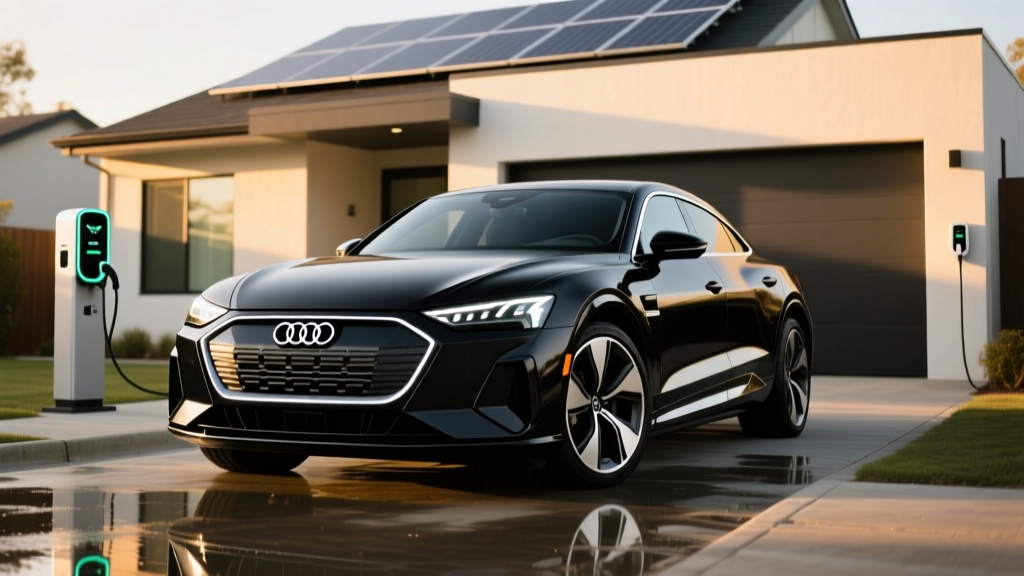
The 2026 Audi e-tron (badged as the Q8 e-tron in the U.S. market) occupies a specific niche: it's the luxury electric SUV for buyers who want whisper-quiet refinement, build quality that justifies its premium, and a charging experience that's genuinely competitive — without chasing the longest range or the flashiest tech. With an EPA-estimated 285 miles of range in the Sportback body style and 270 miles in the SUV, it trails rivals like the BMW iX xDrive50 and the Rivian R1S on paper. But the e-tron's sustained DC fast-charging performance, cabin isolation, and ride quality make a compelling counter-argument for daily luxury use.
This review breaks down the exact numbers that matter — from real-world highway range and charging-curve behavior to IRS §30D tax-credit eligibility — so you can decide whether the e-tron earns a spot in your garage.
Range, Efficiency, and the Real-World Reality Check
| Metric | Q8 e-tron SUV | Q8 e-tron Sportback |
|---|---|---|
| EPA Estimated Range | 270 miles | 285 miles |
| Usable Battery Capacity | 106 kWh (NMC lithium-ion) | |
| Gross Battery Capacity | 114 kWh | |
| Combined MPGe | 83 MPGe | 87 MPGe |
| Energy Consumption | 41 kWh/100 mi | 39 kWh/100 mi |
| Drivetrain | Dual-motor AWD (quattro) | |
The EPA sticker says 270 miles for the SUV and 285 for the Sportback. In mixed driving with moderate climate control, expect 240–260 miles from the SUV and 255–275 miles from the Sportback. Sustained 75+ mph highway driving drops that to roughly 210–230 miles (SUV). In freezing temperatures (below 32°F / 0°C), plan for a 15–25% reduction, bringing effective range to approximately 195–220 miles for the SUV. The heat pump is standard, which helps mitigate cold-weather losses compared to EVs without one.
The e-tron's energy consumption — roughly 39–41 kWh per 100 miles — is on the heavier side. For comparison, the BMW iX xDrive50 achieves about 86 MPGe combined with a similar battery size, while the Tesla Model X Long Range posts 102 MPGe. The e-tron's weight (approximately 5,700 lbs curb) and its emphasis on sound deadening and ride comfort over aero-efficiency explain the gap. If efficiency is your top metric, this isn't the segment leader. If isolation and composure matter more, the trade-off is rational.
Charging Speed: Where the e-tron Earns Its Keep
| Charging Method | Power / Rate | Time / Miles Added |
|---|---|---|
| DC Fast Charging (Peak) | 170 kW | 10–80% in ~31 minutes |
| DC Fast Charging (Sustained 10–80%) | ~145 kW average | Flat charging curve to ~80% SoC |
| Level 2 Home Charging (240V, 48A) | 11.5 kW onboard charger | ~23 miles per hour of charging |
| Level 2 Full Charge (0–100%) | 11.5 kW | ~10.5 hours |
| Level 1 (120V, 12A) | ~1.4 kW | ~3 miles per hour |
The e-tron's standout charging characteristic is its flat charge curve. While many EVs peak at a headline kW figure and then taper aggressively, the e-tron sustains close to its 170 kW peak well past 60% state of charge. In real-world testing at 350 kW Electrify America stations, the e-tron holds above 140 kW from roughly 10% to 75% SoC before tapering. This means the average charging speed during a 10–80% session is more competitive than the peak number alone suggests.
Above 80% SoC, charging slows significantly — this is normal for NMC chemistry and protects long-term battery health. Plan your road-trip stops to charge to 80% and move on; pushing to 100% on DC adds roughly 30–40 minutes for the final 20%.
For home charging, the 11.5 kW onboard charger is adequate. A full 0–100% charge takes about 10.5 hours on a 48-amp Level 2 circuit. Most owners will plug in overnight and wake up to a full battery. If your daily commute is under 60 miles, a partial overnight charge on a 32-amp circuit is more than sufficient.
The Q8 e-tron uses the CCS1 connector for DC fast charging. Audi has not announced a transition to NACS (Tesla's connector) for the 2026 model year in North America, though adapters for Tesla Supercharger access are expected to remain available. Confirm adapter availability with your dealer at purchase.
Performance, Powertrain, and Driving Dynamics
| Metric | Q8 e-tron 55 (Standard) | SQ8 e-tron (Performance) |
|---|---|---|
| Horsepower | 402 hp | 496 hp |
| Torque | 490 lb-ft | 718 lb-ft |
| 0–60 mph | 5.7 seconds | 4.4 seconds |
| Top Speed | 124 mph (electronically limited) | 130 mph |
| Drivetrain | Dual-motor quattro AWD | |
| Adaptive Air Suspension | Standard | |
| Towing Capacity | 4,000 lbs (when properly equipped) | |
The standard Q8 e-tron 55 delivers 402 horsepower in boost mode, which is more than adequate for highway merging and confident passing. The 5.7-second 0–60 time won't embarrass you at a stoplight, but this isn't a performance EV — it's a luxury cruiser that happens to be electric. The air suspension is the chassis highlight: it absorbs broken pavement with a composure that makes rivals feel brittle, and it adjusts ride height automatically based on speed and driving mode.
The SQ8 e-tron variant adds genuine urgency with 496 hp and a 4.4-second 0–60 time, but it comes at a significant price premium and sacrifices roughly 20 miles of EPA range. For most buyers, the 55 is the rational choice.
Regenerative braking in the e-tron is configurable through three levels via steering-wheel paddles, plus an auto mode that uses radar and navigation data to modulate regen based on traffic and upcoming curves. It does not offer true one-pedal driving to a complete stop — the vehicle creeps at very low speeds, which some drivers prefer and others find frustrating. Audi's approach prioritizes a familiar, ICE-like driving feel.
Interior, Cargo Space, and Technology
The cabin is where the e-tron justifies its price. Materials are exemplary — open-pore wood, available Valcona leather, and soft-touch surfaces throughout. The dual-screen MMI setup (10.1-inch upper, 8.6-inch lower) handles infotainment and climate controls respectively. It's responsive, but the lower screen's haptic-feedback buttons for climate are harder to use while driving than physical knobs. The 12.3-inch Virtual Cockit Plus driver display is among the best in the industry.
| Dimension | Q8 e-tron SUV | Q8 e-tron Sportback |
|---|---|---|
| Front Headroom | 38.6 in | 37.8 in |
| Rear Headroom | 38.0 in | 36.9 in |
| Rear Legroom | 39.1 in | 39.1 in |
| Cargo (Behind 2nd Row) | 28.5 cu ft | 26.0 cu ft |
| Cargo (2nd Row Folded) | 58.5 cu ft | 54.0 cu ft |
| Front Trunk (Frunk) | Not available | |
Cargo space is adequate but not class-leading. The BMW iX offers 35.5 cu ft behind its second row, and the Rivian R1S provides more total volume. The absence of a frunk is a missed opportunity — the e-tron uses that space for ancillary electronics. For a family of four on a week-long trip, the SUV body style's 28.5 cu ft will require thoughtful packing.
Driver-assistance tech includes Audi's adaptive cruise assist (a SAE Level 2 system), lane-centering, intersection assist, and a 360-degree camera. It's competent and smooth, but it does not attempt hands-free driving like GM's Super Cruise or Ford's BlueCruise. The driver must keep hands on the wheel at all times.
Pricing, Trims, and Federal Tax Credit Eligibility
| Trim | Body Style | Base MSRP | Est. As-Tested |
|---|---|---|---|
| Premium | SUV | $70,800 | $74,000–$78,000 |
| Premium Plus | SUV | $76,200 | $80,000–$86,000 |
| Prestige | SUV | $82,400 | $87,000–$94,000 |
| SQ8 e-tron Premium Plus | SUV | $90,500 | $95,000–$102,000 |
| Sportback Premium Plus | Sportback | $77,200 | $81,000–$87,000 |
All prices include destination charge. The Premium trim is well-equipped with the air suspension, matrix-design LED headlights, and the full MMI dual-screen system. Most buyers will find the Premium Plus trim — which adds the Bang & Olufsen audio system, head-up display, and additional driver-assist features — to be the sweet spot.
Under current IRS §30D guidelines, the Audi Q8 e-tron's eligibility for the up-to-$7,500 federal tax credit depends on several factors that change frequently:
- MSRP Cap: SUVs must be priced at or below $80,000. The Q8 e-tron Premium and some Premium Plus configurations may qualify; Prestige and SQ8 trims exceed the cap.
- Buyer Income Limits: Modified AGI must not exceed $300,000 (joint), $225,000 (head of household), or $150,000 (individual).
- Battery Sourcing: Critical-mineral and battery-component requirements phase in annually. Audi sources components globally — verify current-year compliance on fueleconomy.gov before purchasing.
- Point-of-Sale Transfer: Eligible buyers can transfer the credit to the dealer at purchase, reducing the out-of-pocket price immediately rather than waiting for a tax refund.
Tax credit eligibility is subject to change. Consult a tax professional and verify on IRS.gov and fueleconomy.gov before purchasing.
If eligible for the full $7,500 credit via point-of-sale transfer, a Q8 e-tron Premium effectively starts around $63,300 — a meaningful reduction that brings it closer to competitors like the Genesis Electrified GV70 and the BMW iX (which has its own credit eligibility nuances).
Warranty, Battery Longevity, and Ownership Costs
Audi provides a competitive warranty package for the Q8 e-tron:
- New Vehicle Limited Warranty: 4 years / 50,000 miles
- Battery & Electric Powertrain: 8 years / 100,000 miles (whichever comes first)
- Battery Capacity Retention: Audi warrants that the high-voltage battery will retain at least 70% of its original usable capacity during the warranty period
- Complimentary Maintenance: 1 year / 10,000 miles (first scheduled service)
The 8-year/100,000-mile battery warranty with a 70% capacity-retention threshold is industry-standard, matching BMW, Mercedes, and Tesla. The NMC chemistry in the e-tron benefits from Audi's liquid thermal management system, which actively heats and cools the battery to keep it in its optimal temperature window. Based on data from earlier e-tron models (2019–2023), degradation has been modest — most high-mileage examples report 8–12% loss over 100,000 miles, well within the warranty threshold.
Insurance costs for the Q8 e-tron run approximately 15–25% higher than a comparable Audi Q8 gasoline model, reflecting higher repair costs and parts pricing for EVs. Get a quote from your insurer before committing.
Pros, Cons, and Who Should Buy the e-tron
- Sustained DC fast-charging curve — real-world 10–80% times beat many competitors with higher peak kW ratings
- Exceptional ride quality and cabin isolation — best-in-class NVH for an EV SUV
- Air suspension standard on all trims
- Build quality and materials justify the luxury price
- 4,000-lb towing capacity (when properly equipped)
- Point-of-sale tax credit transfer available if eligible
- EPA range (270–285 mi) trails BMW iX, Tesla Model X, and Rivian R1S
- Energy consumption of 39–41 kWh/100 mi is high for the segment
- No front trunk (frunk)
- Cargo volume below segment average
- CCS1 connector — no native NACS; Supercharger access requires adapter
- No hands-free driving mode; requires hands on wheel at all times
- Climate controls via lower touchscreen are distracting while driving
Choose the e-tron if: You prioritize ride comfort, cabin quietness, and build quality above all else. You have reliable home Level 2 charging and your typical trips fall within 200 miles. You value a flat, predictable DC charge curve for occasional road trips over maximum range. You want a luxury EV that feels like a traditional Audi — not a tech-first gadget.
Look elsewhere if: Maximum range is your priority (consider the BMW iX xDrive50 at 324 mi EPA or Tesla Model X at 335 mi). You need maximum cargo space (Rivian R1S). You want hands-free highway driving (GM Super Cruise on the Cadillac Lyriq). You want NACS native charging for seamless Tesla Supercharger access.
Frequently Asked Questions
What is the real-world range of the 2026 Audi Q8 e-tron?
The EPA rates the Q8 e-tron SUV at 270 miles and the Sportback at 285 miles. In real-world mixed driving, expect 240–260 miles (SUV) and 255–275 miles (Sportback). Sustained highway driving at 75+ mph reduces that to roughly 210–230 miles for the SUV. In freezing weather, plan for 15–25% less — approximately 195–220 miles. Always use the EPA figure as a best-case baseline and plan trips around 80% of that number for safety margin.
How fast does the Audi e-tron charge at home and on the road?
On a DC fast charger, the e-tron peaks at 170 kW and sustains an average of roughly 145 kW from 10–80% SoC, completing that session in about 31 minutes. At home on a 48-amp Level 2 charger (11.5 kW), expect roughly 23 miles of range per hour of charging, with a full 0–100% charge taking approximately 10.5 hours. A standard overnight charge easily replenishes a day's driving.
How much does the 2026 Audi e-tron cost after tax credits?
The base Q8 e-tron Premium SUV starts at $70,800. If you qualify for the full $7,500 federal tax credit under IRS §30D (subject to income limits, MSRP caps, and battery-sourcing rules), the effective price drops to approximately $63,300 via point-of-sale transfer. Higher trims like the Prestige ($82,400 MSRP) and SQ8 ($90,500 MSRP) exceed the $80,000 SUV MSRP cap and are not eligible for the federal credit.
Does the 2026 Audi e-tron qualify for the federal EV tax credit?
Eligibility depends on the specific trim, your income, and current battery-sourcing requirements. The Premium and some Premium Plus trims fall under the $80,000 SUV MSRP cap, making them potentially eligible. Buyer income must not exceed $300,000 (joint filers), $225,000 (head of household), or $150,000 (individual). Battery critical-mineral and component sourcing rules tighten annually — verify the current status on fueleconomy.gov and consult a tax professional before purchasing.
Is the Audi e-tron worth buying compared to the BMW iX or Tesla Model X?
It depends on your priorities. The BMW iX xDrive50 offers 324 miles of EPA range and 86 MPGe combined — both superior to the e-tron — starting at a similar price. The Tesla Model X provides 335 miles, access to the Supercharger network, and more cargo space, though its interior quality doesn't match Audi's. The e-tron wins on ride comfort, cabin quietness, and sustained DC charging behavior. If range and efficiency lead your decision matrix, the iX is the stronger pick. If refinement and daily comfort matter most, the e-tron makes a compelling case.
What is the battery warranty on the Audi e-tron?
Audi covers the high-voltage battery and electric powertrain for 8 years or 100,000 miles, whichever comes first. The warranty guarantees that the battery will retain at least 70% of its original usable capacity (approximately 74 kWh of the 106 kWh usable) during the coverage period. Real-world data from earlier e-tron models suggests degradation of 8–12% over 100,000 miles, well within this threshold.