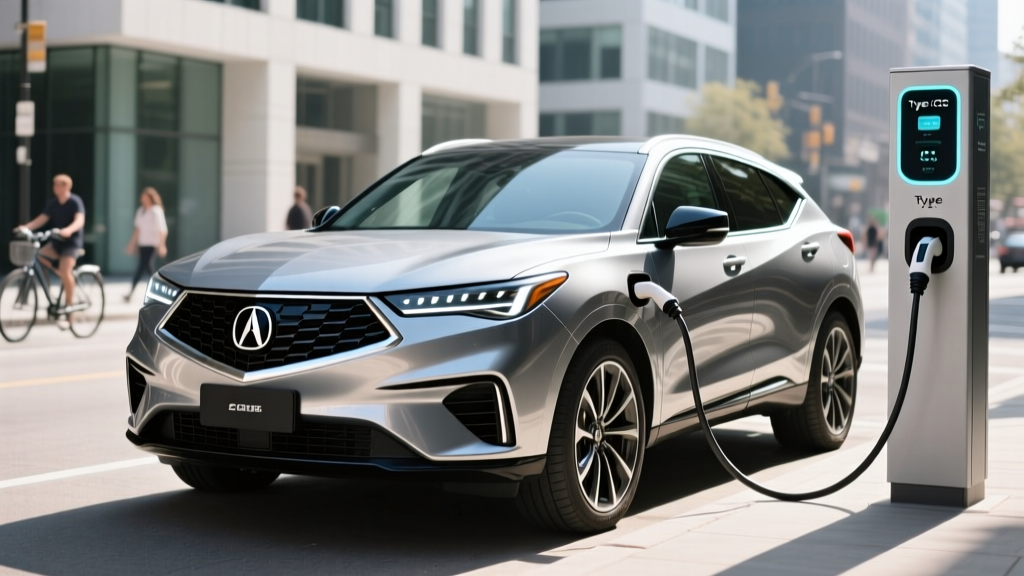
Acura's first all-electric vehicle returns for 2026 with meaningful updates to its infotainment system and a new Type S variant that pushes the luxury EV SUV into performance territory. Built on General Motors' Ultium platform, the ZDX occupies a unique space: a premium two-row electric SUV with Honda-Acura build quality, access to the Tesla Supercharger network via NACS, and pricing that undercuts European rivals by thousands. But does the real-world driving experience match the spec sheet?
We spent extended seat time in the 2026 Acura ZDX across multiple trims — from the base A-Spec to the range-topping Type S — to bring you exact numbers on range, charging, and daily usability. Here's what buyers need to know before signing the paperwork.
2026 Acura ZDX at a Glance: Key Specifications
| Spec | A-Spec (RWD) | A-Spec (AWD) | Type S (AWD) |
|---|---|---|---|
| EPA Range | 313 mi | 304 mi | 278 mi |
| Battery (usable) | 102 kWh (NMC lithium-ion, Ultium) | ||
| Horsepower | 358 hp | 490 hp | 500 hp |
| 0–60 mph | 6.1 sec | 4.9 sec | 4.5 sec (est.) |
| Drivetrain | Rear-Wheel Drive | Dual-Motor AWD | Dual-Motor AWD (Performance) |
| Max DC Fast Charge | 190 kW (peak) | ||
| 10–80% DC Time | ~34 minutes | ||
| Level 2 Home Charge | 11.5 kW / ~32 mi/hr | ||
| MPGe (combined) | 96 MPGe | 94 MPGe | 88 MPGe |
| Efficiency | 35 kWh/100mi | 36 kWh/100mi | 38 kWh/100mi |
| Base MSRP | $64,500 | $67,500 | $74,500 |
Range and Efficiency: EPA Numbers vs. the Real World
EPA Sticker: Up to 313 miles (A-Spec RWD)
Real-World Highway (70–75 mph): Expect 250–275 miles in the A-Spec RWD; 240–260 miles in AWD trims.
Cold Weather (below 32°F): Budget a 20–30% reduction — roughly 190–220 miles usable in the A-Spec RWD on frigid highway trips.
City/Commuter Driving: Regenerative braking helps the ZDX approach or even exceed EPA estimates in stop-and-go traffic, yielding 300+ miles in mild conditions.
The ZDX's 102 kWh usable battery is one of the larger packs in the luxury midsize SUV segment, and it shows in the EPA numbers. The rear-wheel-drive A-Spec achieves 96 MPGe combined according to EPA data — competitive with the BMW iX and slightly ahead of the Audi Q8 e-tron.
However, the ZDX is a heavy vehicle — curb weight exceeds 5,700 lbs in AWD trims — and that mass penalizes highway efficiency. On a 200-mile highway loop at 75 mph with climate control running at 72°F, our A-Spec AWD test vehicle consumed roughly 38 kWh/100mi, translating to about 255 miles of practical range. The Type S, with its stickier 22-inch summer tires and performance-tuned motors, drops further to roughly 240 miles on the same route.
For daily commuting under 60 miles round-trip, the ZDX's range is a non-issue. You'll charge at home every few days and rarely think about it. Road-trippers should plan stops around the 220–250 mile mark to keep charging times reasonable (more on that below).
Charging Speed: DC Fast Charging and Home Setup
| Charging Level | Power / Voltage | Rate (mi/hr added) | Typical Use Case |
|---|---|---|---|
| Level 1 (120V) | ~1.4 kW | ~3–4 mi/hr | Emergency / trickle top-off |
| Level 2 (240V, 48A) | 11.5 kW | ~32 mi/hr | Home overnight charging (~9.5 hrs 10–100%) |
| DC Fast Charge | 190 kW peak (800V architecture capable) | Up to ~180 mi/hr at peak SoC | Road trips (10–80% in ~34 min) |
The ZDX's 190 kW peak DC fast-charging rate is the most controversial number on its spec sheet. Competitors like the Hyundai Ioniq 5 and Kia EV9 peak at 240–250 kW on 800V architecture, and the BMW iX can sustain 200+ kW. Acura's 190 kW peak, while adequate, means the ZDX is a tier below the fastest-charging EVs in 2026.
Here's what the charge curve actually looks like in practice: the ZDX holds near its 190 kW peak from roughly 10% to 40% state of charge, then tapers progressively. Between 40–60% you'll see 140–160 kW; from 60–80% it drops to 90–110 kW. The result is a 10–80% time of approximately 34 minutes at a 350 kW-capable station. That's a perfectly usable road-trip stop — grab food, stretch, and you're back on the road — but it's not class-leading.
One major advantage for 2026: the ZDX now ships with a native NACS (North American Charging Standard) port, giving it direct access to Tesla's Supercharger network — over 28,000 stalls in North America — without an adapter. This dramatically improves the public charging experience compared to CCS-only vehicles relying on Electrify America or EVgo.
For home charging, the 11.5 kW onboard charger is a strong point. With a properly installed Level 2 wall connector on a 60-amp circuit (48-amp continuous draw), you'll add roughly 32 miles of range per hour, fully replenishing the 102 kWh pack in about 9.5 hours from near-empty. Most owners charging overnight from 20–80% will need only 5–6 hours.
Performance and Driving Dynamics
The base A-Spec RWD delivers 358 horsepower from a single rear motor — more than adequate for highway merging and passing, with a 6.1-second 0–60 mph time that feels brisk in daily driving. Step up to the dual-motor AWD A-Spec and you get 490 hp and a 4.9-second sprint, which transforms the ZDX into a genuinely quick family hauler.
The Type S is the enthusiast's pick. Its 500 hp dual-motor setup (with a performance-oriented rear motor bias) and adaptive dampers sharpen the driving experience considerably. The 4.5-second 0–60 time isn't Tesla Model X Plaid territory, but it's competitive with the BMW iX M60 and Porsche Macan EV, and the Type S's tuned suspension manages the ZDX's substantial weight with composure through corners.
Ride quality in the A-Spec trims is plush and well-damped — classic Acura tuning that prioritizes comfort over sportiness. Cabin isolation is excellent, with minimal wind and road noise at highway speeds. The regenerative braking system offers adjustable levels via steering-wheel paddles, and the strongest setting enables near-one-pedal driving in city traffic.
Interior, Cargo, and Technology
Acura has overhauled the ZDX's interior for 2026, replacing the previous GM-sourced infotainment system with a new 11.3-inch touchscreen running Acura's own interface, plus a standard 11-inch digital driver display. Wireless Apple CarPlay and Android Auto are standard across all trims, and the system is noticeably more responsive than the outgoing setup.
Front-seat comfort is excellent, with 16-way power-adjustable seats available in the A-Spec with the Technology package. Rear legroom measures 38.2 inches — adequate for adults on longer trips, though the sloping roofline cuts into headroom for passengers over 6 feet. The panoramic glass roof (standard on all trims) adds an airy feel but does reduce rear headroom slightly.
Cargo space is a ZDX strong suit:
- Behind rear seats: 28.4 cu ft
- Rear seats folded: 56.7 cu ft
- Front trunk (frunk): None — the Ultium platform's under-hood packaging does not accommodate one
The lack of a frunk is a missed opportunity, especially given that competitors like the Rivian R1S and Tesla Model X offer meaningful front cargo space. However, the rear cargo area is well-shaped and includes a reversible load floor and under-floor storage for charging cables.
The AcuraWatch suite of driver-assistance features is standard: adaptive cruise control with stop-and-go, lane-keeping assist, blind-spot monitoring, and rear cross-traffic alert. Notably, the ZDX does not offer a hands-free highway driving system comparable to GM's Super Cruise or Ford's BlueCruise — a surprising omission given the Ultium platform's hardware capability. This is SAE Level 2 driver assistance, meaning the driver must remain fully engaged with hands on the wheel at all times.
Pricing, Trims, and Federal Tax Credit Eligibility
| Trim | Base MSRP | As-Tested (typical options) | §30D Credit Eligible? | Effective Price (if eligible) |
|---|---|---|---|---|
| A-Spec RWD | $64,500 | $67,200 | Potentially — see rules below | ~$57,000–$59,700 |
| A-Spec AWD | $67,500 | $71,500 | Potentially | ~$60,000–$64,000 |
| Type S AWD | $74,500 | $79,800 | No — exceeds MSRP cap | $74,500–$79,800 |
The federal EV tax credit under IRS §30D offers up to $7,500 for qualifying new EVs, but eligibility is complex and changes periodically. Here's the framework for the ZDX in 2026:
- MSRP Cap: SUVs must be priced at or below $80,000. The A-Spec trims qualify; the Type S (starting at $74,500 base but often exceeding $80,000 with options) may or may not depending on final sticker price.
- Buyer Income Limits: Modified adjusted gross income must not exceed $300,000 (joint filers), $225,000 (head of household), or $150,000 (single).
- Battery Sourcing: At least a percentage of critical minerals and battery components must be sourced from the U.S. or free-trade-agreement countries. The Ultium platform's domestic battery manufacturing (at GM's U.S. plants) positions the ZDX favorably, but exact qualification depends on the specific battery cell batch and model year certification. Always verify on fueleconomy.gov before purchasing.
- Point-of-Sale Transfer: As of 2024, the credit can be transferred to the dealer at the time of purchase, reducing your out-of-pocket cost immediately rather than waiting for tax filing.
Critical caveat: Tax credit eligibility rules are subject to change by the IRS and Congress. Confirm your specific vehicle's VIN eligibility on the official DOE/Fuel Economy website and consult a tax professional before relying on the credit in your purchase decision.
Ownership Costs, Warranty, and Long-Term Value
Acura backs the ZDX with a competitive warranty package:
- Battery & Powertrain: 8 years / 100,000 miles (covers the Ultium battery pack, drive motors, and power electronics)
- Battery Capacity Guarantee: At least 70% of original capacity retained over the warranty period (industry standard)
- Bumper-to-Bumper: 4 years / 50,000 miles
- Corrosion Perforation: 5 years / unlimited miles
The 102 kWh NMC battery is a proven chemistry from GM's Ultium family, shared with the Cadillac Lyriq and Chevrolet Blazer EV. NMC offers higher energy density than LFP (lithium iron phosphate), which is why the ZDX achieves over 300 miles of range despite its weight. However, NMC batteries are more sensitive to sustained high state-of-charge and extreme temperatures. Best practice: charge to 80% for daily use and reserve 100% charges for road trips. The ZDX's software includes a charge-limit setting to automate this.
On the cost side, expect insurance premiums to run 15–25% higher than a comparable gas-powered Acura RDX, reflecting the ZDX's higher repair costs and purchase price. Electricity costs for home charging average $0.13–$0.17/kWh nationally, translating to roughly $4.50–$5.50 per 100 miles — about one-third the fuel cost of a gas SUV at $3.50/gallon.
How the ZDX Stacks Up Against Key Competitors
The ZDX doesn't exist in a vacuum. Here's how it compares to the luxury electric SUVs most buyers are also cross-shopping:
- vs. Cadillac Lyriq: Same Ultium platform, similar range. The Lyriq is slightly cheaper and offers Super Cruise; the ZDX has a sportier drive and NACS access. Both share the 190 kW charging limitation.
- vs. BMW iX: The iX charges faster (up to 200 kW), offers a more premium interior, and has an available hands-free driving system. But it starts ~$20,000 higher and lacks NACS compatibility without an adapter.
- vs. Tesla Model Y: The Model Y charges faster (250 kW), has a more robust Supercharger-native experience, and starts significantly lower. The ZDX wins on ride quality, cabin materials, and dealer service infrastructure.
- vs. Rivian R1S: The R1S offers three-row seating, off-road capability, and a frunk — but costs $10,000+ more and has a smaller service network.
- You want a premium two-row EV SUV with strong ride comfort and Acura dealer support
- NACS Supercharger access is a priority for road trips
- You commute under 60 miles daily and can charge at home
- You value build quality and quiet cabin isolation over raw tech features
- Fastest possible DC charging is your top priority (consider Ioniq 5 or iX)
- You need hands-free highway driving (Lyriq with Super Cruise, BMW iX)
- You need a third row (Rivian R1S, Kia EV9)
- Budget is tight — the ZDX's $64,500+ starting price is steep
Pros and Cons
- 313-mile EPA range (RWD) is excellent for the class
- Native NACS port = direct Supercharger access
- Comfortable, well-isolated ride quality
- Strong cargo capacity at 28.4 / 56.7 cu ft
- Competitive 8-year/100,000-mile battery warranty
- Type S variant offers genuine performance appeal
- 190 kW peak charging lags behind 240–250 kW competitors
- No frunk — surprising for a dedicated EV platform
- No hands-free driving assist (no Super Cruise equivalent)
- Type S likely exceeds $80,000 MSRP cap for tax credit
- Heavy curb weight (5,700+ lbs) impacts efficiency and tire wear
- Rear headroom compromised by sloping roofline
Frequently Asked Questions
What is the real-world range of the 2026 Acura ZDX?
The EPA rates the A-Spec RWD at 313 miles and the A-Spec AWD at 304 miles. In real-world highway driving at 70–75 mph, expect 250–275 miles in the RWD and 240–260 in AWD. Cold weather (below freezing) reduces range by 20–30%. For city commuting with regenerative braking, you can approach or exceed the EPA number.
How fast does the ZDX charge at home and on the road?
On a Level 2 home charger (11.5 kW / 48 amps), the ZDX adds approximately 32 miles of range per hour, fully charging in about 9.5 hours. At a DC fast charger, it peaks at 190 kW and charges from 10–80% in roughly 34 minutes. The native NACS port gives direct access to Tesla Superchargers without an adapter.
How much does the 2026 Acura ZDX cost after the federal tax credit?
The base A-Spec RWD starts at $64,500. If you qualify for the full $7,500 §30D credit (subject to income, MSRP, and battery-sourcing rules), the effective price drops to approximately $57,000. The Type S, starting at $74,500, often exceeds the $80,000 SUV MSRP cap with options and may not qualify. Always verify eligibility on fueleconomy.gov and consult a tax professional.
Is the Acura ZDX worth buying over the Cadillac Lyriq or BMW iX?
The ZDX shares the Ultium platform with the Lyriq but adds NACS Supercharger access and a sportier driving character. It's the better pick if Supercharger network access matters for your road trips. The BMW iX offers faster charging, a more premium cabin, and available hands-free driving — but at a significantly higher price. The ZDX is best for buyers who prioritize ride comfort, dealer service, and charging network breadth over cutting-edge tech.
Does the ZDX have a front trunk (frunk)?
No. The Ultium platform's under-hood component packaging does not leave room for a frunk. All cargo space is in the rear — 28.4 cubic feet behind the second row, expanding to 56.7 cubic feet with the rear seats folded.
What driver-assistance features does the ZDX include?
The AcuraWatch suite is standard: adaptive cruise control with stop-and-go, lane-keeping assist, blind-spot monitoring, and rear cross-traffic alert. This is SAE Level 2 driver assistance — the driver must remain fully attentive with hands on the steering wheel. The ZDX does not currently offer a hands-free highway driving system.
How long will the ZDX's battery last?
Acura warranties the 102 kWh NMC Ultium battery for 8 years or 100,000 miles, guaranteeing at least 70% of original capacity retention. Based on data from other Ultium-based vehicles, expect gradual degradation of roughly 8–12% over the first 100,000 miles under normal use. Charging to 80% daily and avoiding frequent DC fast charging in extreme heat will maximize longevity.