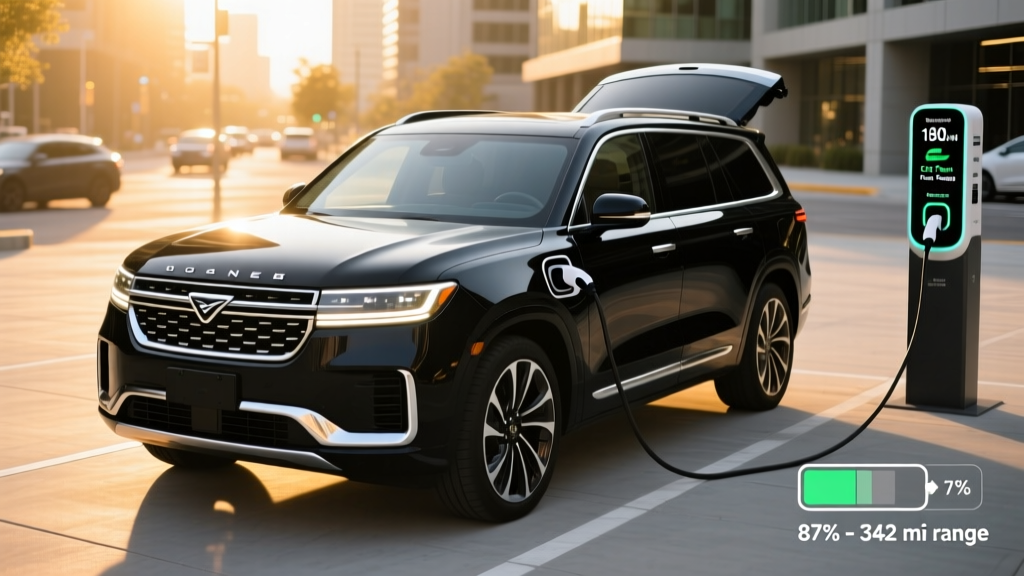
The 2025 Wagoneer S Limited arrives as Jeep's parent brand Stellantis attempts something ambitious: a luxury electric SUV built on the dedicated STLA Large platform that can genuinely compete with the Tesla Model Y, BMW iX, and Genesis Electrified GV70. With 600 horsepower standard, a 100-kWh battery, and a sub-$66,000 starting price, the Limited trim is positioned as the volume play in the two-trim Wagoneer S lineup. But does the spec sheet translate into a compelling daily-driver EV? We break down every number that matters.
Quick Verdict: Who the Wagoneer S Limited Is For
The 2025 Wagoneer S Limited targets luxury-SUV buyers who want genuine straight-line performance, a premium multi-screen cabin, and all-wheel-drive confidence — without crossing into six-figure pricing. It's best suited for suburban families and commuters with home Level 2 charging access who prioritize acceleration and interior tech over segment-leading efficiency or DC fast-charging speed. If you regularly road-trip more than 250 miles between stops, the charging curve and 100 kW peak rate deserve a closer look before you commit.
Range, Efficiency, and Real-World Expectations
The EPA rates the 2025 Wagoneer S Limited at 300 miles of combined range from its 100-kWh (usable) lithium-ion battery pack. Stellantis has confirmed NMC (nickel-manganese-cobalt) chemistry, which offers higher energy density than LFP but trades some long-term cycle-life robustness and thermal stability.
EPA combined: 300 miles
Highway-heavy driving (70-80 mph): expect ~245–265 miles
Cold weather (below 32°F): expect ~220–250 miles depending on cabin preconditioning
Mixed suburban commuting: ~280–300 miles achievable
The Wagoneer S is a heavy vehicle — over 5,800 lbs — and its aerodynamic profile, while sleek for an SUV, still carries more frontal area than a sedan. At sustained highway speeds, efficiency drops noticeably. Preconditioning the battery and cabin while plugged in is essential in winter to preserve range.
Efficiency lands at approximately 2.0–2.2 kWh/mile (roughly 45–50 kWh/100 mi), which translates to an EPA-estimated 100–105 MPGe combined. That's competitive with the Audi Q8 e-tron but trails the more aerodynamically optimized Tesla Model Y (122 MPGe combined) and BMW iX xDrive50 (86 MPGe but with a larger battery and longer range). For context, fueleconomy.gov will list official MPGe figures once EPA testing data is published for the production vehicle.
| Spec | Value |
|---|---|
| EPA Range | 300 miles (est.) |
| Battery (Usable) | 100 kWh, NMC chemistry |
| Drivetrain | Dual-motor AWD |
| Horsepower | 600 hp |
| Torque | 617 lb-ft |
| 0–60 mph | 3.4 seconds |
| Max DC Fast Charge | 100 kW (peak) |
| 10–80% DC Time | ~23 minutes (claimed) |
| Level 2 Home Charge | 11 kW / ~27 mi/hr |
| Charging Port | CCS1 (NACS adapter available) |
| Base MSRP | $65,200 |
| Battery Warranty | 8 years / 100,000 miles |
Charging Speed: DC Fast, Level 2, and the 100 kW Ceiling
This is where the Wagoneer S Limited invites the most scrutiny. Its peak DC fast-charging rate of 100 kW is modest by 2025 luxury-EV standards. Competitors like the Hyundai Ioniq 5 (peak 240 kW), Tesla Model Y (peak ~250 kW), and Porsche Macan Electric (peak 270 kW) charge substantially faster at compatible stations.
| Level | Power | Miles Added per Hour | Notes |
|---|---|---|---|
| Level 1 (120V) | ~1.4 kW | ~3–4 mi/hr | Emergency/trickle only |
| Level 2 (240V, 48A) | 11 kW | ~27 mi/hr | Full overnight charge in ~10 hrs |
| DC Fast Charge | 100 kW peak | ~150–180 mi in 30 min | 10–80% in ~23 min; tapers above 80% |
Understanding the charge curve: The 100 kW peak is typically sustained from roughly 10% to 50% State of Charge, after which the rate tapers to protect the NMC cells. Above 80% SoC, expect charging to slow dramatically — often to 30–40 kW. This means a 10–80% session takes approximately 23 minutes at a capable 150+ kW station, but topping from 80–100% can add another 30–40 minutes. For road trips, plan to charge in the 10–80% window and skip the final 20% unless you're at your destination.
The CCS1 native port is a practical consideration. Stellantis offers a NACS adapter for Tesla Supercharger access, which significantly expands the usable DC fast-charging network. At home on a Level 2 charger (240V, 48-amp circuit), the onboard 11 kW charger replenishes roughly 27 miles of range per hour — meaning a full 0–100% charge takes about 10 hours. Most owners who plug in nightly will wake up fully charged without issue.
Performance: 600 HP and a 3.4-Second 0–60
The Limited's dual-motor all-wheel-drive powertrain produces 600 horsepower and 617 lb-ft of torque. The result is a claimed 3.4-second 0–60 mph time — putting it in the same territory as a Porsche Cayenne E-Hybrid and well ahead of most luxury SUV competitors in this price bracket. The instant torque delivery characteristic of EVs makes the Wagoneer S feel even quicker in real-world passing and merging situations than the stopwatch suggests.
Stellantis has equipped the Wagoneer S with an adaptive air suspension that adjusts ride height based on speed and terrain. The low center of gravity from the under-floor battery pack helps manage the vehicle's substantial curb weight (~5,800 lbs) through corners, though buyers seeking sports-SUV handling should test-drive against the BMW iX, which is tuned more aggressively for cornering composure.
Interior, Cargo, and Technology
The cabin is where Wagoneer aims to justify its luxury positioning. The dashboard is dominated by a multi-screen layout: a 12.3-inch driver display, a 12.3-inch passenger screen, and a central 12.3-inch infotainment touchscreen running Stellantis' Uconnect 5 system. A head-up display and digital rearview mirror round out the driver-facing tech.
Passenger space is configured for five across two rows (no third row is offered). Front-seat legroom is generous at approximately 40.9 inches, with rear legroom around 38.5 inches — enough for adults on longer trips without feeling cramped. The flat floor (no transmission tunnel) helps the middle rear seat remain usable.
Cargo volume measures approximately 30 cubic feet behind the second row and expands to roughly 60 cubic feet with the rear seats folded. A modest front trunk (frunk) adds additional sealed storage for charging cables or a small bag. Compared to the Tesla Model Y (~30 cu ft rear / ~72 cu ft total), the Wagoneer S gives up some maximum cargo capacity, partly due to its more traditional SUV roofline and rear design.
Driver assistance features include adaptive cruise control with stop-and-go, lane-centering assist, blind-spot monitoring, and automatic emergency braking. These constitute a SAE Level 2 driver-assist system — the driver must remain engaged with hands on the wheel and eyes on the road at all times. Stellantis has signaled hands-free driving capability on select highway segments for higher trims or future over-the-air updates, but as delivered, the Limited requires active driver supervision.
Pricing, Trims, and Federal Tax Credit Eligibility
The 2025 Wagoneer S launches in two trims:
- Limited: $65,200 MSRP (before destination and incentives)
- Launch Edition: $70,200 MSRP (additional cosmetic and tech packages)
A fully optioned Limited with premium paint, larger wheels, and the available panoramic sunroof can reach approximately $70,000–$72,000 before incentives.
The Wagoneer S Limited's $65,200 MSRP falls under the IRS §30D SUV cap of $80,000, making it potentially eligible for up to $7,500 in federal tax credits. However, eligibility depends on several conditions that change annually:
- Buyer income cap: Modified AGI must not exceed $150,000 (single), $225,000 (head of household), or $300,000 (joint filers)
- MSRP cap: SUVs/vans/pickups must be ≤ $80,000 — the Wagoneer S qualifies ✓
- Battery sourcing: Critical minerals and battery components must meet phased-in domestic/content thresholds that tighten each year through 2029
- Point-of-sale transfer: As of 2024, eligible buyers can transfer the credit to the dealer for an immediate price reduction at purchase rather than waiting to claim it on their tax return
- FEOC restriction: Vehicles with battery components from a "foreign entity of concern" (certain Chinese, Russian, North Korean, or Iranian entities) are disqualified
Bottom line: Battery-sourcing compliance is the variable to verify at purchase. Stellantis has indicated the Wagoneer S is assembled in North America, but final §30D eligibility depends on the specific battery cell supply chain for your delivery batch. Always confirm current eligibility at IRS.gov and with your dealer before signing.
Pros, Cons, and How It Stacks Up
- 600 hp / 3.4s 0–60 is thrilling for the price
- 300-mile EPA range covers most commutes comfortably
- Premium multi-screen cabin with Uconnect 5
- AWD standard — no rear-drive base model to avoid
- Air suspension for adaptive ride quality
- Falls under the $80K SUV MSRP cap for §30D credit
- 100 kW peak DC charging trails key competitors significantly
- No third-row option — five seats only
- ~5,800 lb curb weight impacts efficiency at highway speeds
- Cargo volume behind second row is modest for the segment
- Real-world highway range drops to ~245–265 miles
- Brand-new EV platform — limited long-term reliability data
Against key competitors: The Tesla Model Y Long Range AWD offers more range (~320 mi EPA), faster Supercharger access, and a lower starting price, but with a sparser interior. The BMW iX xDrive50 delivers a more refined ride, faster DC charging (up to 200 kW), and a more established luxury pedigree, but starts above $87,000. The Genesis Electrified GV70 provides excellent build quality and 236 kW DC charging but sacrifices range (236 mi EPA). The Wagoneer S Limited carves a niche as the high-horsepower value play — if you can live with slower fast charging.
Warranty and Long-Term Ownership
Stellantis backs the Wagoneer S battery pack and electric powertrain with an 8-year / 100,000-mile warranty, which covers capacity degradation below 70% of original capacity — the industry-standard threshold. The basic vehicle warranty is 3 years / 36,000 miles. This aligns with federal requirements for EV battery coverage and matches most competitors, though Hyundai/Kia's 10-year / 100,000-mile powertrain warranty remains the segment benchmark.
For long-term ownership, NMC chemistry typically sees 10–15% degradation over 100,000 miles under normal use patterns. Avoiding repeated DC fast charging to 100%, minimizing prolonged storage at very high or very low State of Charge, and using preconditioning in extreme temperatures will help preserve battery health over the vehicle's life.
Frequently Asked Questions
What is the real-world range of the 2025 Wagoneer S Limited?
The EPA estimates 300 miles combined. In real-world highway driving at 70–80 mph, expect roughly 245–265 miles. In cold weather (below freezing), range can drop to 220–250 miles without preconditioning. Suburban commuting at moderate speeds is where you'll come closest to the EPA sticker.
How fast does the Wagoneer S charge at home and on the road?
At home on a Level 2 charger (240V, 11 kW), it adds about 27 miles of range per hour, fully charging overnight in roughly 10 hours. On DC fast chargers, it peaks at 100 kW, achieving a 10–80% charge in approximately 23 minutes at a compatible station. This is slower than competitors like the Ioniq 5 or Model Y.
Does the Wagoneer S Limited qualify for the $7,500 federal EV tax credit?
It potentially qualifies. The $65,200 MSRP is under the $80,000 SUV cap, and Stellantis assembles the vehicle in North America. However, final eligibility depends on your income (AGI caps apply), the battery's critical-mineral and component sourcing for your specific production batch, and current-year IRS rules. Verify at IRS.gov and with your dealer before purchase. The credit can be transferred at point of sale for an immediate price reduction.
Is the Wagoneer S Limited worth buying over a Tesla Model Y or BMW iX?
It depends on your priorities. Choose the Wagoneer S if you value horsepower (600 hp), a traditional luxury-SUV cabin aesthetic, and air suspension comfort at a sub-$70K price. Choose the Model Y if you prioritize range, charging speed, and Supercharger network access. Choose the iX if you want superior ride refinement and faster DC charging and are willing to pay above $87K.
Does the Wagoneer S have a third row?
No. The Wagoneer S is a two-row, five-passenger SUV. Buyers needing three rows should look at the (non-electric) Wagoneer L or await future Stellantis electric three-row offerings.
What charging connector does the Wagoneer S use?
The native port is CCS1. Stellantis offers a NACS adapter for access to the Tesla Supercharger network, which significantly broadens DC fast-charging options for road trips.
How does cold weather affect the Wagoneer S?
NMC batteries lose efficiency in cold temperatures. Expect a 15–25% range reduction below freezing. The heat pump (standard) helps mitigate cabin energy draw, but preconditioning the battery while plugged in before driving is the single most effective step to preserve winter range and enable faster DC charging upon arrival at a station.