Is the 2025 VW ID.4 Lease the Smartest Path to Electric?
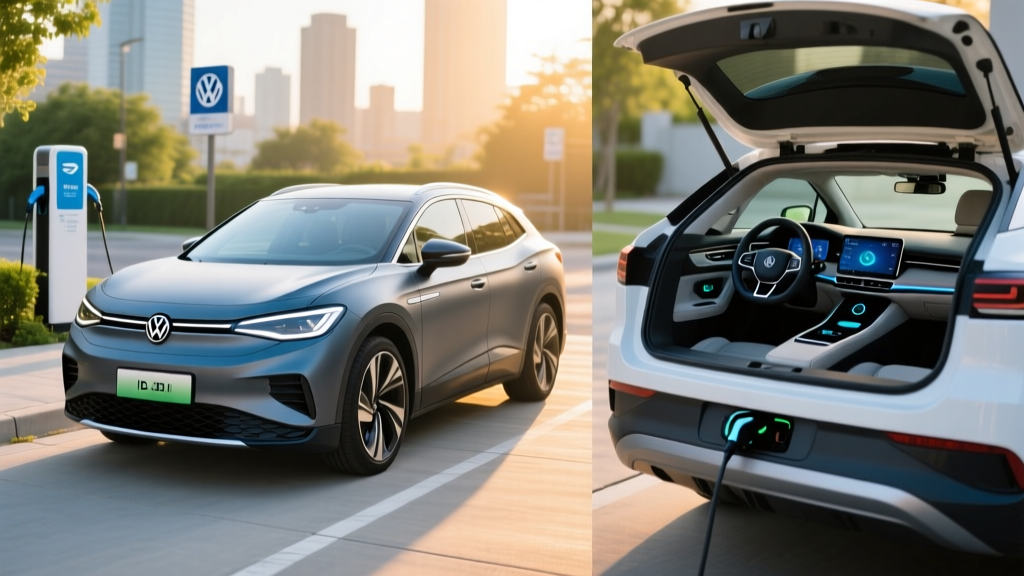
The Volkswagen ID.4 has been a staple of the affordable electric SUV segment since its US launch, and for 2025, it enters a new competitive landscape. With the Tesla Model Y, Hyundai Ioniq 5, and Kia EV6 all pushing efficiency and charging speed benchmarks, the ID.4 has had to sharpen its value proposition — particularly through leasing.
For 2025, the ID.4 is built at Volkswagen's Chattanooga, Tennessee plant, a factor that directly impacts its eligibility for federal incentives when leased. This review covers everything you need to know about leasing a 2025 VW ID.4: real-world range, charging performance, trim-level pricing, tax credit mechanics, and how it stacks up against rivals you're likely cross-shopping.
Quick Verdict: Who Should Lease the 2025 ID.4?
The 2025 ID.4 lease makes the most sense for buyers who want a comfortable, spacious electric crossover for daily commuting and family hauling, without committing to long-term ownership of a rapidly evolving technology platform. Leasing sidesteps depreciation risk — a genuine concern with EVs as battery tech advances — and can unlock incentive advantages that purchase buyers may not access.
The ID.4 excels as a practical family EV: generous rear-seat legroom, a flat load floor, and a compliant ride. Where it falls short is DC fast-charging speed relative to Hyundai/Kia's 800-volt architecture and infotainment responsiveness that still trails segment leaders. If you prioritize a smooth, quiet commute and cargo versatility over cutting-edge charge curves, the ID.4 lease deserves serious consideration.
2025 VW ID.4: Full Spec Breakdown
| Specification | Value |
|---|---|
| EPA Estimated Range | 291 miles (Pro S RWD); 263 miles (AWD Pro S) |
| Usable Battery Capacity | 82 kWh (gross ~91 kWh), NMC chemistry |
| Max DC Fast-Charge Rate | 175 kW peak |
| 10–80% DC Fast Charge | ~29 minutes (with preconditioning) |
| Level 2 Home Charge Rate | 11 kW (~33 miles of range per hour) |
| 0–60 mph | 7.5 sec (RWD); 5.4 sec (AWD dual-motor) |
| Horsepower | 282 hp (RWD); 335 hp (AWD) |
| Drivetrain | Rear-wheel drive or dual-motor AWD |
| Efficiency (Combined) | 107 MPGe (RWD Pro S); 98 MPGe (AWD Pro S) |
| Energy Consumption | 32 kWh/100 mi (RWD); 34 kWh/100 mi (AWD) |
| Cargo Volume (rear seats up) | 30.3 cu ft |
| Cargo Volume (rear seats folded) | 64.2 cu ft |
| Rear Legroom | 37.6 inches |
| Towing Capacity | 2,700 lbs (AWD); 2,200 lbs (RWD) |
| Battery/Powertrain Warranty | 8 years / 100,000 miles |
| Base MSRP (Standard trim) | $39,735 |
| As-Tested (Pro S AWD) | ~$50,000 |
Source: EPA fueleconomy.gov, Volkswagen USA
Real-World Range: What the EPA Sticker Doesn't Tell You
- EPA Sticker (Pro S RWD): 291 miles
- Highway driving (70–80 mph): Expect ~230–255 miles
- Cold weather (below 30°F): Expect ~195–230 miles (15–30% loss depending on cabin heat use)
- City/suburban mixed driving: ~270–290 miles (regen braking helps)
The ID.4's 82 kWh usable NMC (nickel-manganese-cobalt) battery delivers its best efficiency in stop-and-go traffic where regenerative braking recaptures energy. Highway driving at sustained speeds above 70 mph pushes consumption closer to 38–40 kWh/100 mi, cutting range noticeably.
In cold weather, the ID.4 does not come standard with a heat pump in all trims — VW has made it available as part of specific packages. Without a heat pump, resistive cabin heating can draw 3–5 kW continuously, which is the primary cause of winter range loss. If you live in a climate with regular sub-freezing temperatures, confirming heat pump availability on your chosen trim is essential before signing a lease.
One practical note: the ID.4's B-mode (stronger regen) is not true one-pedal driving. You'll still need the friction brakes to come to a complete stop. This is a deliberate VW tuning choice, but drivers coming from a Nissan Leaf or Chevrolet Bolt may notice the difference.
Charging Speed: DC Fast, Level 2, and the Charge Curve Reality
Charging speed is often the deciding factor for EV buyers who road-trip, and the ID.4's 175 kW peak DC fast-charge rate puts it in the middle of the pack — not the fastest, but far from the slowest.
| Charge Level | Power / Rate | Estimated Time | Miles Added per Hour |
|---|---|---|---|
| Level 1 (120V household) | ~1.4 kW | 60+ hours (0–100%) | ~4–5 mi/hr |
| Level 2 (240V home, 48A) | 11 kW | ~8.5 hours (0–100%) | ~33 mi/hr |
| DC Fast Charge (peak) | 175 kW | ~29 min (10–80%) | N/A (burst rate) |
| DC Fast Charge (sustained avg) | ~120 kW avg | ~38 min (10–80% real-world) | N/A |
Source: Volkswagen USA specifications
Here's what the spec sheet doesn't show: the charge curve. The ID.4 peaks at 175 kW only at a low state of charge (roughly 5–15% SoC) with proper battery preconditioning. From about 40% SoC onward, the rate tapers significantly — dropping to roughly 100 kW by 60% and below 50 kW past 80%. This is why VW quotes 10–80% time rather than 0–100%. Charging past 80% at a DC fast charger is painfully slow; plan your road trips around 10–80% stops and you'll spend about 29–35 minutes at a 350 kW Electrify America or compatible station.
For home Level 2 charging, you'll want a 48-amp hardwired EVSE on a 60-amp circuit. The ID.4's 11 kW onboard charger can fully replenish the battery overnight. A typical overnight charge from 20% to 80% takes about 5 hours — perfect for off-peak electricity rates.
The ID.4 uses the CCS1 connector standard. However, Volkswagen has confirmed that future model years will transition to NACS (Tesla's connector). For 2025, if you plan to use Tesla Superchargers, you'll need a CCS-to-NACS adapter. VW has offered adapters to ID.4 owners — confirm availability and compatibility with your dealer at lease signing.
2025 VW ID.4 Pricing, Trims, and Lease Economics
The 2025 ID.4 is offered in several trims, and understanding the pricing ladder is essential for evaluating lease value:
| Trim | MSRP (before destination) | Drivetrain | EPA Range | Federal Incentive (Lease) |
|---|---|---|---|---|
| Standard | $39,735 | RWD | 206 mi | Varies — see below |
| Pro | $43,735 | RWD | 291 mi | Varies — see below |
| Pro S | $47,235 | RWD | 291 mi | Varies — see below |
| Pro S Plus | $51,235 | RWD or AWD | 263–291 mi | Varies — see below |
| AWD Pro S | $50,735 | AWD | 263 mi | Varies — see below |
All prices include destination charge. Source: Volkswagen USA
The Lease vs. Buy Tax Credit Advantage
Here's where leasing the ID.4 gets interesting. Under IRS §30D rules, the $7,500 federal clean vehicle credit for purchases requires the buyer to meet income caps ($150K single / $300K joint), the vehicle must be under the MSRP cap ($80,000 for SUVs), and the battery must meet critical-mineral and component-sourcing thresholds that tighten annually.
However, when you lease a vehicle, the tax credit technically goes to the lessor (the financing entity, typically VW Credit). Under the "commercial vehicle" provision in §45W, many leased EVs — including the US-built ID.4 — can pass the full $7,500 benefit to the lessee as a capitalized cost reduction, without the buyer being subject to personal income caps or the strict battery-sourcing requirements that apply to purchases.
- ✅ MSRP cap: ID.4 is well under the $80,000 SUV threshold
- ✅ US assembly: Built in Chattanooga, TN
- ⚠️ Income caps: May NOT apply on lease (commercial vehicle loophole via §45W) — confirm with dealer and lessor
- ⚠️ Battery sourcing: More flexible on lease vs. purchase — but verify current-year compliance
- ✅ Point-of-sale transfer: Can be applied as cap cost reduction at signing
Important: Lease incentive pass-through is not guaranteed. It depends on whether VW Credit structures the lease to capture and pass along the credit. Always ask the dealer for a written lease quote showing exactly how the $7,500 is applied — whether as a cap cost reduction (lowering monthly payments) or withheld. Consult a tax professional for your specific situation.
Typical Lease Terms (Illustrative)
Based on typical 2025 ID.4 lease structures offered through VW Credit:
- 36 months / 10,000 miles/year: $299–$429/month depending on trim and cap cost reduction applied
- Money factor: Equivalent to roughly 4.5–6.5% APR (varies by credit tier and promotional period)
- Residual value: Typically 48–52% for 36-month ID.4 leases
- Due at signing: Often $0–$3,500 depending on promotions and whether the $7,500 credit offsets first payment + fees
Lease deals fluctuate monthly. VW frequently runs promotional lease rates on the ID.4, particularly at quarter-end. Checking VW's current offers page and contacting multiple dealers for competing quotes is the best strategy.
Interior, Technology, and Driver Assistance
The ID.4 cabin is spacious and thoughtfully laid out, with VW's minimalist design language. The 12.9-inch infotainment touchscreen (on Pro S and above) runs VW's ID. Software 4.0, which is a meaningful improvement over the earlier 3.x versions that drew criticism for lag and unintuitive menus.
Standout tech features:
- Wireless Apple CarPlay and Android Auto
- Augmented-reality head-up display (Pro S Plus)
- IQ.DRIVE suite: Travel Assist (adaptive cruise + lane centering), Front Assist, Park Assist Plus with memory parking
- Heated seats and heated steering wheel standard on Pro and above
- Panoramic fixed glass roof (Pro S and above) — floods the cabin with light but no shade
Notable drawbacks:
- Capacitive touch sliders for volume and climate remain frustrating — no physical buttons or haptic feedback
- Infotainment, while improved, still isn't as responsive as Tesla, Hyundai, or Kia systems
- No front trunk (frunk) — the space houses HVAC components
- Rear drum brakes (on RWD) — unusual for the price point, though EV regen reduces wear
The ID.4's IQ.DRIVE Travel Assist is a Level 2 driver-assistance system. It combines adaptive cruise control with lane centering, but the driver must remain fully engaged — hands on or near the wheel, eyes on the road. This is not autonomous or "self-driving" capability. It's a capable highway companion that reduces fatigue on long drives, but you are always the responsible operator.
How Does the ID.4 Compare to Key Competitors?
If you're evaluating a 2025 VW ID.4 lease, you're almost certainly cross-shopping these alternatives:
| Attribute | VW ID.4 Pro S RWD | Hyundai Ioniq 5 SEL RWD | Tesla Model Y LR RWD | Kia EV6 Wind RWD |
|---|---|---|---|---|
| EPA Range | 291 mi | 303 mi | 320 mi | 310 mi |
| Battery (usable) | 82 kWh | 77.4 kWh | ~75 kWh | 77.4 kWh |
| Peak DC Charge | 175 kW | 238 kW (800V) | 250 kW | 238 kW (800V) |
| 10–80% DC Time | ~29 min | ~18 min | ~22 min | ~18 min |
| 0–60 mph | 7.5 sec | 7.4 sec | 6.5 sec | 7.2 sec |
| Cargo (seats up) | 30.3 cu ft | 27.2 cu ft | 30.2 cu ft | 24.4 cu ft |
| Rear Legroom | 37.6 in | 39.4 in | 41.6 in | 39.4 in |
| Starting MSRP | ~$39,735 | ~$42,600 | ~$44,990 | ~$42,900 |
- You want the most cargo space in the segment (30.3 cu ft with seats up)
- You value a smooth, compliant ride over sporty handling
- You want the lowest entry MSRP among comparable EV SUVs
- You primarily commute and rarely take road trips exceeding 200 miles one-way
- DC fast-charging speed is a priority — Ioniq 5 and EV6 charge 10–80% in ~18 minutes vs. ~29 for the ID.4
- You need maximum range — Model Y Long Range offers 320 miles EPA
- You want access to Tesla's Supercharger network without an adapter
- Rear-seat legroom is critical — Model Y and Ioniq 5 offer more
Pros and Cons at a Glance
- Competitive base MSRP; strong lease incentive potential
- Spacious cargo area (30.3 cu ft) and flat load floor
- Comfortable, compliant ride quality — ideal for daily commuting
- US-built (Chattanooga, TN) — supports lease incentive eligibility
- Improved ID. Software 4.0 infotainment over prior model years
- Comprehensive 8-year/100,000-mile battery warranty
- IQ.DRIVE Travel Assist is a solid Level 2 highway companion
- 175 kW peak DC charge rate is slower than 800V competitors
- Capacitive touch sliders for volume/climate lack physical feedback
- No front trunk (frunk)
- Heat pump not standard on all trims — impacts cold-weather range
- B-mode regen doesn't bring the car to a full stop
- CCS connector requires adapter for Tesla Supercharger access
- Infotainment responsiveness still trails best-in-class
Ownership, Warranty, and Long-Term Considerations
Volkswagen backs the ID.4's battery pack and electric drivetrain with an 8-year / 100,000-mile limited warranty, covering defects and capacity loss below 70% of original capacity. This is standard for the segment and matches Hyundai, Kia, and Tesla battery coverage.
For lease holders, battery degradation is largely irrelevant — a 36-month lease will barely scratch the surface of long-term battery health. Most NMC packs in liquid-cooled systems like the ID.4's lose roughly 5–8% capacity over the first three years before stabilizing. You'll return the vehicle well before degradation becomes a practical concern.
Insurance costs for the ID.4 tend to run 10–20% higher than comparable gas-powered compact SUVs, reflecting higher repair costs for EV-specific components. Get an insurance quote before signing — it can meaningfully affect your total monthly outlay.
Maintenance on the ID.4 is minimal: cabin air filter replacement, tire rotation, brake fluid checks, and wiper blades. Expect to spend $150–$300 annually on scheduled maintenance versus $600–$1,000+ for a gas equivalent. Regenerative braking significantly extends brake pad life.
Frequently Asked Questions
What is the real-world range of the 2025 VW ID.4?
The EPA rates the ID.4 Pro S RWD at 291 miles. In real-world highway driving at 70–80 mph, expect 230–255 miles. In cold weather below 30°F, range can drop to 195–230 miles. City driving with regenerative braking gets closest to the EPA figure, around 270–290 miles.
How fast does the 2025 ID.4 charge at home and on the road?
At home on a Level 2 (240V, 48A) charger, the ID.4 adds about 33 miles of range per hour, or a full charge in roughly 8.5 hours. On DC fast chargers, it peaks at 175 kW and charges from 10–80% in about 29 minutes with proper battery preconditioning. Average sustained rate is closer to 120 kW.
How much does a 2025 VW ID.4 lease cost after tax credits?
Lease payments vary by trim, dealer, and credit tier. Typical 36-month leases range from $299 to $429 per month. If the $7,500 federal lease incentive (via §45W commercial vehicle provision) is passed through as a cap cost reduction, it can lower monthly payments by roughly $150–$200/month. Always confirm the incentive is reflected in your written lease quote.
Does the 2025 VW ID.4 qualify for the federal EV tax credit?
For purchases, eligibility under §30D depends on your income, the vehicle's battery sourcing compliance, and MSRP caps (the ID.4 clears the $80K SUV cap). For leases, the credit flows through the lessor under the §45W commercial vehicle provision, which bypasses several buyer-level restrictions. Confirm current-year eligibility with your dealer and consult IRS guidance or a tax professional.
Is the ID.4 worth leasing over buying?
Leasing makes sense if you want to avoid EV depreciation risk, prefer lower monthly payments, and want to upgrade to newer battery/charging technology in 3 years. Buying makes sense if you drive high annual miles (lease penalties apply over 10K–15K mi/yr), want to own outright, and qualify for the purchase tax credit. For most moderate-mileage commuters, the ID.4 lease offers strong value.
How does the ID.4 compare to the Hyundai Ioniq 5 for leasing?
The Ioniq 5 charges significantly faster (10–80% in ~18 minutes vs. ~29 for the ID.4) thanks to its 800-volt architecture, and offers slightly more EPA range (303 vs. 291 miles). The ID.4 counters with more cargo space (30.3 vs. 27.2 cu ft), a lower starting MSRP, and a more compliant ride. If road-trip charging speed matters, the Ioniq 5 wins. If cargo versatility and daily comfort matter more, the ID.4 is the stronger pick.
What happens at the end of my ID.4 lease?
You can return the vehicle (subject to excess mileage and wear charges), purchase it at the residual value stated in your lease contract, or lease a new vehicle. VW Credit occasionally offers lease-end purchase incentives. Note that if you purchase at lease-end, you generally cannot retroactively claim the §30D tax credit — it was already captured by the lessor during the lease term.
Disclaimer: Pricing, incentive eligibility, and lease terms are based on 2025 model-year information available at time of publication and are subject to change. Always verify current figures with your Volkswagen dealer, IRS.gov, and your tax professional before committing to a lease.