Quick Verdict: The ID.4 Is a Sensible Lease Target in 2025
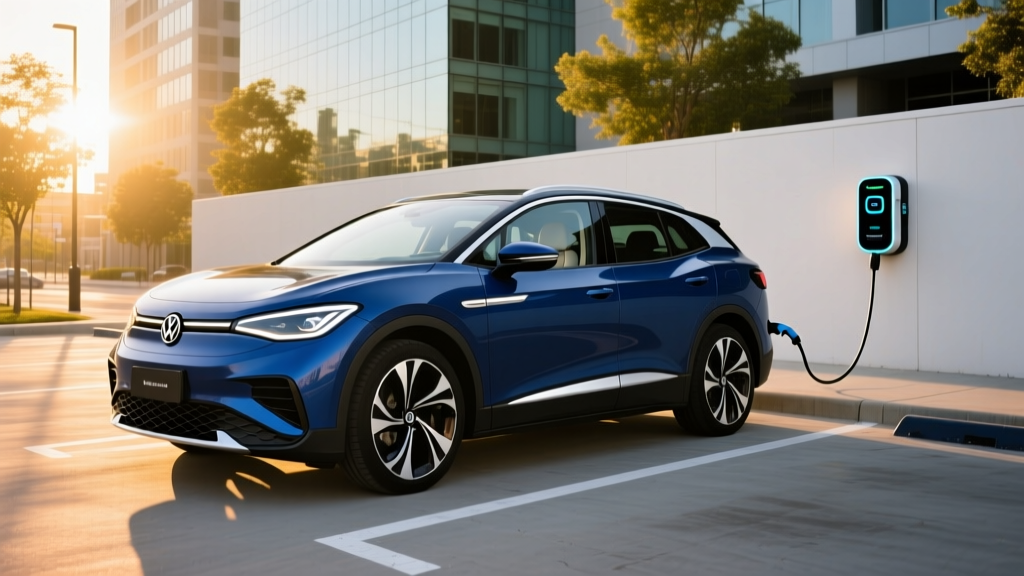
If you are researching 2025 VW ID.4 lease deals, you are looking at one of the most practical compact electric SUVs on the market — a vehicle that prioritizes everyday usability over headline-grabbing performance. The 2025 ID.4 offers an EPA-estimated range of up to 275 miles, a comfortable ride, and competitive cargo space, making it a strong candidate for commuters and small families. Where it truly shines as a lease proposition is the combination of Volkswagen's aggressive lease incentives, federal tax credit pass-through possibilities, and a relatively low money factor that keeps monthly payments attainable.
But before you sign, you need the full picture: real-world range expectations, charging realities, and whether the ID.4's tech stack holds up against rivals like the Hyundai Ioniq 5, Tesla Model Y, and Ford Mustang Mach-E. This review gives you every number you need.
Range, Efficiency, and the Real-World Reality Check
Real-World Expectation: ~230–250 miles on mixed highway driving; ~190–210 miles in sustained cold weather (below 32°F) with cabin heating. City driving with regen braking can approach or slightly exceed the EPA sticker.
The 2025 ID.4 is available with two battery configurations. The base Standard trim uses a 62 kWh (usable) lithium-ion NMC (nickel manganese cobalt) battery, delivering an EPA-estimated 206 miles. The more popular Pro and Pro S trims step up to an 82 kWh (usable) NMC pack, which pushes the EPA range to 275 miles in rear-wheel-drive form. Choose the AWD Pro S with dual motors, and that figure drops to 263 miles due to the added weight and drivetrain losses.
Efficiency varies by configuration. According to fueleconomy.gov, the RWD Pro achieves 104 MPGe combined (approximately 32 kWh per 100 miles). The AWD variant rates at 95 MPGe combined (roughly 35 kWh/100 mi). In practical terms, expect to spend about $4.50–$6.00 per 100 miles on electricity at the national average residential rate of ~$0.16/kWh — roughly one-third the fuel cost of a comparable 25 MPG gas SUV at $3.50/gallon.
| Spec | Standard (RWD) | Pro (RWD) | Pro S AWD |
|---|---|---|---|
| EPA Range | 206 mi | 275 mi | 263 mi |
| Battery (usable) | 62 kWh (NMC) | 82 kWh (NMC) | 82 kWh (NMC) |
| MPGe (combined) | 99 MPGe | 104 MPGe | 95 MPGe |
| Horsepower | 201 hp | 282 hp | 335 hp |
| 0–60 mph | ~9.3 sec | ~7.7 sec | ~5.4 sec |
| Drivetrain | RWD | RWD | AWD (dual-motor) |
| Max DC Fast Charge | 135 kW | 170 kW | 170 kW |
| 10–80% DC Time | ~30 min | ~28 min | ~28 min |
| Base MSRP | $40,785 | $43,785 | $49,185 |
Charging Speed: Home, Public, and the Curve You Need to Know
Charging is where many EV buyers get tripped up by marketing numbers versus physics. The 2025 ID.4 Pro and Pro S support a peak DC fast-charge rate of 170 kW on a compatible CCS1 connector. That peak rate is typically sustained between approximately 10% and 35% state of charge (SoC). Beyond 50% SoC, the charge curve tapers significantly — by 80%, you are pulling roughly 70–80 kW, and above 80%, the rate drops further to protect battery longevity.
For road trips, plan for a 10–80% charge in approximately 28 minutes at a 175 kW or higher station (such as Electrify America's latest 350 kW stalls). From 80–100%, expect another 25–30 minutes — which is why most EV road-trippers target 80% and move on.
| Charging Level | Power | Miles Added per Hour | Notes |
|---|---|---|---|
| Level 1 (120V outlet) | ~1.4 kW | ~4–5 mi/hr | Emergency/trickle only |
| Level 2 (240V, 48A home) | 11 kW | ~32–35 mi/hr | Full charge in ~8 hrs (82 kWh) |
| DC Fast (peak) | 170 kW | ~200+ mi in 10 min | 10–80% in ~28 min; tapers above 50% |
At home on a Level 2 charger (240V, 48-amp circuit), the ID.4 accepts up to 11 kW, meaning a full 0–100% charge of the 82 kWh battery takes approximately 8 hours. Most owners who plug in nightly will never need a full charge — a typical 40-mile daily commute requires about 1.5 hours of Level 2 top-up. Home Level 2 installation typically runs $800–$2,000 depending on panel capacity and conduit distance, so factor that into your lease budget.
One ownership tip: the ID.4 supports battery preconditioning when you navigate to a DC fast charger via the built-in navigation. This warms the battery to optimal temperature before arrival, improving charge speed — especially important in cold weather where unpreconditioned charging can be 30–40% slower.
Lease Pricing, Tax Credits, and Total Monthly Cost
The 2025 ID.4 starts at $40,785 MSRP (Standard trim, RWD) and climbs to $49,185 for the Pro S AWD before destination charges. Fully loaded Pro S Plus AWD models can reach approximately $55,000. But the sticker price is only the starting point — what matters for leasing is the capitalized cost, money factor, residual value, and applicable incentives.
- Maximum credit: $7,500 (if both critical mineral AND battery component requirements are met; $3,750 if only one is satisfied)
- MSRP cap: Vans/SUVs/pickups must be under $80,000 — all ID.4 trims qualify
- Buyer income cap: AGI must not exceed $150,000 (single), $225,000 (head of household), or $300,000 (joint filers)
- Battery sourcing: Increasing percentages of critical minerals and battery components must be sourced from the US or FTA partners — check IRS qualified vehicle list for current-year compliance
- Point-of-sale transfer: As of 2024, the credit can be transferred to the dealer at purchase, reducing the purchase price directly — for leases, the lessor (VW Credit) claims the credit and may pass savings through as a capitalized cost reduction
For leasing specifically, Volkswagen has historically offered attractive lease cash incentives on the ID.4 — often in the $5,000–$7,500 range — which stack with or substitute for the federal credit depending on the lessor's structuring. In many 2025 lease deals, VW Credit (the lessor) claims the commercial clean vehicle credit and passes a portion through as a cap cost reduction, effectively lowering your monthly payment by $80–$150/month compared to an unsubsidized lease.
Typical 2025 ID.4 Pro lease structures (36 months, 10,000 miles/year, with incentives applied) have been advertised in the $299–$399/month range depending on region, credit tier, and down payment. Always verify the exact money factor (a rate of 0.00200 equates to roughly 4.8% APR equivalent) and whether the advertised deal includes all incentives or requires specific qualifications.
Performance, Ride Quality, and Daily Driving Impressions
The 2025 ID.4 is not a performance EV — and it doesn't pretend to be. The RWD Pro's 282 horsepower delivers a 0–60 mph time of approximately 7.7 seconds, which is adequate for highway merging and confident passing but won't pin you to the seat. The dual-motor AWD Pro S improves that to about 5.4 seconds, which feels genuinely quick for a family crossover.
Where the ID.4 earns its keep is ride quality. The suspension tuning is noticeably softer than the Tesla Model Y, absorbing potholes and expansion joints with a compliance that makes it one of the most comfortable rides in the compact electric SUV segment. Steering is light and progressive — ideal for parking lots and city driving, though it lacks the precision feedback that enthusiasts might want on winding roads.
The regenerative braking system offers multiple levels selectable via steering-wheel paddles, but the ID.4 does not offer true one-pedal driving in the way a Nissan Leaf or Chevrolet Bolt does. You will still need to use the brake pedal for complete stops. This is a deliberate engineering choice by VW to maintain a familiar braking feel for drivers transitioning from gas vehicles.
Interior Space, Cargo, and Technology
Passenger space is generous. The ID.4 offers 41.1 inches of front legroom and 37.6 inches of rear legroom — competitive with the Toyota RAV4 and notably more rear space than the Tesla Model Y. The flat floor (no transmission tunnel) makes the middle rear seat actually usable for adults on shorter trips.
Cargo volume stands at 30.3 cubic feet behind the rear seats and 64.2 cubic feet with the rear seats folded — enough for a weekend's worth of family luggage or a large Costco run. There is no front trunk (frunk) on AWD models; RWD models have a small storage compartment under the hood suitable for charging cables.
The infotainment system uses VW's latest ID. Software 4.0 on a 12.9-inch touchscreen (12-inch on Standard trim). Improvements over earlier model years include faster response times, a revised menu structure, and wireless Apple CarPlay and Android Auto. However, the reliance on touch-capacitive sliders for volume and climate control remains a frustration point — many owners prefer physical buttons, and VW has acknowledged this feedback for future updates.
Driver assistance comes via VW's IQ.DRIVE suite, which includes adaptive cruise control with stop-and-go, lane centering (Travel Assist), front and rear automatic emergency braking, blind-spot monitoring, and rear cross-traffic alert. Travel Assist functions as a SAE Level 2 system — it assists with steering and speed on highways but requires the driver to maintain hands-on-wheel awareness at all times. It is not self-driving and should not be confused with Level 4 autonomous systems.
Warranty Coverage and Long-Term Battery Confidence
Volkswagen provides a competitive warranty package for the 2025 ID.4:
- Battery warranty: 8 years / 100,000 miles (whichever comes first), guaranteeing a minimum of 70% state of health (capacity retention)
- Powertrain warranty: 8 years / 100,000 miles
- Bumper-to-bumper: 4 years / 50,000 miles
- Complimentary maintenance: 2 years / 20,000 miles (includes cabin air filter, brake fluid check, tire rotation)
The 70% capacity retention threshold is industry-standard — it means VW will repair or replace the battery if it degrades below 70% of original capacity within the warranty period. Based on current NMC battery degradation data from fleets and long-term owners, most EV batteries lose approximately 10–15% capacity over the first 100,000 miles, suggesting the ID.4's battery should comfortably remain within warranty limits under normal use.
For lessees, the battery warranty exceeds a typical 36-month lease term, meaning you will never face out-of-warranty battery risk during your ownership period — one of the inherent advantages of leasing an EV versus buying.
ID.4 vs. Key Competitors: Which Should You Lease?
| Attribute | VW ID.4 Pro RWD | Hyundai Ioniq 5 SEL RWD | Tesla Model Y LR AWD | Ford Mach-E Select RWD |
|---|---|---|---|---|
| EPA Range | 275 mi | 303 mi | 320 mi | 250 mi |
| Battery | 82 kWh NMC | 77.4 kWh NMC | ~75 kWh NMC | 70 kWh NMC |
| DC Fast Charge (peak) | 170 kW | 240 kW (CCS) / 350 kW (NACS) | 250 kW (NACS) | 150 kW |
| 10–80% Time | ~28 min | ~18 min | ~22 min | ~34 min |
| Cargo (behind rear seats) | 30.3 cu ft | 27.2 cu ft | 30.2 cu ft (+ frunk) | 29.7 cu ft (+ frunk) |
| Base MSRP | $43,785 | $46,650 | $46,630 | $42,995 |
| Supercharger Access | No (CCS only) | NACS version available | Native NACS | Adapter available |
Choose the ID.4 if: You prioritize ride comfort, want a no-surprises driving experience that feels familiar, value strong lease incentive programs, and primarily charge at home or use Electrify America's network (VW includes 3 years of complimentary 30-minute EA charging sessions).
Choose the Ioniq 5 if: DC fast-charging speed is your top priority (18 minutes 10–80% is class-leading), and you want the longest range in the segment.
Choose the Model Y if: You need Tesla Supercharger network access for frequent road trips, want the longest range, and don't mind a firmer ride and minimalist interior.
- Comfortable, compliant ride quality — best in class for daily commuting
- Generous rear legroom and flat floor
- Strong lease incentive history keeps monthly payments competitive
- 3 years of complimentary Electrify America charging included
- Intuitive driving dynamics for gas-to-EV transitioners
- Competitive cargo space at 30.3 cu ft
- DC fast-charge speed (170 kW) trails Ioniq 5 and Model Y
- Touch-capacitive controls frustrate some drivers
- No Tesla Supercharger access (CCS1 only)
- Infotainment, while improved, still lags behind Tesla and Hyundai in responsiveness
- AWD variant is expensive at $49,185+ MSRP
- No true one-pedal driving mode
Who Should Lease the 2025 VW ID.4?
The 2025 ID.4 is best suited for daily commuters and small families who charge primarily at home, drive fewer than 50 miles per day, and take occasional road trips of 200 miles or less. Its soft suspension, quiet cabin, and familiar driving feel make it one of the easiest EVs to adopt for first-time electric vehicle owners.
It is less ideal for frequent long-distance road trippers who need the fastest possible DC charging (look at the Ioniq 5), those who require Tesla Supercharger network coverage in rural areas, or performance-oriented drivers who want sub-4-second acceleration.
If you can charge at home on Level 2, drive a predictable commute, and want a comfortable electric SUV with strong lease economics, the 2025 ID.4 deserves a serious test drive. Negotiate the capitalized cost, verify which incentives are included in the advertised monthly payment, and confirm your federal tax credit eligibility via the IRS qualified vehicle list before signing.
Frequently Asked Questions
What is the real-world range of the 2025 VW ID.4?
The EPA rates the ID.4 Pro RWD at 275 miles, but real-world highway driving typically yields 230–250 miles. In cold weather (below freezing), expect 190–210 miles due to battery chemistry limitations and cabin heating demand. City driving with frequent regenerative braking can match or slightly exceed the EPA estimate.
How fast does the ID.4 charge at home and on the road?
On a home Level 2 charger (240V, 48A), the ID.4 adds about 32–35 miles of range per hour, with a full charge taking roughly 8 hours. On a DC fast charger, it peaks at 170 kW and charges from 10–80% in approximately 28 minutes, though the rate tapers significantly above 50% SoC.
Does the 2025 ID.4 qualify for the $7,500 federal EV tax credit?
Eligibility depends on IRS §30D rules including buyer income caps ($150K single / $300K joint), battery sourcing requirements, and MSRP limits (under $80K for SUVs — all ID.4 trims qualify). The credit can be transferred to the dealer at point of sale. For leases, VW Credit as the lessor typically claims the credit and may pass savings through the lease structure. Always verify current eligibility on the IRS website.
Is leasing the ID.4 better than buying?
Leasing offers advantages for the ID.4: you avoid long-term battery degradation risk (the 8-year warranty covers you regardless), monthly payments are often lower thanks to VW's lease cash incentives, and you can upgrade to newer EV technology every 36 months. However, if you drive more than 12,000–15,000 miles per year, excess mileage penalties can erase the savings. Buying makes more sense for high-mileage drivers who plan to keep the vehicle 5+ years.
How does the ID.4 compare to the Tesla Model Y for families?
The ID.4 offers a more comfortable ride, more intuitive controls for first-time EV owners, and competitive cargo space (30.3 vs 30.2 cu ft). The Model Y wins on range (320 vs 275 mi), DC charging speed, Supercharger network access, and over-the-air software updates. For families who primarily drive locally and value comfort, the ID.4 is compelling; for road-trip-heavy families, the Model Y's charging infrastructure advantage is significant.
What charging network does the ID.4 use?
The 2025 ID.4 uses the CCS1 connector, giving access to Electrify America, EVgo, ChargePoint, and other CCS-equipped networks. It does not have native NACS (Tesla) compatibility. VW includes 3 years of complimentary 30-minute charging sessions on Electrify America. Third-party CCS-to-NACS adapters are becoming available for Supercharger access, but compatibility and charge speeds vary — verify before relying on an adapter for road trips.