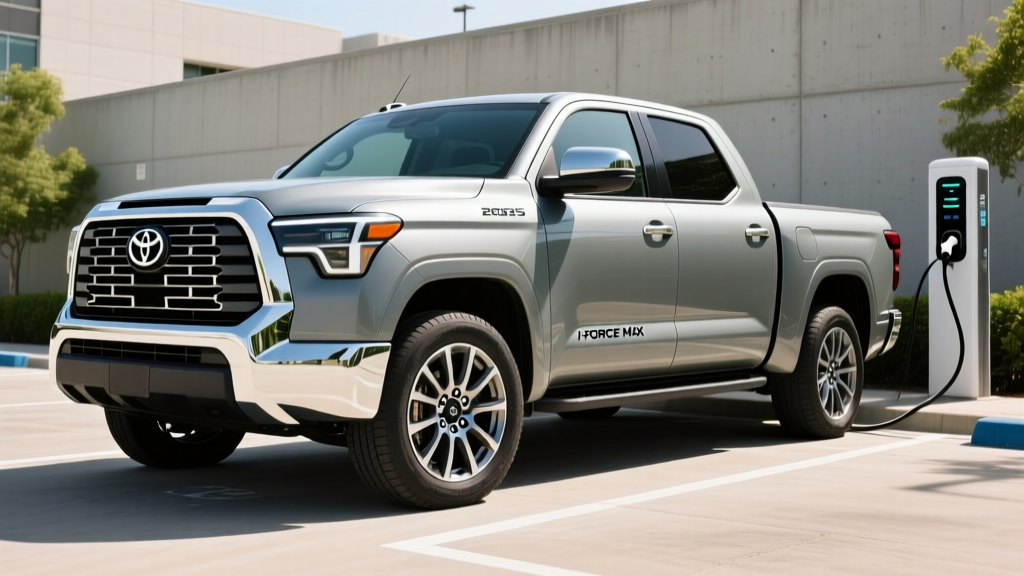
If you're shopping for wheels, tires, or spacers for the current-generation Toyota Tundra, getting the bolt pattern right is non-negotiable. The 2025 Toyota Tundra bolt pattern is 6x139.7mm (6x5.5 inches) — a six-lug configuration shared with several other full-size trucks and SUVs, but with specific center bore, thread size, and offset requirements that vary by trim and wheel size.
This guide covers every wheel-fitment detail you need, plus a full breakdown of the Tundra's i-FORCE MAX hybrid powertrain — because if you're modifying your truck, you should also understand what's pushing it down the road.
2025 Tundra Bolt Pattern: Exact Specifications
The 2025 Toyota Tundra uses a 6-lug bolt pattern measuring 139.7mm (5.5 inches) across opposing lug centers. This is the same 6x139.7mm / 6x5.5" pattern Toyota has used on the Tundra since its second generation, and it's shared with the Toyota Sequoia, Land Cruiser, and 4Runner, as well as several GM and Nissan trucks.
| Specification | Value |
|---|---|
| Bolt Pattern (PCD) | 6x139.7mm (6x5.5") |
| Center Bore | 110.1mm (hub-centric) |
| Lug Thread Size | M14 x 1.5 |
| Lug Seat Type | Conical (60° taper) |
| Lug Nut Torque Spec | 97 lb-ft (131 Nm) |
| Factory Wheel Sizes | 18", 20", or 22" depending on trim |
| Typical Offset Range | +35mm to +60mm (varies by wheel size) |
| Stock Tire Sizes | 265/70R18, 275/60R20, 275/50R22 |
Why center bore matters: The Tundra's 110.1mm hub bore means aftermarket wheels must either match this bore exactly (hub-centric) or use hub-centric rings to fill the gap. Lug-centric wheels that rely solely on lug nuts for centering can cause vibration at highway speeds and premature bearing wear on a truck this heavy.
Trim-Level Wheel Breakdown
Not every 2025 Tundra rolls off the line on the same wheels. Here's what ships from the factory by trim:
- SR / SR5: 18-inch steel or alloy wheels, 265/70R18 all-season tires, offset approximately +55mm to +60mm
- Limited: 20-inch alloy wheels, 275/60R20 all-season tires, offset approximately +45mm to +50mm
- Platinum / 1794 Edition: 22-inch alloy wheels, 275/50R22 all-season tires, offset approximately +35mm to +40mm
- TRD Pro: 18-inch TRD alloy wheels with BFGoodrich All-Terrain T/A KO3 tires (285/75R18), unique offset for suspension clearance
- TRD Off-Road: 18-inch or 20-inch TRD wheels depending on package, all-terrain tires
The TRD Pro's 18-inch setup is deliberate: a taller sidewall provides better off-road compliance and puncture resistance. If you're downsizing from 22s to 18s for winter or trail use, the 6x139.7mm pattern stays the same — just confirm brake caliper clearance with the specific wheel design.
i-FORCE MAX Hybrid Powertrain: The Tundra's Electrified Option
The 2025 Tundra offers Toyota's i-FORCE MAX hybrid powertrain across multiple trms — a twin-turbo V6 paired with an electric motor integrated into the bell housing. This isn't a plug-in hybrid; it's a conventional hybrid (HEV) that captures energy through regenerative braking and doesn't require external charging.
| Specification | Value |
|---|---|
| Engine | 3.4L twin-turbo V6 + electric motor |
| Combined Horsepower | 437 hp |
| Combined Torque | 583 lb-ft |
| Transmission | 10-speed automatic |
| Drivetrain | RWD or 4WD (part-time, electronic) |
| 0-60 mph | ~5.7 seconds (4WD crew cab) |
| Max Towing Capacity | 12,000 lbs (properly equipped) |
| Max Payload | 1,940 lbs |
The i-FORCE MAX's hybrid battery is a 1.87 kWh nickel-metal hydride (NiMH) pack located under the rear seats. This is a small buffer battery designed for torque-fill and low-speed electric assist — not for electric-only driving range. Toyota's hybrid system in the Tundra prioritizes low-end torque delivery and fuel savings over electrification for its own sake.
Fuel Economy: EPA Estimates vs. Real-World MPG
City: 19 MPG | Highway: 22 MPG | Combined: 20 MPG
For a 5,800-pound truck producing 583 lb-ft of torque, 20 MPG combined is respectable. But real-world results depend heavily on your driving profile:
- Highway cruising (70-75 mph, unloaded): Expect 21-23 MPG. The hybrid system's torque fill reduces downshifts and keeps the V6 in its efficient range.
- City stop-and-go: 18-20 MPG. Regenerative braking recovers energy, and the electric motor handles low-speed creep, which is where the i-FORCE MAX shines versus the non-hybrid i-FORCE.
- Towing (5,000+ lbs trailer): 12-15 MPG. Hybrid assist helps off the line, but aerodynamic drag and weight dominate on the highway.
- Cold weather (below 30°F): Expect a 1-2 MPG drop as the engine runs longer to reach operating temperature and cabin heating draws more load.
The non-hybrid i-FORCE V6 (389 hp, 479 lb-ft) returns an EPA-estimated 18 MPG combined with 4WD — making the i-FORCE MAX a meaningful 2 MPG improvement in mixed driving, plus substantially more torque.
Who Should Buy the i-FORCE MAX Hybrid Tundra?
The i-FORCE MAX adds roughly $4,000-$5,500 over the standard i-FORCE V6 depending on trim, and it's standard on Platinum, 1794 Edition, and TRD Pro trims. Here's the decision framework:
- You tow regularly and want the 583 lb-ft torque advantage
- You drive primarily in city/stop-and-go traffic where regenerative braking pays off
- You want the smoothest, most responsive acceleration in a full-size truck
- You plan to keep the truck 8+ years (the hybrid system has proven long-term durability in Toyota's lineup)
- Your budget is tight and you drive mostly highway miles unloaded
- You prioritize lower initial cost and simpler powertrain maintenance
- You rarely exceed 3,000 lbs of towing
Pricing, Trims, and Tax Credit Eligibility
| Trim | Engine | Base MSRP |
|---|---|---|
| SR5 (i-FORCE) | 3.4L V6 Turbo | ~$45,960 |
| Limited (i-FORCE MAX) | Hybrid V6 | ~$59,815 |
| Platinum (i-FORCE MAX) | Hybrid V6 | ~$68,715 |
| 1794 Edition (i-FORCE MAX) | Hybrid V6 | ~$69,005 |
| TRD Pro (i-FORCE MAX) | Hybrid V6 | ~$74,910 |
Federal tax credit note: The Toyota Tundra — including the i-FORCE MAX hybrid — does not qualify for the federal §30D clean vehicle credit. That credit applies only to battery electric vehicles (BEVs) and plug-in hybrids (PHEVs) meeting specific battery-sourcing and critical-mineral requirements under current IRS rules. The Tundra's conventional hybrid system doesn't have plug-in capability, so it falls outside §30D eligibility.
However, the i-FORCE MAX may qualify for certain state-level clean vehicle incentives depending on your jurisdiction — some states offer rebates for conventional hybrids. Check your state's energy or environmental agency for current programs.
Aftermarket Wheel Compatibility: What Fits the 6x139.7mm Pattern?
Because the 6x139.7mm bolt pattern is shared across multiple manufacturers, you have a broad aftermarket selection. But bolt pattern alone doesn't guarantee fitment. Here's what else to verify:
- Center bore: Must be ≥110.1mm or use hub-centric rings. Wheels with a smaller bore won't physically mount.
- Offset and backspacing: Staying within +35mm to +60mm prevents rubbing on control arms and fender liners. Aggressive negative offsets require a lift or leveling kit.
- Load rating: The Tundra's gross axle weight rating (GAWR) demands wheels rated for at least 3,300 lbs per corner on heavy-duty configurations. Verify the wheel's load rating — many passenger-car wheels in 6x139.7mm are not rated for truck use.
- TPMS compatibility: The 2025 Tundra uses 315 MHz TPMS sensors. Aftermarket wheels need compatible sensors or a reprogramming tool.
Cross-compatible vehicles sharing the 6x139.7mm pattern: Toyota Sequoia (2023+), Toyota 4Runner, Toyota Land Cruiser (300 series), Lexus LX 600, Lexus GX 550, Chevrolet Silverado 1500 (2019+, 6-lug), GMC Sierra 1500 (2019+, 6-lug), Nissan Titan, and Nissan Frontier. Always verify center bore and offset — shared bolt pattern doesn't mean direct swap.
Warranty Coverage and Hybrid Battery Protection
Toyota backs the 2025 Tundra with competitive warranty terms, and the hybrid components receive extended coverage that reflects their proven reliability:
- Basic (bumper-to-bumper): 3 years / 36,000 miles
- Powertrain: 5 years / 60,000 miles
- Hybrid battery (i-FORCE MAX): 8 years / 100,000 miles (10 years / 150,000 miles in states adopting California emissions standards — check Toyota's warranty guide for state-specific details)
- Hybrid system components: 8 years / 100,000 miles (inverter, electric motor, control modules)
- Corrosion perforation: 5 years / unlimited miles
The NiMH hybrid battery in the i-FORCE MAX is far less stressed than the high-voltage packs in BEVs — it never deep-cycles and operates in a narrow state-of-charge window. Toyota's track record with NiMH packs (dating back to the original Prius in 1997) suggests replacement is unlikely within the warranty period. If needed, replacement cost is estimated at $2,500-$4,000 — substantially less than a BEV traction battery.
Frequently Asked Questions
Is the 2025 Tundra bolt pattern the same as the Chevy Silverado?
Yes — the 2025 Tundra and the 2019+ Chevy Silverado 1500 (6-lug versions) both use the 6x139.7mm bolt pattern. However, the Silverado's center bore is 117.1mm versus the Tundra's 110.1mm, and offsets differ. You'll need hub-centric rings and must verify offset/backspacing before swapping wheels between these trucks.
Can I put 20-inch wheels on a Tundra SR5 that came with 18s?
Yes, as long as the aftermarket wheels match the 6x139.7mm bolt pattern, 110.1mm center bore (or use rings), and have appropriate offset (+45mm to +55mm is safe). You'll also need to recalibrate the speedometer if the overall tire diameter changes, which most shops can handle through the OBD-II port or a tuning module.
Does the i-FORCE MAX hybrid Tundra qualify for any tax credits?
Not at the federal level. The IRS §30D clean vehicle credit requires a plug-in vehicle (BEV or PHEV) with minimum battery capacity and compliant sourcing. The Tundra's conventional hybrid system doesn't plug in. Some states offer hybrid incentives — consult your state's energy office or a tax professional for specifics.
What's the real-world fuel economy when towing with the i-FORCE MAX?
Expect 12-15 MPG when towing a 5,000-7,000 lb trailer on flat highway terrain. Mountainous routes or heavier loads will push this below 12 MPG. The hybrid system's advantage is most noticeable during initial acceleration from stops and low-speed maneuvering — not sustained highway towing.
What lug nut torque does the 2025 Tundra require?
Toyota specifies 97 lb-ft (131 Nm) for all 2025 Tundra models. Always torque lug nuts in a star pattern, and re-torque after the first 50 miles on newly installed wheels. This is especially critical with aftermarket wheels that may have different seat geometries.