Quick Verdict: The 2025 bZ4X XLE at a Glance
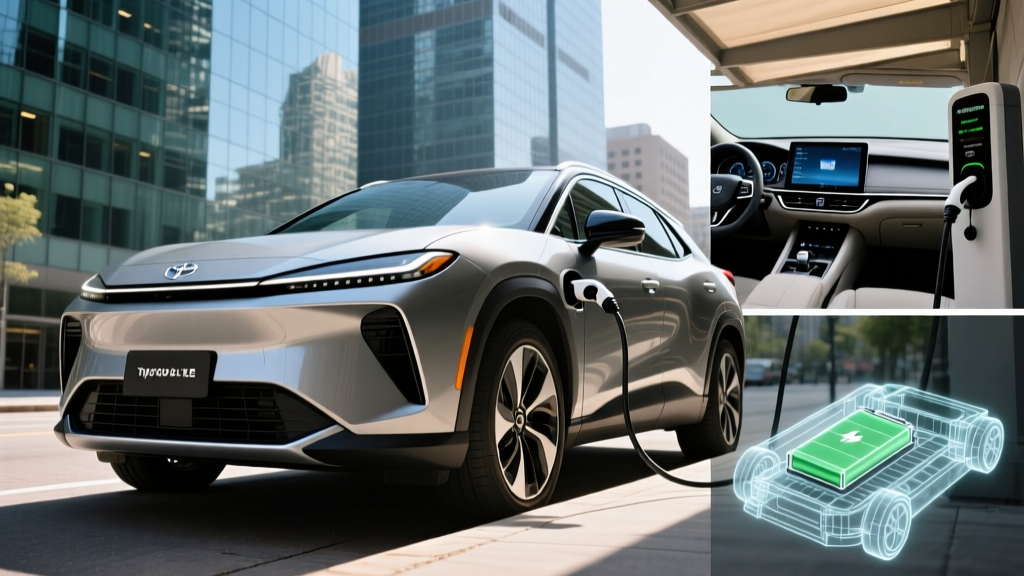
The 2025 Toyota bZ4X XLE occupies a specific niche: a mainstream, comfort-oriented electric crossover from the world's largest automaker, priced to compete with the Hyundai Ioniq 5 and Volkswagen ID.4. With an EPA-estimated 252 miles of range (FWD), a 71.4 kWh lithium-ion battery, and a starting MSRP around $37,070, the XLE trim is the volume play in Toyota's two-trim bZ4X lineup. It's not the fastest-charging or longest-range EV in its class, but it delivers Toyota's hallmark reliability reputation, standard Toyota Safety Sense 3.0, and a ride quality that prioritizes comfort over sportiness.
This review breaks down every spec that matters — from real-world highway range and DC fast-charge curves to federal tax credit eligibility under IRS §30D rules — so you can decide whether the 2025 bZ4X XLE fits your daily driving and budget.
| Spec | FWD XLE | AWD XLE |
|---|---|---|
| EPA Range | 252 mi | 228 mi |
| Battery (usable) | 71.4 kWh | 71.4 kWh |
| Battery Chemistry | NMC (Nickel Manganese Cobalt) | NMC |
| Max DC Fast Charge | 150 kW | 150 kW |
| 10–80% DCFC Time | ~30 min | ~30 min |
| Level 2 Charge Rate | 6.6 kW (~23 mi/hr) | 6.6 kW (~23 mi/hr) |
| 0–60 mph | 7.4 sec | 5.8 sec |
| Horsepower | 201 hp | 214 hp |
| Drivetrain | Single-motor FWD | Dual-motor AWD |
| MPGe (combined) | 114 MPGe | 102 MPGe |
| Efficiency | 29 kWh/100 mi | 33 kWh/100 mi |
| Base MSRP | $37,070 | $39,150 |
| Battery Warranty | 8 yr / 100,000 mi | 8 yr / 100,000 mi |
Range and Efficiency: EPA vs. Real World
The FWD 2025 bZ4X XLE carries an EPA-estimated 252 miles of range, while the AWD variant drops to 228 miles. These figures are derived from the EPA's official fuel economy data and reflect a combined city/highway driving cycle.
EPA Sticker: 252 mi (FWD) / 228 mi (AWD)
Highway (70–80 mph, mild weather): ~210–230 mi (FWD)
Cold Weather (below 30°F, mixed driving): ~170–200 mi (FWD)
City/Commuter (regenerative braking active): ~240–255 mi (FWD)
The bZ4X lacks a heat pump on the XLE trim in most U.S. markets, which increases cabin-heating energy draw in winter. Expect 20–30% range reduction in sustained sub-freezing conditions.
Efficiency for the FWD model is rated at 114 MPGe combined (29 kWh/100 miles), which is competitive but trails the Hyundai Ioniq 5's 114–132 MPGe depending on trim and the Tesla Model Y's 120+ MPGe. The AWD's 102 MPGe reflects the energy penalty of the second motor and added weight.
Toyota equips the bZ4X with a battery thermal management system using a glycol-based liquid cooling circuit. Unlike some competitors, the bZ4X does not offer aggressive battery preconditioning for DC fast charging — a factor that can slow charge speeds in cold weather, which we'll address in the charging section below.
Charging Speed: DC Fast, Level 2, and Level 1
Charging is where the 2025 bZ4X XLE reveals one of its most discussed limitations. Toyota rates the peak DC fast-charge speed at 150 kW (FWD) and 150 kW (AWD). In practice, the charge curve tells a more nuanced story.
| Level | Power / Voltage | Speed (miles added/hr) | Notes |
|---|---|---|---|
| Level 1 (120V) | ~1.2 kW | ~3–4 mi/hr | Emergency/trickle only |
| Level 2 (240V, 32A) | 6.6 kW (max onboard) | ~23 mi/hr | Full charge in ~11 hours |
| DC Fast (CCS/NACS) | 150 kW peak | ~250 mi/hr at peak | 10–80% in ~30 min; tapers significantly above 80% |
The 10–80% DC fast-charge time of approximately 30 minutes is acceptable for road-trip stops but trails competitors like the Hyundai Ioniq 5 (18 minutes at 350 kW-capable chargers) and the Kia EV6 (also ~18 minutes). The bZ4X's charge curve holds near peak power through roughly 50% State of Charge (SoC), then tapers progressively. Above 80%, charging slows to under 40 kW — typical for NMC chemistry, but worth noting if you regularly charge past 80% on road trips.
For home Level 2 charging, the 6.6 kW onboard charger means a full 10–100% session takes roughly 11 hours on a 32-amp, 240-volt circuit. Most owners who plug in nightly will never notice this — you're typically replenishing 30–80 miles of daily driving, which takes 1.5–3.5 hours at Level 2.
Connector note: For 2025, the bZ4X ships with a CCS1 connector in the U.S. market. Toyota has announced a transition to NACS (Tesla's North American Charging Standard) for future model years, but the 2025 model year uses CCS. Adapters are available for Tesla Supercharger access on CCS-equipped vehicles via the J3400 adapter standard.
Performance and Driving Dynamics
The FWD bZ4X XLE uses a single front-mounted electric motor producing 201 horsepower and 196 lb-ft of torque, delivering a 0–60 mph time of approximately 7.4 seconds. The AWD variant adds a rear motor for a combined 214 hp and 248 lb-ft, cutting the 0–60 time to roughly 5.8 seconds.
Neither figure will impress performance-oriented EV buyers — the Tesla Model Y Long Range hits 60 mph in about 4.8 seconds, and even the Ioniq 5 AWD manages a sub-5-second run. But the bZ4X was never engineered for drag-strip bragging rights.
Where the bZ4X XLE earns points is ride quality. Toyota tuned the suspension for compliance over sportiness, and the result is a crossover that absorbs potholes and highway expansion joints with minimal fuss. Steering is light and predictable, making it an easy daily driver in urban environments. The turning radius is reasonable at 18.4 feet, and visibility is good thanks to a relatively upright greenhouse.
Regenerative braking offers multiple levels adjustable via paddle shifters behind the steering wheel. The strongest setting approaches one-pedal driving but doesn't bring the car to a complete hold — you'll still need the brake pedal at stops. This is a deliberate Toyota choice, consistent with their approach across hybrid and EV models.
Interior, Cargo, and Technology
The bZ4X XLE's cabin is functional rather than luxurious. A 12.3-inch touchscreen dominates the center stack, running Toyota's latest infotainment interface with wireless Apple CarPlay and Android Auto. Physical climate controls are absent — everything routes through the touchscreen or voice commands, which draws mixed reactions from owners accustomed to knobs.
Passenger space is generous for the segment:
- Front legroom: 42.1 inches
- Rear legroom: 35.4 inches
- Front headroom: 39.2 inches
- Rear headroom: 38.0 inches
Cargo volume behind the rear seats is 27.7 cubic feet, expanding to approximately 56.9 cubic feet with the 60/40 split rear seats folded. There is no front trunk (frunk) — the space under the hood houses electronics and the HVAC system. This is a notable omission compared to the Ioniq 5 (0.85 cu ft frunk) and Model Y (4.1 cu ft frunk).
Toyota Safety Sense 3.0 comes standard on every bZ4X XLE and includes:
- Pre-Collision System with Pedestrian Detection
- Lane Departure Alert with Steering Assist
- Full-Speed Range Dynamic Radar Cruise Control
- Lane Tracing Assist
- Road Sign Assist
- Proactive Driving Assist (low-speed gentle braking/steering support)
Toyota Safety Sense 3.0 and the available Advanced Park system are SAE Level 2 driver-assistance features. The driver must remain fully engaged, hands on or near the wheel, and eyes on the road at all times. This is not autonomous or self-driving capability.
Pricing, Trims, and Federal Tax Credit Eligibility
The 2025 bZ4X is offered in two trims: XLE and Limited. This review focuses on the XLE, which is the higher-volume, more affordable option.
| Trim | Drivetrain | MSRP | Est. After §30D Credit* |
|---|---|---|---|
| XLE | FWD | $37,070 | ~$29,570 |
| XLE | AWD | $39,150 | ~$31,650 |
| Limited | FWD | $43,070 | ~$35,570 |
| Limited | AWD | $45,150 | ~$37,650 |
*Prices shown before destination charges (~$1,095). Tax credit estimates assume full §30D eligibility. See eligibility checklist below.
The 2025 bZ4X XLE qualifies for the federal clean vehicle credit under IRS §30D, potentially reducing your tax liability by up to $7,500. Starting in 2024, buyers can also elect to transfer the credit to the dealer as a point-of-sale rebate, reducing the purchase price directly.
- MSRP Cap: Vehicle MSRP must not exceed $80,000 for SUVs/crossovers (bZ4X qualifies ✓)
- Buyer Income Cap: Modified AGI ≤ $150,000 (single) / $300,000 (joint) / $225,000 (head of household)
- Battery Sourcing: Critical minerals and battery components must meet phased-in U.S./FTA-country sourcing thresholds (verify current-year compliance with dealer or IRS guidance)
- Assembly: Final assembly must occur in North America (the bZ4X is assembled in Japan — this may disqualify it from the §30D new-vehicle credit; check the latest DOE/FuelEconomy eligible vehicle list before purchasing)
- Point-of-Sale Transfer: Available — you can apply the credit at purchase if eligible
Ownership Costs, Warranty, and Longevity
Toyota backs the bZ4X with the following warranty coverage:
- Basic Vehicle: 3 years / 36,000 miles
- Powertrain: 5 years / 60,000 miles
- EV Battery: 8 years / 100,000 miles (capacity retention guarantee: Toyota warrants the battery will retain at least 70% of original capacity during the warranty period)
- Corrosion Perforation: 5 years / unlimited miles
- Roadside Assistance: 2 years / 25,000 miles
The 70% capacity retention threshold over 8 years/100,000 miles is industry-standard, matching most competitors. Toyota's extensive experience with hybrid battery systems (over 25 years with the Prius lineage) lends credibility to their battery management engineering, even though the bZ4X is their first dedicated BEV platform.
NMC battery chemistry, which the bZ4X uses, typically exhibits 10–15% degradation over 100,000 miles under normal use patterns. Best practices for longevity include:
- Charging to 80% for daily use (set via the vehicle's charge-limit setting)
- Avoiding repeated DC fast charging in extreme heat without preconditioning
- Not storing the vehicle at 100% SoC or below 10% SoC for extended periods
Insurance costs for the bZ4X tend to run 10–20% higher than a comparably priced gas-powered RAV4, reflecting higher repair costs for EV-specific components. Get quotes from your insurer before committing.
Pros and Cons: The Honest Assessment
✓ Pros
- Comfortable, compliant ride quality
- Standard Toyota Safety Sense 3.0 suite
- Competitive pricing at $37,070 (FWD XLE)
- Strong reliability reputation from Toyota brand
- Good rear-seat passenger space (35.4" legroom)
- Wireless Apple CarPlay and Android Auto standard
- Available AWD with dedicated rear motor
✗ Cons
- DC fast charging peaks at 150 kW — slower than Ioniq 5, EV6, Model Y
- No front trunk (frunk)
- No heat pump on XLE (reduced cold-weather efficiency)
- Japan-assembled — likely ineligible for §30D new-vehicle tax credit
- EPA range of 252 mi trails many competitors in 2025
- No physical climate controls — touchscreen-only
- Moderate 0–60 time (7.4 sec FWD) for the segment
Who Should Buy the 2025 bZ4X XLE?
Choose the bZ4X XLE if:
- You prioritize ride comfort and Toyota's reliability track record over maximum range or fastest charging
- Your daily commute is under 80 miles round-trip and you have reliable home Level 2 charging
- You want a mainstream EV from a brand with an extensive dealer network for service
- You plan to lease (which may unlock the commercial clean vehicle credit passed through as a lease incentive)
Look elsewhere if:
- You regularly road-trip 300+ miles and need the fastest DC charging available (consider Ioniq 5 or EV6)
- You need maximum range — the Model Y Long Range offers 310+ EPA miles
- You require the federal §30D purchase credit and need a North American-assembled EV
- Cold-weather range is critical and you want a heat pump (Ioniq 5 includes one standard)
Frequently Asked Questions
What is the real-world range of the 2025 bZ4X XLE?
In mixed driving at moderate temperatures (60–80°F), expect 220–240 miles from the FWD XLE. Highway driving at 75+ mph reduces this to roughly 200–220 miles. In sustained cold weather (below 30°F), range drops to 170–200 miles due to cabin heating demands and battery chemistry limitations. The AWD model will return 10–15% less across all scenarios.
How fast does the 2025 bZ4X XLE charge?
On a DC fast charger, the bZ4X XLE peaks at 150 kW and charges from 10–80% in approximately 30 minutes. At home on a Level 2 (240V, 32A) charger, it charges at 6.6 kW, adding roughly 23 miles of range per hour. A full Level 2 charge from empty takes about 11 hours.
Does the 2025 bZ4X XLE qualify for the federal EV tax credit?
Likely not for purchase. The bZ4X is assembled in Japan, and §30D requires North American final assembly for the new-vehicle credit. However, leasing a bZ4X may allow the dealer or lessor to claim the commercial clean vehicle credit (§45W) and pass savings to you as a reduced lease cost. Always confirm current eligibility on fueleconomy.gov and consult a tax professional.
Is the 2025 bZ4X XLE worth buying vs. competitors?
It depends on priorities. The Hyundai Ioniq 5 SE ($42,600, 303 mi EPA, 350 kW DC charging) is the stronger road-trip EV. The Tesla Model Y Long Range ($44,990, 310+ mi, extensive Supercharger network) is the range and charging-network leader. The VW ID.4 Pro ($39,735, 291 mi, U.S.-assembled, §30D eligible) is a direct price rival with better range and tax credit access. The bZ4X XLE wins on ride comfort, Toyota brand trust, and a lower entry price — but it concedes ground on range, charging speed, and tax credit eligibility.
What is the battery warranty on the 2025 bZ4X?
Toyota covers the EV battery for 8 years or 100,000 miles, whichever comes first. The warranty guarantees the battery will retain at least 70% of its original capacity during that period. If capacity drops below 70%, Toyota will repair or replace the battery at no cost.
Does the bZ4X XLE have a heat pump?
The XLE trim does not include a heat pump in most U.S. configurations. The Limited trim may include one depending on model year and market. A heat pump improves cold-weather efficiency by using ambient heat rather than resistive heating for the cabin, reducing winter range loss by roughly 10–15%.