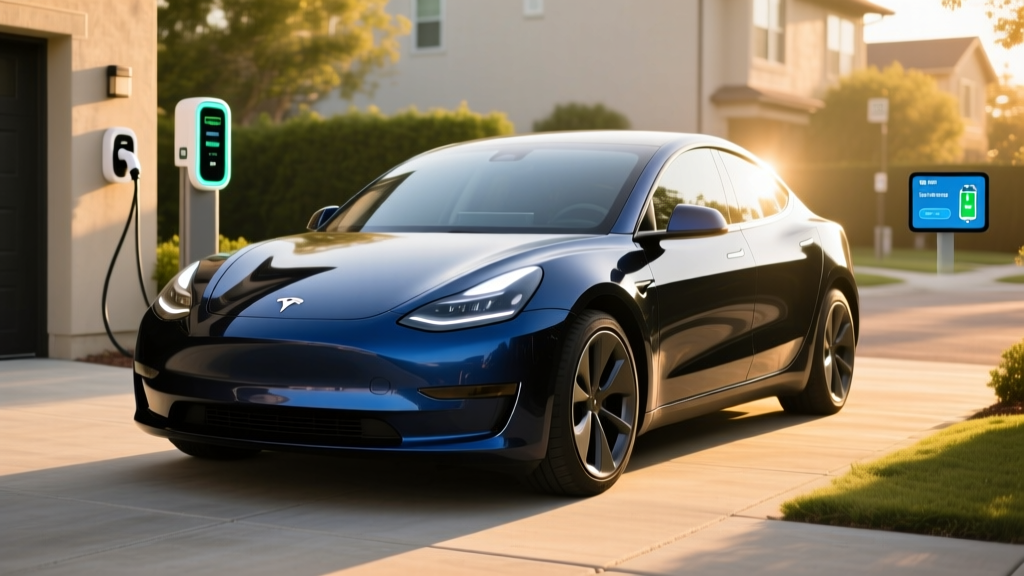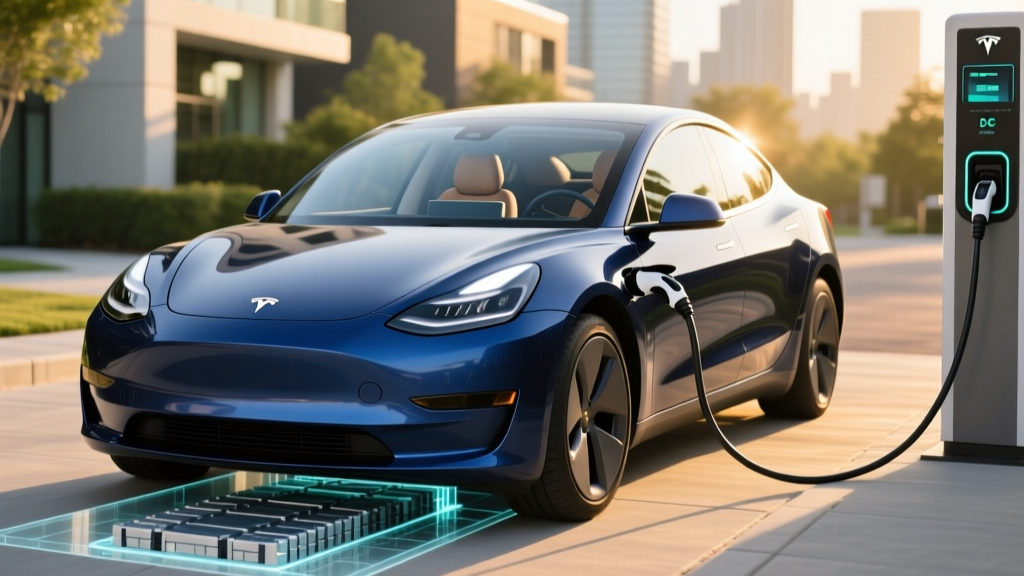
If you've been searching for 2025 Tesla Model 3 images and specs, you've likely noticed Tesla's mid-cycle refresh — internally dubbed "Highland" — brought meaningful changes to the sedan's design, cabin materials, and ride quality. But pictures only tell part of the story. What matters to EV buyers is how the numbers stack up: real-world range, charging speed, total cost after incentives, and whether the Model 3 still earns its spot against a growing field of rivals.
This review breaks down every spec that matters for the 2025 Model 3 lineup — the Long Range RWD, Long Range AWD, and Performance — with the exact figures, ownership costs, and practical caveats you need before signing a purchase agreement.
2025 Tesla Model 3: Full Spec Sheet at a Glance
| Spec | Long Range RWD | Long Range AWD | Performance AWD |
|---|---|---|---|
| Base MSRP | $42,490 | $47,490 | $52,990 |
| EPA Range | 363 mi | 341 mi | 315 mi |
| Battery (usable) | ~79 kWh (NMC) | ~79 kWh (NMC) | ~79 kWh (NMC) |
| MPGe (combined) | 132 MPGe | 121 MPGe | 113 MPGe |
| kWh/100 mi | 25 | 28 | 30 |
| 0–60 mph | 4.9 sec | 4.2 sec | 2.9 sec |
| Horsepower | ~271 hp | ~346 hp | ~510 hp |
| Drivetrain | RWD (single motor) | AWD (dual motor) | AWD (dual motor) |
| DC Fast Charge (peak) | 250 kW | 250 kW | 250 kW |
| 10–80% DC Time | ~27 min | ~27 min | ~27 min |
| Level 2 Home Charge | 11.5 kW (~44 mi/hr) | 11.5 kW (~44 mi/hr) | 11.5 kW (~44 mi/hr) |
| Battery Warranty | 8 yr / 120,000 mi | 8 yr / 120,000 mi | 8 yr / 120,000 mi |
| Cargo Volume | 23 cu ft (trunk 21 + frunk 2) | ||
Source: fueleconomy.gov and Tesla official specifications. Pricing excludes destination fees and is subject to change.
Range and Efficiency: EPA vs. Real World
The 2025 Model 3 Long Range uses an NMC (nickel manganese cobalt) battery pack with approximately 79 kWh of usable capacity. Tesla does not publish exact chemistry breakdowns per trim, but teardowns and supply-chain data confirm NMC for Long Range and Performance models (the Standard Range RWD, where available, has historically used LFP — lithium iron phosphate — which trades energy density for longevity and 100% daily charging tolerance).
Efficiency is where the Model 3 continues to lead the midsize EV sedan segment. At 25 kWh/100 mi (Long Range RWD), it outperforms the Hyundai Ioniq 6 (~27 kWh/100 mi) and BMW i4 (~30 kWh/100 mi). That efficiency translates directly to lower charging costs and more miles per minute at a DC fast charger.
For context on cold-weather impact: Tesla's heat pump, standard on all 2025 trims, recovers waste heat from the powertrain to warm the cabin. This reduces the range penalty compared to older resistive-heater EVs, but physics still wins — expect a 15–25% reduction in range below freezing, particularly on short trips where the cabin must heat from cold each time.
Charging Speed: DC Fast, Level 2, and the Curve
The 2025 Model 3 peaks at 250 kW on DC fast chargers using the native NACS (North American Charging Standard) connector — the Tesla Supercharger plug now adopted by Ford, GM, Rivian, and most major automakers. That peak rate is impressive, but sustained charging speed is what actually determines your road-trip stop duration.
| Charging Level | Power (kW) | Miles Added per Hour | Notes |
|---|---|---|---|
| Level 1 (120V household) | ~1.4 kW | ~3–5 mi/hr | Emergency/trickle only; full charge takes days |
| Level 2 (240V, 48A Wall Connector) | 11.5 kW | ~44 mi/hr | Full overnight charge in ~7–8 hours |
| DC Fast (Supercharger V3/V4) | Up to 250 kW (peak) | ~170 mi in 15 min | 10–80% in ~27 min; tapers sharply above 80% |
Understanding the charge curve: The Model 3 hits 250 kW only at low states of charge (roughly 5–15% SoC) and optimal battery temperature. By 50% SoC, you're typically seeing 100–130 kW. Above 80%, the rate drops to under 50 kW to protect the battery. This is why Tesla and every EV manufacturer quote 10–80% times — the final 20% is painfully slow and best reserved for overnight Level 2 sessions.
At home, Tesla's Wall Connector on a 60-amp circuit delivers the full 11.5 kW the car can accept. That's roughly 44 miles of range per hour of charging, or a full 0–100% in about 7–8 hours. Most owners charge between 20–80% overnight, which takes under 5 hours — more than enough for daily commuting. Note: kW (kilowatts) measures charging power — the rate of energy flow — while kWh (kilowatt-hours) measures the battery's total energy capacity. Confusing the two is the most common EV spec error.
Preconditioning matters: Navigate to a Supercharger using the car's built-in navigation, and the Model 3 will automatically warm the battery to its optimal charging temperature before you arrive. Without preconditioning — say, if you plug into a third-party DC charger without routing through nav — your initial charge rate may be significantly lower, especially in cold weather.
Performance and Driving Dynamics
The 2025 Model 3 Performance earns its name: 2.9 seconds 0–60 mph from its dual-motor AWD setup producing approximately 510 horsepower. That's supercar territory from a $52,990 sedan. The Long Range AWD is no slouch at 4.2 seconds and 346 hp, while the RWD variant manages a respectable 4.9 seconds.
The Highland refresh brought genuinely meaningful chassis improvements. Tesla reworked the suspension bushings, added frequency-selective dampers, and improved sound insulation. The result is a noticeably quieter, more compliant ride than the pre-2024 Model 3 — addressing one of the most common owner complaints. Road noise at highway speed is substantially reduced, and the car absorbs expansion joints and rough pavement with less harshness.
Regenerative braking remains strong and consistent. The Model 3 does not offer adjustable regen levels or a true one-pedal-driving mode that brings the car to a complete stop without brake intervention (unlike some competitors), but the single regen setting is aggressive enough for most drivers to use the brake pedal sparingly in city driving.
Interior, Tech, and Cargo
The 2025 interior is a significant upgrade from earlier Model 3 cabins. Ventilated front seats, ambient lighting, rear-seat ventilation, and a rear touchscreen for climate and media controls are now standard. The materials — soft-touch surfaces, woven textiles, and aluminum trim — finally match the price point.
Infotainment: The 15.4-inch center touchscreen runs Tesla's proprietary OS. There is no Apple CarPlay or Android Auto — a dealbreaker for some buyers. Navigation, media, and vehicle controls are all integrated, and the system is fast and responsive. A 17-speaker audio system on Long Range and Performance trims delivers excellent sound quality.
Cargo: The Model 3 offers 23 cubic feet total (21 cu ft trunk + 2 cu ft frunk). Rear legroom is 35.3 inches — adequate for adults on shorter trips but tight for tall passengers on long drives. The trunk opening is narrow compared to a liftback like the Ioniq 6 or Model Y, which limits practicality for bulky items.
Autopilot and FSD: All 2025 Model 3 vehicles ship with basic Autopilot (traffic-aware cruise control and lane centering). Full Self-Driving (Supervised) is an optional $8,000 add-on (or $99/month subscription as of early 2025). Important clarification:
Both Autopilot and FSD (Supervised) are SAE Level 2 driver-assistance systems. The driver must remain fully engaged, eyes on the road, hands available to take over at any moment. These systems do not make the car self-driving. Tesla's steering-wheel torque monitoring and cabin camera enforce attention, but the legal and practical responsibility for safe operation remains entirely with the driver.
Pricing, Trims, and Federal Tax Credit
The 2025 Model 3 starts at $42,490 for the Long Range RWD (including destination). The Long Range AWD is $47,490, and the Performance tops the lineup at $52,990. Tesla's pricing has fluctuated frequently — these figures reflect early-2025 MSRP and may shift.
| Trim | Base MSRP | Federal Credit (§30D) | Effective Price (if eligible) |
|---|---|---|---|
| Long Range RWD | $42,490 | Up to $7,500 | ~$34,990 |
| Long Range AWD | $47,490 | Up to $7,500 | ~$39,990 |
| Performance AWD | $52,990 | Up to $7,500 | ~$45,490 |
Federal tax credit eligibility is not automatic. Under IRS §30D rules, the $7,500 credit requires meeting multiple criteria simultaneously:
- MSRP cap: Sedans must be at or below $55,000 — all 2025 Model 3 trims qualify.
- Buyer income cap: Modified AGI must not exceed $150,000 (single), $225,000 (head of household), or $300,000 (joint filers).
- Battery sourcing: A percentage of critical minerals and battery components must be sourced from the U.S. or free-trade-agreement countries. These thresholds increase annually. Tesla's Fremont-built packs have largely met these requirements, but the exact credit amount ($3,750 for minerals, $3,750 for components) can vary by build date and supply-chain changes.
- Point-of-sale transfer: As of 2024, eligible buyers can transfer the credit to the dealer at purchase, reducing the upfront price rather than waiting for a tax refund. Confirm with Tesla at order time.
Always verify current eligibility at irs.gov or through the DOE's tax credit lookup tool before finalizing your purchase. Rules change, and a vehicle that qualifies in January may face sourcing disqualification later in the model year.
Pros, Cons, and the Competition
Pros
- Class-leading efficiency (25 kWh/100 mi LR RWD)
- 363-mile EPA range tops the segment
- Access to Tesla Supercharger network (most reliable DC network)
- Improved ride quality and cabin noise post-Highland refresh
- Strong resale value relative to EV peers
- Over-the-air updates add features post-purchase
Cons
- No Apple CarPlay or Android Auto
- Turn-signal stalks removed — steering-wheel buttons instead
- Rear legroom tight for tall adults (35.3 in)
- Trunk opening is narrow (not a liftback/hatch)
- FSD (Supervised) remains Level 2 despite the name and $8,000 cost
- No adjustable regen or true one-pedal stop
Key competitors: The Hyundai Ioniq 6 offers 361 miles of range, a more spacious cabin, and CarPlay — but charges at a similar 250 kW and lacks Supercharger access (though it gains NACS in 2025). The BMW i4 eDrive40 starts higher ($52,200) with 307 miles but delivers a more premium interior and traditional luxury ownership experience. The Polestar 2 provides a distinctive design and Google-based infotainment but trails on range (276 mi standard) and efficiency.
The Model 3's strongest competitive advantage remains the Supercharger network. With over 6,000 V3/V4 stalls across North America, Tesla owners experience far fewer failed charging sessions, broken connectors, or payment headaches than CCS-network users — though this gap is narrowing as other networks invest in reliability.
Who Should Buy the 2025 Model 3?
Best for: Daily commuters covering 30–80 miles round-trip who want minimal charging hassle, road-trippers who value Supercharger reliability, and tech-forward buyers who prefer Tesla's software ecosystem. The Long Range RWD is the value pick — 363 miles of range, the lowest price, and the highest efficiency.
Look elsewhere if: You need CarPlay/Android Auto, regularly carry tall rear passengers, want a hatchback-style cargo area (consider the Model Y), or prefer a traditional dealership service experience. If you live in an apartment without home charging access, the Model 3 still works thanks to Superchargers, but ownership is significantly more convenient with a Level 2 home setup.
Frequently Asked Questions
What is the real-world range of the 2025 Tesla Model 3?
The Long Range RWD achieves 363 miles EPA, but expect 300–320 miles in real-world highway driving at 70 mph in moderate temperatures. Below freezing, plan for 250–280 miles. The AWD trims deliver 10–20 fewer real-world miles due to drivetrain losses and added weight.
How fast does the 2025 Model 3 charge at home and on the road?
On a 240V Level 2 home charger (48A), the Model 3 charges at 11.5 kW, adding about 44 miles of range per hour — a full overnight charge. On DC fast chargers, it peaks at 250 kW and reaches 10–80% in approximately 27 minutes, adding up to 170 miles in 15 minutes under optimal conditions.
Does the 2025 Tesla Model 3 qualify for the $7,500 federal tax credit?
All trims fall under the $55,000 MSRP cap for sedans, so the vehicle qualifies. However, buyer eligibility depends on income limits ($150K single / $300K joint), and the credit amount depends on battery mineral and component sourcing, which can change throughout the model year. Verify at irs.gov before purchase. The credit can be applied as a point-of-sale discount.
Is the 2025 Model 3 worth buying over the Hyundai Ioniq 6 or BMW i4?
If Supercharger access, maximum range, and software integration are priorities, the Model 3 wins. If you want CarPlay, a more spacious rear seat, or a luxury badge with dealer service, the Ioniq 6 or i4 may be better fits. Test-drive all three — the Highland refresh made the Model 3's ride quality competitive, but interior preferences are personal.
What are the biggest drawbacks of the 2025 Model 3?
The removal of turn-signal stalks (replaced by steering-wheel buttons) is polarizing. The lack of Apple CarPlay/Android Auto frustrates some buyers. Rear seat space is tight, and the trunk opening is narrow for a sedan of this price. FSD (Supervised) costs $8,000 but remains a Level 2 assist system requiring full driver attention.
How long will the Model 3 battery last, and what's the warranty?
Tesla warranties the battery and drive unit for 8 years or 120,000 miles (whichever comes first), with a guaranteed minimum 70% capacity retention over that period. Real-world data from Tesla's fleet suggests NMC packs typically retain 85–90% capacity after 100,000 miles. Full battery replacement out of warranty is estimated at $12,000–$16,000, though most packs outlast the vehicle itself.