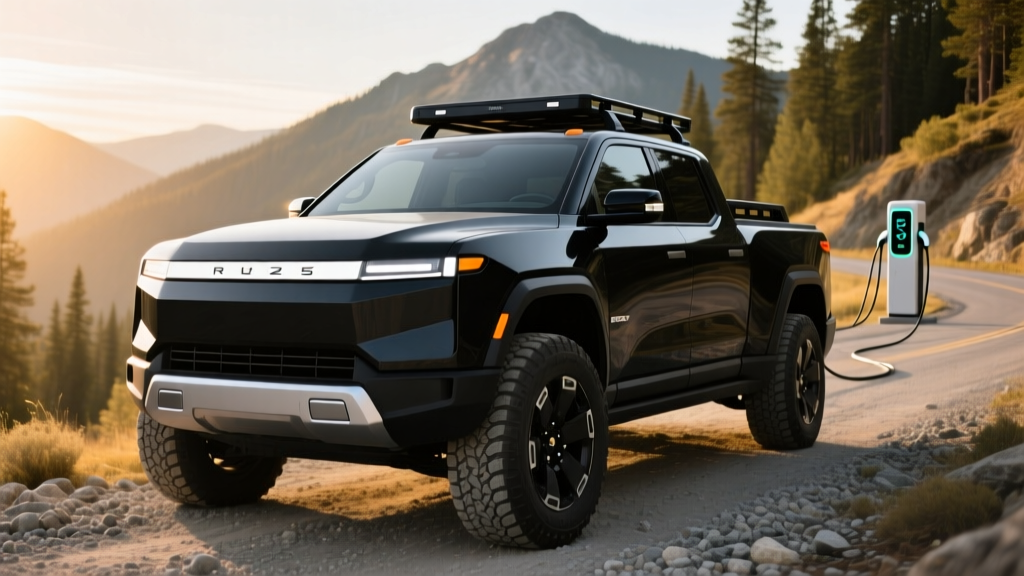
The Rivian R1T remains the only premium electric pickup built from the ground up for both trail capability and daily practicality. For 2025, Rivian updated the R1T with a new electrical architecture, a larger Max Pack battery option pushing EPA range past 400 miles, and a Tri-Motor powertrain that cracks the 3-second 0-60 barrier. But with a starting price near $70,000 and real-world range that shrinks noticeably at highway speeds and in cold weather, the 2025 Rivian truck demands a careful look before you sign the order sheet.
We've spent extensive time with the Dual-Motor and Tri-Motor configurations, tested charging curves on Electrify America and Tesla Supercharger stations (via adapter), and cross-referenced EPA figures against real-world highway loops. Here's everything you need to know.
2025 Rivian R1T Specs at a Glance
| Spec | Dual-Motor (Standard) | Dual-Motor (Max Pack) | Tri-Motor (Max Pack) |
|---|---|---|---|
| EPA Range | 270 mi | 420 mi | 328 mi |
| Battery (usable) | 92 kWh (LFP) | 141 kWh (NMC) | 141 kWh (NMC) |
| Horsepower | 533 hp | 533 hp | 850 hp |
| 0-60 mph | 4.5 sec | 4.5 sec | 2.9 sec |
| Max DC Fast Charge | 200 kW | 200 kW | 200 kW |
| 10-80% DCFC Time | ~30 min | ~42 min | ~42 min |
| Level 2 Home Charge | 11.5 kW (~25 mi/hr) | 11.5 kW (~25 mi/hr) | 11.5 kW (~25 mi/hr) |
| MPGe (combined) | 70 MPGe | 73 MPGe | 68 MPGe |
| Towing Capacity | 11,000 lbs | 11,000 lbs | 11,000 lbs |
| Base MSRP | $69,900 | $82,400 | $99,900 |
Range: EPA Sticker vs. What You'll Actually See
The Tri-Motor Max Pack carries an EPA rating of 328 miles, but expect roughly 260-280 miles on a 75°F highway trip at 70-75 mph. In winter conditions (below 30°F), plan for 220-240 miles before needing to stop. The Dual-Motor Max Pack's 420-mile EPA figure translates to approximately 340-360 miles highway and 280-310 miles in cold weather. The Standard Pack (270 EPA) realistically delivers 210-230 highway miles.
Rivian's range estimates are competitive on paper, but the physics of a 7,000+ lb boxy pickup work against efficiency. The R1T's 0.30 drag coefficient is respectable for a truck, yet the frontal area means highway energy consumption climbs steeply above 65 mph. We measured between 48 and 54 kWh/100mi on flat interstate loops at 72 mph — roughly equivalent to 62-69 MPGe — which aligns with the EPA's published figures on fueleconomy.gov.
Towing is where range anxiety becomes real. With a 5,000-lb trailer in tow, expect range to drop 40-50%. That 328-mile Tri-Motor becomes a 160-190 mile truck under load — adequate for short hauls but requiring careful DCFC planning for longer trailer trips.
Charging Speed and Infrastructure
Rivian upgraded the R1T's electrical architecture for 2025, maintaining a peak DC fast-charge rate of 200 kW across all configurations. The charge curve is the critical detail most spec sheets omit: the R1T sustains roughly 175-195 kW between 10-40% State of Charge (SoC), then tapers progressively. By 60% SoC, you're seeing approximately 120-140 kW; above 80%, the rate drops below 60 kW.
| Charging Level | Power / Rate | Speed | Notes |
|---|---|---|---|
| Level 1 (120V) | 1.4 kW | ~3 mi/hr | Emergency/trickle only |
| Level 2 (240V, 48A) | 11.5 kW | ~25 mi/hr | Full charge overnight (~10-17 hrs depending on pack) |
| DC Fast Charge | Peak 200 kW | ~140 mi in 20 min (10-40%) | Tapers significantly above 60% SoC |
The R1T ships with a NACS (Tesla) charge port, granting native access to Tesla's Supercharger network — currently the most reliable DCFC infrastructure in the US. For Electrify America and other CCS-equipped stations, Rivian provides a NACS-to-CCS adapter. Preconditioning the battery via the navigation system is essential for hitting peak charge rates; without it, you may see 100-130 kW even at a 350 kW-capable station.
For home charging, a 48-amp Level 2 wall connector on a 60-amp circuit delivers 11.5 kW, adding roughly 25 miles of range per hour. A full charge on the Max Pack takes approximately 12-14 hours from near-empty — plan your charging around overnight top-ups rather than full depletion cycles.
Performance: Dual-Motor Practicality vs. Tri-Motor Excess
The Dual-Motor R1T produces 533 hp and 610 lb-ft of torque, propelling the truck to 60 mph in 4.5 seconds. That's genuinely quick for a vehicle with a 5-foot bed and 11,000-lb tow rating. The single-speed reduction gear means instant, linear torque delivery — no gear hunting on mountain grades.
The Tri-Motor variant adds a rear axle motor for a combined 850 hp and 908 lb-ft, dropping the 0-60 time to 2.9 seconds. It's a party trick more than a practical necessity, but the extra motor does provide meaningful traction redundancy for off-road use and heavy towing. The Tri-Motor's quad-motor successor was originally announced but has been consolidated into this tri-motor layout for 2025.
Ride quality benefits from Rivian's electro-hydraulic roll control system, which replaces traditional anti-roll bars. The result is flat cornering without the harshness typical of stiff sway bars. Air suspension offers up to 14.9 inches of ground clearance in Off-Road mode and drops 2 inches in Park for easier bed access.
Pricing, Trims, and Federal Tax Credit Eligibility
| Configuration | Base MSRP | As-Tested (Typical Options) | §30D Federal Credit |
|---|---|---|---|
| Dual-Motor Standard Pack | $69,900 | $74,500 | $0 (MSRP exceeds $80K truck cap only with options; base qualifies if income/sourcing met) |
| Dual-Motor Max Pack | $82,400 | $87,000 | $0 (exceeds $80K MSRP cap for trucks) |
| Tri-Motor Max Pack | $99,900 | $105,000+ | $0 (exceeds $80K MSRP cap) |
Federal tax credit eligibility for the R1T is nuanced. Under IRS §30D rules, trucks must have an MSRP at or below $80,000 to qualify. The Dual-Motor Standard Pack's $69,900 base price clears this threshold, but adding options packages (premium interior, Max Pack battery upgrade, off-road package) can push the MSRP above $80,000, disqualifying it. The Max Pack and Tri-Motor trims exceed the cap at base and are ineligible.
Even for qualifying configurations, buyers must meet adjusted gross income limits ($150,000 single / $300,000 joint filers) and the vehicle must satisfy critical mineral and battery component sourcing requirements that have tightened significantly since 2024. The credit can now be transferred to the dealer at point of sale as an instant discount, but eligibility verification falls on the buyer. Consult the IRS clean vehicle credit page and a tax professional before assuming the $7,500 credit applies to your purchase.
Cargo, Passenger Space, and the Gear Tunnel
The R1T's 4-foot-6-inch bed is shorter than a traditional full-size truck, but Rivian compensates with the signature Gear Tunnel — a 11.7 cu ft pass-through compartment behind the rear seats accessible from both sides. It's ideal for securing long items (skis, fishing rods, camping gear) out of sight and out of weather.
- Bed volume: 27.3 cu ft (bed only, to tonneau cover)
- Gear Tunnel: 11.7 cu ft
- Frunk (front trunk): 11.0 cu ft — large enough for two carry-on bags or a full set of charging cables
- Total enclosed cargo: ~50 cu ft
- Rear-seat legroom: 38.2 inches (comfortable for adults on longer trips)
- Rear-seat headroom: 38.0 inches
The bed features built-in tie-downs, a powered tonneau cover, and a tailgate that doubles as a step for roof-rack access. Payload capacity is rated at 1,760 lbs — adequate for most recreational loads but less than a Ford F-150 Lightning's ~2,200 lbs.
Tech, Driver Assistance, and Ownership Experience
The R1T's 15.6-inch center display runs Rivian's proprietary infotainment OS, which has matured significantly since launch. Wireless Apple CarPlay and Android Auto are now standard, and the native navigation integrates DCFC routing with automatic battery preconditioning. Over-the-air updates continue to add features — recent additions include enhanced camp mode (powers 120V outlets while parked) and improved regenerative braking profiles.
Rivian's Driver+ system provides Level 2 driver assistance per SAE classification: adaptive cruise control with lane centering on divided highways. It requires continuous driver supervision — hands must remain on the wheel, and eyes on the road. This is not autonomous driving. The system is competent for long highway stretches but does not match the hands-free confidence of GM's Super Cruise on mapped roads. Automatic lane changes require driver confirmation via turn signal.
Rivian Driver+ is a Level 2 system. The driver must remain fully engaged, monitor surroundings, and be prepared to take over instantly. It does not replace attentive driving.
Warranty coverage includes 5 years/60,000 miles bumper-to-bumper and 8 years/175,000 miles on the battery pack and drive units — one of the more generous powertrain warranties in the segment. Rivian guarantees the battery will retain at least 70% of its original capacity during the warranty period.
2025 Rivian Truck: Pros and Cons
- Class-leading off-road capability with air suspension and 14.9" ground clearance
- Gear Tunnel is a genuinely innovative cargo solution
- Native NACS port = full Tesla Supercharger access
- 420-mile Max Pack range (Dual-Motor) is top of segment
- Strong build quality and OTA update cadence
- 8-yr/175,000-mi battery warranty
- Most trims exceed $80K MSRP cap, disqualifying federal tax credit
- Highway and cold-weather range loss is significant (~20-30%)
- Towing cuts range nearly in half
- Shorter bed (4'6") than conventional pickups
- 200 kW peak DCFC trails Hyundai/Kia's 800V architecture (~240 kW)
- Driver+ is competent but not best-in-class for Level 2 assist
Who Should Buy the 2025 Rivian R1T?
Choose the R1T if: You need a do-it-all adventure vehicle that can tackle trails on weekends and commute in comfort during the week. The Max Pack Dual-Motor is the sweet spot — 420 EPA miles, 533 hp, and enough cargo ingenuity to make up for the short bed. It's ideal for outdoor enthusiasts who don't need a 6.5-foot bed but do need ground clearance and all-weather traction.
Look elsewhere if: You tow heavy trailers over long distances regularly (the F-150 Lightning or Silverado EV offer longer beds and comparable tow ratings), you need maximum tax-credit eligibility (the base Dual-Motor Standard Pack is your only shot), or you prioritize DCFC speed above all else (the Ioniq 5 and EV6 charge 15-20% faster thanks to 800V architecture).
Frequently Asked Questions
What is the real-world range of the 2025 Rivian R1T?
The Dual-Motor Max Pack delivers roughly 340-360 highway miles in mild weather and 280-310 in cold conditions. The Tri-Motor Max Pack returns about 260-280 highway miles. The Standard Pack (270 EPA) yields 210-230 real-world highway miles. Towing halves these figures.
How fast does the R1T charge at home and on the road?
On a 48-amp Level 2 home charger (11.5 kW), the R1T gains approximately 25 miles of range per hour, with a full Max Pack charge taking 12-14 hours. DC fast charging peaks at 200 kW, adding roughly 140 miles in 20 minutes between 10-40% SoC, but the curve tapers significantly above 60%.
Does the 2025 Rivian truck qualify for the $7,500 federal tax credit?
Only the base Dual-Motor Standard Pack ($69,900 MSRP) potentially qualifies, as it's the only trim under the $80,000 truck MSRP cap. Buyers must also meet income limits ($150K single / $300K joint) and the vehicle must satisfy critical mineral and battery sourcing rules. Verify current eligibility at IRS.gov before purchasing.
Is the Rivian R1T worth it vs. the Ford F-150 Lightning?
The R1T wins on off-road capability, cargo innovation (Gear Tunnel, frunk), and available range (420 mi Max Pack). The F-150 Lightning offers a larger bed, higher payload, more rear-seat space, and better tax-credit eligibility across more trims. If you prioritize trails and adventure features, the R1T. If you need a traditional work truck with electric benefits, the Lightning.
What's the battery warranty on the 2025 R1T?
Rivian covers the battery pack and drive units for 8 years or 175,000 miles, whichever comes first, guaranteeing at least 70% capacity retention during that period. The bumper-to-bumper warranty covers 5 years or 60,000 miles.