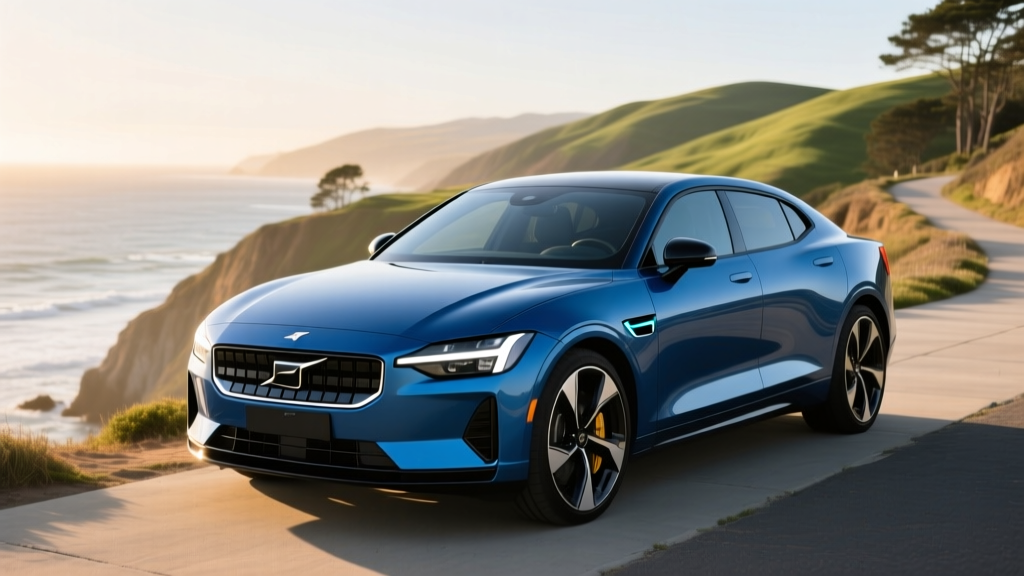
The Polestar 2 occupies a distinct niche in the premium electric sedan segment: Scandinavian minimalism, Google-native infotainment, and a chassis tuned with more driver engagement than most luxury crossovers offer. For 2026, the lineup has stabilized around three core configurations after Polestar's 2024 refresh introduced the Long Range Single Motor (RWD), Long Range Dual Motor (AWD), and the performance-oriented BST Edition. If you're sitting in the online configurator right now, the choices — battery size, drivetrain, Plus and Pilot packs, the Performance Pack — can shift the price by nearly $15,000 and alter real-world range by 50+ miles.
This guide walks through every major decision point when you configure Polestar 2 for the 2026 model year, with exact EPA data, charging benchmarks, and a clear-eyed look at federal tax credit eligibility under current IRS §30D rules.
2026 Polestar 2 Trim Lineup and Core Specs
| Specification | Long Range Single Motor | Long Range Dual Motor | BST Edition 270 |
|---|---|---|---|
| Drivetrain | RWD | AWD (Dual Motor) | AWD (Dual Motor) |
| Horsepower | 299 hp | 421 hp | 476 hp |
| Torque | 361 lb-ft | 546 lb-ft | 546 lb-ft |
| 0–60 mph | 5.9 sec | 4.3 sec | 4.1 sec |
| Usable Battery | 79 kWh (NMC) | 79 kWh (NMC) | 79 kWh (NMC) |
| EPA Range | 320 mi | 276 mi | 262 mi |
| EPA Efficiency | 114 MPGe (29 kWh/100mi) | 100 MPGe (34 kWh/100mi) | 93 MPGe (36 kWh/100mi) |
| Base MSRP | $54,950 | $57,950 | $64,900 |
| Battery Warranty | 8 yr / 100,000 mi | 8 yr / 100,000 mi | 8 yr / 100,000 mi |
All three trims share the same 79 kWh usable lithium-ion pack with NMC (nickel manganese cobalt) chemistry. Polestar does not currently offer an LFP option in the 2 — the energy density of NMC is necessary to hit the 300+ mile targets in a sedan form factor. The 8-year/100,000-mile battery warranty guarantees capacity retention above 70%, consistent with the European luxury-brand standard.
Real-World Range: What to Actually Expect
EPA sticker: 320 mi (Single Motor) / 276 mi (Dual Motor) / 262 mi (BST)
Highway-heavy driving (70–80 mph): Expect 255–280 mi from the Single Motor and 220–245 mi from the Dual Motor. The Polestar 2's fastback shape helps aerodynamics, but the 4,680-lb curb weight works against it at sustained speed.
Cold weather (below 32°F): Plan for 20–30% range reduction. A Single Motor rated at 320 mi EPA could deliver 225–255 mi in freezing temps, especially on short trips where the heat pump can't fully leverage battery preconditioning.
City/commuter driving: This is where the Polestar 2 thrives — regenerative braking and lower speeds can push the Single Motor past its EPA rating to 330+ mi in mild weather.
Charging Speed: DC Fast Charge and Home Level 2
Charging speed is where the Polestar 2 delivers solidly but not spectacularly. The 82 kWh gross / 79 kWh usable NMC pack supports a peak DC fast-charge rate of 205 kW. In practice, the charge curve holds strong through 40% SoC, then tapers progressively — as all NMC packs do to protect longevity.
| Charging Level | Power / Rate | Time or Miles Added |
|---|---|---|
| Level 1 (120V household) | ~1.4 kW | ~4–5 mi/hr (38+ hrs for full charge) |
| Level 2 (240V, 48A home) | 11 kW | ~32 mi/hr (~7.5 hrs 10–100%) |
| Level 2 (240V, 32A) | 7.7 kW | ~22 mi/hr (~10.5 hrs 10–100%) |
| DC Fast Charge (peak) | 205 kW | 10–80% in ~28 min |
| DC Fast Charge (avg 10–80%) | ~145 kW sustained | 10–80% in ~28 min; 80–100% adds ~22 min |
Charging-curve reality check: You'll see 205 kW only briefly between roughly 15–35% SoC under ideal thermal conditions. The sustained average from 10–80% is closer to 145 kW, yielding the ~28-minute time. Above 80%, the curve drops sharply — if you're road-tripping, plan your stops around the 10–80% window and don't linger to top off unless you need the last 20% for destination arrival.
The 11 kW onboard AC charger is a genuine advantage over competitors still using 7.7 kW or 9.6 kW units. If your home charger and electrical panel support a 48A / 60A circuit, you'll recover the full battery overnight in about 7.5 hours — meaning even a low-SoC evening still gives you a full charge by morning. Per Polestar's official specifications, preconditioning activates automatically when a charging stop is set in the Google Maps navigation, warming the battery to optimize DC charge acceptance.
Pricing, Packages, and Federal Tax Credit Eligibility
When you configure Polestar 2, the base price is only the starting point. Polestar structures options around two main packages plus a standalone Performance Pack:
- Plus Pack ($4,000): Panoramic glass roof, Harman Kardon premium audio, heated rear seats, heated steering wheel, wireless phone charging, 360° camera.
- Pilot Pack ($3,500): Pilot Assist (Level 2 adaptive cruise + lane centering), Pixel LED headlights with cornering, LED front fog lights, Driver Awareness Package (blind-spot assist, rear collision warning, cross-traffic alert with brake).
- Performance Pack ($5,500, Dual Motor only): Öhlins dual-flow dampers, Brembo 4-piston front calipers, gold seatbelts, 20" forged alloy wheels. Increases power to 476 hp on the BST (already standard there).
| Configuration | MSRP | Est. Federal Credit | Effective Price |
|---|---|---|---|
| LR Single Motor (base) | $54,950 | $0 (MSRP cap) | $54,950 |
| LR Single Motor + Plus + Pilot | $62,450 | $0 (MSRP cap) | $62,450 |
| LR Dual Motor (base) | $57,950 | $0 (MSRP cap) | $57,950 |
| LR Dual Motor + Perf. Pack + Plus | $71,450 | $0 (MSRP cap) | $71,450 |
| BST Edition 270 | $64,900 | $0 (MSRP cap) | $64,900 |
Federal Tax Credit: The MSRP Cap Problem
Under current IRS §30D rules, new clean vehicles must meet an MSRP cap to qualify: $55,000 for sedans, $80,000 for SUVs/trucks/vans. The Polestar 2 is classified as a sedan, which means:
- The base Long Range Single Motor at $54,950 technically sits just under the $55,000 sedan cap — but adding any package or paid color pushes MSRP above the limit and eliminates eligibility.
- The Dual Motor ($57,950) and BST Edition ($64,900) exceed the cap in every configuration.
- Even if MSRP qualifies, the buyer must meet income caps ($150K single / $300K joint AGI) and the vehicle must satisfy critical minerals and battery component sourcing thresholds that change annually.
Bottom line: Most Polestar 2 buyers will not receive the $7,500 federal credit. Consult a tax professional and verify current-year sourcing requirements on the IRS page before counting on it. State-level incentives (California, Colorado, New York, and others) may still apply — check your state's energy office.
Interior, Cargo, and Daily Livability
The Polestar 2 cabin is one of its strongest selling points and its biggest limitation simultaneously. The vegan textile (or optional Nappa leather) interior, 11.2-inch portrait touchscreen running Android Automotive OS, and 12.3-inch driver display are executed with genuine craft. Google Maps, Google Assistant, and the Google Play store are natively embedded — no phone projection required, though wireless Apple CarPlay is available.
Cargo space: 14.4 cu ft behind the rear seats (liftback design makes loading easier than a traditional trunk), plus a 1.4 cu ft front trunk (frunk). With rear seats folded, you get approximately 38.7 cu ft. This is competitive with the Tesla Model 3's trunk but smaller overall than hatchback rivals like the Hyundai Ioniq 6 or the BMW i4 Gran Coupe.
Passenger space: Front legroom is generous at 42.2 inches. Rear legroom measures 33.9 inches — adequate for adults under 6 feet on shorter trips but tighter than a Model 3 (35.3 in) and noticeably snug for long highway stretches. The high floor (battery pack underneath) creates a somewhat knees-up seating position in back. The center tunnel hump also makes the middle rear seat impractical for anyone but a child.
Standout tech: The Android Automotive OS integration is the best in the industry — Google Maps with live charging routing, over-the-air updates, and voice control that actually works. The optional 360° camera and Pixel LED headlights (with matrix high-beam dimming) are genuinely useful daily features.
Driving Dynamics and Performance
The Long Range Single Motor's 299 hp and 5.9-second 0–60 time are more than adequate for merging and passing. The RWD layout gives the 2 a more natural steering feel than many AWD-heavy EV competitors. Ride quality on the standard suspension is firm but controlled — this is a driver's sedan, not a luxury barge.
The Dual Motor's 421 hp and 4.3-second sprint are brisk, but the real transformation comes with the Performance Pack's Öhlins dampers. The 22-way adjustable coilovers (manually adjusted, not electronic) let you dial from compliant grand-touring to track-day stiffness. The trade-off is that the lowest settings transmit more road imperfection than most buyers in this price range want on daily commutes.
The BST Edition 270 adds the Öhlins, Brembos, and 20-inch wheels as standard. The 476 hp output and 4.1-second 0–60 time make it the quickest 2, but the 20-inch wheels and lower-profile tires reduce range (262 mi EPA vs. 276 mi for the standard Dual Motor) and increase road noise noticeably above 65 mph.
Driver Assistance: Pilot Assist and SAE Level 2
SAE Level 2 — Driver Supervision Required. Polestar's Pilot Assist combines adaptive cruise control with lane-centering steering. It is a Level 2 driver-assistance system, meaning the driver must keep hands on the wheel and eyes on the road at all times. This is not autonomous or "self-driving" capability.
Pilot Assist works well on divided highways with clear lane markings. It handles stop-and-go traffic smoothly and maintains following distance competently. Limitations include:
- No automated lane changes (you must initiate every lane change manually)
- Lane centering can hunt on faded or construction-zone markings
- No hands-free mode comparable to GM's Super Cruise or Ford's BlueCruise on mapped highways
- Requires periodic steering-wheel torque input to confirm engagement
The Pilot Pack's Driver Awareness suite adds blind-spot information system (BLIS) with steering assist, rear collision mitigation, and cross-traffic alert with automatic braking — all worthwhile for a $3,500 package.
How the Polestar 2 Stacks Up Against Key Competitors
| Attribute | Polestar 2 LR SM | Tesla Model 3 LR | BMW i4 eDrive40 | Hyundai Ioniq 6 SEL |
|---|---|---|---|---|
| EPA Range | 320 mi | 341 mi | 301 mi | 361 mi |
| Peak DC Charge | 205 kW | 250 kW | 205 kW | 240 kW |
| 10–80% DC Time | ~28 min | ~25 min | ~31 min | ~18 min |
| Base MSRP | $54,950 | $47,740 | $57,900 | $42,450 |
| 0–60 mph | 5.9 sec | 5.8 sec | 5.5 sec | 5.1 sec |
| Federal Credit | Limited (MSRP cap) | Eligible (varies) | Not eligible (MSRP cap) | Eligible (varies) |
The Model 3 wins on range, charging speed, price, and Supercharger network access. The Ioniq 6 offers the longest range and fastest charging at a significantly lower price, though its interior materials and brand cachet don't match Polestar's. The BMW i4 is the closest rival in build quality and driving refinement but costs more and charges slightly slower.
The Polestar 2's advantages are interior design execution, the Android Automotive OS ecosystem, and chassis dynamics that feel more engaging than the Model 3 or Ioniq 6. Its disadvantages are rear-seat space, charging speed that trails the segment leaders, and pricing that leaves it outside federal credit eligibility for most configurations.
Pros, Cons, and Who Should Buy
Pros
- Best-in-class Android Automotive OS with native Google Maps charging routing
- Premium interior materials and Scandinavian design at a sub-$60K starting point
- 11 kW AC onboard charger enables fast home Level 2 recovery
- Engaging RWD chassis dynamics (Single Motor); Öhlins option (Performance Pack) is track-capable
- Standard heat pump for cold-climate efficiency
- Liftback cargo design more practical than traditional sedan trunks
Cons
- Rear legroom (33.9 in) is tight for adults on longer trips
- DC fast-charging at 205 kW trails Hyundai/Kia E-GMP (240 kW) and Tesla (250 kW)
- Most configurations exceed the $55,000 sedan MSRP cap for the federal tax credit
- No hands-free highway driving mode (Pilot Assist requires hands-on-wheel)
- Cargo volume (14.4 cu ft) smaller than hatchback rivals
- Performance Pack Öhlins dampers require manual adjustment — not adaptive
Who Should Configure the Polestar 2?
Choose the Long Range Single Motor if: You prioritize maximum range (320 mi EPA), commute 40–80 miles daily, and want the quietest, most efficient configuration. This is the volume seller for good reason.
Choose the Long Range Dual Motor if: You need AWD for snow-belt winters, want the 4.3-second 0–60 punch, and can accept 44 fewer miles of range. The Performance Pack is worth it only for enthusiasts who'll actually adjust the Öhlins dampers.
Choose the BST Edition 270 if: You want the full performance package standard, accept 262 mi of range, and value exclusivity. Know that 20-inch wheels increase tire replacement costs significantly ($300–$450 per tire).
Look elsewhere if: You regularly carry rear-seat adults (BMW i4 or Tesla Model 3 are roomier), need the longest possible range at the lowest price (Hyundai Ioniq 6), or depend on the $7,500 federal credit to make the math work.
Frequently Asked Questions
What is the real-world range of the Polestar 2?
The EPA rates the Long Range Single Motor at 320 miles, the Dual Motor at 276 miles, and the BST Edition at 262 miles. In real-world highway driving at 70–80 mph, expect roughly 255–280 miles from the Single Motor and 220–245 from the Dual Motor. Cold weather (below 32°F) can reduce range by 20–30% on short trips. City driving with regenerative braking can exceed the EPA estimate in mild conditions.
How fast does the Polestar 2 charge at home and on the road?
On a DC fast charger, the Polestar 2 peaks at 205 kW and charges from 10–80% in approximately 28 minutes, with a sustained average around 145 kW. At home on a 48A Level 2 charger (11 kW), it recovers about 32 miles of range per hour and charges fully in roughly 7.5 hours. On a standard 120V outlet (Level 1), expect only 4–5 miles per hour — practical only for overnight top-ups.
Does the Polestar 2 qualify for the federal EV tax credit?
It depends on configuration and buyer eligibility. Under IRS §30D, sedans face a $55,000 MSRP cap. The base Long Range Single Motor at $54,950 technically qualifies, but adding any option package or premium color pushes MSRP over the cap and eliminates the credit. The Dual Motor and BST Edition are above the cap in all configurations. Even at qualifying MSRP, the buyer must meet income limits ($150K single / $300K joint) and the vehicle must satisfy evolving critical-mineral and battery-component sourcing rules. Always verify on the IRS clean vehicle credits page and consult a tax professional before purchase.
Is the Polestar 2 worth buying vs. the Tesla Model 3 or BMW i4?
The Polestar 2 is worth it if you value interior design quality, Android Automotive OS, and chassis engagement over maximum range or lowest price. The Tesla Model 3 Long Range offers more range (341 mi), faster DC charging (250 kW), Supercharger network access, and a lower base price — but its interior materials and ride quality don't match the Polestar. The BMW i4 eDrive40 is the closest rival in refinement and driving dynamics, but it costs more and offers 19 fewer miles of EPA range. If the $7,500 federal credit matters to your budget, the Model 3 or Hyundai Ioniq 6 will likely qualify where the Polestar 2 won't.
What are the biggest drawbacks of the Polestar 2?
The three most common owner complaints are: (1) rear-seat legroom is tight for adults over 6 feet on trips longer than an hour; (2) DC fast-charging speed at 205 kW is adequate but trails the 240–250 kW leaders, adding 5–10 minutes to road-trip stops; and (3) the federal tax credit is unavailable on most configurations due to the $55,000 sedan MSRP cap. Additionally, Pilot Assist lacks a hands-free mode, which some buyers now expect at this price point.
Does the Polestar 2 have a heat pump?
Yes. All 2026 Polestar 2 models include a standard heat pump for cabin heating and battery thermal management. This improves cold-weather efficiency by 10–15% compared to resistive heating, reducing the winter range penalty. Preconditioning via the Polestar app or scheduled departure times further optimizes cold-weather range and charge acceptance.