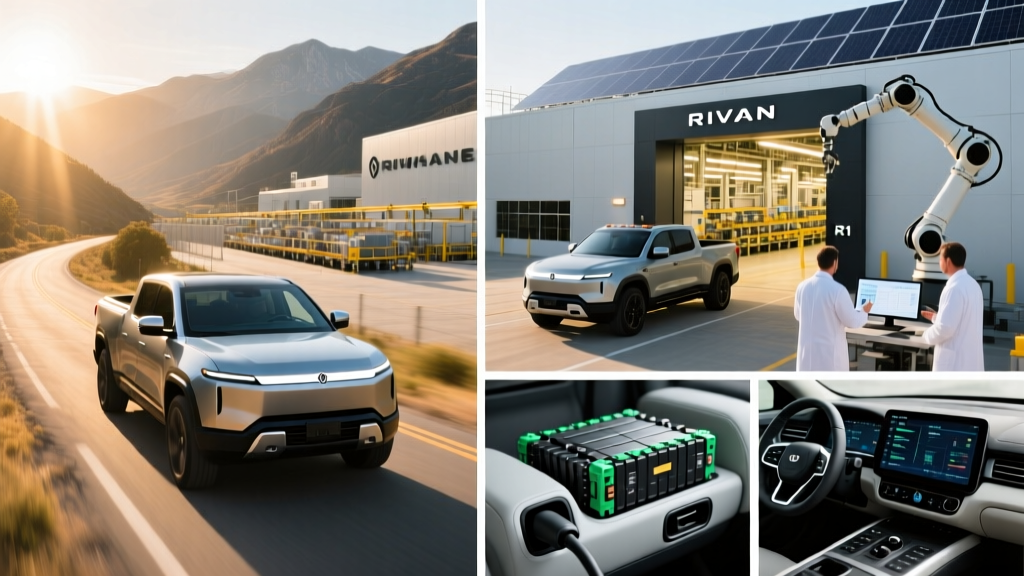
The 2025 Rivian R1S arrives with a substantial generational refresh—dubbed internally as Gen 2—bringing a new tri-motor powertrain, an updated electrical architecture, and a rethought cabin that directly addresses the most common complaints from early R1S adopters. For families cross-shopping the Tesla Model X, BMW iX, and Mercedes EQS SUV, the R1S now makes a more compelling case than ever, particularly when you factor in its off-road capability and three-row seating. This review focuses on the 2025 Rivian R1S interior, powertrain updates, charging behavior, and whether the math still works after federal tax credits.
2025 Rivian R1S Interior: Materials, Space, and Tech Upgrades
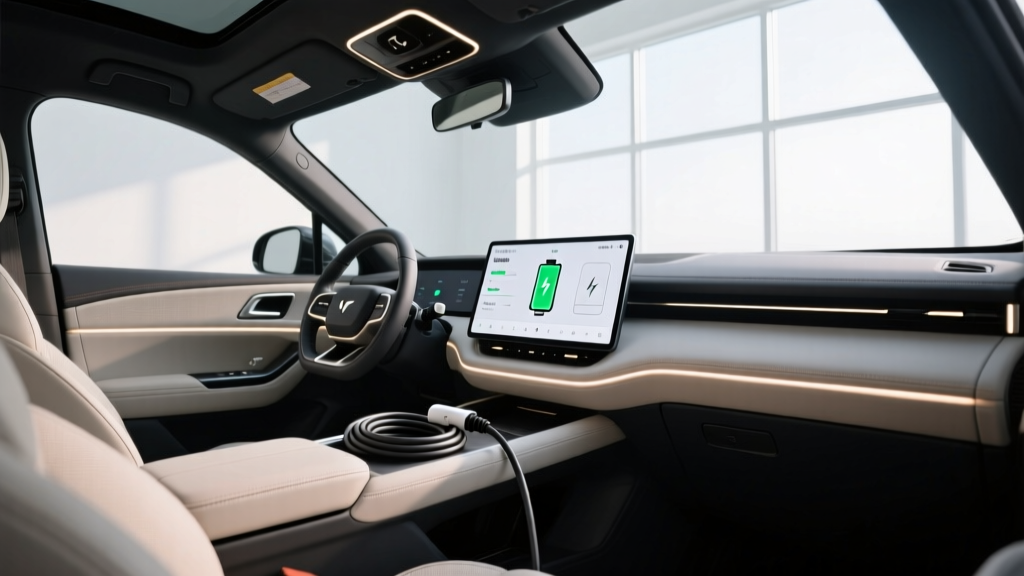
Rivian overhauled the R1S cabin for 2025 with higher-grade materials, improved sound insulation, and a redesigned center console. The dashboard now features a 15.6-inch center touchscreen running Rivian's latest software stack, paired with a 12.3-inch digital instrument cluster. The steering wheel is heated and wrapped in vegan leather as standard, with genuine leather available on the Premium and Adventure trims.
Material quality sees a noticeable step up: soft-touch surfaces replace the hard plastics that drew criticism in 2022–2024 models. The wood trim options include Ash, Walnut, and a new driftwood-inspired finish on the Ascend package. Ambient lighting is now configurable across 12 zones.
Passenger and Cargo Dimensions
The R1S remains one of the few electric SUVs offering genuine three-row seating. Here is how the space breaks down:
| Measurement | Specification |
|---|---|
| Front headroom | 41.0 in |
| Front legroom | 41.3 in |
| Second-row legroom | 38.4 in |
| Third-row legroom | 30.4 in |
| Cargo (behind 3rd row) | 10.6 cu ft |
| Cargo (3rd row folded) | 46.7 cu ft |
| Cargo (2nd & 3rd folded) | 83.5 cu ft |
| Front trunk (frunk) | 11.1 cu ft |
The third row is best suited for children or short trips—adults over 5'8" will find the 30.4 inches of legroom tight on longer drives. That said, it compares favorably to the Tesla Model X's third row and offers more usable space than the Mercedes EQS SUV's cramped rearmost seats. The 11.1-cubic-foot frunk is large enough for a charging cable bag and a small cooler, adding practical cargo flexibility.
Infotainment runs on Rivian's proprietary OS with native navigation, streaming apps, and over-the-air updates. Wireless Apple CarPlay and Android Auto are standard. The 18-speaker Rivian Elevation Audio system (standard on Premium and above) delivers excellent clarity, though the system lacks a traditional AM radio tuner—a choice Rivian made to reduce electromagnetic interference with the drive motors.
Powertrain, Performance, and Efficiency
The 2025 R1S is offered in three powertrain configurations:
| Configuration | Horsepower | Torque (lb-ft) | 0–60 mph | Drivetrain |
|---|---|---|---|---|
| Dual-Motor AWD | 533 hp | 610 | 4.5 sec | AWD |
| Performance Dual-Motor | 665 hp | 829 | 3.4 sec | AWD |
| Tri-Motor AWD | 850 hp | 1,103 | 2.9 sec | AWD |
The tri-motor variant, new for the Gen 2 platform, places one motor on the front axle and two on the rear, enabling torque vectoring across the rear wheels. This setup provides both blistering acceleration and improved handling on winding roads. The dual-motor variants use one motor per axle with a mechanical disconnect on the front motor to improve efficiency during light-load cruising.
Real-World Range Expectations
EPA Estimated Range:
- Dual-Motor (Standard Battery, 92 kWh): 270 miles
- Dual-Motor (Max Battery, 141 kWh): 352 miles
- Tri-Motor (Max Battery, 141 kWh): 410 miles (with Max Pack)
Real-World Adjustments: Expect 240–260 miles on the Standard pack during mixed highway driving at 70–75 mph. The Max Pack Tri-Motor delivers roughly 340–370 miles in moderate temperatures on the highway. In cold weather (below 32°F), plan for a 20–30% range reduction across all configurations due to battery resistance and cabin heating demands. Rivian's heat pump, standard on all 2025 models, partially mitigates this loss compared to resistive heating systems.
Efficiency ratings vary by configuration. The Dual-Motor Standard achieves approximately 73 MPGe combined (roughly 46 kWh/100 mi), while the Tri-Motor Max Pack drops to around 65 MPGe combined (51 kWh/100 mi) owing to its higher mass and additional motor. These figures are competitive with the BMW iX xDrive50 (79 MPGe) but trail the more aerodynamically optimized Tesla Model X Long Range (102 MPGe).
Battery Chemistry, Capacity, and Longevity
Rivian uses two battery packs for the 2025 R1S:
- Standard Pack: ~92 kWh usable capacity, NMC (nickel manganese cobalt) chemistry, supplied by Samsung SDI
- Max Pack: ~141 kWh usable capacity, NMC chemistry, higher energy-density cells
Rivian has not adopted LFP (lithium iron phosphate) chemistry for the R1S, likely due to the energy-density requirements of a heavy, three-row SUV. NMC cells offer better range per kilogram but are more sensitive to sustained high-state-of-charge storage. Rivian recommends daily charging to 80–85% for routine use and reserving 100% charges for road trips.
The battery warranty covers 8 years or 175,000 miles, whichever comes first, with a capacity retention threshold of 70%. This is more generous on mileage than the industry-standard 100,000-mile coverage offered by most competitors, though the 70% threshold is typical. Real-world degradation data from early R1S owners (2022–2024 models) suggests approximately 5–8% capacity loss over the first 60,000 miles, which is in line with NMC pack behavior across the industry.
Charging Speed: DC Fast Charging and Home Level 2
The Gen 2 R1S features a significantly upgraded charging architecture with a maximum DC fast-charge rate of up to 220 kW (Max Pack) and 200 kW (Standard Pack). This is a meaningful improvement over the Gen 1 R1S, which peaked around 200 kW but sustained lower rates.
| Charging Method | Power / Rate | Time / Miles Added |
|---|---|---|
| DC Fast Charge (Max Pack) | Peak 220 kW | 10–80% in ~27 minutes |
| DC Fast Charge (Standard) | Peak 200 kW | 10–80% in ~25 minutes |
| Level 2 Home (48A / 11.5 kW) | 11.5 kW | ~25 miles of range per hour |
| Level 2 Home (32A / 7.7 kW) | 7.7 kW | ~17 miles of range per hour |
| Level 1 (120V / 12A) | ~1.4 kW | ~3 miles of range per hour |
Charging curve reality: The 220 kW peak on the Max Pack is sustained roughly between 10% and 35% state of charge. From 35–60%, the rate tapers to approximately 150–170 kW, and above 80% it drops below 50 kW to protect cell longevity. This means a 10–80% session takes roughly 27 minutes at a capable 350 kW charger, but a 10–90% session stretches past 40 minutes. For road-trip planning, target 10–80% stops to minimize time at the charger.
The R1S ships with a NACS (North American Charging Standard) port for 2025, giving native access to Tesla Supercharger stalls (now open to non-Tesla vehicles). A CCS adapter is included for compatibility with Electrify America, EVgo, and other CCS networks. This dual-network access is a significant practical advantage for road-trippers.
For home charging, Rivian offers the Rivian Wall Connector at 48 amps (11.5 kW on a 60-amp circuit), which adds roughly 25 miles of range per hour—enough to fully replenish the Standard Pack overnight and bring the Max Pack from 20% to 100% in about 12 hours. Installation costs typically range from $800 to $2,500 depending on panel capacity and conduit run length; homes with 200-amp panels usually accommodate the circuit without a panel upgrade.
Pricing, Trims, and Federal Tax Credit Eligibility
| Trim | Powertrain | Battery | Base MSRP |
|---|---|---|---|
| Adventure (Dual-Motor) | Dual-Motor AWD | Standard (92 kWh) | $79,900 |
| Adventure (Dual-Motor Max) | Dual-Motor AWD | Max (141 kWh) | $89,900 |
| Adventure (Tri-Motor Max) | Tri-Motor AWD | Max (141 kWh) | $99,900 |
| Ascend (Tri-Motor Max) | Tri-Motor AWD | Max (141 kWh) | $109,900 |
Destination fees add approximately $1,800. Popular options include the Camp Kitchen ($5,200), the Gear Tunnel ($3,000 on R1T, not applicable to R1S), and premium paint colors ($1,500–$2,500). A well-equipped Dual-Motor Adventure with the Max Pack typically lands around $95,000–$98,000 before incentives.
Federal Tax Credit (§30D) Eligibility
Does the 2025 Rivian R1S qualify for the $7,500 federal EV tax credit? It depends on your income, the vehicle's MSRP, and battery sourcing. Here are the key IRS rules for 2025:
- MSRP Cap: SUVs must have a base MSRP at or below $80,000. This means the Dual-Motor Adventure with the Standard Pack ($79,900) qualifies, but Max Pack and Tri-Motor variants exceed the cap and are ineligible for the new-vehicle credit.
- Buyer Income Cap: Modified adjusted gross income must not exceed $300,000 (joint filers), $225,000 (head of household), or $150,000 (single filers).
- Battery Sourcing: The full $7,500 requires meeting both critical-minerals and battery-component sourcing thresholds set by the IRS. Rivian has worked to qualify, but the exact credit amount (full $7,500 vs. partial $3,750) depends on current-year sourcing compliance. Verify at IRS.gov §30D page before purchasing.
- Point-of-Sale Transfer: Eligible buyers can transfer the credit to the dealer at purchase, reducing the out-of-pocket cost immediately rather than waiting for a tax refund.
Bottom line: Only the base Dual-Motor Standard Pack Adventure at $79,900 is eligible for the federal credit, and only if your income falls below the caps and battery sourcing requirements are met. If you qualify, the effective price drops to roughly $72,400. For higher trims, no federal new-vehicle credit is available, though some states offer additional rebates—check your state's energy office for specifics.
Driver Assistance and Safety Technology
The 2025 R1S comes standard with Rivian's Driver+ system, which includes adaptive cruise control, lane-centering assist, automatic emergency braking, blind-spot monitoring, and rear cross-traffic alert. Driver+ is an SAE Level 2 system, meaning the driver must remain fully engaged with hands on the wheel and eyes on the road at all times.
Important: Rivian Driver+ is not a self-driving system. It does not handle stoplights, construction zones, or complex urban intersections autonomously. The driver is legally and operationally responsible for the vehicle at all times. Competitors like GM's Super Cruise and Ford's BlueCruise offer hands-free operation on pre-mapped highways, which Rivian does not yet match.
Rivian has announced plans for an enhanced "Driver+ with Hands-Free" feature via over-the-air update, but as of the 2025 model year, hands-on-wheel operation is required. The system performs competently on highways but can be overly conservative with lane-change decisions and braking in merging traffic.
Safety ratings from the NHTSA and IIHS are pending for the refreshed 2025 model at publication time. The prior-generation R1S earned the IIHS Top Safety Pick+ designation, and Rivian has added additional airbags and improved crumple-zone engineering for Gen 2.
Warranty Coverage and Ownership Costs
| Coverage | Term |
|---|---|
| Battery Pack | 8 years / 175,000 miles (70% capacity retention) |
| Powertrain (motors, reducers) | 8 years / 175,000 miles |
| Bumper-to-Bumper | 5 years / 60,000 miles |
| Corrosion Perforation | 12 years / unlimited miles |
| Roadside Assistance | 5 years / 60,000 miles |
Rivian's 175,000-mile battery and powertrain warranty is among the most generous in the segment, exceeding Tesla's 120,000-mile coverage and matching or surpassing most legacy automakers. The 5-year/60,000-mile bumper-to-bumper is average.
Estimated annual insurance costs for the R1S run $2,400–$3,600 depending on trim, location, and driving record—higher than comparable gas SUVs due to repair costs and vehicle value. Maintenance costs are low: no oil changes, no transmission fluid, and regenerative braking extends pad life significantly. Expect cabin air filter replacements ($80–$120) and tire rotations as the primary service items. Rivian offers mobile service for many repairs, though body-shop turnaround times remain a pain point reported by some owners.
Pros, Cons, and Verdict
Pros
- Genuine three-row seating with usable cargo space and an 11.1 cu ft frunk
- Tri-Motor variant delivers 850 hp and a 2.9-second 0–60 time—supercar acceleration in a family SUV
- Up to 410 miles EPA range (Tri-Motor Max Pack) with real-world highway range near 350+ miles
- NACS native charging plus CCS adapter for maximum network flexibility
- Best-in-class 175,000-mile battery warranty
- Class-leading off-road capability (8.9 inches ground clearance, wading to 39 inches)
- Over-the-air updates continue to improve the vehicle post-purchase
Cons
- Only the base $79,900 trim qualifies for the $7,500 federal tax credit
- Third-row legroom (30.4 in) is tight for adults on longer trips
- Driver+ requires hands-on-wheel; no hands-free highway driving like Super Cruise
- Insurance premiums run 20–40% higher than comparable ICE SUVs
- Service center availability still limited in rural areas
- Tri-Motor efficiency (65 MPGe) trails more aerodynamic competitors on highway
Who Should Buy the 2025 Rivian R1S?
Buy it if: You need three rows, plan to tow (7,700 lb capacity on Dual-Motor), enjoy off-road weekends, and want a single vehicle that handles school runs, road trips, and trailheads without compromise. The Max Pack variants are ideal for frequent road-trippers who need 350+ real-world highway miles.
Look elsewhere if: You primarily commute solo and don't need the third row (the BMW iX or Tesla Model Y offer better efficiency at lower prices), you want hands-free highway driving (GM Super Cruise vehicles), or your budget caps below $75,000 after incentives.
Frequently Asked Questions
What is the real-world range of the 2025 Rivian R1S?
For the Max Pack Tri-Motor, expect 340–370 miles on the highway in moderate temperatures. The Standard Pack Dual-Motor delivers roughly 240–260 miles in mixed driving. Cold weather (below 32°F) reduces range by 20–30% across all trims.
How fast does the 2025 R1S charge?
The Max Pack peaks at 220 kW DC fast charging, achieving a 10–80% charge in approximately 27 minutes at a 350 kW-capable station. At home on a 48-amp Level 2 charger, expect roughly 25 miles of range added per hour.
How much does the R1S cost after tax credits?
The base Dual-Motor Adventure at $79,900 qualifies for up to $7,500 in federal tax credits (subject to income caps and battery-sourcing rules), bringing the effective price to ~$72,400. Higher trims exceed the $80,000 SUV MSRP cap and do not qualify for the new-vehicle federal credit.
Is the 2025 R1S worth buying vs. the Tesla Model X or BMW iX?
The R1S wins on off-road capability, three-row practicality, and warranty coverage. The Model X offers better efficiency (102 MPGe), faster Supercharger access (though Rivian now has NACS), and a more mature hands-free driving roadmap. The BMW iX is more refined on-road and more efficient but offers only two rows. Your choice depends on whether you need the third row and off-road ability.
Does the 2025 Rivian R1S qualify for the federal EV tax credit?
Only the base Dual-Motor Adventure with the Standard Pack ($79,900 MSRP) is potentially eligible. You must also meet IRS income limits ($300K joint, $150K single) and the vehicle must satisfy battery critical-minerals and component sourcing requirements. Confirm current eligibility at IRS.gov before purchasing.
Can the R1S tow, and does towing affect range?
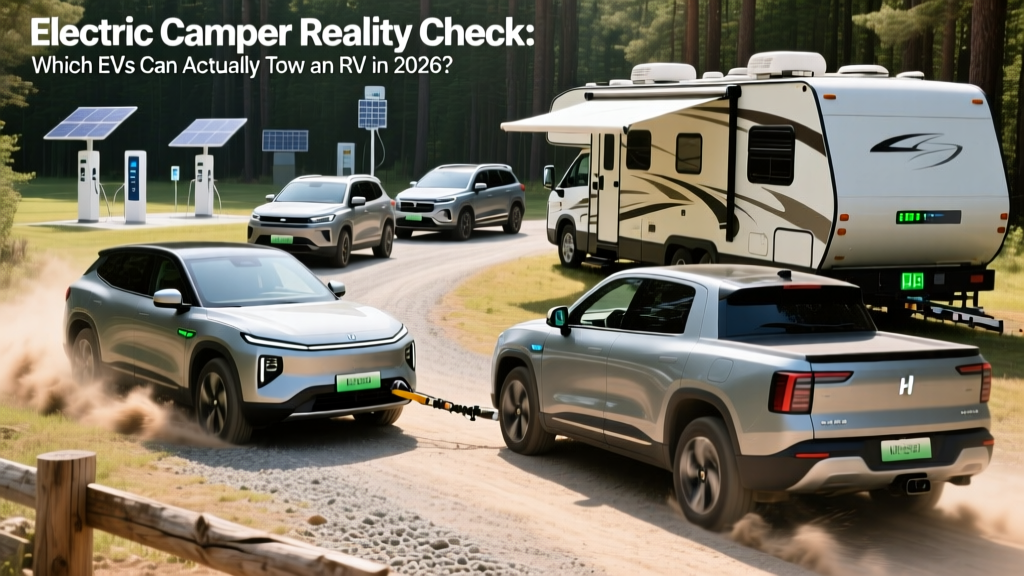
Yes. The Dual-Motor R1S is rated to tow up to 7,700 pounds. When towing a 5,000-pound trailer at highway speeds, expect range to drop by 40–50%—plan for charging stops every 150–180 miles with the Max Pack.
What connector does the 2025 R1S use?
The 2025 R1S ships with a native NACS (Tesla-style) charge port. A CCS1 adapter is included in the vehicle for use with Electrify America, EVgo, and other CCS-equipped public chargers.