2025 Ram 2500 Bolt Pattern: The Critical Spec Every Owner Should Know
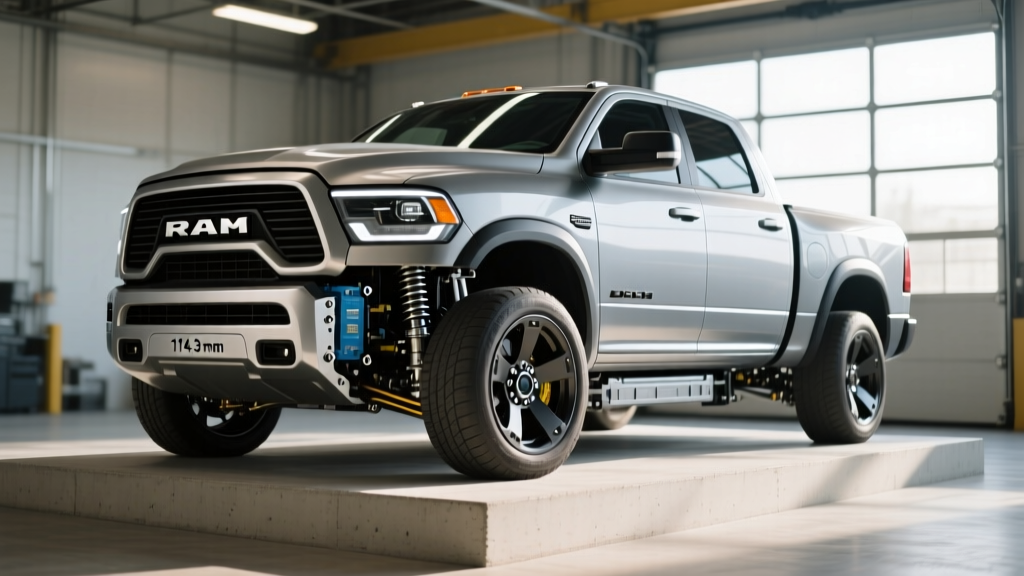
The 2025 Ram 2500 bolt pattern is 8x165.1mm (8x6.5 inches), an eight-lug configuration shared across Ram's heavy-duty truck lineup. While this specification matters to anyone swapping wheels, upgrading tires, or maintaining fleet vehicles, it carries added significance as Ram prepares its transition to electrified heavy-duty trucks. Understanding the bolt pattern, center bore, and lug specifications helps current owners plan wheel upgrades today and positions you to understand compatibility as the Ram 2500 EV eventually reaches production.
At AutoEdgeView, we cover electrified vehicles and the infrastructure surrounding them. The 2025 Ram 2500 is a conventional diesel/gas heavy-duty truck — not an EV — but its mechanical specifications matter to the growing community of EV conversion builders and to buyers waiting for Stellantis to deliver an electric heavy-duty Ram. This guide covers the bolt pattern in detail, explores EV conversion implications, and examines where the Ram 2500 EV stands as of early 2026.
Exact Bolt Pattern, Center Bore, and Lug Specifications
The 2025 Ram 2500 uses the following wheel-mounting specifications across all trims (Tradesman, Big Horn, Laramie, Power Wagon, Limited):
| Specification | Value |
|---|---|
| Bolt Pattern | 8x165.1mm (8x6.5") |
| Number of Lugs | 8 |
| Center Bore | 121.3mm (4.77") |
| Lug Thread Size | M14 x 1.5 |
| Lug Torque Spec | 130 lb-ft (176 Nm) |
| Typical Wheel Offset | +19mm to +28mm (varies by wheel) |
| Stock Wheel Sizes | 17", 18", 20" depending on trim |
The 8-lug pattern exists because the Ram 2500 is rated for heavy payloads and towing — up to 20,000 lbs with the proper configuration, per Ram's official towing guide. Eight lugs distribute clamping force across a wider hub area compared to the 6-lug patterns found on half-ton trucks like the Ram 1500.
Why Bolt Pattern Matters for EV Conversions
A growing niche of builders is converting heavy-duty trucks to electric powertrains using salvaged Tesla, Rivian, or commercial EV drivetrains. If you're planning an EV conversion on a Ram 2500 chassis, the bolt pattern directly affects which hubs, adapters, and wheels you can use.
Hub and Adapter Compatibility
Most EV motors and reduction gearboxes don't bolt directly to a Ram 2500's Dana 60 or AAM 11.5 rear axle. Conversion shops typically fabricate adapter plates or swap the entire axle assembly. When retaining the stock axle, the 8x165.1mm pattern must be preserved, meaning any aftermarket wheel must match or you need hub-centric adapters machined to 121.3mm center bore.
Weight Considerations
EV conversions add significant weight from battery packs — often 1,500 to 3,000 lbs of cells alone. The 8-lug pattern and 121.3mm center bore were engineered for heavy loads, making the Ram 2500 chassis a reasonable candidate for conversion. However, gross axle weight ratings (GAWR) must be re-evaluated after conversion, and wheel load ratings must exceed the new per-corner weight.
Wheel Options for Conversions
Wheels with the 8x165.1mm pattern are widely available in 17" and 18" sizes from manufacturers like Method, Fuel, and American Force. For conversions prioritizing low rolling resistance (to maximize range), look for lighter forged aluminum wheels in the correct pattern. Avoid heavy cast wheels — unsprung weight directly reduces EV efficiency.
The Ram 2500 EV: What We Know for 2026
Stellantis has confirmed an electric Ram heavy-duty truck is in development, but as of early 2026, the Ram 2500 EV has not been officially unveiled with production specs. The lighter Ram 1500 REV (Range Extended Vehicle) was announced for production, and Ram CEO Mike Koval has indicated that heavy-duty electrification follows the half-ton rollout.
Estimated Specifications (Preliminary)
Based on the STLA Frame platform and competitive benchmarks like the Chevrolet Silverado EV and Ford F-150 Lightning, industry analysts estimate a Ram 2500 EV could feature:
- Battery: 150–200 kWh (likely NMC chemistry for energy density in a heavy-duty application)
- Estimated Range: 250–350 miles (unloaded); significantly less when towing
- DC Fast Charging: 350 kW peak capability on 800V architecture
- Drivetrain: Dual-motor AWD standard on HD models
- Towing: Targeted at 15,000+ lbs to remain competitive with diesel 2500 models
Whether the production Ram 2500 EV will retain the 8x165.1mm bolt pattern is unconfirmed. The Ram 1500 REV uses a 6-lug pattern, but heavy-duty models may carry over the 8-lug configuration to maintain parts commonality with diesel variants and support the higher gross vehicle weight rating.
EV Conversion Reality: Range, Charging, and Cost
If you're not waiting for a factory Ram 2500 EV and are instead considering a third-party EV conversion, here's what real-world numbers look like for a heavy-duty truck conversion as of 2026.
Estimated Range: 120–200 miles (varies heavily with battery budget and pack size)
Battery Cost: $20,000–$60,000 for 80–200 kWh of LFP or NMC modules
Full Conversion Cost: $50,000–$120,000+ depending on shop and components
DC Fast Charging: Typically limited to 50–100 kW unless using a Tesla or CCS-compatible inverter
Home Level 2 Charging: 7–19 kW depending on circuit; expect 8–20+ hours for a full charge on a large pack
Range Reality for Heavy-Duty EV Conversions
A Ram 2500's aerodynamic profile (large frontal area, boxy shape) and heavy curb weight work against efficiency. Even with a 150 kWh pack, expect roughly 1.5–2.0 kWh/mile in mixed driving, yielding 75–100 miles of real-world range. Highway driving at 70+ mph pushes consumption to 2.5+ kWh/mile. Cold weather (below 32°F) can reduce range by 20–35% without active battery thermal management — a system most conversion shops don't integrate due to cost and complexity.
Charging Speed Limitations
Most EV conversions use salvaged or aftermarket inverters that cap DC fast charging at 50–75 kW. A 150 kWh pack charging at 60 kW takes roughly 2.5 hours for a 10–90% charge. Home Level 2 charging on a 48-amp circuit (11.5 kW) would take 13+ hours for the same pack. This is the primary practical limitation of heavy-duty EV conversions in 2026 — the trucks are simply too large and energy-hungry for today's typical conversion charging hardware.
Competing Electric Trucks: What's Available Now
If you need an electric truck today and don't want to undertake a conversion, here's how the available options compare to a Ram 2500 in capability:
| Spec | Ram 2500 (Diesel) | Chevy Silverado EV 4WT | Ford F-150 Lightning | Rivian R1T |
|---|---|---|---|---|
| EPA Range | N/A (diesel) | ~390 mi (4WT) | ~320 mi (Ext. Range) | ~352 mi (Max Pack) |
| Max Towing | ~20,000 lbs | ~10,000 lbs | ~10,000 lbs | ~11,000 lbs |
| Payload | ~4,000 lbs | ~1,800 lbs | ~2,235 lbs | ~1,760 lbs |
| Base MSRP | ~$49,000 | ~$78,000 | ~$55,000 | ~$79,900 |
| Truck Class | ¾-ton HD | ½-ton (fleet) | ½-ton | ½-ton |
| §30D Tax Credit | N/A | Up to $7,500 | Up to $7,500 | Up to $7,500 |
The critical takeaway: no production electric truck in 2026 matches the Ram 2500's heavy-duty towing and payload capacity. The Silverado EV and F-150 Lightning are half-ton trucks. If you need genuine ¾-ton capability (15,000+ lb towing, 3,500+ lb payload) and want electric, you're waiting for the Ram 2500 EV, the Chevrolet Silverado EV HD, or a conversion.
Federal Tax Credit Note
Under IRS §30D rules, the up-to-$7,500 federal EV tax credit is subject to MSRP caps ($80,000 for trucks/vans/SUVs), buyer income limits ($150K single / $300K joint MAGI), and critical mineral and battery component sourcing requirements. Eligibility varies by vehicle, battery sourcing, and buyer tax liability. Consult a tax professional and check the fueleconomy.gov credit tracker before purchasing.
Who Should Consider a Ram 2500 EV Conversion vs. Waiting?
- You need a Ram 2500 chassis now for work and want electric drivetrain
- You have a $70,000+ budget and accept 100–150 mile real-world range
- You have access to commercial-grade Level 2 charging (19.2 kW) at your depot
- You're building a show truck or off-grid vehicle where range is secondary
- You need 15,000+ lb towing with adequate range
- You want DC fast charging above 200 kW for highway trips
- You need a full manufacturer warranty and dealer service network
- You want §30D tax credit eligibility without conversion paperwork headaches
Frequently Asked Questions
What is the bolt pattern on a 2025 Ram 2500?
The 2025 Ram 2500 bolt pattern is 8x165.1mm (also written as 8x6.5 inches). It uses 8 lug nuts with M14 x 1.5 threads, a 121.3mm center bore, and a lug torque specification of 130 lb-ft.
Will the Ram 2500 EV have the same bolt pattern?
Stellantis has not confirmed the Ram 2500 EV's wheel specifications. The current diesel Ram 2500 uses 8x165.1mm. The electric version may retain this pattern for parts commonality and load rating, or it could adopt a different configuration depending on the axle and hub design chosen for the STLA Frame platform.
Can I put Ram 1500 wheels on a Ram 2500?
No. The Ram 1500 uses a 6-lug pattern (6x139.7mm), which is completely incompatible with the Ram 2500's 8-lug hub. Even with adapters, this is not recommended due to the 2500's significantly higher gross axle weight ratings and the safety risk of underspecified hardware.
What wheels fit a 2025 Ram 2500?
Any wheel with an 8x165.1mm bolt pattern, 121.3mm (or larger with hub-centric rings) center bore, and adequate load rating for the Ram 2500's GAWR. Popular options include Method MR501, Fuel Maverick, and American Force Truxx in 17", 18", or 20" diameters. Always verify the wheel's load rating meets or exceeds your truck's per-corner weight.
Is a Ram 2500 EV conversion worth it in 2026?
For most buyers, no. A quality heavy-duty EV conversion costs $50,000–$120,000+ on top of the donor truck, yields 100–150 miles of range, and offers limited DC fast charging. It makes sense for specialized fleet applications, show builds, or off-grid use cases. For daily drivers needing HD capability, waiting for a factory electric heavy-duty truck is the more practical path.
Does the 2025 Ram 2500 qualify for any EV tax credits?
No. The 2025 Ram 2500 is a conventional diesel/gasoline truck and does not qualify for the IRS §30D clean vehicle credit. Only battery-electric and qualifying plug-in hybrid vehicles meet the credit's requirements. A professionally converted EV may face significant documentation hurdles for credit eligibility.