The Polestar 4 Is a Coupe-SUV That Challenges EV Conventions
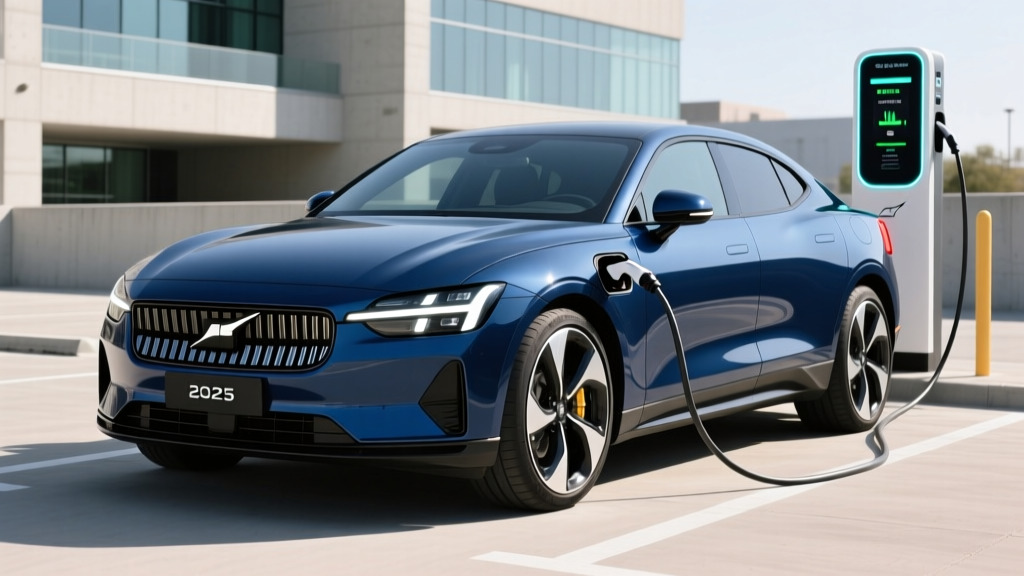
The 2025 Polestar 4 is the Swedish-Chinese brand's most controversial and arguably most compelling model. It eliminates the rear window entirely, replacing it with a high-definition camera-fed digital rearview mirror. It's a design choice that signals Polestar's willingness to break norms — and that extends to the powertrain. Built on Geely's Sustainable Experience Architecture (SEA), the Polestar 4 pairs a 102 kWh (usable) NMC lithium-ion battery with either a single-motor rear-wheel-drive or dual-motor all-wheel-drive layout, delivering up to 544 horsepower and an EPA-estimated range of up to 300 miles.
But specs on paper only tell part of the story. After spending time with the Polestar 4's real-world charging behavior, efficiency under load, and ownership economics, here's what buyers actually need to know before signing a lease or purchase agreement.
| Spec | Single Motor (RWD) | Dual Motor (AWD) |
|---|---|---|
| EPA Range | 300 mi | 270 mi |
| Battery (usable) | 102 kWh NMC | 102 kWh NMC |
| Horsepower | 272 hp | 544 hp |
| 0-60 mph | 6.9 sec | 3.8 sec |
| Drivetrain | RWD | AWD (dual motor) |
| Max DC Fast Charge | 200 kW | 200 kW |
| 10-80% DC Time | ~30 min | ~30 min |
| Level 2 (AC) | 11 kW | 11 kW |
| MPGe (combined) | 106 MPGe | 89 MPGe |
| Base MSRP | $54,900 | $62,900 |
Range and Efficiency: What the EPA Number Doesn't Tell You
The single-motor Polestar 4 Long Range carries an EPA-estimated 300 miles of range, while the dual-motor drops to 270 miles due to the added weight and parasitic loss of the front motor. Efficiency for the RWD model sits at roughly 34 kWh/100 mi (106 MPGe combined), which is competitive for a 5,000+ lb luxury SUV but not class-leading against lighter rivals like the Hyundai Ioniq 5 or Tesla Model Y.
EPA Sticker: 300 mi (RWD) / 270 mi (AWD)
Highway (70-80 mph, moderate climate): ~250-265 mi (RWD) / ~225-240 mi (AWD)
Cold weather (below 32°F, highway): ~210-230 mi (RWD) / ~185-205 mi (AWD)
City/regenerative driving: Can approach or exceed EPA estimates due to regen recovery
The 102 kWh usable battery is substantial, and Polestar's thermal management system includes a heat pump as standard equipment — a critical advantage for cold-climate owners. In practice, you'll see the battery precondition automatically when a DC fast charger is set as your navigation destination, which helps sustain peak charging speeds. Expect roughly 15-20% range reduction on sustained highway driving in winter conditions, consistent with NMC chemistry behavior in cold temperatures.
Charging Speed: 200 kW Peak, But Watch the Curve
The Polestar 4 supports up to 200 kW peak DC fast charging via its CCS1 connector (a NACS adapter will be available for Tesla Supercharger access). Polestar quotes a 10-80% charge time of approximately 30 minutes. That's respectable, though not as quick as the Hyundai/Kia E-GMP platform's 18-minute 10-80% times at 350 kW chargers.
| Charging Level | Power | Speed / Time | Typical Use Case |
|---|---|---|---|
| Level 1 (120V) | ~1.4 kW | ~4 mi/hr | Emergency / overnight trickle |
| Level 2 (240V, 48A) | 11 kW | ~33 mi/hr; full charge ~10 hr | Home daily charging |
| DC Fast (peak) | 200 kW | 10-80% in ~30 min | Road trips, public stations |
| DC Fast (sustained avg) | ~130-150 kW | 10-80% realistic avg | Actual observed charge sessions |
The critical detail for road-trippers: the 200 kW figure is a peak, not a sustained rate. In real-world DC sessions, expect the charge curve to taper noticeably above 60% state of charge. Average sustained power from 10-80% typically lands in the 130-150 kW range on a 350 kW-capable Electrify America or EVgo station. Polestar's preconditioning helps — always navigate to your charger via the built-in Google Maps system to trigger battery warming before arrival.
For home charging, the 11 kW onboard AC charger means a full replenishment from near-empty takes roughly 10 hours on a properly installed 48-amp Level 2 circuit (60-amp breaker). Most owners charging overnight from 20-80% will see a full top-up in about 5-6 hours, which is more than adequate for daily use.
Performance and Driving Dynamics
The dual-motor Polestar 4 Performance variant delivers 544 horsepower and 506 lb-ft of torque, launching from 0-60 mph in a claimed 3.8 seconds. That puts it squarely in Porsche Macan Electric and Tesla Model Y Performance territory. The single-motor RWD model makes 272 hp and hits 60 mph in 6.9 seconds — brisk enough for confident highway merging but noticeably less thrilling.
Ride quality benefits from the SEA platform's low center of gravity and available adaptive damping. The steering is precise if slightly light in Comfort mode. Where the Polestar 4 impresses most is in its refinement: cabin noise isolation is excellent, and the suspension absorbs broken pavement with a composure that rivals the BMW iX. The Performance trim includes a semi-active suspension with Öhlins-tuned dampers, a feature usually reserved for far more expensive vehicles.
Interior, Cargo, and the Missing Rear Window
The cabin uses a minimalist Scandinavian design with vegan textile and bio-based material options alongside available Nappa leather. A 15.4-inch landscape-oriented touchscreen runs Polestar's Android Automotive OS with Google Maps, Google Assistant, and Play Store apps natively integrated. The 10.2-inch digital instrument cluster is complemented by a standard head-up display.
The digital rearview mirror — fed by a roof-mounted camera — takes roughly a day to adjust to. The image is crisp, wide-angle, and free of the headrest and passenger obstructions that plague traditional mirrors. However, some drivers report eye strain on long trips from the constant focal-distance shift between the road and the screen. A physical rear window is not available as an option.
Cargo space measures approximately 18.4 cubic feet behind the rear seats and 49.2 cubic feet with the 60/40 split rear seats folded. Rear-seat legroom is generous at 40.3 inches, thanks to the flat floor and long wheelbase. There is no front trunk (frunk) — the space is occupied by HVAC and power electronics.
Pricing, Trims, and Federal Tax Credit Eligibility
The 2025 Polestar 4 lineup starts at $54,900 for the Long Range Single Motor and climbs to $62,900 for the Long Range Dual Motor Performance. Destination charges add approximately $1,400. A fully loaded Performance model with the Plus and Pilot packages, 22-inch wheels, and Nappa leather can approach $72,000.
| Trim | Base MSRP | As-Tested (typical) | §30D Credit Eligibility |
|---|---|---|---|
| Long Range Single Motor | $54,900 | $58,000-$62,000 | See eligibility notes below |
| Long Range Dual Motor | $59,900 | $64,000-$68,000 | See eligibility notes below |
| Long Range Dual Motor Performance | $62,900 | $68,000-$72,000 | See eligibility notes below |
- MSRP Cap: SUVs must be under $80,000 — all Polestar 4 trims qualify on MSRP alone.
- Buyer Income Cap: AGI must not exceed $150,000 (single), $225,000 (head of household), or $300,000 (joint).
- Battery Sourcing: The full $7,500 requires meeting both critical-minerals and battery-component requirements per IRS §30D rules. As of 2025, vehicles with battery components from foreign entities of concern (FEOC) may be disqualified. Polestar's Geely-supplied battery sourcing is subject to these restrictions — confirm eligibility with your dealer and a tax professional before purchase.
- Point-of-Sale Transfer: Eligible buyers can transfer the credit to the dealer at purchase for an immediate price reduction, rather than waiting to claim it on their tax return.
The Polestar 4's tax credit situation is nuanced. Because Polestar is owned by Geely (headquartered in China) and uses SEA-platform battery supply chains with Chinese mineral sourcing, the vehicle's eligibility for the full $7,500 credit depends on whether its battery components and critical minerals satisfy the FEOC restrictions that tightened in 2024 and 2025. Always verify current eligibility on the IRS qualified vehicles list and consult a tax professional — do not assume the credit applies.
Warranty, Ownership Costs, and Competitor Comparison
Polestar provides a 4-year/50,000-mile limited vehicle warranty and an 8-year/100,000-mile battery and drive unit warranty, with the battery covered if capacity drops below 70% of original. This is competitive with Volvo (Polestar's sister brand) and matches most European rivals, though Hyundai/Kia's 10-year/100,000-mile powertrain coverage remains the segment benchmark.
Insurance premiums for the Polestar 4 tend to run 15-25% higher than a comparably priced gas SUV, reflecting the vehicle's performance capability, repair costs for aluminum body panels, and EV-specific parts pricing. Expect annual premiums in the $2,200-$3,000 range depending on your state and driving record.
Against the Tesla Model Y Long Range (~$48,000, 310 mi EPA, faster Supercharger network access), the Polestar 4 costs more and offers slightly less range, but delivers superior build quality, a more refined ride, and a more distinctive design. Against the BMW iX xDrive50 (~$87,000, 324 mi EPA), the Polestar 4 is significantly cheaper while offering comparable interior luxury, though the iX edges ahead in range and charging speed. The Porsche Macan Electric starts around $78,000 and offers sharper handling but lower range and a higher entry price.
Who Should Buy the 2025 Polestar 4?
Choose the Polestar 4 if:
- You want a luxury electric SUV with distinctive design that isn't a Tesla
- You value ride comfort and cabin quietness over maximum range
- You primarily charge at home and road-trip 3-5 times per year
- You appreciate Scandinavian minimalism and Google-based infotainment
- The dual-motor Performance variant's 3.8-second 0-60 time appeals to you
Look elsewhere if:
- Maximum range per dollar is your top priority (Tesla Model Y or Hyundai Ioniq 5 wins)
- You need access to the Tesla Supercharger network natively (NACS adapter pending)
- You're uncomfortable with a camera-based rearview mirror instead of a physical window
- You need a frunk for additional cargo versatility
- Federal tax credit eligibility is a deal-breaker and the Polestar 4's sourcing doesn't qualify
Pros and Cons
- Standard heat pump for cold-climate efficiency
- 544 hp dual-motor variant is genuinely quick (3.8s 0-60)
- 102 kWh battery provides a usable 300-mile buffer for road trips
- Google Automotive OS with native Google Maps and OTA updates
- Adaptive suspension with Öhlins tuning on Performance trim
- Premium interior materials with sustainable options
- No rear window — digital mirror takes adjustment
- 200 kW peak DC charging is outpaced by 350 kW rivals
- No frunk for extra storage
- Federal tax credit eligibility uncertain due to battery sourcing
- Higher insurance premiums typical of performance EVs
- Single-motor RWD variant feels underpowered for the price
Frequently Asked Questions
What is the real-world range of the 2025 Polestar 4?
The EPA rates the single-motor RWD at 300 miles and the dual-motor AWD at 270 miles. In real-world highway driving at 70-80 mph, expect approximately 250-265 miles from the RWD model and 225-240 miles from the AWD. In cold weather below freezing, reduce those figures by an additional 15-20%. City driving with regenerative braking can meet or slightly exceed EPA estimates.
How fast does the Polestar 4 charge at home and on the road?
On a 48-amp Level 2 home charger (240V), the Polestar 4 charges at 11 kW, adding roughly 33 miles per hour and completing a full charge in about 10 hours. On DC fast chargers, it peaks at 200 kW with a 10-80% time of approximately 30 minutes, though sustained average power is typically 130-150 kW due to charge-curve tapering above 60% state of charge.
Does the 2025 Polestar 4 qualify for the $7,500 federal EV tax credit?
It may, but eligibility is not guaranteed. All trims fall under the $80,000 SUV MSRP cap, and buyer income limits apply ($300,000 joint / $150,000 single). However, the battery sourcing requirements under IRS §30D — particularly the FEOC restrictions on critical minerals and battery components — may disqualify some or all Polestar 4 configurations. Always check the current IRS qualified vehicle list and consult a tax professional before relying on the credit.
Is the Polestar 4 worth buying over the Tesla Model Y or BMW iX?
The Polestar 4 occupies a middle ground: more luxurious and better-riding than the Model Y, but less expensive than the iX. If you prioritize build quality, distinctive design, and ride comfort over maximum range or the lowest price, the Polestar 4 is compelling. If range-per-dollar or Supercharger network access is paramount, the Model Y wins. If budget is flexible and you want maximum range and charging speed, the iX is the stronger technical package.
Can I tow with the Polestar 4?
The 2025 Polestar 4 is rated to tow up to 4,409 pounds (2,000 kg) when equipped with the factory tow package. That's sufficient for a small boat trailer or light utility trailer, but not a large travel trailer. Keep in mind that towing will reduce range by 30-50% depending on trailer weight and aerodynamics.
What connector does the Polestar 4 use?
The 2025 Polestar 4 uses the CCS1 (Combined Charging System) connector for both AC and DC charging in North America. Polestar has indicated that a NACS adapter for Tesla Supercharger compatibility will be available, but as of early 2025, CCS remains the native connection. The industry-wide shift to NACS means future Polestar models will likely adopt the Tesla connector natively.