Quick Verdict: The Polestar 3 in 2025
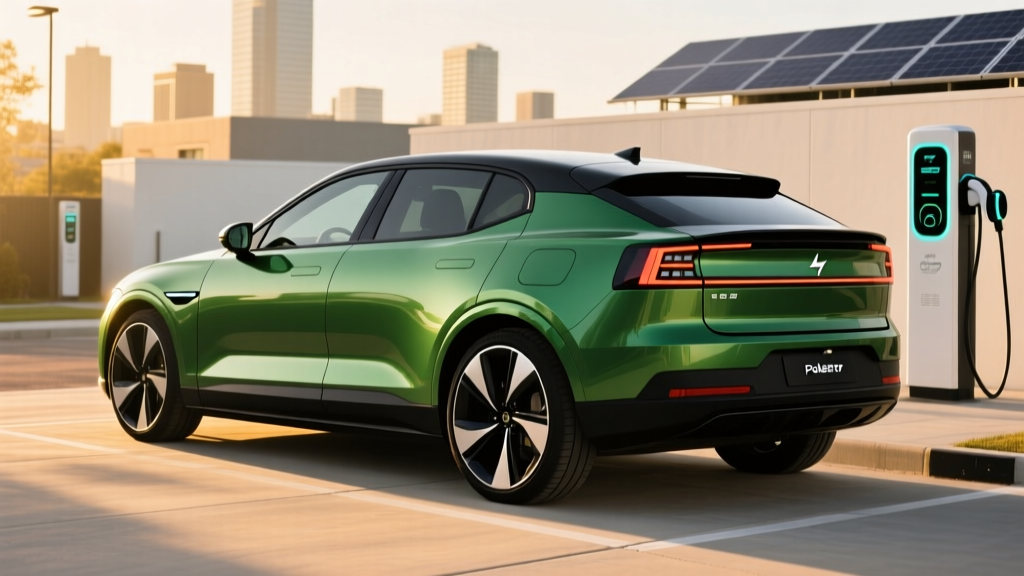
The 2025 Polestar 3 is the Swedish-Chinese brand's flagship luxury electric SUV, built on the same SPA2 platform as the Volvo EX90 but tuned for a sportier, more driver-focused experience. With up to 315 miles of EPA-estimated range, 250 kW DC fast-charging capability, and a minimalist Scandinavian interior, it targets buyers who want premium EV credentials without the ubiquity of a Tesla Model X or the traditionalism of a BMW iX.
For those eyeing a 2025 Polestar 3 lease, the math can be compelling — especially when factoring in the $7,500 federal lease credit (via the IRS §45W commercial clean vehicle provision), which sidesteps many of the sourcing and income restrictions that apply to purchases under §30D. This review breaks down everything you need to know before signing.
Range, Battery & Efficiency
The 2025 Polestar 3 Long Range Dual Motor comes equipped with a 111 kWh gross battery pack (approximately 107 kWh usable) using NMC (nickel-manganese-cobalt) chemistry. NMC offers higher energy density than LFP, which is why Polestar can pack substantial range into a sleek roofline.
Long Range Dual Motor: EPA-estimated 315 miles (standard 20" wheels). With optional 21" or 22" wheels, expect ~290-300 miles EPA.
Real-world highway (70-80 mph): Plan for approximately 260-280 miles in moderate temperatures. At sustained highway speeds, aerodynamic drag cuts into the NMC pack's advantage.
Cold-weather (below 30°F): Expect a 15-25% reduction, bringing usable range to roughly 220-250 miles. The Polestar 3's heat pump helps mitigate cabin-heating losses, but battery chemistry still slows in freezing temps.
Performance trim (Dual Motor with Performance Pack): EPA drops to ~275-285 miles due to more aggressive tuning and standard larger wheels.
| Attribute | Long Range Dual Motor | Performance Pack |
|---|---|---|
| EPA Range | 315 mi (20" wheels) | ~275-285 mi |
| Battery (gross / usable) | 111 kWh / ~107 kWh | 111 kWh / ~107 kWh |
| Chemistry | NMC | NMC |
| Horsepower | 489 hp | 517 hp |
| 0-60 mph | 4.8 sec | 4.6 sec |
| Drivetrain | AWD (dual motor) | AWD (dual motor) |
| MPGe (combined) | ~87 MPGe | ~82 MPGe |
| Efficiency | ~39 kWh/100mi | ~41 kWh/100mi |
| Max DC Fast Charge | 250 kW | 250 kW |
| 10-80% DC Time | ~30 min | ~30 min |
| Level 2 Home Charge | 11 kW (AC) | 11 kW (AC) |
| Cargo (rear seats up) | ~17.1 cu ft | ~17.1 cu ft |
| Cargo (rear seats folded) | ~51 cu ft | ~51 cu ft |
| Frunk | ~1.1 cu ft | ~1.1 cu ft |
| Base MSRP | $67,900 | $73,900 |
Efficiency lands around 87 MPGe combined (39 kWh/100 miles), which is respectable for a 5,500+ lb luxury SUV but trails the more aerodynamic BMW iX xDrive50 (~89 MPGe). For context, the EPA data is available at fueleconomy.gov.
Charging Speed: DC Fast & Home Level 2
Polestar equips the 3 with a 250 kW peak DC fast-charging rate on CCS1 (or NACS via adapter, as Polestar has committed to the Tesla Supercharger network transition). Here's what that translates to in practice:
| Charging Level | Power | Speed / Time |
|---|---|---|
| Level 1 (120V household) | ~1.4 kW | ~4 mi/hr |
| Level 2 (240V home, 48A) | 11 kW | ~28-32 mi/hr; full charge ~10-11 hrs |
| DC Fast (peak) | 250 kW | 10-80% in ~30 min |
| DC Fast (sustained avg) | ~150-170 kW | Real-world avg on 350 kW chargers |
Charging curve reality check: The Polestar 3 peaks near 250 kW only between roughly 10-30% State of Charge (SoC). Beyond 50%, the curve tapers progressively — by 80%, you're looking at roughly 60-80 kW. This is typical for NMC packs with active thermal management but means the advertised 30-minute 10-80% time assumes ideal conditions (preconditioned battery, high-power charger availability). Always precondition via the Polestar app before arriving at a DC station.
For home charging, the 11 kW onboard charger means a full 0-100% session takes about 10-11 hours on a properly installed Level 2 station (240V / 48A circuit). Most owners charging overnight from 20-80% will add roughly 200 miles in 6-7 hours — more than sufficient for daily use.
Performance & Driving Dynamics
The dual-motor AWD setup delivers 489 horsepower in standard form and 517 hp with the Performance Pack, which also unlocks torque vectoring on the rear axle and a more aggressive throttle map. The 0-60 mph sprint takes 4.8 seconds (4.6 with the Performance Pack) — quick enough to merge confidently but not supercar territory like the Tesla Model X Plaid.
Ride quality benefits from standard air suspension with adaptive dampers. The Polestar 3 is tuned slightly firmer than the Volvo EX90, prioritizing body control over plush isolation. Road noise is well-suppressed, and the low center of gravity (thanks to the floor-mounted 111 kWh pack) keeps cornering flat for a vehicle this size.
Regenerative braking offers two modes — a mild coasting mode and a stronger regen setting that approaches one-pedal driving but doesn't quite bring the car to a full stop without brake application. It's a conservative calibration compared to the aggressive regen in a Hyundai Ioniq 5 or BMW iX.
Interior, Tech & Driver Assistance
The cabin is unmistakably Scandinavian: clean lines, recycled microfiber and wool-blend upholstery options, and a portrait-oriented 14.5-inch center touchscreen running Android Automotive OS with Google Built-in (Maps, Assistant, Play Store). A 9-inch driver display sits behind the steering wheel, and an available 25-speaker Bowers & Wilkins audio system with Dolby Atmos is a standout.
ADAS / Driver Assistance: The Polestar 3 ships with Pilot Assist (SAE Level 2), which provides adaptive cruise control with lane-centering. It also includes Pilot Test features — a suite of advanced driver-monitoring and hands-off-eye-on capabilities enabled by interior cameras and LiDAR (sourced from Luminar on higher trims). However, this is strictly a Level 2 system: the driver must remain attentive and keep hands available at all times. It is not autonomous or "self-driving."
Polestar 3's Pilot Assist is a Level 2 driver-assistance system. The driver must remain fully engaged, monitor the road, and be prepared to take over instantly. This is not Level 4 autonomy (which is currently limited to geofenced robotaxi services like Waymo in select cities).
Notable tech drawbacks:
- No Apple CarPlay at launch (Polestar has indicated it's coming via OTA, but confirm current status before purchasing)
- Climate controls are buried in the touchscreen — no physical knobs
- LiDAR hardware is included but advanced features require a subscription or Pilot package (~$3,000-$5,000 depending on trim)
- The frunk (1.1 cu ft) is barely large enough for a charging cable — don't expect meaningful storage
Pricing, Lease Deals & Federal Tax Credit Eligibility
The 2025 Polestar 3 starts at $67,900 for the Long Range Dual Motor and $73,900 for the Long Range Dual Motor with Performance Pack (destination included). With options like the Plus and Pilot packages, 22" wheels, and the Bowers & Wilkins audio, an as-tested price of $78,000-$85,000 is realistic.
| Scenario | Long Range DM | Performance Pack |
|---|---|---|
| Base MSRP | $67,900 | $73,900 |
| Typical as-tested (with packages) | $75,000-$80,000 | $80,000-$85,000 |
| Federal §30D purchase credit | Up to $7,500* | Up to $7,500* |
| Federal §45W lease credit (passed through) | $7,500 (typical) | $7,500 (typical) |
| Effective lease price (after credit) | From ~$60,400 | From ~$66,400 |
Federal tax credit nuances (2025 rules):
- Purchase (§30D): Up to $7,500, but subject to buyer income caps ($150K single / $300K joint MAGI), MSRP caps ($80,000 for SUVs — the Polestar 3 qualifies), and critical-mineral/battery-component sourcing requirements that change annually. Not all buyers will receive the full amount. Check current rules at IRS.gov §30D.
- Lease (§45W commercial credit): When you lease, the leasing company (Polestar Financial Services) claims the $7,500 commercial clean vehicle credit and typically passes it through as a capitalized-cost reduction. This pathway bypasses the income caps, MSRP caps, and battery-sourcing requirements that apply to purchases. For many buyers, leasing is the more reliable path to the full $7,500 benefit — making the 2025 Polestar 3 lease particularly attractive.
- Point-of-sale transfer: For purchases, the credit can be transferred to the dealer at sale, reducing your out-of-pocket cost immediately (requires IRS registration at time of purchase).
- ✓ MSRP ≤ $80,000 (SUV cap) — Polestar 3 qualifies at base
- ✓ Buyer MAGI ≤ $150K (single) / $300K (joint) — income-dependent
- ⚠ Battery component sourcing (North America) — verify current-year compliance
- ⚠ Critical minerals sourcing (FTA countries) — verify current-year compliance
- ✓ Final assembly in North America — NOT required for Polestar 3 (built in China/Chengdu) — this may disqualify the purchase credit
Key issue: The Polestar 3 is manufactured in Chengdu, China. Under §30D, final assembly must occur in North America to qualify for the purchase credit. This likely disqualifies the Polestar 3 from the §30D purchase credit. However, the §45W lease credit does not have a North American assembly requirement, making leasing the viable path to the $7,500 benefit. Always confirm with your tax professional and dealer before committing.
Pros, Cons & Who Should Lease the Polestar 3
- 315-mile EPA range is competitive in the luxury EV SUV segment
- 250 kW DC fast-charging with NMC pack delivers practical road-trip capability
- Standard air suspension and refined ride quality
- Scandinavian interior design with sustainable material options
- $7,500 lease credit (via §45W) reliably available despite China assembly
- LiDAR hardware included for future ADAS capability
- Android Automotive with Google Built-in is intuitive and well-integrated
- Manufactured in China — disqualifies §30D purchase credit (lease only for the $7,500)
- Cargo space (17.1 cu ft behind rear seats) trails BMW iX and Tesla Model X
- Small frunk (1.1 cu ft) is essentially decorative
- No Apple CarPlay (at launch; OTA promised but unconfirmed timeline)
- Climate controls require touchscreen interaction — no physical buttons
- LiDAR-enabled advanced features require expensive Pilot package add-on
- Brand is less established — resale value and service network are still developing
Who this EV suits best:
- Luxury commuters who value design, cabin quality, and a 300+ mile range for daily drives with occasional road trips
- Lease-oriented buyers who want to access the $7,500 federal credit without worrying about sourcing or assembly rules
- Tech-forward drivers who prefer Google-native infotainment and are willing to wait for ADAS features to mature via OTA
- Two-car households where the Polestar 3 serves as the premium daily driver, not the primary road-trip hauler
Who should look elsewhere:
- Buyers who need maximum cargo space (BMW iX offers ~35 cu ft behind rear seats)
- Those who want a proven Supercharger network experience without adapters (Tesla Model X)
- Buyers intent on purchasing (not leasing) who need the federal tax credit — the China assembly is a dealbreaker under §30D
Competitor Comparison: Is the Polestar 3 Worth It?
| Spec | Polestar 3 LR DM | BMW iX xDrive50 | Tesla Model X LR |
|---|---|---|---|
| EPA Range | 315 mi | ~324 mi | ~335 mi |
| Battery | 111 kWh NMC | 111.5 kWh NMC | ~100 kWh |
| Horsepower | 489 hp | 516 hp | 670 hp |
| 0-60 mph | 4.8 sec | 4.4 sec | 3.8 sec |
| Max DC Charge | 250 kW | 200 kW | 250 kW |
| 10-80% DC | ~30 min | ~34 min | ~25 min |
| Cargo (rear up) | 17.1 cu ft | 35.5 cu ft | ~37 cu ft (+ frunk) |
| Base MSRP | $67,900 | $87,250 | $79,990 |
| Federal Credit (lease) | $7,500 | $7,500* | $7,500* |
The Polestar 3 undercuts the BMW iX by nearly $20,000 at base and matches or exceeds it on DC charging speed. The Tesla Model X offers more range, cargo, and performance but at a higher price point and with a more polarizing interior. For a 2025 Polestar 3 lease, the value proposition is strongest against the BMW iX — you get comparable range and tech at a significantly lower monthly payment, assuming comparable money-down and lease terms.
Warranty & Ownership
Polestar provides a competitive warranty package:
- Limited vehicle warranty: 4 years / 50,000 miles
- Battery & powertrain warranty: 8 years / 100,000 miles (covers battery capacity retention below 70% of original)
- Corrosion warranty: 12 years / unlimited miles
- Roadside assistance: 4 years / unlimited miles
The 70% battery capacity retention threshold over 8 years is industry-standard (matching Tesla, Hyundai, and BMW). NMC chemistry typically degrades 10-15% over the first 100,000 miles under normal use patterns — meaning most owners will never approach the warranty claim threshold. For more on NMC longevity and degradation curves, see our battery degradation guide.
Frequently Asked Questions
What is the real-world range of the 2025 Polestar 3?
The EPA estimates 315 miles for the Long Range Dual Motor on 20" wheels. In real-world highway driving at 70-80 mph, expect 260-280 miles in moderate weather and 220-250 miles in freezing conditions. City driving with regen braking can push closer to the EPA number or slightly above.
How fast does the Polestar 3 charge at home and on DC fast chargers?
On a Level 2 home charger (240V, 48A), the 11 kW onboard charger delivers roughly 28-32 miles of range per hour, with a full charge taking 10-11 hours. On DC fast chargers, it peaks at 250 kW and reaches 10-80% in approximately 30 minutes under ideal conditions (preconditioned battery, 350 kW station).
How much does the 2025 Polestar 3 cost after tax credits?
The base MSRP is $67,900. When leased, the $7,500 federal lease credit (§45W) is typically applied as a cap-cost reduction, bringing the effective starting price to ~$60,400. For purchases, the §30D credit likely does not apply due to China assembly. Consult a tax professional for your specific situation.
Does the 2025 Polestar 3 qualify for the federal EV tax credit?
For purchases under §30D: likely no, because final assembly occurs in Chengdu, China, and §30D requires North American assembly. For leases under §45W: yes, the $7,500 commercial clean vehicle credit is available to the leasing entity and typically passed through to the lessee. Always verify current IRS rules at irs.gov and confirm with your dealer.
Is the Polestar 3 worth leasing over the BMW iX or Tesla Model X?
If you prioritize design, a lower entry price, and reliable access to the $7,500 lease credit, the Polestar 3 is a strong value. If you need maximum cargo space (BMW iX) or the longest range and Supercharger convenience (Tesla Model X), those competitors may justify their premiums. Test-drive all three and compare actual lease quotes before deciding.
What are the biggest drawbacks of the Polestar 3?
The main limitations are modest cargo space (17.1 cu ft behind the rear row), a nearly useless frunk, no Apple CarPlay (pending OTA), touchscreen-only climate controls, and the fact that China assembly blocks the purchase tax credit. Service centers are also less numerous than Tesla or BMW networks.