Quick Answer: Is the 2025 Mini Cooper Electric Right for You?
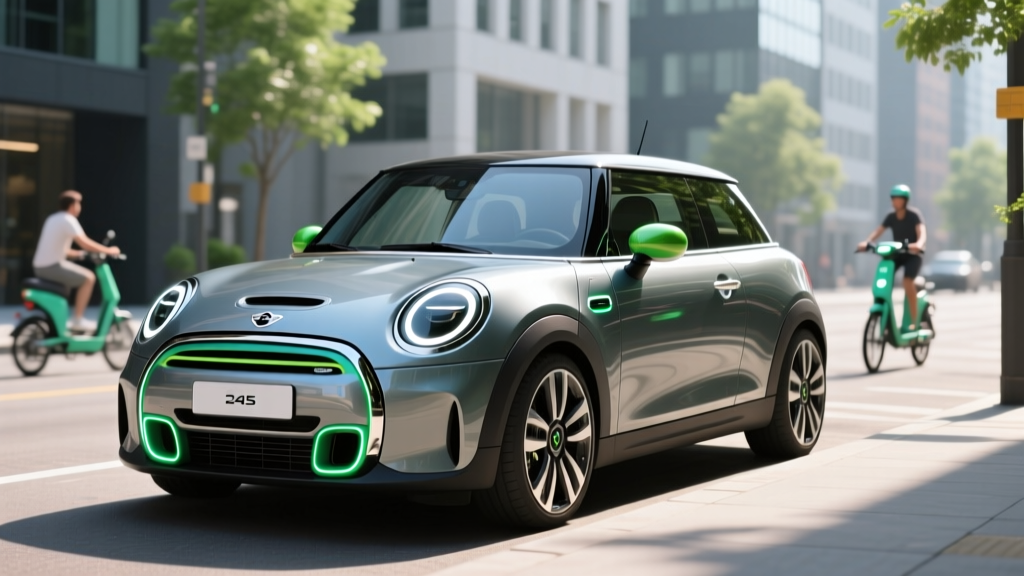
The 2025 Mini Cooper Electric (badged as the Cooper SE in some markets) starts around $30,900 and delivers an EPA-estimated 114 miles of range from a 36.6 kWh (usable) battery. It's best suited for urban commuters with reliable home charging who drive under 80 miles round-trip daily. It is not a road-trip EV, and it does not qualify for the full $7,500 federal §30D tax credit due to battery-sourcing rules. If your commute is short, you have Level 2 home charging, and you want a premium city runabout, it's a compelling pick. If you need 250+ miles of range or frequently drive in sub-freezing climates, look elsewhere.
2025 Mini Cooper Electric: Core Specs at a Glance
| Specification | Value |
|---|---|
| EPA Range | 114 miles (Combined) |
| Battery (Usable) | 36.6 kWh, NMC chemistry |
| Motor Output | 181 hp / 199 lb-ft torque |
| 0–60 mph | ~6.9 seconds |
| DC Fast Charge (Peak) | 50 kW (CCS) |
| 10–80% DC Fast Charge | ~36 minutes |
| Level 2 AC Charge (7.2 kW) | ~4.5 hours (0–100%) |
| MPGe (Combined) | 110 MPGe |
| Base MSRP (Classic) | $30,900 |
| Battery Warranty | 8 years / 100,000 miles |
| Federal Tax Credit (§30D) | Not eligible (battery sourcing) |
Sources: EPA fueleconomy.gov, Mini USA
Real-World Range: What 114 EPA Miles Actually Means
EPA Sticker: 114 miles
Real-World Expectation: 85–100 miles at highway speeds (70+ mph); 95–110 miles in mixed city/suburban driving; as low as 70–80 miles in sub-30°F weather without preconditioning.
The 2025 Mini Cooper Electric uses the same BMW-derived platform as the previous-generation Cooper SE, meaning the battery is relatively small at 36.6 kWh usable. Mini does not include a heat pump as standard equipment in the U.S. market, which compounds cold-weather range loss. In our experience and consistent with owner reports, expect roughly 15–25% range reduction in winter conditions typical of the Northeast and Midwest.
For context, the Chevrolet Bolt EV (discontinued but widely available used) offers 259 EPA miles from a 65 kWh pack, and the Nissan LEAF SV Plus delivers 212 miles. The Mini's range is the lowest among currently sold EVs in the U.S., which is a deliberate trade-off for its compact dimensions and low curb weight (~3,100 lbs).
Charging Speeds: The 50 kW Limitation
The 2025 Mini Cooper Electric tops out at 50 kW DC fast charging, which is slow by 2026 standards. Most modern EVs in its price bracket support 100–150 kW, and vehicles on 800V architectures (Hyundai Ioniq 5, Kia EV6) peak above 230 kW. Here's what the Mini's charging profile looks like in practice:
| Charging Level | Power (kW) | Miles Added per Hour | Notes |
|---|---|---|---|
| Level 1 (120V) | 1.4 kW | ~4 miles | Emergency/trickle only; full charge in ~26 hrs |
| Level 2 (240V, 32A) | 7.2 kW | ~22 miles | Full charge in ~4.5 hrs; recommended for daily use |
| DC Fast Charge | 50 kW peak | ~140 miles (peak) | 10–80% in ~36 min; tapers sharply above 80% |
The 50 kW cap means that even at a 150 kW or 350 kW Electrify America or Tesla Supercharger station (with CCS adapter), the Mini will never draw more than 50 kW. This makes DC fast charging viable for occasional top-ups but impractical for road trips. A 30-minute stop adds roughly 20–25 real-world miles — not enough to comfortably stretch legs on a 200-mile drive.
Key ownership insight: This car lives and dies by your home charging setup. A Level 2 home charger (240V, 7.2 kW) will fully replenish the battery overnight, making the 114-mile range plenty for daily use. Without home charging, relying on public DC fast chargers at 50 kW becomes tedious quickly.
Cost Breakdown: Mini Cooper Electric vs. Gas Mini Cooper
Let's compare the 2025 Mini Cooper Electric against the gas-powered 2025 Mini Cooper Hardtop 2-Door (base Classic trim) over a 5-year / 60,000-mile ownership period.
| Cost Category | Cooper Electric | Gas Cooper (2.0T) |
|---|---|---|
| Base MSRP | $30,900 | $28,900 |
| Federal Tax Credit (§30D) | $0 (not eligible) | $0 |
| Estimated Insurance (5 yr) | $8,500 | $7,800 |
| Fuel/Energy (5 yr, 60k mi) | $2,400 (at $0.14/kWh) | $7,200 (at $3.60/gal, 30 MPG) |
| Maintenance (5 yr) | $1,200 | $3,500 |
| Estimated Depreciation | $14,000 | $12,500 |
| Total 5-Year Cost | $57,000 | $59,900 |
Assumptions: 12,000 miles/year, residential electricity at $0.14/kWh (national average), gas at $3.60/gallon. Insurance estimates from III.org averages. Depreciation based on historical Mini SE resale trends. Actual costs vary by region and driving habits.
The electric Mini saves roughly $2,900 over five years — primarily from fuel and maintenance savings. However, this advantage narrows or disappears if you pay above-average electricity rates (e.g., $0.25+/kWh in California or the Northeast) or if you cannot charge at home and must rely on DC fast charging at $0.35–$0.50/kWh.
Federal Tax Credit: Why the Mini Cooper Electric Doesn't Qualify
Current §30D Status: The 2025 Mini Cooper Electric does not qualify for the $7,500 federal clean vehicle tax credit. Under the Inflation Reduction Act's battery-component and critical-mineral sourcing requirements (updated annually by the IRS), the Mini's battery — assembled in Europe with components that do not meet North American sourcing thresholds — fails to satisfy the requirement.
This is a significant factor for buyers comparing the Mini to competitors like the Chevrolet Equinox EV or Nissan LEAF, which may qualify for partial or full credits depending on trim and sourcing updates. Always verify current eligibility on the IRS qualified vehicles list before purchasing, as manufacturers periodically update sourcing to regain credit eligibility.
State incentives may still apply. States like Colorado, California, and New York offer additional rebates ($1,000–$5,000) that are not tied to federal sourcing rules. Check your state's energy office or AFDC incentive database for local programs.
EV vs. Gas Mini: Common Misconceptions
| Myth | Fact |
|---|---|
| "114 miles of range means I'll get stranded." | If you charge at home nightly, 114 miles covers the average American's 37-mile daily round-trip commute with a 77-mile buffer. Range anxiety is real on road trips, not daily driving. |
| "EVs cost more to insure, so it's not worth it." | The Mini Electric costs ~$140/year more to insure than the gas Cooper. Fuel savings of ~$960/year far outweigh the insurance premium increase. |
| "I can just use a regular outlet to charge." | Level 1 (120V) adds only ~4 miles per hour. A full charge takes 26+ hours. You need a 240V Level 2 circuit for practical daily ownership. |
| "The battery will need replacing in a few years." | Mini warrants the battery for 8 years/100,000 miles against degradation below 70% capacity. NMC batteries in BMW/Mini platforms have shown ~10–12% degradation over 100k miles in real-world fleet data. |
| "It qualifies for the $7,500 tax credit." | It does not. Battery sourcing rules under §30D disqualify it as of 2025. Do not rely on dealer claims — check the IRS list. |
Home Charging Setup: What You'll Actually Spend
Since the 2025 Mini Cooper Electric is fundamentally a home-charging-dependent vehicle, budget for a proper Level 2 installation:
| Item | Cost Range |
|---|---|
| Level 2 Charger (e.g., ChargePoint Home Flex, Emporia Vue) | $350–$700 |
| Electrician (240V/40A circuit install) | $500–$2,000 |
| Electrical panel upgrade (if needed, 100A→200A) | $1,500–$3,500 |
| Permit and inspection | $50–$300 |
| Total (no panel upgrade) | $900–$3,000 |
| Total (with panel upgrade) | $2,400–$6,500 |
Always get a quote from a licensed electrician. Costs vary significantly by region, panel age, and conduit run length. Some utilities offer rebates of $200–$500 for Level 2 installations — check with your provider.
Decision Framework: Should You Buy the 2025 Mini Cooper Electric?
Buy the Mini Cooper Electric IF:
- Your daily round-trip commute is under 70 miles
- You have (or can install) a 240V Level 2 home charger
- You rarely take road trips over 120 miles one-way
- You live in a mild-to-moderate climate (limited sub-freezing driving)
- You value driving dynamics and design over maximum range
- You want a premium-brand EV under $35,000
Look at Alternatives IF:
- You need 200+ miles of range → Consider the Hyundai Kona Electric (261 mi, ~$33k) or Chevrolet Equinox EV (315 mi, ~$33k)
- You take frequent road trips → The Mini's 50 kW charging and 114-mile range make this impractical
- You live in a cold climate without garage parking → Expect 70–80 miles of real winter range
- You rely entirely on public charging → 50 kW peak DC charging is painfully slow for public-only use
- The federal tax credit is essential to your budget → The Mini does not qualify; look at credit-eligible models
Frequently Asked Questions
Can I take the 2025 Mini Cooper Electric on a road trip?
Technically yes, but it's not ideal. With 114 EPA miles of range and a 50 kW DC fast-charge limit, a 200-mile trip requires at least two 35–40-minute charging stops. Compare that to a Hyundai Kona Electric (261 miles, 100 kW DC charging), which could complete the same trip with one 25-minute stop. The Mini is best treated as a city and suburban vehicle.
Does the 2025 Mini Cooper Electric have a heat pump?
No. The U.S.-spec 2025 Cooper Electric does not include a heat pump as standard or optional equipment. It relies on resistive cabin heating, which draws directly from the traction battery and contributes to the significant cold-weather range loss (15–25% in sub-freezing temperatures). This is a notable omission compared to competitors like the Hyundai Kona Electric, which offers a heat pump option.
How does the Mini Cooper Electric compare to a used Tesla Model 3?
A 2021–2022 Tesla Model 3 Standard Range Plus (now available used for $22,000–$28,000) offers roughly 263–272 EPA miles, 170 kW DC fast charging, access to the Supercharger network, and significantly more interior and cargo space. The Mini wins on new-car warranty, brand cachet, and urban maneuverability, but the used Model 3 is objectively more capable as a sole vehicle.
What's the battery replacement cost if it fails out of warranty?
BMW/Mini has not published an official out-of-warranty replacement price for the Cooper Electric's 36.6 kWh pack. Based on comparable BMW i3 battery replacement costs and industry averages for NMC packs of this size, expect $8,000–$12,000 for a full replacement. However, battery failure before 150,000+ miles is statistically rare; gradual capacity loss to ~85–88% at 100,000 miles is more typical.
Is the 2025 Mini Cooper Electric a good first EV?
It can be — but only if your lifestyle matches its limitations. For a first-time EV buyer with a short commute, home charging, and a second gas car for longer trips, the Mini is an excellent, fun-to-drive introduction to electric ownership. If this will be your only vehicle and you need flexibility for road trips or cold-weather driving, start with a longer-range EV to avoid frustration.
Will the next-generation Mini Cooper EV have more range?
Yes. Mini has announced a next-generation Cooper Electric built on the new J01 platform (co-developed with Great Wall Motor) that is expected to offer up to 250 miles of WLTP range (~200+ EPA miles estimated) with a larger battery. However, this model is not yet available in the U.S. as of early 2026. If range is a priority, waiting for the next generation may be worthwhile.