The Flagship Electric Mercedes: Quick Verdict
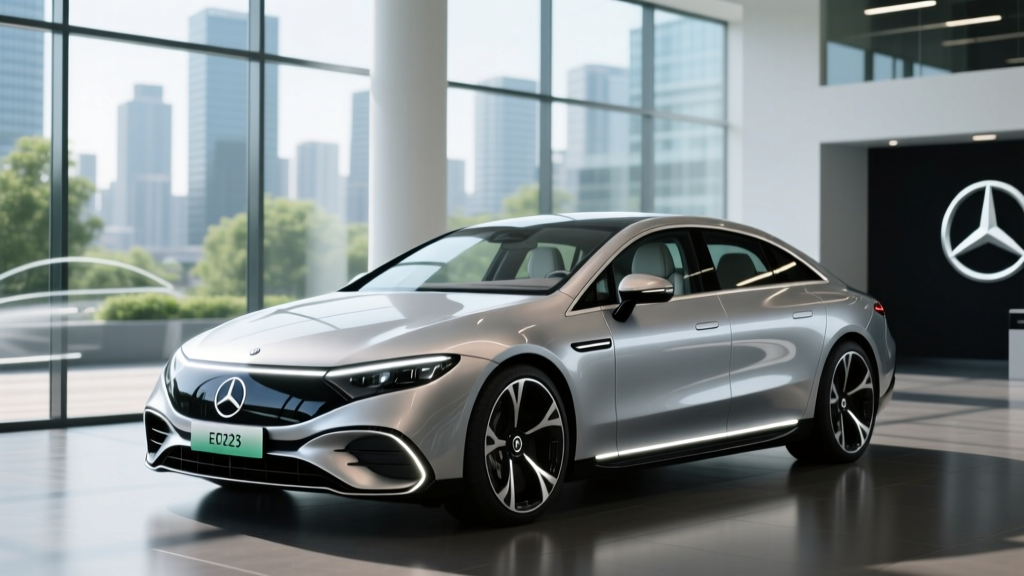
The 2025 Mercedes-Benz EQS Sedan remains the brand's electric halo — a full-size luxury EV that prioritizes ride comfort, cabin silence, and long-distance cruising over sporty pretensions. With a refreshed 118 kWh battery pack and EPA range reaching 390 miles on the EQS 450+, it competes directly with the Tesla Model S, BMW i7, and Lucid Air. But at a base price above $104,000, buyers need to know exactly what they're getting — and where the EQS falls short of its sticker-promise.
For the 2025 model year, Mercedes updated the EQS with a revised front grille (now featuring a chrome surround and standing star), increased battery capacity, and standard 4MATIC all-wheel drive on the mid-tier EQS 580. The result is a more polished, more complete luxury EV — though one that still faces questions about charging speed relative to newer competitors and the ongoing complexity of federal tax credit eligibility for six-figure vehicles.
Range, Battery, and Real-World Efficiency
| Specification | EQS 450+ (RWD) | EQS 450 4MATIC | EQS 580 4MATIC |
|---|---|---|---|
| EPA Range | 390 mi | 371 mi | 371 mi |
| Battery (Usable) | 118 kWh (NMC chemistry) | ||
| Efficiency (MPGe Combined) | 97 MPGe | 93 MPGe | 91 MPGe |
| Efficiency (kWh/100 mi) | 35 kWh | 36 kWh | 37 kWh |
| Drivetrain | RWD (single motor) | AWD (dual motor) | AWD (dual motor) |
| Horsepower | 355 hp | 355 hp | 536 hp |
| 0-60 mph | 5.9 sec | 5.3 sec | 4.1 sec |
The switch to a 118 kWh usable capacity (up from 107.8 kWh in the 2022-2024 models) is the most significant mechanical change for 2025. Mercedes uses NMC (nickel-manganese-cobalt) cell chemistry, which offers higher energy density than LFP but requires more careful state-of-charge management for long-term health. Mercedes recommends daily charging to 80-90% for NMC packs and reserving 100% for planned long trips — a practice that extends battery longevity.
Charging Speed: DC Fast, Level 2, and the Curve
| Charging Method | Max Rate | Time / Range Added |
|---|---|---|
| DC Fast Charge (CCS/NACS*) | 200 kW peak | 10-80% in ~31 minutes |
| Level 2 (240V, 48A) | 11.5 kW | ~37 miles per hour of charging |
| Level 1 (120V) | ~1.4 kW | ~4-5 miles per hour |
The EQS supports 200 kW peak DC fast charging — adequate but not class-leading. The Tesla Model S and Lucid Air both charge faster in practice, with Lucid's 900V architecture enabling peaks above 250 kW. The EQS's charging curve is relatively flat through 40% state of charge, then tapers progressively: you'll see close to 200 kW from 10-30%, dropping to roughly 150 kW by 50%, and falling below 100 kW past 70%. This is why the 10-80% time stretches to 31 minutes — competitive with many luxury EVs but noticeably slower than the Hyundai Ioniq 5 or Kia EV6 on 800V platforms.
At home on a Level 2 charger (the realistic daily charging scenario for EQS owners), the 11.5 kW onboard charger adds roughly 37 miles of range per hour. A full 10-100% charge takes approximately 11-12 hours. Most owners will plug in overnight and wake to a full battery — the large pack means even a partial overnight charge covers days of commuting.
*For 2025, Mercedes-Benz includes a NACS adapter for Tesla Supercharger access. Native NACS ports are expected on future Mercedes models, but the 2025 EQS ships with CCS1 and relies on the adapter for the growing Supercharger network.
Pricing, Trims, and Tax Credit Eligibility
| Trim | Base MSRP | Typical As-Tested |
|---|---|---|
| EQS 450+ Sedan (RWD) | $104,400 | $112,000-$120,000 |
| EQS 450 4MATIC Sedan | $107,400 | $115,000-$125,000 |
| EQS 580 4MATIC Sedan | $127,350 | $135,000-$148,000 |
| AMG EQS Sedan | $149,900 | $155,000-$170,000 |
- MSRP Cap: Sedans must be priced at or below $55,000 to qualify. The EQS Sedan (starting at $104,400) exceeds this cap on all trims.
- Income Cap: Modified AGI must not exceed $300,000 (joint), $225,000 (head of household), or $150,000 (single).
- Battery Sourcing: Critical minerals and battery component requirements phase in annually through 2029.
- Result: The 2025 EQS Sedan does NOT qualify for the $7,500 federal tax credit due to the MSRP cap. It also does not qualify for the $4,000 used-EV credit if purchased new.
Source: IRS §30D Clean Vehicle Credit. Consult a tax professional for individual eligibility. Some state incentives may still apply — check your local DMV or energy office.
At these prices, the EQS is a statement purchase, not a value proposition. Destination charges, dealer-installed accessories, and Mercedes' extensive option packages (AMG Line exterior, Executive Rear Seat package, Burmester 4D surround sound) push most examples well above $120,000. The AMG variant, with 751 hp and a 3.4-second 0-60, approaches supercar territory in price and performance alike.
Interior Space, Tech, and the Hyperscreen Question
The EQS rides on Mercedes' dedicated EVA2 platform, yielding a flat floor and generous interior volume. Front legroom measures 41.7 inches; rear legroom is 42.1 inches — limousine-class space that surpasses the S-Class in some dimensions. Cargo volume behind the rear seats is 22 cubic feet (hatchback-style liftgate), expanding to 63 cubic feet with seats folded. The frunk adds 2.5 cubic feet for charging cables and small items.
The cabin's centerpiece is the MBUX Hyperscreen — a 56-inch curved glass panel spanning the full dashboard width, housing a 17.7-inch central OLED display, a 12.3-inch driver cluster, and a 12.3-inch passenger screen. It's visually stunning and technically impressive, though some drivers find the all-touch interface distracting compared to physical knobs. The optional rear-seat entertainment system adds two 11.6-inch screens, reinforcing the EQS's role as a chauffeur-class vehicle.
Driver assistance includes Mercedes' Driver Assistance Package: adaptive cruise control with stop-and-go, active lane-keeping, evasive steering assist, and Pre-Safe (anticipatory collision preparation). This is SAE Level 2 automation — the driver must remain engaged and hands on or near the wheel at all times. Mercedes' DRIVE PILOT system (Level 3, approved in limited jurisdictions like Nevada and California for speeds up to 40 mph in heavy traffic) is available on the EQS but requires specific conditions and geo-fenced areas. It is not a substitute for driver attention.
Ownership: Warranty, Depreciation, and Running Costs
Mercedes backs the EQS with a 4-year/50,000-mile basic warranty and an 8-year/100,000-mile battery warranty (covering capacity below 70% of original). The 8-year battery warranty is industry-standard, matching Tesla, BMW, and most competitors. Battery replacement cost, if needed out of warranty, is estimated at $20,000-$30,000 based on current NMC pack pricing — though degradation data on the 118 kWh pack is still accumulating.
Electricity costs for the EQS depend on local rates. At the national average of $0.17/kWh and the EQS 450+'s 35 kWh/100mi efficiency, fuel cost is approximately $0.06 per mile — roughly one-third the cost of a comparable S-Class on premium gasoline. Home charging at off-peak rates drops this further. Public DC fast charging at $0.40-$0.50/kWh raises the per-mile cost to $0.14-$0.18, still below gasoline but eroding the EV cost advantage on road trips.
Depreciation is the EQS's most significant ownership cost. Luxury EVs have historically depreciated faster than their ICE counterparts, with 3-year residual values in the 40-50% range (vs. 55-65% for an S-Class). High initial price, rapid EV tech advancement, and battery health uncertainty all contribute. Lease deals (often subsidized by Mercedes) can mitigate this risk and are worth exploring.
Pros, Cons, and the Competition
- Class-leading 390-mile EPA range (450+ trim)
- Exceptionally quiet, spacious cabin with premium materials
- Standard air suspension delivers outstanding ride quality
- Large 118 kWh battery provides real-world range buffer
- Hyperscreen and MBUX tech are visually impressive
- Hatchback cargo versatility (22 cu ft / 63 cu ft)
- Base price above $104,000; no federal tax credit eligibility
- 200 kW peak DC charging is slower than Lucid Air, Porsche Taycan
- All-touch Hyperscreen interface can distract while driving
- Heavy (5,600+ lbs) — noticeable in corners despite air suspension
- Steep depreciation expected; high insurance premiums
- Rear visibility compromised by sloping roofline
Against the Tesla Model S ($79,990 base, 402-mile range, 250 kW charging), the EQS trades performance and Supercharger convenience for traditional luxury, build quality, and dealer service. The BMW i7 ($119,300 base, 318-mile range) offers comparable luxury but less range. The Lucid Air Pure ($69,900 base, 419-mile range) delivers more range and faster charging at a lower price, though its service network and brand maturity lag Mercedes. The EQS occupies a specific niche: buyers who want Mercedes badge prestige, S-Class-level comfort, and are willing to accept the cost premium and charging-speed trade-off.
Who Should Buy the 2025 EQS Sedan?
- You prioritize ride comfort, cabin silence, and brand prestige over outright performance
- You have reliable home Level 2 charging and use DC fast charging infrequently
- You value Mercedes' dealer network, service infrastructure, and resale support
- Your daily driving is under 200 miles, with occasional 300+ mile road trips
- You need the fastest possible DC charging for frequent long-distance travel (consider Lucid Air or 800V platforms)
- You want federal tax credit eligibility (the MSRP cap excludes the EQS)
- You prefer sporty handling dynamics over comfort-oriented tuning (consider Porsche Taycan or BMW i7 M70)
- Budget is a primary concern — the Lucid Air Pure offers more range at $35,000 less
Frequently Asked Questions
What is the real-world range of the 2025 Mercedes-Benz EQS Sedan?
The EQS 450+ has an EPA-estimated 390 miles, but real-world highway driving at 70-75 mph yields approximately 320-340 miles. In cold weather (below freezing), expect 270-310 miles. City and suburban driving in moderate temperatures can approach or match the EPA figure.
How fast does the EQS charge at home and on the road?
At home on a Level 2 charger (240V, 48A), the EQS charges at 11.5 kW, adding about 37 miles of range per hour. A full charge takes 11-12 hours. On DC fast chargers, it peaks at 200 kW, reaching 10-80% in approximately 31 minutes. The charging curve tapers significantly above 70% state of charge.
Does the 2025 EQS qualify for the federal EV tax credit?
No. Under current IRS §30D rules, sedans must have an MSRP at or below $55,000 to qualify for the $7,500 credit. The EQS starts at $104,400 and exceeds this cap on all trims. Some state-level incentives may still apply.
Is the EQS worth buying vs. the Tesla Model S or Lucid Air?
The EQS wins on traditional luxury, cabin materials, ride comfort, and Mercedes dealer service. The Model S offers more range, faster charging, and Supercharger access at a lower price. The Lucid Air Pure delivers the most range (419 mi EPA) and fastest charging at the lowest price. Choose the EQS if brand prestige and comfort matter more than charging speed or value.
What is the battery warranty and expected lifespan?
Mercedes provides an 8-year/100,000-mile battery warranty covering capacity retention below 70%. With NMC chemistry and proper charging habits (daily charges to 80-90%, avoiding frequent 100% charges and DC fast charging), the battery should retain 80%+ capacity through 150,000-200,000 miles based on current industry degradation data.
Can the EQS use Tesla Superchargers?
Yes, with the included NACS adapter (new for 2025). Mercedes provides the adapter for access to Tesla's Supercharger network, expanding the EQS's DC fast-charging options significantly. Native NACS ports are expected on future Mercedes EVs.