The Quick Verdict: Where Tesla Still Holds the Edge
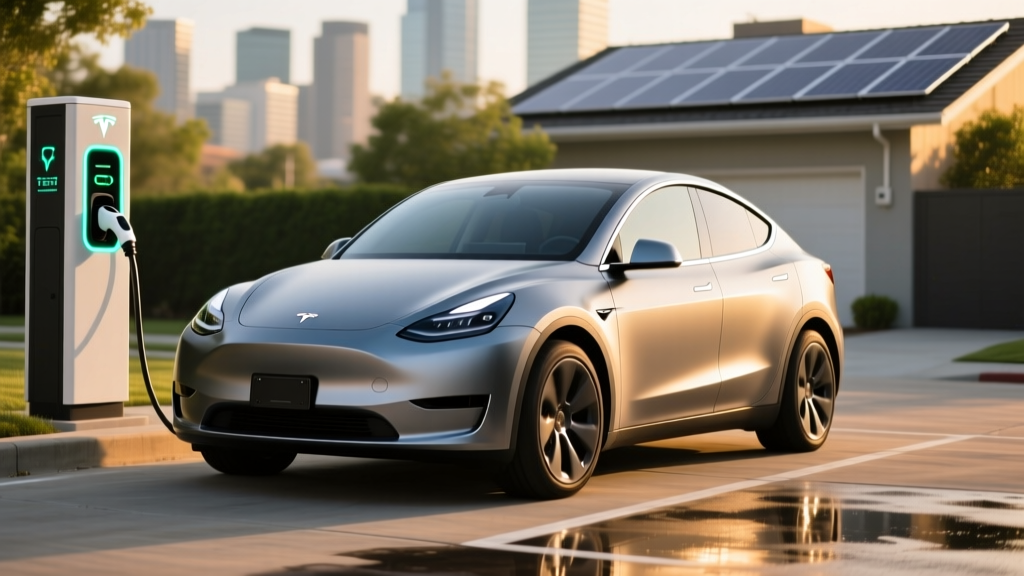
Despite a wave of compelling rivals from Hyundai, Ford, and BMW, the 2026 Tesla Model Y Long Range AWD remains the benchmark compact electric SUV. Its competitive advantage isn't any single spec — it's the integration of best-in-class efficiency, a mature Supercharger network, continuous over-the-air refinement, and a price point that undercuts most competitors even before federal incentives. But the gap has narrowed significantly. Here's the data-driven breakdown of where Tesla leads, where it doesn't, and whether the Model Y is still the right buy in 2026.
Range, Efficiency, and the Real-World Reality Check
The 2026 Model Y Long Range AWD carries an EPA-estimated 320 miles of range from its 78.1 kWh usable battery (NMC chemistry, 2170 cells). Efficiency clocks in at 122 MPGe combined, or roughly 27 kWh per 100 miles — numbers that still beat most rivals in the segment.
EPA sticker: 320 miles. In practice:
- City/suburban mixed driving (55-65°F): 300-315 miles — regenerative braking recovers significant energy
- Sustained highway (75 mph, moderate temps): ~265-280 miles — aerodynamic drag dominates
- Cold weather (20-30°F, highway): ~220-245 miles — expect a 25-30% reduction without preconditioning
- Cold weather + cabin heat, no preconditioning: As low as 195-210 miles on short trips
Tesla's heat pump (standard since 2021 refresh) significantly mitigates cold-weather loss compared to EVs using resistive heating, but physics is physics — cold batteries and dense air take their toll.
| Attribute | Specification |
|---|---|
| EPA Range | 320 miles |
| Battery (Usable) | 78.1 kWh, NMC (2170 cells) |
| Efficiency | 122 MPGe / 27 kWh/100 mi |
| Peak DC Fast Charge | 250 kW (CCS/NACS) |
| 10-80% DC Fast Charge | ~27 minutes |
| Level 2 Home Charging | 11.5 kW (~44 mi/hr) |
| 0-60 mph | 4.8 seconds |
| Horsepower | 384 hp (dual motor) |
| Drivetrain | Dual-motor AWD |
| Cargo Volume | 30.2 cu ft (rear seats up) / 72.1 cu ft (folded) |
| Front Trunk (Frunk) | 4.1 cu ft |
| Rear Legroom | 37.0 inches |
| Battery Warranty | 8 years / 120,000 miles |
| Base MSRP | $44,990 |
Charging: Supercharger Network Is Still the Moat
Tesla's charging story operates on two levels: the hardware in the car, and the network behind it.
| Level | Power / Voltage | Speed |
|---|---|---|
| Level 1 (120V household) | ~1.4 kW | ~4-5 miles per hour |
| Level 2 (240V home, Wall Connector) | 11.5 kW / 48A | ~44 miles per hour |
| Level 2 (public, 48A) | 11.5 kW | ~44 miles per hour |
| DC Fast (V3 Supercharger) | Peak 250 kW | 10-80% in ~27 min |
| DC Fast (V4 Supercharger) | Peak 250 kW (vehicle-limited) | 10-80% in ~27 min |
| DC Fast (non-Tesla CCS) | Up to 250 kW | Varies by station |
The charge curve reality: The Model Y peaks at 250 kW only briefly between roughly 10-30% state of charge. From 30-60%, expect sustained rates around 150-180 kW. Above 80%, charging tapers sharply to protect the NMC cells — a 80-100% top-off can add another 20-25 minutes. This is typical for NMC chemistry and is why Tesla recommends daily charging to 80%.
The Supercharger network advantage: As of early 2026, Tesla operates over 6,500 Supercharger stations in North America with a reliability rate consistently above 97%. While Ford, GM, Rivian, and others now access Superchargers via NACS adapters or native NACS ports, Tesla owners still benefit from native plug-and-charge integration, automatic billing, and the densest corridor coverage. Non-Tesla EVs at Superchargers may face cord-length limitations and slightly higher per-kWh pricing.
Performance, Tech, and the Driving Experience
The dual-motor AWD powertrain delivers 384 horsepower and a 4.8-second 0-60 mph time — quick enough to merge confidently and pass without drama, though the Performance trim (3.5 seconds) exists for enthusiasts. Ride quality has improved with the latest suspension tuning, but the Model Y still leans toward firm, especially on broken pavement. Road noise remains a weak point compared to the Hyundai Ioniq 5 or BMW iX.
Standout Technology
- 15.4-inch central touchscreen: Controls virtually everything — no physical buttons for HVAC, mirrors, or glovebox
- Autopilot (standard): SAE Level 2 lane-centering and adaptive cruise; competent on highways
- Full Self-Driving Supervised ($8,000 option): SAE Level 2 with automatic lane changes, traffic light/stop sign response, and city-street navigation — driver must remain fully engaged at all times
- Sentry Mode / Dashcam: Integrated multi-camera recording with cloud alerts
- Over-the-air updates: Continuous feature additions, efficiency improvements, and UI refinements without dealer visits
- Tesla app: Remote preconditioning, charge monitoring, location tracking, and Summon
Tesla's Full Self-Driving (Supervised) is classified as SAE Level 2 automation. The driver must maintain hands-on-wheel awareness and be prepared to take over instantly. It is not a Level 4 driverless system like Waymo. Treat FSD as an advanced driver assist, not a replacement for attention.
Notable Drawbacks
- Minimalist interior: No physical stalks (turn signals are steering-wheel buttons on refreshed models), no instrument cluster — polarizing for traditional car buyers
- Panel gaps and build consistency: Improved but still occasionally variable vs. legacy OEMs
- No Apple CarPlay / Android Auto: Tesla's proprietary infotainment only
- Rear-seat comfort: 37.0 inches of legroom is adequate but trails the Ioniq 5 (39.4 in)
- Insurance costs: Tesla premiums average 20-40% higher than comparable non-EV SUVs in most states
Pricing, Tax Credits, and Total Cost of Ownership
The 2026 Model Y lineup starts at $44,990 for the Long Range AWD (the base RWD trim has been discontinued in the US market). The Performance trim starts at $48,990. Adding FSD Supervised pushes a well-equipped Long Range to roughly $54,490 before destination fees.
| Trim | Base MSRP | Est. w/ Options & Dest. | §30D Credit (if eligible) | Effective Price |
|---|---|---|---|---|
| Long Range AWD | $44,990 | $46,490 | Up to $7,500 | ~$38,990 |
| Performance AWD | $48,990 | $50,490 | Up to $7,500 | ~$42,990 |
| LR AWD + FSD | $52,990 | $54,490 | Up to $7,500 | ~$46,990 |
The up to $7,500 credit is not automatic. Eligibility depends on:
- MSRP cap: Vehicle MSRP must not exceed $80,000 (SUVs/vans/pickups) — Model Y qualifies
- Buyer income cap: Modified AGI must not exceed $150,000 (single) / $300,000 (married filing jointly)
- Battery sourcing: Critical minerals and battery components must meet escalating domestic/free-trade-partner thresholds — Tesla's US-built batteries with LFP and NMC sourcing have generally qualified, but verify current-year compliance on fueleconomy.gov
- Point-of-sale transfer: As of 2024+, eligible buyers can transfer the credit to the dealer for an upfront price reduction rather than waiting for tax filing
- VIN registration: Vehicle must be registered in the buyer's name for personal use in the US
Credit rules change frequently. Consult a tax professional and verify on irs.gov before purchasing.
5-Year Ownership Cost Snapshot
At 15,000 miles/year and a national average electricity cost of $0.16/kWh, annual "fuel" cost for the Model Y is roughly $650. A comparable gas SUV at 25 MPG and $3.40/gallon costs about $2,040/year. That's a $1,390 annual fuel savings, or roughly $6,950 over five years — before factoring in reduced maintenance (no oil changes, fewer brake replacements due to regenerative braking). Offset this against higher insurance premiums (~$400-700/year more) and the net savings remain compelling for most buyers with home charging access.
How the Model Y Stacks Up Against Key Competitors
Tesla's competitive advantage is easiest to see in direct comparison:
| Spec | Tesla Model Y LR AWD | Hyundai Ioniq 5 Limited AWD | Ford Mustang Mach-E Premium AWD | BMW iX xDrive50 |
|---|---|---|---|---|
| EPA Range | 320 mi | 290 mi | 300 mi | 324 mi |
| Battery (usable) | 78.1 kWh (NMC) | 77.4 kWh (NMC) | 88 kWh (NMC) | 105.2 kWh (NMC) |
| Peak DC Charge | 250 kW | 240 kW (350-kW capable) | 150 kW | 200 kW |
| 10-80% Time | ~27 min | ~18 min | ~36 min | ~31 min |
| 0-60 mph | 4.8 sec | 4.5 sec | 5.1 sec | 4.4 sec |
| Efficiency (MPGe) | 122 | 110 | 101 | 86 |
| Cargo (rear up) | 30.2 cu ft | 27.2 cu ft | 29.7 cu ft | 35.5 cu ft |
| Base MSRP | $44,990 | $52,600 | $48,995 | $87,250 |
| Charging Network | Native Supercharger | NACS adapter for SC | NACS adapter for SC | NACS adapter for SC |
The takeaway: The Ioniq 5 charges faster (800V architecture enables an 18-minute 10-80% session). The Mach-E offers a more traditional interior. The iX is a luxury class above. But no competitor matches the Model Y's combination of 320-mile range, 122 MPGe efficiency, sub-$45,000 pricing, and native Supercharger access in a single package.
Pros and Cons at a Glance
- Best-in-class efficiency (122 MPGe combined)
- 320-mile EPA range at a sub-$45K price
- Native Supercharger access — most reliable DC network
- Strong OTA update track record adds features post-purchase
- Competitive cargo space with frunk bonus
- Lower 5-year fuel + maintenance cost vs. gas SUVs
- Qualifies for up to $7,500 federal tax credit (verify eligibility)
- Minimalist interior lacks physical controls — polarizing
- No Apple CarPlay or Android Auto support
- Rear legroom trails Ioniq 5 and Mach-E
- Insurance premiums 20-40% above segment average
- FSD Supervised ($8K) is Level 2 only — not autonomous
- Road noise and ride firmness on rough surfaces
- DC fast-charge speed trails Ioniq 5's 800V system
Who Should Buy the 2026 Model Y?
- Choose the Model Y if: You prioritize efficiency, range-per-dollar, and reliable DC fast-charging infrastructure for road trips. It's the best all-rounder for suburban families and commuters who want minimal charging hassle.
- Choose the Ioniq 5 if: Ultra-fast DC charging (18-min 10-80%) matters more than absolute range, you prefer a more conventional interior with physical controls, and rear-seat space is a priority.
- Choose the Mach-E if: You want a more traditional driving feel, prefer Ford dealer service infrastructure, and don't mind slightly lower efficiency.
- Choose the BMW iX if: Budget is flexible ($87K+), you want a luxury-tier cabin with superior ride quality and sound isolation, and range/efficiency trade-offs are acceptable.
Frequently Asked Questions
What is the real-world range of the 2026 Tesla Model Y?
The EPA rates it at 320 miles. In real-world mixed driving at moderate temperatures, expect 290-310 miles. Sustained highway driving at 75 mph drops this to roughly 265-280 miles. In freezing weather with cabin heat, plan for 220-245 miles. Preconditioning the battery and using seat heaters instead of cabin heat can recover 10-20 miles in cold conditions.
How fast does the Model Y charge at home and on the road?
On a home Level 2 Tesla Wall Connector (240V, 48A), the Model Y charges at 11.5 kW, adding roughly 44 miles of range per hour — a full overnight session replenishes the battery completely. On DC fast chargers (V3/V4 Superchargers), it peaks at 250 kW and charges from 10-80% in approximately 27 minutes, though sustained rates taper significantly above 60% state of charge.
Does the 2026 Model Y qualify for the $7,500 federal EV tax credit?
It generally qualifies, but eligibility depends on your income (under $150K single / $300K joint modified AGI), the vehicle's MSRP (under $80K for SUVs — Model Y clears this), and current-year battery sourcing requirements under IRS §30D. The credit can be transferred to the dealer at point of sale for an upfront price reduction. Always verify current eligibility on fueleconomy.gov and consult a tax professional before relying on the credit.
Is the Model Y still worth buying over newer competitors?
For most buyers seeking a compact electric SUV under $50,000 with strong range, proven reliability, and hassle-free road-trip charging, yes. The Model Y's efficiency (122 MPGe) and Supercharger integration remain difficult to beat. However, if ultra-fast charging, a more traditional interior, or rear-seat comfort are higher priorities, the Ioniq 5 and Mach-E are strong alternatives worth test-driving.
How long will the Model Y battery last?
Tesla warranties the battery for 8 years or 120,000 miles (whichever comes first) with a minimum 70% capacity retention threshold. Real-world data from high-mileage Tesla owners and fleet operators suggests NMC 2170 cells typically degrade 8-12% over the first 100,000 miles, with degradation slowing significantly after the initial break-in period. Many Model Y batteries are projected to retain 85%+ capacity at 150,000 miles under normal use (avoiding frequent 100% charges and excessive DC fast-charging).
What does it cost to charge a Model Y at home vs. a Supercharger?
At the US average residential electricity rate of ~$0.16/kWh, a full 78.1 kWh charge costs about $12.50, or roughly $0.04 per mile. Supercharger pricing varies by location and time of day but averages $0.28-$0.35/kWh in 2026, putting road-trip fueling at roughly $0.08-$0.10 per mile — still significantly cheaper than gasoline at ~$0.14/mile for a 25 MPG SUV.