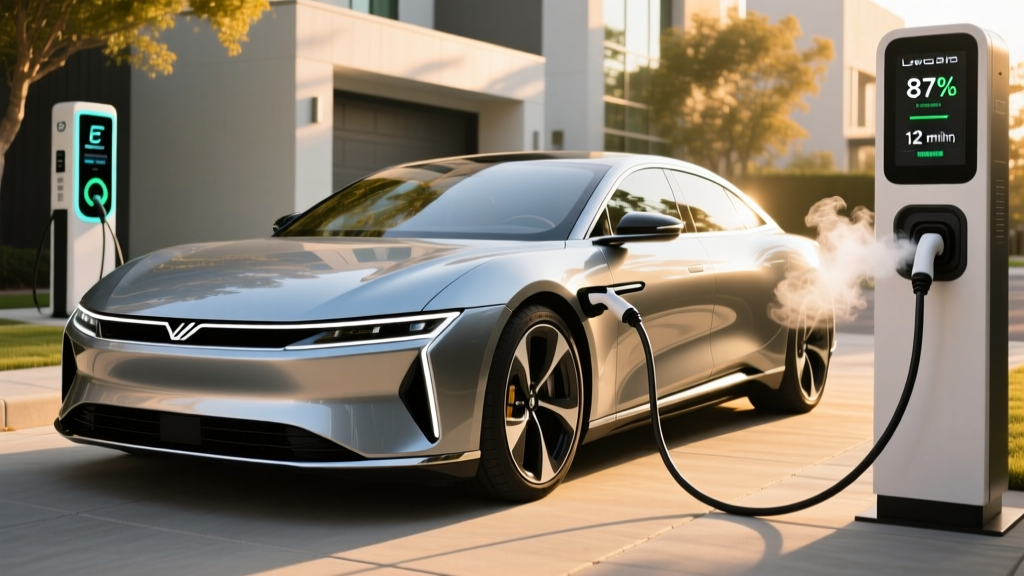
If you've been searching for 2025 Lucid Air images to see whether this luxury sedan lives up to its spec-sheet hype, you're not alone. The Lucid Air remains one of the most efficient, longest-range electric vehicles on the road, and its 2025 lineup adds a more accessible Pure trim alongside the range-topping Sapphire. But photos only tell part of the story. Below, we pair exterior and interior gallery context with hard numbers — EPA range, charging curves, real-world efficiency, and tax-credit math — so you can decide if the Air deserves a spot in your garage.
2025 Lucid Air Lineup at a Glance
For 2025, Lucid offers the Air in four primary configurations. The Pure serves as the entry point with a single-motor RWD layout, while the Touring and Grand Touring add dual-motor AWD and larger battery packs. The Sapphire sits at the apex as a tri-motor performance halo. Here's how the core specs stack up across the lineup:
| Trim | Drivetrain | HP | Battery (usable kWh) | EPA Range | 0-60 mph | Base MSRP |
|---|---|---|---|---|---|---|
| Pure | RWD | 430 | 88 kWh (NMC) | 419 mi | 5.0 sec | $69,900 |
| Touring | AWD Dual-Motor | 620 | 92 kWh (NMC) | 406 mi | 3.4 sec | $87,400 |
| Grand Touring | AWD Dual-Motor | 819 | 112 kWh (NMC) | 516 mi | 3.0 sec | $125,600 |
| Sapphire | AWD Tri-Motor | 1,234 | 118 kWh (NMC) | 427 mi | 1.89 sec | $249,000 |
All trims use nickel-manganese-cobalt (NMC) lithium-ion cells. Lucid has not adopted LFP (lithium iron phosphate) chemistry in the Air, prioritizing energy density over the lower cost and longer cycle life that LFP offers. This matters if you plan to keep the car well past the warranty period — NMC packs tend to degrade slightly faster than LFP when routinely charged to 100%, though Lucid's sophisticated thermal management system helps mitigate that.
Real-World Range vs. the EPA Sticker
EPA Estimate: Up to 516 miles (Grand Touring), 419 miles (Pure RWD).
Real-World Expectation: Plan for 380–440 miles in mixed driving on the Grand Touring; around 350–380 miles on the Pure. At sustained highway speeds of 75+ mph, expect a 10–15% reduction. In freezing temperatures (below 32°F), range can drop 20–30% due to battery resistance and cabin heating demands, even with the Air's standard heat pump.
The Lucid Air Grand Touring's 516-mile EPA rating is extraordinary — it remains the highest of any production EV sold in the U.S., according to fueleconomy.gov. But EPA testing cycles include substantial low-speed city driving where regenerative braking recaptures energy. On a 70-mph highway loop in mild conditions (65–75°F), independent testers have recorded roughly 430–460 miles from the Grand Touring before needing a plug. The Pure's 419-mile EPA figure translates to roughly 340–370 real-world highway miles.
Efficiency is where Lucid truly shines. The Air Pure achieves an EPA-rated 146 MPGe combined (roughly 23 kWh/100 mi), and the Grand Touring manages 131 MPGe combined. For context, the Tesla Model S Long Range rates at 122 MPGe. Lucid's miniaturized drive units and 900V+ electrical architecture reduce resistive losses, giving you more miles per kWh than nearly any competitor.
Charging Speed: DC Fast Charging and Home Level 2
Lucid's 900V+ battery architecture enables some of the fastest DC charging in the luxury sedan segment. Here's what you can expect at the plug:
| Charging Level | Power / Rate | Speed / Time | Notes |
|---|---|---|---|
| Level 1 (120V) | ~1.4 kW | ~3–4 mi/hr | Emergency/trickle only |
| Level 2 (240V, 48A) | 11.5 kW | ~37 mi/hr | Full charge overnight (~10–12 hrs for Grand Touring) |
| DC Fast Charge (peak) | Up to 300 kW | 10–80% in ~20 min (Grand Touring) | Peak rate sustained to ~55% SoC, then tapers |
| DC Fast Charge (Pure/Touring) | Up to 225 kW | 10–80% in ~25 min | Smaller pack = shorter taper window |
The Grand Touring and Sapphire can accept up to 300 kW at compatible CCS chargers (or NACS chargers via adapter, as Lucid has adopted the Tesla North American Charging Standard for newer deliveries). However, the peak 300 kW rate is not sustained across the full charging session. In real-world testing, the charge curve holds near peak from roughly 10% to 50–55% State of Charge, then tapers progressively. A 10–80% session typically takes 20–22 minutes at a 350 kW Electrify America or Ionity station.
For home charging, the onboard 11.5 kW AC charger is competitive. A full Level 2 session on a 48-amp circuit adds about 37 miles of range per hour. Most Grand Touring owners will need 10–12 hours for a full 0–100% charge — perfectly suited for overnight replenishment. If your home electrical panel is older (100-amp service), you may need a panel upgrade to support a hardwired 48A charger; budget $500–$2,000 for that electrical work on top of the $500–$800 charger unit and $800–$1,500 installation labor.
Performance, Ride, and the Sapphire Question
Even the base Air Pure hits 60 mph in 5.0 seconds with 430 horsepower from a single rear motor — quick enough to merge confidently and overtake without drama. The Touring's 620-hp dual-motor setup drops that to 3.4 seconds with all-weather AWD traction.
The Grand Touring's 819 hp and 3.0-second sprint are firmly supercar territory, but it's the Sapphire that grabs headlines: 1,234 horsepower, a 1.89-second 0-60 time, and a sub-9-second quarter mile. It competes directly with the Tesla Model S Plaid but adds a more composed ride thanks to adaptive dampers and torque-vectoring rear motors.
Across the lineup, the Air uses a multi-link front and rear suspension with available air springs (standard on Grand Touring and Sapphire). Ride quality is firm but well-damped — this is a driver's sedan first, not a floaty luxury barge. The steering is precise, if slightly light on feel. One notable drawback: the Air's regenerative braking, while effective, doesn't offer true one-pedal driving to a full stop in all conditions. You'll still use the friction brake pedal at low speeds, which surprises some EV converts.
Interior Space, Tech, and Cargo
The Lucid Air's cabin is airy and modern, with a curved 34-inch glass cockpit display spanning the driver's instrument cluster and central infotainment screen. A lower "Pilot" panel handles climate and secondary controls. Materials are premium — available Nappa leather, open-pore wood, and aluminum accents — though some reviewers note that at the Pure's price point, certain interior plastics don't quite match the Mercedes EQS.
Passenger space is generous for a sedan:
- Front legroom: 45.3 inches
- Rear legroom: 37.6 inches (surprisingly roomy given the sloping roofline)
- Trunk (rear cargo): 32.1 cubic feet (with the rear parcel shelf removed; the Air has a traditional sedan trunk, not a hatchback)
- Frunk (front trunk): 10.1 cubic feet
- Total cargo: 42.2 cubic feet combined
The frunk is large enough for a carry-on suitcase or charging cables. The rear trunk is deep but narrow at the opening — long items like skis will fit, but bulky cargo like large boxes is easier to load in a Model S hatchback or a crossover.
On the tech front, Lucid's DreamDrive Pro ADAS suite includes adaptive cruise control, lane-centering assist, and automated parking. It's a solid SAE Level 2 system — meaning you must keep your hands on the wheel and eyes on the road at all times. It does not offer hands-free highway driving like GM's Super Cruise or Ford's BlueCruise. Lucid has signaled future hands-free capability via over-the-air updates, but as of the 2025 model year, it remains a supervised system.
Pricing, Tax Credits, and Ownership Costs
Here's where the math gets interesting — and complicated. The 2025 Lucid Air Pure starts at $69,900, which places it below the IRS §30D federal tax credit's MSRP cap of $55,000 for sedans. This means the Air Pure does not qualify for the $7,500 new EV tax credit as a sedan. The Touring, Grand Touring, and Sapphire all exceed the cap as well.
Under current IRS §30D rules, the new clean vehicle credit is capped at sedans with an MSRP of $55,000 or less. All 2025 Lucid Air trims exceed this threshold. Additionally, buyers must meet income caps ($150K single / $300K joint AGI), and the vehicle must satisfy critical-mineral and battery-component sourcing requirements. Lucid has been working to localize sourcing, but the MSRP cap remains the binding constraint for the Air. Check the latest rules at irs.gov before purchasing, as regulations may shift.
| Trim | Base MSRP | Federal Tax Credit | Est. Effective Price |
|---|---|---|---|
| Pure | $69,900 | $0 (exceeds $55K sedan cap) | $69,900 |
| Touring | $87,400 | $0 | $87,400 |
| Grand Touring | $125,600 | $0 | $125,600 |
| Sapphire | $249,000 | $0 | $249,000 |
Some buyers may still benefit from state-level incentives (California's CVRP, for instance, or utility-company rebates), but these vary by jurisdiction and often have their own income and price caps. Consult your state's energy office or a tax professional for specifics.
On the ownership-cost side, the Air's efficiency is a financial asset. At a national average electricity rate of $0.17/kWh, charging the Grand Touring's 112 kWh pack from 0–100% costs roughly $19 — yielding over 400 real-world miles. A comparable gas sedan at 25 mpg and $3.50/gallon would spend $56+ on the same distance. Over five years and 75,000 miles, fuel savings alone can exceed $6,000.
Warranty and Battery Longevity
Lucid backs the Air with the following coverage:
- Basic vehicle warranty: 4 years / 50,000 miles
- Battery and powertrain: 8 years / 100,000 miles (retains at least 70% capacity)
- Roadside assistance: 4 years / 50,000 miles
The 70% capacity retention threshold over 8 years is industry-standard, matching Tesla, BMW, and Mercedes. For an NMC pack charged primarily to 80–90% and kept in moderate temperatures, real-world degradation data from early Lucid owners suggests roughly 5–8% loss over the first 50,000 miles — well within warranty tolerance. Out-of-warranty battery replacement costs remain high; industry estimates for a pack of this size run $18,000–$28,000 if needed beyond the warranty window.
Who the 2025 Lucid Air Is For — and Who Should Look Elsewhere
Choose the Lucid Air if:
- You want the longest EPA range of any production EV and prioritize efficiency
- You need a luxury sedan with genuine back-seat room for adults
- You mostly drive highway miles and want fewer charging stops on road trips
- You value understated design over badge prestige
Look elsewhere if:
- You need hatchback/crossover cargo flexibility (consider the Tesla Model S or a luxury EV SUV)
- You want hands-free Level 2 highway driving (GM Super Cruise or Ford BlueCruise vehicles)
- You're counting on the $7,500 federal tax credit to make the math work
- You live in a region with limited CCS/NACS DC fast-charging infrastructure
2025 Lucid Air: Pros and Cons
- Class-leading EPA range (516 mi Grand Touring)
- Best-in-class efficiency (up to 146 MPGe)
- Up to 300 kW DC fast charging
- Spacious rear seat for a sedan
- Refined ride quality with air suspension
- Generous frunk + trunk cargo volume
- No federal tax credit (all trims exceed $55K sedan cap)
- Trunk opening is narrow vs. hatchback rivals
- ADAS is Level 2 only — no hands-free mode yet
- Regen braking doesn't fully stop the car (no one-pedal to 0 mph)
- Service center network is still growing
- Higher insurance premiums typical of luxury EVs
Frequently Asked Questions
What is the real-world range of the 2025 Lucid Air?
The Grand Touring's 516-mile EPA rating translates to roughly 380–460 miles in real-world mixed driving, depending on speed and temperature. Highway driving at 75 mph in mild weather yields around 430–460 miles; freezing conditions can cut that to 320–370 miles. The Pure RWD delivers about 340–380 real-world miles.
How fast does the Lucid Air charge at home and on the road?
At a 350 kW DC fast charger, the Grand Touring peaks at 300 kW and charges from 10–80% in approximately 20–22 minutes. At home on a Level 2 (240V, 48A) charger, the 11.5 kW onboard rate adds about 37 miles per hour — a full charge takes 10–12 hours for the larger pack.
Does the 2025 Lucid Air qualify for the $7,500 federal EV tax credit?
No. Under current IRS §30D rules, the new-vehicle credit caps sedan eligibility at $55,000 MSRP. All Lucid Air trims start above that threshold. State and utility incentives may still apply — check your local programs and consult a tax professional.
Is the Lucid Air worth buying over the Tesla Model S or Mercedes EQS?
If range and efficiency are your top priorities, the Air is unmatched. The Model S offers a hatchback trunk, the Supercharger network, and hands-free-capable FSD (supervised), while the EQS delivers more traditional luxury branding and a wider dealer network. The Air wins on miles-per-kWh and back-seat space; the Model S wins on cargo versatility and charging-network convenience.
What's the biggest drawback of owning a Lucid Air?
Service infrastructure is the most common owner concern. Lucid's service-center footprint is far smaller than Tesla's, and mobile-service availability varies by metro area. If you live outside a major city, factor in potential travel for warranty work. Additionally, no federal tax credit means you pay full MSRP.