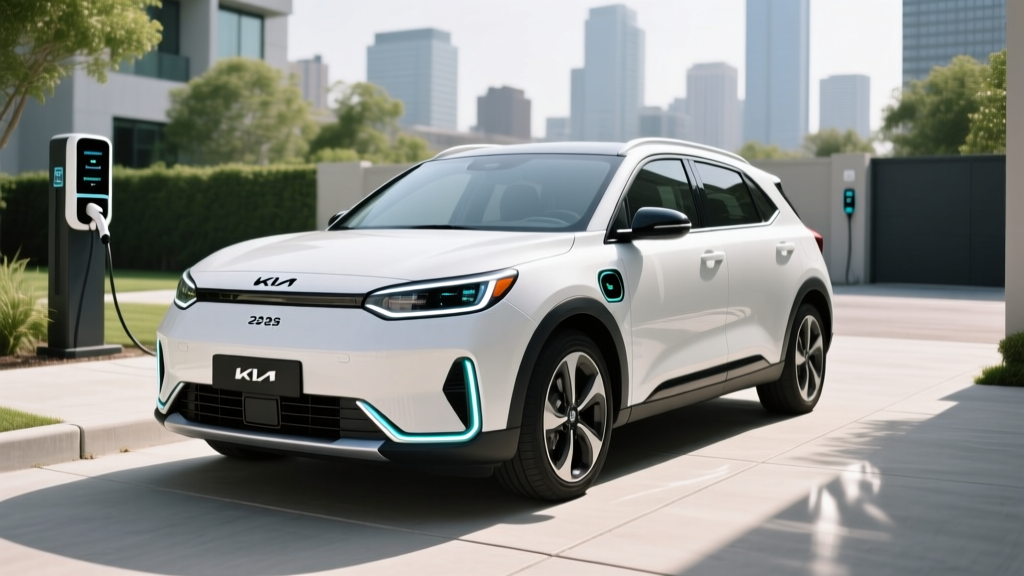
If you're researching the 2025 Kia Niro EV Wind, here's the quick answer: it offers an EPA-estimated 239 miles of range from a 64.8 kWh battery, peaks at roughly 85 kW on DC fast charging (10–80% in about 45 minutes), and starts at an MSRP of $40,875 before any incentives. It's a practical, efficiency-focused compact crossover that trades blistering charge speeds and all-wheel-drive availability for strong real-world efficiency, a comfortable cabin, and Kia's 10-year/100,000-mile powertrain warranty. Whether it saves you money versus a gas Niro or a hybrid depends heavily on your electricity rate, driving pattern, and whether you can charge at home.
Quick Verdict: Who Is the Niro EV Wind For?
Buy it if: You want a comfortable, efficient compact EV crossover for daily commuting and moderate road trips, have access to Level 2 home charging, and prioritize warranty coverage and interior quality over maximum range or ultra-fast charging.
Skip it if: You frequently drive 300+ miles between stops in cold weather, need AWD, or rely exclusively on DC fast charging and want sub-20-minute charge stops.
Specs at a Glance: 2025 Kia Niro EV Wind
| Spec | Value |
|---|---|
| Base MSRP (Wind trim) | $40,875 |
| EPA Range | 239 miles |
| Battery (usable) | 64.8 kWh (NMC) |
| Combined MPGe | 113 MPGe |
| Efficiency | 30 kWh/100 mi |
| Motor Output | 201 hp / 188 lb-ft (FWD) |
| 0–60 mph | ~7.2 seconds |
| Max DC Fast Charge | ~85 kW (peak) |
| 10–80% DC Charge Time | ~45 minutes |
| Level 2 (AC) Charge Rate | 10.9 kW |
| Charge Port | CCS1 (J1772 for AC) |
| Battery Warranty | 10 yr / 100,000 mi |
| Drivetrain | FWD only |
The Wind sits as the mid-tier trim in the 2025 Niro EV lineup, above the base Wind (which replaced the prior Air designation) and below the GT-Line. The Wind adds features like a power sunroof, heated front seats, and a heated steering wheel over the base model, making it the value sweet spot for most buyers.
Real-World Range: What the EPA Number Doesn't Tell You
EPA vs. Reality
EPA Estimate: 239 miles
Expected Real-World Highway (70 mph, mild weather): ~200–215 miles
Expected Real-World Cold Weather (below 32°F, mixed driving): ~160–185 miles
Expected Real-World City/Commuter (mild weather): ~235–250 miles
The Niro EV's 113 MPGe combined rating, as listed on fueleconomy.gov, reflects strong efficiency for a compact crossover. Its 30 kWh/100 mi consumption figure means you're spending less per mile than most EV competitors in this segment.
However, the EPA test cycle includes a significant portion of low-speed urban driving, where EVs are most efficient thanks to regenerative braking. Sustained highway driving at 70–75 mph pushes consumption closer to 33–35 kWh/100 mi, cutting range to roughly 200 miles. In freezing temperatures, the battery's internal resistance increases and cabin heating draws significant energy — expect a 20–30% range reduction. The Niro EV uses a resistive PTC heater rather than a heat pump, which means cold-weather efficiency takes a larger hit than EVs equipped with heat-pump systems like the Hyundai Ioniq 5 or Tesla Model Y.
For most commuters driving 30–60 miles round trip, the Niro EV Wind requires charging only every 3–4 days on a Level 2 home charger, even in winter.
Charging Speeds: The Niro EV's Biggest Trade-Off
| Charging Level | Power (kW) | Miles Added per Hour | Full Charge Time |
|---|---|---|---|
| Level 1 (120V household) | ~1.4 kW | ~4 mi/hr | ~55+ hours |
| Level 2 (240V, 48A) | 10.9 kW | ~34 mi/hr | ~6.5 hours |
| DC Fast Charge (CCS) | ~85 kW peak | ~150+ mi/hr (peak) | 10–80% in ~45 min |
Here's where the Niro EV Wind demands honest consideration. Its peak DC fast-charge rate of roughly 85 kW is well behind competitors like the Hyundai Ioniq 5 (peak ~240 kW on 800V architecture) or the Tesla Model Y (peak ~250 kW). On a road trip, that 10–80% charge in ~45 minutes means longer stops — and the charge curve tapers significantly above 60% State of Charge (SoC).
kW vs. kWh refresher: kW (kilowatts) measures the rate of energy flow — how fast you're filling the battery. kWh (kilowatt-hours) measures total energy stored — the size of the "tank." The Niro's 64.8 kWh battery fills at a maximum rate of ~85 kW.
For daily ownership, this matters far less. Plug in overnight on a Level 2 home charger at 10.9 kW, and you'll wake up with a full battery every morning. The 85 kW DC rate only becomes a pain point on road trips exceeding the car's real-world range. If you take 4+ road trips per year that exceed 250 miles one-way, the slower charging will add 15–25 minutes per stop compared to faster-charging competitors.
The Niro EV uses the CCS1 connector standard. With the industry shifting toward NACS (the Tesla connector), Kia has announced future models will adopt NACS, but the 2025 Niro EV ships with CCS1. Adapters are available (Tesla sells a CCS-to-NACS adapter), and most Electrify America and EVgo stations still offer CCS connectors.
Niro EV vs. Gas Niro vs. Niro Hybrid: Cost Comparison
The Niro lineup is unusual: Kia sells it as a hybrid (HEV), plug-in hybrid (PHEV), and full battery EV (BEV). Here's how the EV Wind stacks up against its siblings and a comparable gas compact crossover on total operating cost.
| Metric | 2025 Niro EV Wind | 2025 Niro Hybrid EX | 2025 Niro PHEV EX |
|---|---|---|---|
| MSRP | $40,875 | $30,390 | $35,390 |
| EPA Combined | 113 MPGe | 53 MPG | 108 MPGe / 48 MPG |
| EV-Only Range | 239 mi | N/A | 33 mi |
| Annual Fuel/Energy (15k mi) | ~$540* | ~$1,050** | ~$750*** |
| Annual Maintenance Est. | ~$300 | ~$650 | ~$600 |
| Federal Tax Credit (§30D) | Eligibility varies† | None | Up to $3,750† |
*Based on $0.16/kWh national average, 30 kWh/100 mi. **Based on $3.50/gal, 53 MPG. ***Assumes 60% electric / 40% gas driving. †See IRS §30D rules below — eligibility depends on battery sourcing, buyer income, and MSRP caps. Verify at irs.gov.
The EV Wind carries a ~$10,500 premium over the Niro Hybrid EX. At roughly $510/year in fuel savings, the break-even point on energy alone is approximately 20 years — but factor in lower maintenance (no oil changes, fewer brake replacements thanks to regenerative braking, no transmission fluid), and the gap narrows. The real financial case for the EV strengthens dramatically with a federal tax credit, state incentives, or cheap overnight electricity rates (under $0.10/kWh in some regions).
Federal Tax Credit: Does the Niro EV Qualify?
IRS §30D Clean Vehicle Credit — Key Requirements
- MSRP Cap: Vans/SUVs/trucks ≤ $80,000; sedans ≤ $55,000 (Niro EV qualifies at $40,875)
- Buyer Income Cap: AGI ≤ $150K single / $225K head of household / $300K joint
- Battery Sourcing: Critical minerals and battery components must meet escalating domestic/free-trade-partner thresholds — this is where many Kia/Hyundai models have faced challenges
- Assembly: Final assembly must be in North America (the Niro EV is assembled in South Korea, which is a significant issue for §30D eligibility)
- Transfer Option: If eligible, you can transfer the credit to the dealer as a point-of-sale discount
Bottom line: Because the 2025 Niro EV is manufactured in South Korea, it does not meet the North American final-assembly requirement for the §30D new-vehicle credit. Check the latest eligibility at fueleconomy.gov and consult a tax professional. Some states offer separate rebates that aren't affected by assembly location.
This is a crucial ownership consideration. The Niro EV's South Korean assembly disqualifies it from the federal $7,500 credit that competitors like the Tesla Model Y, Ford Mustang Mach-E, and VW ID.4 can claim. This effectively widens the price gap versus those rivals by up to $7,500 unless your state offers a compensating incentive. States like California, Colorado, Massachusetts, and New York have their own EV rebates — check your local DMV or energy office for current amounts.
5-Year Cost of Ownership Breakdown
| Category (5 Years / 75K Miles) | Niro EV Wind | Niro Hybrid EX |
|---|---|---|
| Purchase Price (MSRP) | $40,875 | $30,390 |
| Energy/Fuel | $2,700 | $5,250 |
| Maintenance | $1,500 | $3,250 |
| Insurance (est. avg) | $9,500 | $7,500 |
| Estimated Depreciation | $16,000 | $10,500 |
| Total 5-Year Cost | $70,575 | $56,890 |
The EV costs roughly $13,700 more over five years at MSRP without a tax credit. The energy and maintenance savings ($4,300 combined) don't close the gap created by the higher purchase price, steeper depreciation typical of EVs, and higher insurance premiums. The math flips if you qualify for state rebates, lease with manufacturer incentives, or live in a region with very cheap electricity and expensive gas.
Common Misconceptions About the Niro EV
| Myth | Fact |
|---|---|
| "The battery will need replacing in 5 years" | Kia warrants the battery for 10 years/100,000 miles. NMC batteries in this generation typically retain 85–92% capacity at 100K miles based on fleet data. Full replacement, if ever needed, runs $8,000–$12,000. |
| "You can't road trip in an EV" | The CCS network (Electrify America, EVgo) covers major US highways. Plan 45-min charge stops every ~180 highway miles. It's slower than gas, but entirely feasible. |
| "EVs are worse in cold weather" | Range drops 20–30% in freezing temps — real, but manageable. The Niro EV starts reliably in any temperature (no cold-crank issues), and preconditioning while plugged in mitigates range loss. |
| "Home charging requires a panel upgrade" | Most homes with a 200A panel can add a 48A Level 2 charger on a 60A circuit without an upgrade. A licensed electrician can confirm for $100–200. Typical install: $500–$2,000 if no panel work is needed. |
| "The Niro EV gets the $7,500 federal tax credit" | As of 2025, it does not — South Korean assembly fails the North American final-assembly requirement under §30D. State incentives may partially offset this. |
First-Time EV Buyer: What You Need to Know Before Purchasing
If the 2025 Niro EV Wind is your first EV, these practical considerations will determine whether you love or regret the purchase:
1. Home charging is essential. Without it, EV ownership becomes a chore. A Level 2 (240V) home charger adds roughly 34 miles of range per hour — plug in when you get home, and you'll always wake up "full." Budget $500–$2,000 for professional installation of a ChargePoint Home Flex or similar unit. If you live in an apartment without charging access, the Niro PHEV (33 miles electric + gas backup) is a better fit.
2. Your electrical panel may need evaluation. A 48A Level 2 charger requires a 60A dedicated circuit. Homes with 100A service or heavily loaded 200A panels may need a $1,500–$3,500 panel upgrade. Get a quote from a licensed electrician before committing to the car.
3. Plan for cold weather. If you live where winters drop below freezing, expect real range closer to 160–185 miles. The Niro EV's lack of a heat pump makes this more pronounced. Preconditioning the battery and cabin while still plugged in at home recovers some of that loss.
4. Insurance costs more. EV insurance premiums run 15–25% higher than equivalent gas cars due to repair costs and battery replacement risk. Get a quote before purchasing — the difference can be $200–$500/year depending on your profile.
5. Maintenance is minimal but not zero. You'll still rotate tires (EVs wear tires faster due to instant torque and heavier weight), replace cabin air filters, top off washer fluid, and eventually replace brake fluid. But no oil changes, spark plugs, timing belts, or transmission fluid.
Decision Framework: Should You Buy the 2025 Niro EV Wind?
Choose the Niro EV Wind If:
- You have Level 2 home charging (or can install it)
- Your daily round-trip commute is under 80 miles
- You take fewer than 4 road trips per year exceeding 250 miles
- You value Kia's 10-year/100,000-mile warranty coverage
- You live in a state with its own EV rebate that offsets the lack of federal credit
- You prefer a car-like driving position over a tall SUV
Choose Something Else If:
- You need AWD — consider the Hyundai Ioniq 5, Tesla Model Y, or Ford Mustang Mach-E
- You road-trip frequently and want faster DC charging — the Ioniq 5 (240 kW peak) or Model Y (250 kW) cut charge-stop time in half
- You can't charge at home — the Niro PHEV gives you 33 miles of electric commuting with gas-engine freedom
- You need the federal tax credit to make the math work — the VW ID.4, Tesla Model Y, and Ford Mach-E are assembled in North America and may qualify
- You regularly drive in extreme cold and need maximum range retention — look for EVs with heat pump systems
Frequently Asked Questions
Does the 2025 Kia Niro EV Wind qualify for the $7,500 federal tax credit?
No. The Niro EV is assembled in South Korea, which does not meet the North American final-assembly requirement under IRS §30D rules. State incentives may still apply — check your state's energy office or DMV for current programs.
How long does it take to charge the Niro EV at home?
On a Level 2 (240V) home charger at 10.9 kW, a full 0–100% charge takes approximately 6.5 hours. Most owners charge from 20–80% overnight, which takes about 4 hours. On a standard 120V outlet (Level 1), a full charge takes over 55 hours — only practical for emergency topping off.
What is the real-world highway range of the Niro EV Wind?
Expect roughly 200–215 miles at 70 mph in mild weather (60–80°F). In freezing temperatures, highway range drops to approximately 160–185 miles. City driving with regenerative braking can exceed the EPA estimate, reaching 240–250 miles in ideal conditions.
Is the Niro EV a good choice for cold climates?
It's adequate but not optimal. The Niro EV uses a PTC resistive heater rather than a more efficient heat pump, which increases energy consumption for cabin heating by roughly 30–40% versus a heat-pump-equipped EV. If you live in Minnesota, Maine, or similar climates, preconditioning while plugged in is essential, and you should plan for 160–185 miles of real winter range.
How does the Niro EV's cargo space compare to the hybrid?
The Niro EV offers 18.5 cubic feet behind the rear seats and 53.0 cubic feet with seats folded — nearly identical to the hybrid variant. The EV's flat floor (battery underneath) actually makes the cargo area slightly more usable, with no transmission tunnel intrusion.
Will the CCS1 charge port become obsolete?
The industry is shifting to NACS (Tesla's connector), and Kia has committed to NACS on future models. However, CCS1 won't disappear overnight — Electrify America, EVgo, and ChargePoint stations will maintain CCS connectors for years, and CCS-to-NACS adapters are available. The 2025 Niro EV will remain chargeable at the vast majority of public stations for its usable life.