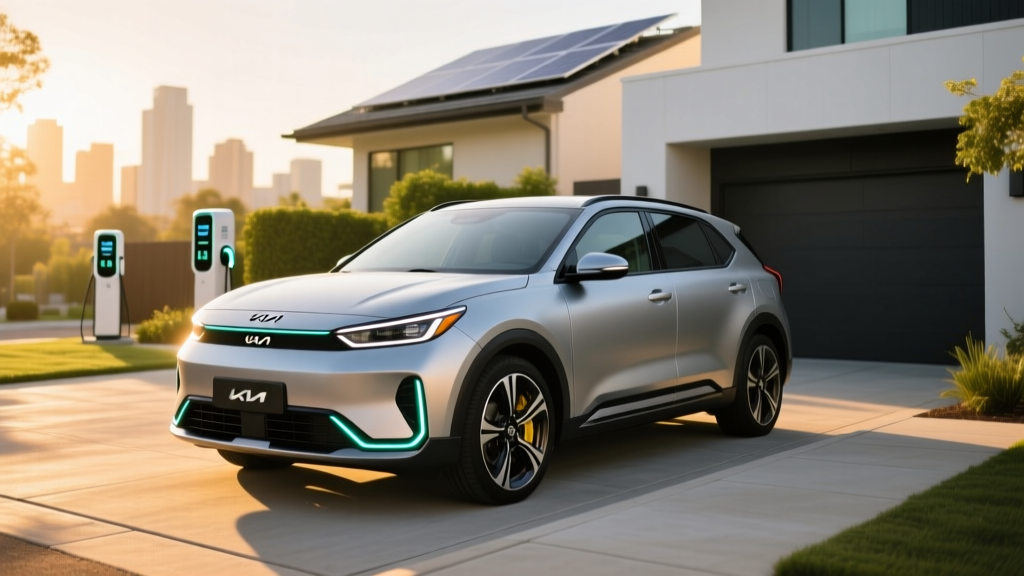
Quick Verdict: Is the Niro EV Wind Worth Leasing in 2025?
The 2025 Kia Niro EV Wind occupies a rare sweet spot in the compact electric crossover segment: an EPA-estimated 239 miles of range, a usable 64.8 kWh battery, and a starting MSRP around $39,600 that keeps it under the federal tax credit's price cap. When you find aggressive lease deals — often structured to pass through the $7,500 §30D clean vehicle credit as a capitalized-cost reduction — the effective monthly payment can undercut gas-powered competitors while delivering lower per-mile operating costs.
But leasing an EV involves trade-offs that brochures don't highlight. Below, we run the full five-year ownership math, dissect current incentive eligibility, and show you where the Niro EV Wind saves money — and where it quietly costs more.
2025 Kia Niro EV Wind: Key Specs at a Glance
| Spec | Value |
|---|---|
| EPA Range | 239 miles (real-world highway: ~200–215 mi; cold weather: ~170–190 mi) |
| Battery (Usable) | 64.8 kWh, NMC chemistry |
| Motor Output | 201 hp / 291 lb-ft torque (FWD) |
| 0–60 mph | ~7.2 seconds |
| DC Fast Charge (Peak) | ~85 kW (10–80% in ~43 min) |
| Level 2 AC Charge | 11 kW onboard charger (~7 hr from empty) |
| EPA Efficiency | 113 MPGe combined (30 kWh/100 mi) |
| Base MSRP (Wind trim) | ~$39,600 (before destination) |
| Battery/Powertrain Warranty | 10 years / 100,000 miles |
Breaking Down the 5-Year Total Cost of Ownership
The sticker price is just the entry fee. Here's what five years with a 2025 Niro EV Wind actually costs, assuming 15,000 miles driven annually (75,000 miles total), home Level 2 charging at the national average electricity rate, and a clean driving record.
| Category | Estimated 5-Year Cost | Notes |
|---|---|---|
| Purchase (after $7,500 credit) | ~$33,100* | MSRP ~$40,600 incl. destination, minus §30D credit |
| Electricity (charging) | ~$3,375 | 30 kWh/100 mi × 75,000 mi × $0.15/kWh avg |
| Insurance | ~$9,500–$11,400 | $1,900–$2,280/yr; EVs typically 15–25% more than gas equivalents |
| Maintenance | ~$1,200–$1,800 | Cabin filter, tire rotation, fluid top-offs, wiper blades |
| Depreciation (est. resale at yr 5) | ~$18,000–$22,000 | EVs currently depreciate 45–55% over 5 years |
| Total Estimated 5-Year Cost | ~$47,175–$51,675 | Varies by region, utility rate, insurance profile |
*Purchase price assumes full §30D credit eligibility. Lease structures may pass the credit through differently — see the incentive section below.
Federal Tax Credit: Do You Qualify for the Full $7,500?
The IRS §30D Clean Vehicle Credit offers up to $7,500 for qualifying new EVs, but eligibility hinges on four simultaneous requirements. Miss any one, and the credit shrinks or disappears entirely.
- MSRP Cap: Vehicle MSRP must not exceed $55,000 for SUVs/crossovers. The Niro EV Wind at ~$39,600 clears this easily.
- Buyer Income Limits: Modified AGI must be ≤ $300,000 (joint filers), ≤ $225,000 (head of household), or ≤ $150,000 (single). Checked against the year of delivery or prior year — whichever is lower.
- Battery Sourcing: The credit splits into two halves — $3,750 for critical-minerals sourcing and $3,750 for battery-component manufacturing. Both have escalating domestic-content thresholds that tighten annually. Kia's battery supply chain for the Niro EV has historically met component requirements, but critical-mineral sourcing must be verified at point of sale for the specific VIN.
- Point-of-Sale Transfer: Since 2024, buyers can transfer the credit to the dealer as an immediate price reduction rather than claiming it on their tax return. For leases, the credit typically goes to the lessor (the financing entity), who may or may not pass it through as a cap-cost reduction — always confirm this in writing before signing.
Lease Deals vs. Purchase: The Credit Pass-Through Question
When you see advertised "2025 Kia Niro EV Wind lease deals" at $299–$399/month, scrutinize how the $7,500 credit is applied. In a lease, the leasing company (not you) technically claims the credit. Competitive dealers structure deals so the credit reduces the capitalized cost, effectively lowering your monthly payment. But some ads show low payments that already bake in the credit — meaning you're not getting an additional discount on top.
What to ask the dealer: "Is the $7,500 federal credit applied as a cap-cost reduction in this lease quote, and is the money factor and residual being set by Kia Motors Finance or a third-party lessor?" Get the full lease disclosure — cap cost, residual percentage, money factor, and all fees — before committing.
Charging Cost vs. Gas: The Per-Mile Math
This is where the Niro EV Wind delivers its clearest financial advantage — but the savings depend heavily on your electricity rate and charging habits.
| Scenario | Niro EV Wind | Gas Crossover (28 MPG combined) |
|---|---|---|
| Home charging @ $0.15/kWh | $0.045/mile | — |
| Home charging @ $0.25/kWh (CA, Northeast) | $0.075/mile | — |
| Public DC fast charging @ $0.40/kWh | $0.12/mile | — |
| Gasoline @ $3.40/gallon | — | $0.121/mile |
| Gasoline @ $4.20/gallon | — | $0.15/mile |
| Annual fuel cost (15,000 mi) | $675–$1,125 | $1,815–$2,250 |
At the national average residential rate of roughly $0.15/kWh (per EIA data), the Niro EV's 30 kWh/100 mi consumption translates to about $0.045 per mile — roughly one-third the cost of a 28 MPG gas crossover burning $3.40/gallon fuel. Over 75,000 miles in five years, that's a fuel savings of approximately $5,100–$7,900.
However, if you rely primarily on public DC fast charging at $0.35–$0.48/kWh (common on Electrify America and EVgo networks), your per-mile cost rises to $0.105–$0.144, which narrows or eliminates the savings gap versus gasoline. Home charging access is the single biggest variable in EV operating economics.
Maintenance Savings: Where EVs Quietly Win
The Niro EV's electric powertrain eliminates the maintenance items that dominate gas-car service schedules. Here's what you'll never pay for:
| Eliminated Service Item | Typical Gas-Car 5-Year Cost |
|---|---|
| Oil changes (5–7 over 5 years) | $350–$700 |
| Transmission fluid | $150–$300 |
| Spark plugs | $200–$400 |
| Engine air filter | $100–$200 |
| Brake pad replacement | $300–$600 |
| Total avoided | $1,100–$2,200 |
Regenerative braking significantly extends brake pad life — many EV owners report original pads lasting 80,000+ miles. Your primary maintenance costs will be cabin air filter replacement (~$40–$80 annually), tire rotation (~$25–$50 every 7,500 miles), and eventual tire replacement. EVs tend to wear tires 15–20% faster than comparable gas cars due to instant torque and higher curb weight (the Niro EV weighs ~3,850 lbs). Budget for a set of four tires around $600–$900 at roughly 40,000–50,000 miles.
The Insurance Reality: Expect to Pay More
EV insurance premiums run 15–25% higher than equivalent gas vehicles, and the Niro EV is no exception. Based on national averages for a 35-year-old driver with a clean record, expect annual premiums of $1,900–$2,280, compared to roughly $1,500–$1,750 for a gas-powered Kia Sportage.
Why EVs cost more to insure:
- Higher repair costs: Battery pack damage in a collision often requires full replacement ($10,000–$15,000 for the Niro's 64.8 kWh pack), and insurers price in that risk.
- Specialized labor: High-voltage system repairs require certified EV technicians, which are scarcer and more expensive.
- Total-loss thresholds: Insurers may declare an EV a total loss after relatively minor battery-adjacent damage, increasing claim payouts.
Shop quotes from insurers with dedicated EV programs (Geico, Progressive, and Liberty Mutual all offer EV-specific policies). Some offer discounts for garaging near fire stations or for vehicles with advanced ADAS features — the Niro EV's standard Kia Drive Wise suite qualifies.
Depreciation and Resale Value: The EV Wild Card
This is the category where EVs have struggled most. Industry data from sources like iSeeCars and Kelley Blue Book shows that EVs depreciated an average of 45–55% over five years in the 2023–2025 period, compared to roughly 38–42% for gas vehicles. Several factors drive this:
- Price wars: Tesla's repeated price cuts in 2023–2024 cascaded through used-EV values across all brands.
- Battery anxiety: Used buyers remain cautious about long-term battery health, even though data shows most NMC packs retain 85–90% capacity at 100,000 miles.
- Rapid tech obsolescence: Newer EVs with faster charging and longer range make 3–4-year-old models feel dated.
- Tax credit headwinds: When new EVs become cheaper via incentives, used EV prices must drop to remain competitive.
For the Niro EV Wind specifically, expect a 5-year resale value in the range of $18,000–$22,000 (from a ~$40,600 starting point). This is a significant cost that partially offsets fuel and maintenance savings.
Lease advantage: If you lease, depreciation is the lessor's problem. Your risk is limited to excess mileage and wear charges. For buyers worried about EV resale uncertainty, leasing transfers that risk entirely — which is why many of the best Niro EV Wind deals are lease-structured.
State, Local, and Utility Incentives: Check Your Region
Beyond the federal §30D credit, dozens of states, municipalities, and utility companies offer additional rebates and incentives. These vary dramatically by ZIP code and change frequently, so always verify current programs through official sources.
- California: CVRP rebate up to $7,000 for income-qualified buyers; additional $1,500 from some utilities (PG&E, SCE)
- Colorado: State tax credit up to $5,000 for EVs under $80,000 MSRP
- New York: Drive Clean Rebate up to $2,000 at point of sale
- Utility rebates: Many utilities offer $250–$1,000 for Level 2 home charger installation, plus time-of-use rate plans that cut charging costs by 30–50%
Check afdc.energy.gov/laws for a state-by-state incentive database. Consult a tax professional for state credit eligibility, as rules differ from federal requirements.
Charging Speed Reality: The Niro EV's Biggest Limitation
If there's one spec that should give prospective Niro EV Wind lessees pause, it's DC fast charging speed. The Niro EV peaks at roughly 85 kW on a DC fast charger — well below the 150–250 kW rates offered by competitors like the Hyundai Ioniq 5 (which shares a corporate parent but uses an 800V architecture).
A 10–80% charge takes approximately 43 minutes at a 150+ kW station. The charge curve is relatively flat — the Niro sustains close to its peak rate through most of the session, which is good, but that peak is simply modest by 2025 standards. For daily commuting with home charging, this is irrelevant. For road trips requiring multiple fast-charging stops, it adds 15–20 minutes per stop compared to faster-charging rivals.
The Niro EV uses the CCS1 connector standard. With the industry's ongoing shift to NACS (Tesla's connector), Kia has not announced a NACS retrofit adapter program for the 2025 Niro EV, though third-party CCS-to-NACS adapters are becoming available for Supercharger access.
Frequently Asked Questions
How much does it really cost to own a 2025 Kia Niro EV Wind over 5 years?
Our analysis estimates a total 5-year cost of roughly $47,000–$52,000 including purchase (after the federal credit), electricity, insurance, maintenance, and depreciation. The largest variable is depreciation, which depends on used-EV market conditions at resale time. If you lease, your out-of-pocket is limited to monthly payments, insurance, charging, and maintenance — typically $28,000–$35,000 over 60 months depending on deal structure.
Do I qualify for the full $7,500 federal tax credit?
You qualify if your modified AGI falls under the IRS thresholds ($150K single / $300K joint), the vehicle MSRP is under $55,000 (the Niro EV Wind qualifies), and the battery meets current-year critical-mineral and component sourcing requirements. The dealer must provide a clean-vehicle seller report at point of sale confirming eligibility for your specific VIN. Rules tighten annually — always verify against current IRS guidance.
How much do I save on fuel and maintenance versus a gas car?
With home charging at $0.15/kWh, expect to save roughly $5,100–$7,900 on fuel over five years versus a 28 MPG gas crossover. Maintenance savings add another $1,100–$2,200. Combined, that's approximately $6,200–$10,100 in operational savings — meaningful, but not enough to fully offset higher insurance premiums and potentially steeper depreciation.
Are EVs more expensive to insure than gas cars?
Yes, typically 15–25% more. For the Niro EV, expect annual premiums of $1,900–$2,280 versus $1,500–$1,750 for a comparable gas crossover. Higher repair costs, battery replacement risk, and specialized labor drive the difference. Shop multiple insurers and ask about EV-specific discounts.
How well does the Kia Niro EV hold its value?
EVs broadly have depreciated 45–55% over five years in the current market, and the Niro EV is in that range. Expect a 5-year resale value of approximately $18,000–$22,000 from a ~$40,600 purchase price. Leasing eliminates resale risk entirely, which is why many Niro EV buyers prefer lease structures — especially when the federal credit is passed through as a cap-cost reduction.
Is the Niro EV Wind a good choice for road trips?
It's adequate but not class-leading. The 239-mile EPA range means stops every 180–200 miles in real-world highway driving, and the ~85 kW peak charge rate means each 10–80% stop takes about 43 minutes. For frequent road trippers, the Hyundai Ioniq 5 or Kia EV6 (both with 800V architecture and 200+ kW charging) are stronger choices. For commuters who road-trip 2–3 times a year, the Niro EV's comfort and efficiency outweigh the charging-speed limitation.