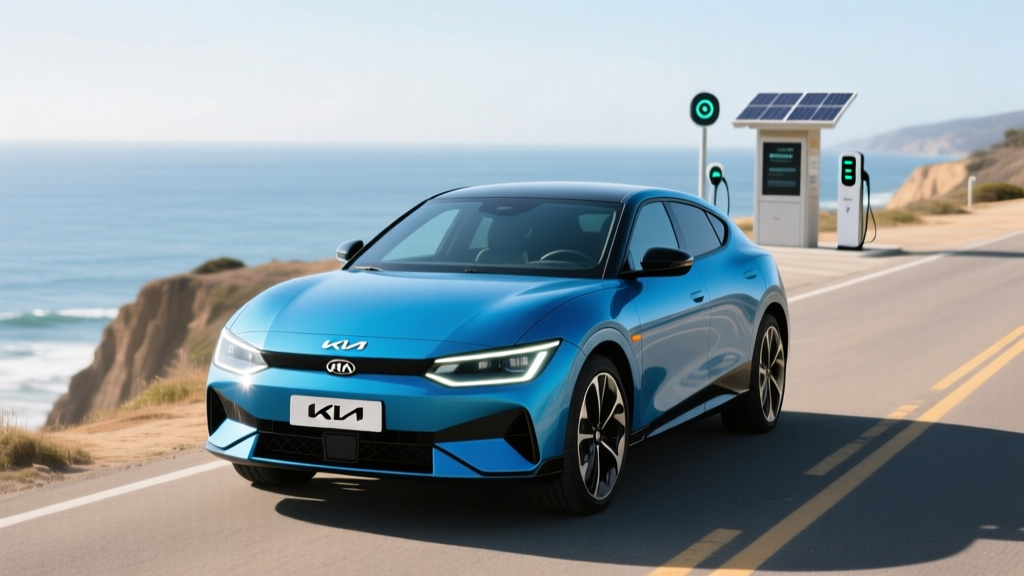
Quick Verdict: The 2025 Kia EV6 Wind
The 2025 Kia EV6 Wind sits in the middle of Kia's electric crossover lineup — above the base Light and below the GT-Line — and it's arguably the trim most buyers should target. You get the full 77.4 kWh usable battery, dual-motor all-wheel drive, and Kia's upgraded 800-volt architecture that still outpaces most rivals at the DC fast charger. The Wind trim adds premium touches like a heated steering wheel, ventilated front seats, and a power liftgate without pushing the MSRP into luxury territory.
After spending time with the EV6 platform across multiple model years, the Wind trim strikes a balance: enough range for road trips, enough power for confident merging, and enough tech to keep passengers happy. The main trade-off is cargo space, which trails the Hyundai Ioniq 5 and Tesla Model Y. If you need a family hauler first and an EV second, cross-shop carefully. If you want a fast-charging, well-equipped daily driver that handles winter commutes and weekend getaways, the Wind is a strong pick.
Range, Efficiency & Real-World Expectations
The 2025 Kia EV6 Wind AWD carries an EPA-estimated range of 282 miles on a full charge. That's down from the RWD Light trim's 310-mile EPA figure, a direct consequence of the dual-motor setup adding weight and parasitic drivetrain loss. Efficiency lands at 117 MPGe combined, which translates to roughly 29 kWh per 100 miles — competitive with the Ford Mustang Mach-E Extended Range AWD but a touch behind the Ioniq 5 AWD's slightly lighter curb weight.
EPA sticker: 282 miles (AWD Wind). Expect ~240–260 miles in mixed highway driving at 70–75 mph, where aerodynamic drag dominates. In freezing temperatures (below 32°F), plan for ~200–220 miles of usable range before you're hunting for a charger. City driving with heavy regenerative braking can push you close to or slightly above the EPA number. The EV6's heat pump — standard on the Wind — helps mitigate cold-weather cabin heating losses, but battery chemistry still suffers in deep cold.
| EPA Range | 282 miles (AWD) |
| Battery (Usable) | 77.4 kWh, NMC (nickel-manganese-cobalt) |
| Efficiency | 117 MPGe combined / 29 kWh/100 mi |
| Max DC Fast Charge | 239 kW peak (800V architecture) |
| 10–80% DC Charge Time | ~18 minutes (ideal conditions) |
| Level 2 Home Charge Rate | 10.9 kW onboard charger |
| 0–60 mph | 5.1 seconds |
| Horsepower / Torque | 320 hp / 446 lb-ft |
| Drivetrain | Dual-motor AWD |
| Cargo (behind rear seats) | 24.4 cu ft |
| Cargo (rear seats folded) | 50.2 cu ft |
| Rear Legroom | 39.0 inches |
| Base MSRP (Wind AWD) | $48,300 (before destination) |
| Battery Warranty | 10 years / 100,000 miles |
Charging Speed: DC Fast, Level 2 & What to Expect
The EV6's 800-volt electrical architecture remains one of its strongest advantages in this price class. On a 350 kW-capable DC fast charger (such as Electrify America's latest stalls or Tesla Superchargers with the included NACS adapter), the EV6 Wind peaks at 239 kW and can charge from 10% to 80% in approximately 18 minutes under ideal thermal conditions.
That peak number doesn't hold for the entire session. The charge curve tapers significantly above 60% state of charge, and by 80% you're pulling closer to 80–100 kW. This is normal for NMC chemistry — the battery management system protects cell longevity by reducing current as voltage rises. A full 10–90% session will take closer to 30–35 minutes. For road trips, the practical move is charging to 80% and moving on; the last 10–20% is painfully slow unless you're parked overnight.
| Charging Level | Power | Miles Added per Hour | Notes |
|---|---|---|---|
| Level 1 (120V household) | ~1.4 kW | ~4 mi/hr | Emergency/top-off only |
| Level 2 (240V, 48A home charger) | 10.9 kW (max onboard) | ~36 mi/hr | Full charge in ~7.5 hours |
| DC Fast (50 kW station) | 50 kW | ~150 mi/hr | 10–80% in ~55 min |
| DC Fast (350 kW station) | 239 kW peak | ~650+ mi/hr (peak) | 10–80% in ~18 min |
For home charging, the EV6's 10.9 kW onboard charger means you'll want a 48-amp Level 2 wall connector on a 60-amp circuit to maximize speed. A full overnight charge from near-empty takes about 7.5 hours — more than enough for any daily commute. If your home has a 200-amp electrical panel with spare capacity, installation typically runs $500–$1,500 beyond the charger hardware itself. Older homes may need a panel upgrade, which can add $1,500–$3,000.
Performance & Driving Impressions
The dual-motor AWD Wind produces 320 horsepower and 446 lb-ft of torque, good for a 0–60 mph time of 5.1 seconds. That's quick enough to merge confidently onto any freeway and satisfying at stoplights, but it's not the GT's 3.4-second territory. The instant torque delivery means the EV6 feels faster than its numbers suggest in everyday driving — around-town acceleration is immediate and linear.
Ride quality on the Wind's standard 19-inch wheels is composed and slightly firm, trading some plushness for cornering confidence. The steering is precise if a touch light, and the low center of gravity (battery pack under the floor) keeps body roll well-controlled. Regenerative braking offers multiple levels via steering-wheel paddles, including a true one-pedal driving mode that brings the car to a complete stop without touching the brake pedal.
The Wind's AWD system is full-time — both motors are always engaged — which gives it predictable traction in rain and light snow. Ground clearance is 6.1 inches, adequate for plowed roads but not for deep drifts or trail use.
Interior, Tech & Cargo Practicality
Inside, the 2025 EV6 Wind features a dual 12.3-inch curved display panel running Kia's latest infotainment software with wireless Apple CarPlay and Android Auto. The center console includes a rotary dial shifter, physical climate controls (a welcome decision over touchscreen-only HVAC), and a pair of USB-C ports front and rear. The Wind adds ventilated front seats, a heated steering wheel, ambient interior lighting, and a power liftgate over the base Light trim.
Passenger space is generous for the segment: 41.2 inches of front legroom and 39.0 inches of rear legroom make the back seat comfortable for adults on longer trips. Headroom is adequate, though the sloping roofline cuts into space for taller passengers in the rear outboard seats.
Cargo is where the EV6 shows its limits. Behind the rear seats, you get 24.4 cubic feet — less than the Ioniq 5's 27.2 cu ft and significantly less than the Model Y's ~30 cu ft. Fold the rear seats and the EV6 opens up to 50.2 cubic feet, which handles a weekend's worth of luggage for four or a large grocery haul, but it won't swallow a full-size stroller and a week of camping gear simultaneously. The front trunk (frunk) on AWD models is a small 0.7 cu ft — enough for a charging cable and a jacket, not much else.
On the tech front, the EV6 Wind includes Highway Driving Assist 2 (HDA2), Kia's Level 2 driver-assistance suite combining adaptive cruise control with stop-and-go, lane-centering, and lane-change assist. It's competent on interstates but requires hands on the wheel at all times — this is not an eyes-off system. The available digital key lets you use a smartphone as a key fob, and the 360-degree camera with blind-spot view display is a parking-lot standout.
Pricing, Tax Credit & Ownership Costs
The 2025 Kia EV6 Wind AWD starts at a base MSRP of $48,300, with destination charges adding approximately $1,375. Common options — such as the Wind Technology Package (adding a head-up display, remote smart parking assist, and parking collision avoidance) — can push an as-tested price to $51,000–$53,000.
The Kia EV6 is assembled in West Point, Georgia (as of the 2024 model year), which helps it qualify for the up to $7,500 federal EV tax credit under IRS §30D — but eligibility depends on several buyer-specific and vehicle-specific factors:
- MSRP cap: SUVs must be at or below $80,000 — the Wind clears this easily.
- Buyer income cap: Modified AGI must not exceed $150,000 (single), $225,000 (head of household), or $300,000 (joint).
- Battery sourcing: A percentage of critical minerals and battery components must meet North American sourcing thresholds, which increase annually. The exact credit amount ($3,750 or $7,500) depends on current-year sourcing compliance.
- Point-of-sale transfer: Eligible buyers can apply the credit as an instant rebate at the dealership rather than waiting for tax filing.
Always verify current eligibility at IRS.gov and with your tax professional before relying on the credit in your purchase math. Rules and sourcing compliance change annually.
| Item | Amount |
|---|---|
| Base MSRP (Wind AWD) | $48,300 |
| Destination Charge | ~$1,375 |
| Wind Technology Package (optional) | ~$1,700 |
| As-Tested Price (with options) | ~$51,375 |
| Est. Federal Tax Credit (if eligible) | Up to $7,500 |
| Effective Price After Credit | ~$40,800–$43,875 |
On the ownership side, Kia's warranty coverage is a major asset: 5 years/60,000 miles bumper-to-bumper and 10 years/100,000 miles on the battery and powertrain. The battery warranty guarantees the pack will retain at least 70% of its original capacity during that period. Based on current NMC degradation data from similar Hyundai Motor Group platforms, expect roughly 5–8% capacity loss over the first 100,000 miles under normal use — well within the warranty threshold.
Insurance premiums for the EV6 Wind tend to run 10–20% higher than a comparably priced gas crossover, driven by higher repair costs for battery-adjacent collision damage. Shop quotes before buying. Electricity costs for home charging average roughly $0.14/kWh nationally, putting a full charge at about $10.85 — equivalent to gasoline at $1.50/gallon in a 30 MPG vehicle.
Pros, Cons & Who Should Buy
✓ Pros
- Best-in-class DC fast charging (800V, 10–80% in ~18 min)
- Strong 320 hp dual-motor acceleration
- Generous 10-year/100,000-mile battery warranty
- Physical climate controls and intuitive infotainment
- Comfortable ride quality with composed handling
- Standard heat pump for cold-weather efficiency
- Now assembled in the USA (Georgia), improving tax-credit odds
✗ Cons
- Cargo space trails Ioniq 5, Model Y, and Mach-E
- Small frunk on AWD models (0.7 cu ft)
- Rear visibility hampered by thick C-pillars and sloping roof
- No front trunk pass-through for longer items
- AWD range drops to 282 mi EPA (vs. 310 mi RWD Light)
- Insurance premiums above segment average
- Some dealers still unfamiliar with EV sales and credit transfer
- Commuters (30–80 mi round trip): Excellent fit. Home charging covers daily needs with range to spare, and the comfortable ride reduces highway fatigue.
- Couples / small families: Works well for two adults and one or two kids. Rear car seats fit, but the limited cargo area means stroller-and-grocery Tetris on busy weekends.
- Road trippers: The 18-minute DC fast charge makes long-distance travel practical on the Electrify America and Tesla Supercharger networks. Plan stops around 200-mile intervals in winter.
- Towing: Rated at 2,700 lbs with trailer brakes — enough for a small utility trailer or a pair of dirt bikes, but not a camper. Towing cuts range roughly in half.
- Not ideal for: Large families needing three rows, or anyone who regularly hauls bulky cargo. Look at the Kia EV9 or a three-row electric SUV instead.
How It Stacks Up Against Competitors
The EV6 Wind AWD competes directly with the Hyundai Ioniq 5 SEL AWD (~$52,600, 260 mi EPA, 24.4 cu ft cargo), the Tesla Model Y Long Range AWD (~$48,000 after price cuts, 311 mi EPA, ~30 cu ft cargo), and the Ford Mustang Mach-E Premium AWD (~$49,000, 290 mi EPA, 29.7 cu ft cargo).
The EV6 wins on DC charging speed — its 239 kW peak outpaces the Mach-E (~150 kW) and matches the Ioniq 5 (which shares the same 800V platform). The Model Y charges quickly on Tesla's Supercharger network but uses a different connector ecosystem, though NACS adoption is narrowing this gap. The Model Y wins decisively on cargo volume and range, while the Mach-E offers a larger frunk and slightly more rear cargo room. The Ioniq 5 is the EV6's closest sibling — mechanically identical, but styled differently and with marginally more cargo space.
If charging speed and warranty are your top priorities, the EV6 Wind is the strongest choice. If cargo volume and maximum range dominate your decision, the Model Y Long Range remains the benchmark. If you want the same hardware with retro-modern styling, the Ioniq 5 is the EV6's twin in a different suit.
Frequently Asked Questions
What is the real-world range of the 2025 Kia EV6 Wind AWD?
The EPA rates it at 282 miles. In real-world highway driving at 70–75 mph, expect 240–260 miles. In freezing weather, plan for 200–220 miles. City driving with regenerative braking can approach or slightly exceed the EPA number.
How fast does the EV6 Wind charge at home and on the road?
On a Level 2 home charger (240V, 48A), the 10.9 kW onboard charger adds about 36 miles of range per hour, with a full charge in roughly 7.5 hours. On a 350 kW DC fast charger, it peaks at 239 kW and reaches 10–80% in approximately 18 minutes under ideal conditions.
Does the 2025 Kia EV6 Wind qualify for the $7,500 federal tax credit?
It can, but eligibility depends on your income (AGI caps apply), the vehicle's battery-sourcing compliance for the current year, and the $80,000 SUV MSRP cap (which the Wind clears). The EV6 is now assembled in Georgia, improving its sourcing profile. Verify current eligibility at IRS.gov and consult a tax professional.
Is the EV6 Wind worth buying over the Tesla Model Y or Ioniq 5?
Choose the EV6 Wind if DC fast-charging speed, Kia's 10-year warranty, and physical interior controls matter most. Choose the Model Y if you need maximum cargo space and range. Choose the Ioniq 5 if you prefer its styling — it's mechanically identical to the EV6 with slightly more cargo room.
How long will the EV6 battery last?
Kia warranties the battery for 10 years or 100,000 miles, guaranteeing at least 70% capacity retention. Based on data from similar NMC packs in the Hyundai Motor Group family, expect 5–8% degradation over 100,000 miles. Many EV batteries outlast 150,000+ miles before dropping below 80% health, though individual results vary with charging habits and climate.
Can I use Tesla Superchargers with the EV6?
Yes. Kia provides a NACS adapter with the 2025 EV6, enabling access to Tesla's Supercharger network (V3 and V4 stalls). The EV6 uses its native CCS port for Electrify America and other non-Tesla DC networks. Having both connector options is a significant advantage for road-trip flexibility.
Sources: EPA Fuel Economy, Kia America, IRS New Clean Vehicle Credit. Specifications reflect 2025 model year data available at time of publication. Tax credit rules are subject to change — verify with IRS.gov and a qualified tax professional.