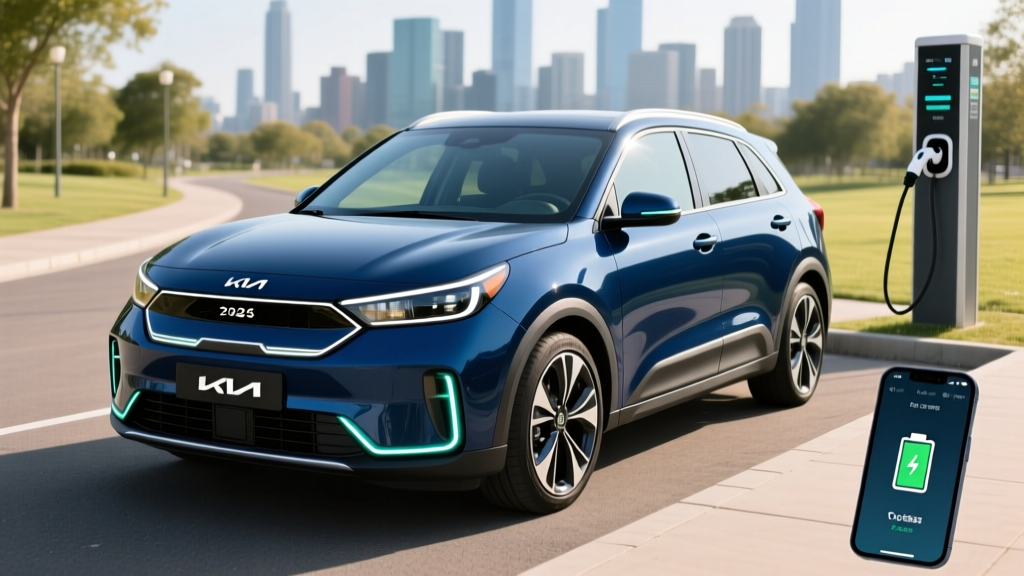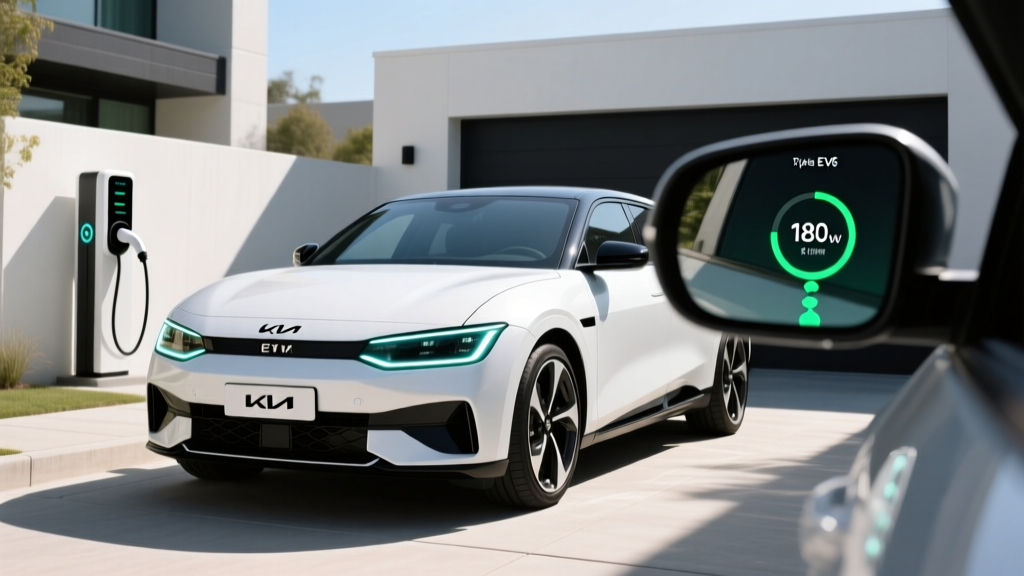
The Kia EV6 enters its fourth model year with a significant battery upgrade for 2025, pushing the Long Range variant past the 300-mile EPA threshold while retaining the 800-volt architecture that makes it one of the fastest-charging mainstream EVs on the market. With a refreshed design, updated infotainment, and expanded ADAS features, the 2025 EV6 is Kia's bid to stay competitive in the midsize electric crossover segment against the Hyundai Ioniq 5, Tesla Model Y, and Ford Mustang Mach-E.
But spec sheets only tell part of the story. After spending time with the EV6 in mixed driving conditions — from stop-and-go commuting to sustained highway cruising and cold-weather operation — here's what the numbers actually look like when you live with this car.
Range and Efficiency: EPA Numbers vs. Real-World Reality
The 2025 Kia EV6 Long Range RWD carries an EPA-estimated 310 miles of range, up from 282 miles in the prior model year, thanks to a larger 84.0 kWh usable battery pack (up from 77.4 kWh). The AWD Long Range drops to 290 miles EPA, while the performance-oriented GT model with its dual-motor setup returns 230 miles EPA.
- EPA sticker: 310 miles
- Mixed driving (city/suburban): 290–310 miles — regen-friendly city driving can match or slightly exceed the EPA figure
- Sustained highway (70–75 mph): 250–275 miles — aerodynamic drag at speed reduces efficiency by roughly 12–18%
- Cold weather (below 32°F): 220–260 miles — expect 15–25% range loss depending on cabin heating use and battery preconditioning
The EV6's heat pump (standard on Long Range and GT trims) helps mitigate cold-weather losses compared to EVs without active thermal management, but physics is physics — any lithium-ion pack loses efficiency in freezing temperatures.
Efficiency for the Long Range RWD is rated at 117 MPGe combined (134 city / 101 highway), translating to roughly 29 kWh per 100 miles. That's competitive with the Ioniq 5 and slightly behind the more aerodynamic Tesla Model Y. The GT model drops to 85 MPGe combined given its 576-hp output and stickier tires.
| Spec | Light (RWD) | Long Range RWD | Long Range AWD | GT (AWD) |
|---|---|---|---|---|
| EPA Range | 234 mi | 310 mi | 290 mi | 230 mi |
| Battery (usable) | 58.0 kWh | 84.0 kWh | 84.0 kWh | 84.0 kWh |
| Chemistry | NMC | NMC | NMC | NMC |
| Horsepower | 167 hp | 225 hp | 320 hp | 576 hp |
| 0–60 mph | 7.7 sec | 6.2 sec | 5.0 sec | 3.4 sec |
| Drivetrain | RWD | RWD | AWD | AWD |
| MPGe (combined) | 117 | 117 | 106 | 85 |
| Base MSRP | $42,900 | $46,300 | $49,900 | $63,100 |
All EV6 trims use NMC (nickel manganese cobalt) battery chemistry, which offers higher energy density than LFP but requires more careful state-of-charge management for long-term longevity. Kia recommends keeping daily charge between 20–80% and only charging to 100% for longer trips.
Charging: 800-Volt Architecture Still Sets the Pace
The EV6's 800-volt electrical architecture remains one of its strongest competitive advantages. On a compatible 350 kW DC fast charger (such as those found at Electrify America and select Tesla Supercharger stations with Magic Dock adapters), the Long Range EV6 can accept a peak rate of 239 kW.
| Charging Level | Power | Speed / Time |
|---|---|---|
| Level 1 (120V household) | ~1.4 kW | ~4 miles per hour |
| Level 2 (240V home / public) | 10.9 kW (max onboard) | ~36 miles per hour; full charge in ~8.5 hrs (84 kWh pack) |
| DC Fast Charge (350 kW station) | Peak 239 kW | 10–80% in ~18 minutes |
| DC Fast Charge (150 kW station) | ~130 kW sustained | 10–80% in ~30 minutes |
| DC Fast Charge (50 kW CHAdeMO/CCS) | 50 kW | 10–80% in ~70 minutes |
A critical note on charge curves: the EV6 hits its 239 kW peak only between roughly 10–35% state of charge, then tapers progressively. From 50–80%, expect rates closer to 100–140 kW. This is normal for all EVs, but it means the advertised "18 minutes to 80%" assumes optimal battery temperature and a 350 kW-capable station. In practice, on a typical road trip where you arrive at 15% and leave at 75%, plan for 20–25 minutes plugged in at a 350 kW charger.
For the 2025 model year, Kia has adopted the NACS (Tesla) charge port on the EV6, replacing the CCS1 connector used on 2022–2024 models. This grants native access to Tesla's Supercharger network — currently the largest and most reliable DC fast-charging network in the U.S. — without an adapter. For home Level 2 charging, the EV6 includes a J1772/NACS combo inlet compatible with all standard home wall connectors.
The EV6 also supports V2L (vehicle-to-load) via an interior outlet and an available external adapter, allowing you to power devices, tools, or even a small appliance from the traction battery — useful for camping or emergency backup.
Performance and Driving Dynamics
The Long Range AWD's 320 horsepower and 446 lb-ft of torque deliver a 5.0-second 0–60 mph time, which is brisk for daily driving and highway merging. The GT model's 576 hp drops that to 3.4 seconds, putting it in sports-car territory, though at a significant cost to range and efficiency.
Ride quality on the standard EV6 trims is firm but controlled — the E-GMP platform places the battery pack low, giving the crossover a planted feel through corners that belies its 4,500-lb curb weight. The GT adds an electronically controlled limited-slip differential and adaptive dampers for more aggressive handling, though the ride becomes noticeably stiffer.
Regenerative braking is adjustable via paddle shifters across four levels (0–3), with Level 3 enabling near one-pedal driving in city conditions. The i-PEDAL mode brings the car to a complete stop without touching the brake pedal, though it doesn't hold the car at a standstill on inclines without a brief brake application.
Interior, Cargo, and Technology
The 2025 EV6's cabin gets a notable refresh with a curved panoramic display combining a 12.3-inch digital cluster and 12.3-inch infotainment screen. Kia's latest ccNC (Connected Car Navigation Cockpit) infotainment system is faster and more responsive than the previous generation, with wireless Apple CarPlay and Android Auto standard across all trims.
Passenger space is generous for the segment:
- Front legroom: 41.7 inches
- Rear legroom: 39.4 inches — more than the Model Y and competitive with the Ioniq 5
- Cargo behind rear seats: 24.4 cu ft
- Cargo with rear seats folded: 50.2 cu ft
- Front trunk (frunk): 0.7 cu ft (AWD) / 1.8 cu ft (RWD) — small but useful for charging cables
The flat floor and long wheelbase (114.2 inches) create a lounge-like rear seat experience that works well for families and taller passengers. However, the sloping roofline cuts into rear headroom for occupants over 6'2", and the cargo area, while adequate, falls short of the Model Y's 76 cu ft maximum.
Driver Assistance and Safety
The EV6 comes equipped with Kia's Highway Driving Assist 2 (HDA2), a SAE Level 2 driver-assistance system that combines adaptive cruise control with lane-centering and automatic lane-change initiation when the driver activates the turn signal. It's competent on interstate highways but requires continuous driver engagement — hands must remain on the wheel, and the system will issue escalating warnings if it detects inattention.
This is not an autonomous or "self-driving" system. The driver is fully responsible for vehicle operation at all times.
HDA2 is a Level 2 system. It does NOT handle construction zones, unmapped roads, severe weather, or stopped traffic with stationary obstacles reliably. The driver must keep hands on the wheel and eyes on the road. Performance degrades in heavy rain, snow, and faded lane markings.
The 2025 EV6 earned the IIHS Top Safety Pick+ rating, the institute's highest honor, with Good ratings across all crashworthiness tests. NHTSA awarded it a 5-Star Overall Safety Rating.
Pricing, Trims, and Federal Tax Credit Eligibility
| Trim | Base MSRP | As-Tested (typical) | §30D Credit Eligibility |
|---|---|---|---|
| Light (RWD) | $42,900 | $44,500 | Potentially up to $3,750–$7,500* |
| Wind (LR RWD) | $46,300 | $49,200 | Potentially up to $3,750–$7,500* |
| Wind (LR AWD) | $49,900 | $53,000 | Potentially up to $3,750–$7,500* |
| GT-Line (LR AWD) | $53,500 | $57,800 | Potentially up to $3,750–$7,500* |
| GT (AWD) | $63,100 | $67,500 | Exceeds MSRP cap — NOT eligible |
*Federal tax credit eligibility under IRS §30D depends on multiple requirements that change periodically. As of the 2025 tax year, key rules include:
- MSRP cap: Vans, SUVs, and pickups must be under $80,000. The EV6 qualifies on all trims except the GT at $63,100 — wait, the GT is under $80K. However, the GT may still face eligibility constraints based on battery component sourcing rules.
- Buyer income cap: Modified AGI must not exceed $150,000 (single), $225,000 (head of household), or $300,000 (joint).
- Battery sourcing: The full $7,500 credit splits into two halves — $3,750 for critical minerals and $3,750 for battery components, each with separate sourcing requirements that tighten annually. The EV6's South Korean-built battery has historically met partial sourcing thresholds, often qualifying for $3,750 rather than the full $7,500.
- Point-of-sale transfer: Buyers can transfer the credit to the dealer at purchase for an immediate price reduction, rather than waiting to claim it on their tax return.
Important: Battery sourcing requirements change annually, and Kia's supply chain shifts can affect eligibility mid-year. Always verify current credit status on fueleconomy.gov before purchasing, and consult a tax professional for your specific situation.
Ownership Costs and Warranty
Kia backs the EV6 with one of the strongest warranty packages in the segment:
- Basic warranty: 5 years / 60,000 miles
- Powertrain warranty: 10 years / 100,000 miles
- Battery warranty: 10 years / 100,000 miles (replaces if capacity drops below 70% of original)
The 70% capacity retention threshold is industry-standard, though some competitors (notably Tesla) use the same benchmark. Real-world NMC degradation data from early EV6 owners and E-GMP platform siblings suggests roughly 5–8% capacity loss over the first 100,000 miles under normal use — well within the warranty buffer.
Insurance costs for the EV6 tend to run 15–25% higher than comparable gas-powered crossovers, consistent with the broader EV segment. Average annual premiums land in the $1,800–$2,400 range depending on state, driving record, and coverage level.
Home charging on a Level 2 wall connector at the national average electricity rate of $0.16/kWh works out to roughly $4.64 per 100 miles for the Long Range RWD — compared to approximately $12–$14 per 100 miles for a 28 MPG gas crossover at $3.50/gallon. Over 15,000 miles annually, that's a fuel savings of roughly $1,100–$1,400 per year before any time-of-use rate optimization.
Who the 2025 EV6 Suits Best
- You want one of the fastest-charging EVs in its class and have access to 350 kW DC fast chargers on your regular routes
- Native Tesla Supercharger access (via NACS port) is a priority for road-trip flexibility
- You value a long warranty and plan to keep the vehicle 8+ years
- Rear-seat passenger comfort matters — the EV6's flat floor and 39.4" legroom are class-leading
- Maximum cargo volume is your top priority — the Model Y offers significantly more
- You need a third row — consider the Kia EV9 or Hyundai Ioniq 9
- You're on a tight budget and can't access home charging — the public-charging cost premium erodes savings
- You want a hands-free highway driving system like GM's Super Cruise or Ford's BlueCruise
Pros and Cons
- Class-leading DC fast-charge speed on 350 kW stations
- NACS port provides native Supercharger access
- 310-mile EPA range (Long Range RWD) eliminates range anxiety for most use cases
- Excellent rear-seat space and flat floor
- 10-year/100,000-mile battery and powertrain warranty
- IIHS Top Safety Pick+ and 5-star NHTSA rating
- V2L capability for external power use
- Cargo space trails the Model Y and some competitors
- HDA2 is competent but less refined than GM Super Cruise or Ford BlueCruise
- Small frunk (especially on AWD models)
- Federal tax credit often limited to $3,750 (not full $7,500) due to battery sourcing
- GT model sacrifices significant range for performance
- Insurance premiums run higher than gas equivalents
- Rear headroom tight for occupants over 6'2"
Frequently Asked Questions
What is the real-world range of the 2025 Kia EV6?
The Long Range RWD carries a 310-mile EPA estimate, but real-world results depend heavily on driving style and conditions. Expect 290–310 miles in mixed city driving, 250–275 miles on sustained highway trips at 70+ mph, and 220–260 miles in freezing temperatures. The AWD model drops to roughly 270 miles in mixed real-world use.
How fast does the 2025 EV6 charge at home and on the road?
On a 350 kW DC fast charger, the EV6 peaks at 239 kW and reaches 10–80% in approximately 18 minutes under optimal conditions. On a 150 kW charger, plan for about 30 minutes. At home on a Level 2 (240V) wall connector, the 10.9 kW onboard charger adds about 36 miles per hour, fully replenishing the 84 kWh battery in roughly 8.5 hours.
Does the 2025 EV6 qualify for the $7,500 federal EV tax credit?
It depends. Under current IRS §30D rules, the EV6's South Korean-built battery typically qualifies for $3,750 of the potential $7,500, based on critical minerals and battery component sourcing requirements. You must also meet income caps ($150K single / $300K joint). The credit can be transferred to the dealer at point of sale for an immediate price reduction. Always verify eligibility on fueleconomy.gov at the time of purchase, as sourcing rules change.
How does the EV6 compare to the Hyundai Ioniq 5 and Tesla Model Y?
The EV6 shares the E-GMP platform with the Ioniq 5 and offers similar range and charging speed, but with a sportier design and slightly firmer ride. The Model Y offers more cargo space and access to the same Supercharger network (now that the EV6 has NACS), plus a more mature software ecosystem. The EV6's advantage is its combination of 800V charging, IIHS Top Safety Pick+ rating, and Kia's 10-year warranty — areas where Tesla's warranty is shorter (8 years/120,000 miles for the battery).
Is the 2025 EV6 a good EV for road trips?
Yes, particularly the Long Range trims. The 310-mile range and 18-minute fast-charging capability mean you can realistically cover 500+ miles in a day with a single 20–25 minute charging stop. The NACS port means Supercharger access, which is the most reliable DC fast-charging network in the U.S. The main road-trip limitation is cargo space, which is adequate for two people but tight for a family of four with bulky luggage.
What is the battery replacement cost for the EV6?
Out-of-warranty battery replacement for the EV6 is estimated at $12,000–$18,000 including labor, based on current E-GMP platform pricing. However, Kia's 10-year/100,000-mile battery warranty (with a 70% capacity retention guarantee) and real-world NMC degradation data suggest most owners will never need a full replacement. Individual module repairs, if needed, are significantly cheaper.