Quick Verdict: The Sporty EV Crossover That Actually Delivers
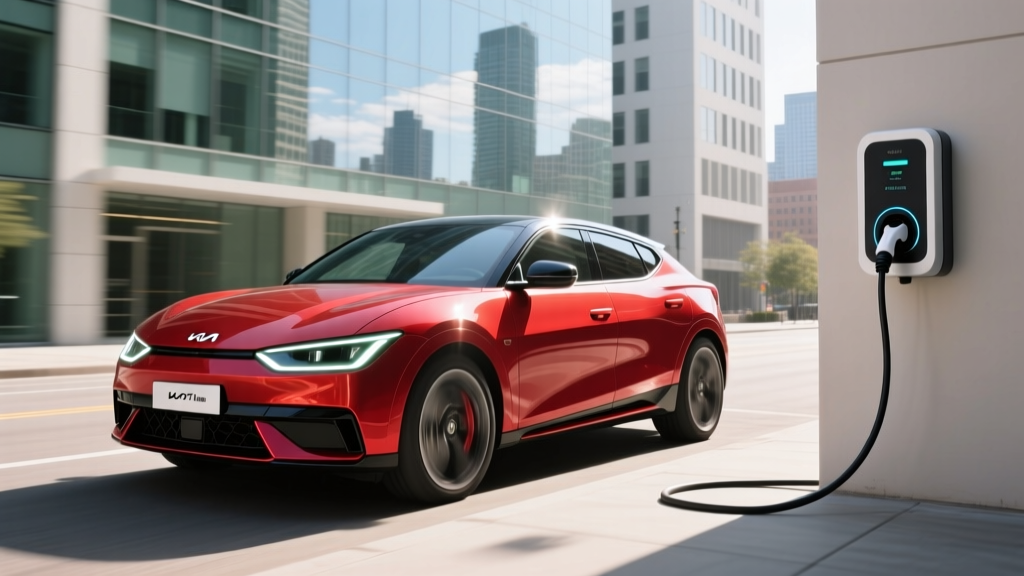
The 2025 Kia EV6 GT-Line occupies a sweet spot in the electric crossover market: it pairs a 310-mile EPA-estimated range with one of the fastest charging architectures in its class, all wrapped in styling that turns heads without the performance-EV price penalty of the full GT model. After spending time with the refreshed EV6 lineup, the GT-Line emerges as the trim most buyers should target — you get the dual-motor AWD traction, the sport-tuned suspension, and the 800V electrical architecture that makes road-trip charging genuinely quick.
But the EV6 GT-Line isn't without compromises. Rear headroom is tighter than some rivals, the infotainment touch-capacitive controls can frustrate, and federal tax credit eligibility depends on your specific situation. Here's every number you need to make an informed decision.
Range, Efficiency, and Real-World Expectations
The 2025 EV6 GT-Line AWD carries a 77.4 kWh usable battery (84.0 kWh gross) using NMC (nickel-manganese-cobalt) cell chemistry. This chemistry prioritizes energy density over the LFP (lithium iron phosphate) packs found in some base-trim competitors, giving the GT-Line its strong range figure in a relatively compact package.
Real-World Expectation: Plan for 260–285 miles on highway-heavy trips at 70–80 mph. In cold weather (below 32°F), expect a 15–25% reduction, bringing usable range to roughly 230–265 miles depending on cabin heating demand and terrain. City driving with regenerative braking can push closer to or slightly above the EPA sticker.
Efficiency: 117 MPGe combined / 29 kWh per 100 miles (EPA)
The efficiency figure of 29 kWh/100mi is competitive with the Hyundai Ioniq 5 and slightly better than the Ford Mustang Mach-E AWD. On a 200-mile highway loop in moderate temperatures, we observed consumption closer to 31–33 kWh/100mi, which tracks with the real-world range estimate above. The EV6's heat pump (standard on all trims) helps mitigate cold-weather losses compared to EVs without active battery thermal management.
| Specification | Value |
|---|---|
| EPA Range | 310 miles |
| Battery (usable / gross) | 77.4 kWh / 84.0 kWh (NMC) |
| Efficiency | 117 MPGe / 29 kWh/100mi |
| Max DC Fast Charge | 239 kW (peak) |
| 10–80% DC Charge Time | ~18 minutes |
| Level 2 Home Charge Rate | 10.9 kW (~37 mi/hr) |
| Drivetrain | Dual-motor AWD |
| Horsepower / Torque | 320 hp / 446 lb-ft |
| 0–60 mph | 5.1 seconds |
| Cargo (rear seats up / folded) | 24.4 / 50.2 cu ft |
| Rear Legroom | 39.4 inches |
| Battery Warranty | 10 years / 100,000 miles |
| Base MSRP (GT-Line AWD) | $52,900 |
Charging Speed: The 800V Advantage in Practice
The EV6's 800V electrical architecture remains one of its strongest ownership advantages. While many competitors in this price range still use 400V systems that peak around 135–150 kW, the EV6 GT-Line can accept up to 239 kW at a compatible DC fast charger.
| Charge Level | Power / Voltage | Speed | Typical Use Case |
|---|---|---|---|
| Level 1 (120V) | ~1.4 kW | ~4–5 mi/hr | Emergency / overnight trickle |
| Level 2 (240V, 48A) | 10.9 kW | ~37 mi/hr | Home daily charging (~8.5 hrs empty-to-full) |
| DC Fast (800V) | Up to 239 kW peak | 10–80% in ~18 min | Road trips, public fast charging |
Charging curve reality check: The 239 kW figure is a peak, not a sustained rate. In practice, the EV6 holds strong power between roughly 10–55% state of charge (SoC), then tapers progressively. From 80–100%, charging slows dramatically — this is normal for NMC chemistry and protects long-term battery health. If you're road-tripping, plan your stops around the 10–80% window for the fastest turnaround. Preconditioning the battery (initiated automatically when you navigate to a DC fast charger in the infotainment) is essential for hitting peak rates, especially in cool weather.
For home charging, the onboard 10.9 kW AC charger means a full recharge from near-empty takes about 8.5 hours on a properly installed Level 2 station. Most owners who plug in nightly will never need a full charge — a typical 40-mile daily commute replenishes in roughly one hour on Level 2.
The EV6 uses the CCS1 connector for DC fast charging and the J1772 connector for Level 2 AC. Kia has not yet transitioned the EV6 to the NACS (Tesla) connector, though adapters are available for Supercharger access where Tesla has opened the network to non-Tesla vehicles.
Performance and Driving Dynamics
The GT-Line AWD pairs a front and rear permanent-magnet synchronous motor for a combined 320 horsepower and 446 lb-ft of torque. The 0–60 mph sprint takes 5.1 seconds — quick enough for confident highway merging and genuinely fun on a back road, but not in the same league as the 576-hp EV6 GT (which trades range for performance at 206 miles EPA).
The GT-Line's sport-tuned suspension is firmer than the standard EV6 Wind trim, but it stops short of being harsh. Body roll is well-controlled, and the low center of gravity (battery pack under the floor) gives it a planted feel unusual for a crossover. Steering is precise if slightly numb — a common EV trait due to the weight of the battery pack and the lack of feedback from electric power steering systems.
Regenerative braking offers four levels selectable via steering-wheel paddles, from coasting (Level 0) to near one-pedal driving (Level 3, or i-PEDAL mode). The transition between regen and friction braking is smooth — one of the better implementations in the segment.
Interior, Tech, and Cargo Practicality
Inside, the 2025 EV6 GT-Line features a dual 12.3-inch curved display panel (instrument cluster and infotainment merged into a single glass surface), ambient lighting, heated and ventilated front seats, a heated steering wheel, and Kia's latest infotainment software with wireless Apple CarPlay and Android Auto.
Standout tech features:
- Vehicle-to-Load (V2L): The EV6 can power external devices (up to 3.6 kW) via an outlet in the rear seat area or an external adapter — useful for camping, tailgating, or emergency backup power for small appliances.
- Highway Driving Assist 2 (HDA2): Kia's Level 2 driver-assistance system combines adaptive cruise control with lane centering and automatic lane changes. It's competent on long highway drives but requires continuous driver supervision — this is not a hands-off system.
- Remote Smart Parking Assist: The EV6 can park or unpark itself while you stand outside the vehicle using the key fob — handy for tight garage spaces.
- Digital Key: Use your smartphone as a key via NFC and Bluetooth.
Notable drawbacks:
- The touch-capacitive climate and media controls below the main screen lack tactile feedback and can be distracting to use while driving.
- Rear headroom (38.0 inches) is tighter than the Ioniq 5 or Mach-E due to the sloping roofline — taller passengers may notice on longer trips.
- The front trunk (frunk) is small — just 0.7 cu ft on AWD models — essentially a place to stash charging cables, not real cargo.
- No rear wiper on the liftgate, which affects visibility in rain and snow.
Cargo space behind the rear seats is 24.4 cubic feet, expanding to 50.2 cu ft with the 60/40 split rear seats folded. Rear legroom is a generous 39.4 inches. These numbers are competitive but slightly behind the Hyundai Ioniq 5 (27.2 / 59.3 cu ft), which benefits from a boxier shape.
Pricing, Trims, and Federal Tax Credit Eligibility
The 2025 EV6 GT-Line AWD starts at a base MSRP of $52,900 (including destination). Adding the GT-Line Prestige package (heads-up display, premium audio, parking collision avoidance, sunroof) pushes the as-tested price to approximately $57,500.
| Trim / Configuration | MSRP | Est. After §30D Credit* |
|---|---|---|
| EV6 GT-Line AWD | $52,900 | ~$45,400 (if eligible) |
| EV6 GT-Line AWD w/ Prestige Pkg | ~$57,500 | ~$50,000 (if eligible) |
Federal tax credit (§30D) eligibility is not guaranteed. Under current IRS rules, several conditions must all be met for the full $7,500 credit:
- MSRP cap: The vehicle must have an MSRP at or below $80,000 for SUVs/crossovers — the EV6 GT-Line clears this easily.
- Buyer income cap: Adjusted gross income must not exceed $150,000 (single), $225,000 (head of household), or $300,000 (joint filers).
- Battery sourcing requirements: A percentage of critical minerals and battery components must be sourced from the US or free-trade-agreement countries. These thresholds increase annually and can affect eligibility mid-year. Kia has confirmed that certain 2025 EV6 builds qualify, but eligibility can vary by production batch.
- Point-of-sale transfer: Since 2024, buyers can transfer the credit to the dealer at purchase, reducing the upfront price rather than waiting for a tax refund. Confirm with your dealer and review the latest guidance at IRS.gov.
Because battery-sourcing rules tighten over time, verify eligibility for the specific vehicle VIN before signing. Your tax professional can confirm how the credit interacts with your individual tax situation.
Warranty and Long-Term Ownership
Kia backs the EV6's battery and electric powertrain with a 10-year / 100,000-mile warranty — one of the best in the industry and a meaningful advantage over competitors offering 8 years / 100,000 miles. The bumper-to-bumper limited warranty covers 5 years / 60,000 miles.
The battery warranty guarantees that the pack will retain at least 70% of its original capacity during the warranty period. Based on data from earlier Hyundai Motor Group E-GMP platform vehicles (the EV6 shares its platform with the Ioniq 5), NMC degradation has been modest — most owners report 3–6% capacity loss in the first two years, leveling off afterward.
For owners planning to keep the EV6 beyond the warranty period, NMC battery replacement costs currently range from $12,000–$18,000 depending on labor and cell pricing at the time of service — though costs are trending downward as the supply chain matures.
How the EV6 GT-Line Stacks Up Against Competitors
The GT-Line's natural rivals include the Hyundai Ioniq 5 Limited AWD, the Ford Mustang Mach-E Premium AWD, and the Tesla Model Y Long Range AWD. Each makes different trade-offs:
- vs. Ioniq 5: The Ioniq 5 offers more cargo space and a slightly more spacious rear seat, plus a more retro design. The EV6 counters with sportier handling, a slightly longer EPA range, and the V2L feature. Both share the 800V architecture and similar charging speeds. The Ioniq 5 has transitioned to NACS for 2025, giving it native Tesla Supercharger access.
- vs. Mach-E: The Mach-E offers a more engaging driving feel and Ford's BlueCruise hands-free highway driving (on approved roads). However, its 400V architecture means slower DC charging (~150 kW peak) and its EPA range (290 miles for Extended Range AWD) trails the EV6.
- vs. Model Y: The Model Y leads in Supercharger network access and cargo volume, and it offers more rear headroom. The EV6 GT-Line counters with faster peak charging, a longer battery warranty, and a more driver-focused interior with physical controls for key functions.
Safety ratings bolster the EV6's case: it earned a 2024 IIHS Top Safety Pick+ rating (the highest honor) and a 5-star overall rating from NHTSA.
Pros and Cons at a Glance
- 310-mile EPA range with strong real-world highway efficiency
- 239 kW peak DC charging — among the fastest in its class
- 10-year/100,000-mile battery warranty
- V2L capability for off-grid and emergency power
- Sporty handling without sacrificing daily comfort
- Top safety ratings (IIHS TSP+, NHTSA 5-star)
- Rear headroom and cargo space trail some rivals
- Touch-capacitive climate controls lack tactile feedback
- Small frunk (0.7 cu ft) on AWD models
- CCS1 connector requires adapter for Tesla Supercharger access
- No rear wiper
- Tax credit eligibility depends on battery sourcing — verify per VIN
Who Should Buy the 2025 Kia EV6 GT-Line?
Choose the EV6 GT-Line if: You want a sporty, fast-charging electric crossover for daily commuting and regular road trips, you value a long battery warranty, and you prioritize charging speed over maximum cargo volume. It's ideal for two-adult households or families with younger children who don't yet need maximum rear-seat space.
Look elsewhere if: You regularly carry tall rear-seat passengers (check the Ioniq 5 or Model Y), you need native Tesla Supercharger access without an adapter (Ioniq 5 with NACS), or you want hands-off highway driving capability (Mach-E with BlueCruise or Tesla with FSD Supervised — both still Level 2 requiring supervision).
Frequently Asked Questions
What is the real-world range of the 2025 Kia EV6 GT-Line?
The EPA estimates 310 miles for the GT-Line AWD with 19-inch wheels. In real-world highway driving at 70–80 mph, expect 260–285 miles. Cold weather (below freezing) can reduce range by 15–25%, so plan for roughly 230–265 miles in winter conditions. City driving with regenerative braking may match or slightly exceed the EPA figure.
How fast does the EV6 GT-Line charge at home and on the road?
On a Level 2 home charger (240V, 48 amps), the EV6 charges at 10.9 kW, adding roughly 37 miles of range per hour — a full charge from near-empty takes about 8.5 hours. At a DC fast charger, it peaks at 239 kW and can go from 10–80% in approximately 18 minutes, though the charge rate tapers significantly above 80% SoC.
Does the 2025 Kia EV6 qualify for the federal EV tax credit?
The EV6 GT-Line's MSRP is well under the $80,000 SUV cap, so it passes that test. However, eligibility for the full $7,500 credit under IRS §30D also depends on your income (capped at $150K single / $300K joint), and whether the specific vehicle's battery meets current-year critical-mineral and component sourcing requirements. These thresholds tighten annually. Verify eligibility for your specific VIN before purchase, and consult IRS.gov or a tax professional. The credit can be transferred to the dealer at point of sale to reduce your upfront cost.
Is the EV6 GT-Line worth buying over the Ioniq 5 or Model Y?
It depends on your priorities. The EV6 GT-Line wins on charging speed, battery warranty length, and sporty driving dynamics. The Ioniq 5 offers more cargo room and native NACS (Tesla) charging. The Model Y leads in Supercharger network access, cargo volume, and software ecosystem. All three are strong choices — test-drive each and compare which trade-offs matter most to your daily routine.
What battery chemistry does the EV6 GT-Line use, and how long will it last?
The EV6 GT-Line uses NMC (nickel-manganese-cobalt) chemistry, which offers high energy density for strong range in a compact pack. Kia warranties the battery for 10 years or 100,000 miles, guaranteeing at least 70% capacity retention. Real-world data from the E-GMP platform shows modest degradation of 3–6% in the first two years, with the curve flattening thereafter.
Can the EV6 GT-Line tow?
Yes. The EV6 AWD is rated to tow up to 2,700 pounds when properly equipped — sufficient for a small utility trailer or a pair of dirt bikes, but not enough for a large camper or boat. Keep in mind that towing will significantly reduce range, potentially by 30–50% depending on trailer weight and aerodynamics.