Quick Verdict: The Wagoneer S Enters the Luxury Electric SUV Arena
The 2025 Jeep Wagoneer S is the brand's first global battery-electric vehicle, built on Stellantis' STLA Large platform. With 600 horsepower, an EPA-estimated 300 miles of range, and a starting MSRP of $71,995, it targets the premium electric SUV segment dominated by the BMW iX, Audi Q8 e-tron, and Tesla Model X. For buyers researching 2025 Jeep Wagoneer S lease deals, the math hinges on federal tax credit eligibility, real-world range expectations, and whether Jeep's first EV delivers the refinement luxury buyers demand.
| Spec | Value |
|---|---|
| EPA Range | 300 miles |
| Battery Capacity | 100 kWh (usable), NMC chemistry |
| Drivetrain | Dual-motor AWD |
| Horsepower | 600 hp |
| 0-60 mph | 3.4 seconds |
| DC Fast Charge (peak) | ~175 kW |
| 10-80% DC Charge | ~23 minutes (est.) |
| Level 2 Home Charging | 11.5 kW (~29 mi/hr) |
| Efficiency | ~89 MPGe (est.) |
| Cargo Volume | 30.5 cu ft (rear seats up), 61.0 cu ft (folded) |
| Base MSRP | $71,995 (Launch Edition) |
| Battery/Powertrain Warranty | 8 years / 100,000 miles |
Range and Efficiency: What the EPA Sticker Doesn't Tell You
The Wagoneer S carries an EPA-estimated 300 miles of range from its 100 kWh NMC (nickel-manganese-cobalt) battery pack. That figure is competitive with the BMW iX xDrive50 (307-324 miles depending on wheels) and comfortably ahead of the Audi Q8 e-tron (285 miles). However, EPA estimates assume mixed driving with moderate temperatures and minimal accessory load — conditions rarely replicated in daily use.
Real-World Range Expectations
EPA Sticker: 300 miles
Highway driving (70-75 mph): Expect ~245-265 miles. Aerodynamic drag at sustained highway speeds reduces efficiency by 15-20% compared to city driving.
Cold weather (below 32°F): Expect ~210-240 miles. NMC batteries lose capacity in freezing temperatures, and cabin heating draws significant energy even with a heat pump system.
City/commute driving: You may see 290-310 miles thanks to regenerative braking recovering energy in stop-and-go traffic.
The Wagoneer S uses a heat pump for cabin climate control, which helps mitigate cold-weather range loss compared to resistive heaters. However, the vehicle's 6,000+ pound curb weight and upright SUV profile work against efficiency at highway speeds. Plan conservatively: if your round-trip commute or road trip leg exceeds 230 miles in winter, you'll want a charging stop.
Charging Speed: DC Fast Charging and Home Setup
Charging infrastructure access is a top concern for EV buyers, and the Wagoneer S delivers mid-pack DC fast-charging performance. The dual-motor AWD system and 100 kWh pack accept a peak charge rate of approximately 175 kW on a capable DC fast charger.
| Charging Level | Power (kW) | Speed | Use Case |
|---|---|---|---|
| Level 1 (120V outlet) | ~1.4 kW | ~3-4 miles/hour | Emergency/overnight trickle |
| Level 2 (240V home charger) | 11.5 kW | ~29 miles/hour | Daily home charging; full charge in ~9 hours |
| DC Fast Charge | Peak 175 kW | 10-80% in ~23 min | Road trips; adds ~150 miles in 15 min under ideal conditions |
The 175 kW peak rate is respectable but trails the Hyundai Ioniq 5 (240 kW) and Porsche Macan EV (270 kW). More critically, peak rate is not sustained rate — the Wagoneer S will taper charging speed as the battery fills, particularly above 80% state of charge. In real-world DC charging, expect the 10-80% session to take 23-26 minutes at a 150+ kW charger, assuming the battery is preconditioned (warmed to optimal charging temperature).
Preconditioning matters: If you navigate to a DC fast charger using the vehicle's built-in navigation, the Wagoneer S will precondition the battery en route, reducing charge time. Cold-soaking the battery (arriving without preconditioning) can add 5-10 minutes to your session.
For home Level 2 charging, you'll need a 240V, 48-amp circuit installed by a licensed electrician. The 11.5 kW onboard charger means a full overnight charge (from 20% to 100%) takes roughly 7-9 hours. Most owners charge incrementally — plugging in each evening and rarely depleting below 30-40%.
Performance: 600 HP Dual-Motor AWD
The Wagoneer S Launch Edition pairs front and rear electric motors for a combined 600 horsepower and full-time all-wheel drive. Jeep quotes a 0-60 mph time of 3.4 seconds — firmly in sports-sedan territory and competitive with the BMW iX M60 (3.6 seconds) and Tesla Model X Plaid (2.5 seconds, though at a much higher price).
Electric torque delivery is instantaneous, meaning the Wagoneer S feels punchy from a stoplight and responsive during highway merging. The dual-motor setup provides torque vectoring for improved traction in snow and rain — a core Jeep brand value translated to electric. However, this is a luxury grand tourer, not an off-road-focused Wrangler 4xe; ground clearance and approach/departure angles are tuned for pavement comfort.
Pricing, Lease Deals, and Federal Tax Credit Eligibility
The 2025 Wagoneer S launches exclusively in Launch Edition trim at a base MSRP of $71,995 (including destination). This positions it above the BMW iX xDrive50 ($73,200 base) but below the Tesla Model X ($79,990). Additional trims are expected for the 2026 model year, potentially lowering the entry price.
| Scenario | Amount |
|---|---|
| Base MSRP (Launch Edition) | $71,995 |
| Federal §30D Tax Credit (if eligible) | Up to $7,500 |
| Effective Price (with full credit) | $64,495 |
| Estimated Lease (36 mo / 12k mi, with credit) | ~$850-$950/month (varies by dealer, money factor, residual) |
Federal Tax Credit Eligibility (§30D Rules)
The Wagoneer S may qualify for the full $7,500 federal EV tax credit under IRS §30D rules, but eligibility depends on three factors:
- MSRP Cap: SUVs must have an MSRP at or below $80,000. The $71,995 Launch Edition clears this threshold.
- Buyer Income Cap: Modified adjusted gross income (MAGI) must not exceed $300,000 (joint filers), $225,000 (head of household), or $150,000 (single).
- Battery Sourcing: The battery must meet critical minerals and battery component requirements, which tighten annually. Stellantis has not publicly confirmed full §30D compliance for the 2025 Wagoneer S — verify with your dealer and consult a tax professional before assuming credit eligibility.
The credit can now be transferred to the dealer at point of sale (effective 2024), reducing your upfront cost or monthly lease payment rather than waiting for a tax refund.
Lease Considerations
Leasing an EV often yields stronger monthly payments than financing because luxury EVs depreciate steeply in years 1-3, and manufacturers subsidize lease money factors to move inventory. However, leasing means you forfeit the §30D credit (the lessor claims it, though they may pass savings via lower payments). Ask the dealer whether their lease offer reflects the federal credit as a capitalized cost reduction.
Interior, Tech, and Standout Features
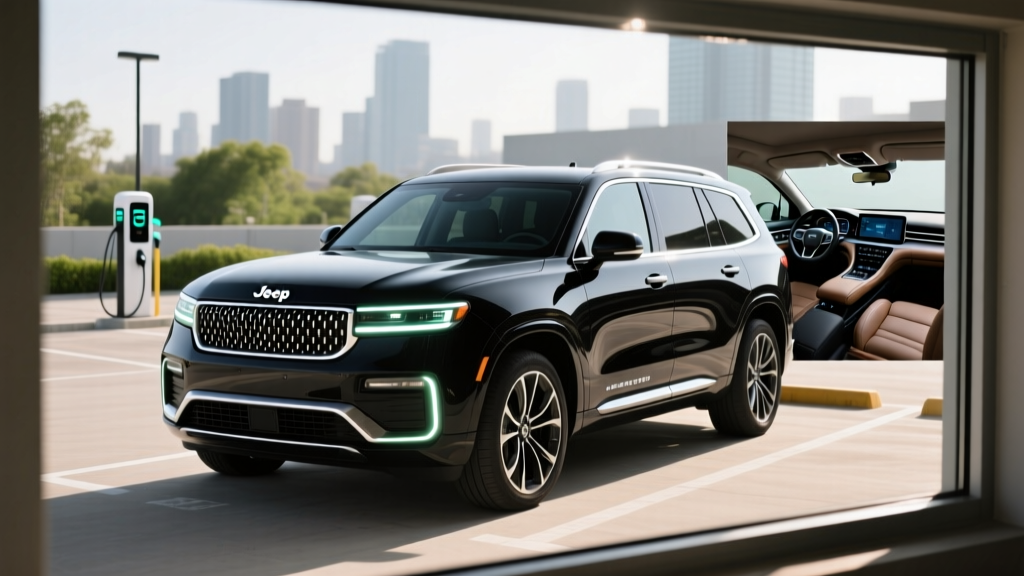
The Wagoneer S interior is a dramatic departure from Jeep's traditional body-on-frame SUVs. The cabin features:
- Seven screens total: 12.3-inch driver cluster, 12.3-inch passenger display, 12.1-inch center infotainment, and a dedicated climate-control touchscreen below.
- McIntosh audio system: 19-speaker premium sound, a Jeep-McIntosh partnership exclusive.
- Uconnect 5: Stellantis' latest infotainment platform with wireless Apple CarPlay/Android Auto, over-the-air updates, and integrated navigation with charging station routing.
- Panoramic glass roof: Fixed glass with electrochromic dimming.
- Heads-up display: Full-color HUD with navigation prompts.
Driver assistance includes adaptive cruise control with stop-and-go, lane centering, automatic emergency braking, blind-spot monitoring, and a 360-degree camera system. These are SAE Level 2 driver-assist features — the driver must remain engaged and hands-on-wheel at all times. This is not autonomous driving.
Notable Drawbacks
The touchscreen-heavy interior may frustrate buyers who prefer physical controls for climate and volume. The rear cargo area (30.5 cu ft with seats up) is modest for the vehicle's exterior footprint — the BMW iX offers 35.5 cu ft. And at 6,000+ pounds, tire wear and insurance costs will exceed lighter EVs.
Who Should Consider the Wagoneer S?
Choose the Wagoneer S if:
- You want a luxury electric SUV with Jeep brand cachet and dual-motor AWD confidence in snow/rain.
- Your daily commute is under 100 miles round-trip, with occasional 250-mile road trips.
- You value interior tech and premium audio over maximum cargo space.
- You qualify for the §30D tax credit and can apply it at point of sale.
Consider competitors if:
- You need 320+ miles of EPA range (BMW iX xDrive50, Tesla Model X).
- You want faster DC charging (Hyundai Ioniq 5, Kia EV6, Porsche Macan EV).
- You need three-row seating or maximum cargo volume.
- You prefer proven long-term reliability data (Tesla, BMW have longer EV track records).
Pros and Cons
Pros
- 600 hp with 3.4-second 0-60 — sports-sedan acceleration in an SUV
- 300-mile EPA range is competitive for the class
- Seven-screen interior with McIntosh audio is visually impressive
- Dual-motor AWD suits snow-belt buyers
- Heat pump for improved cold-weather efficiency
Cons
- DC charging peaks at 175 kW — trails 800V competitors
- Cargo space (30.5 cu ft) is below segment average
- Touchscreen-heavy climate controls may frustrate
- First-year model with no long-term reliability data
- $71,995 entry price before options or tax credit
Warranty Coverage
Jeep covers the Wagoneer S battery and electric powertrain for 8 years or 100,000 miles (whichever comes first), with a capacity retention threshold of 70% — meaning Stellantis will repair or replace the battery if it degrades below 70% of original capacity within the warranty period. The vehicle limited warranty is 3 years / 36,000 miles (bumper-to-bumper) and 5 years / 60,000 miles (powertrain).
FAQ: 2025 Jeep Wagoneer S
What is the real-world range of the 2025 Jeep Wagoneer S?
The EPA estimates 300 miles, but expect 245-265 miles on highway road trips and 210-240 miles in freezing temperatures. City driving with regenerative braking may yield 290-310 miles.
How fast does the Wagoneer S charge at home and on the road?
At home on a Level 2 (240V) charger, it adds ~29 miles per hour and fully charges in ~9 hours. On a DC fast charger, it peaks at 175 kW, achieving 10-80% in approximately 23 minutes with battery preconditioning.
Does the 2025 Wagoneer S qualify for the $7,500 federal tax credit?
It may, if the MSRP is at or below $80,000 (the $71,995 Launch Edition qualifies), your income is below the §30D caps ($300k joint / $150k single), and the battery meets critical minerals and component sourcing rules. Verify with your dealer and consult a tax professional — rules tighten annually.
How much does a 2025 Jeep Wagoneer S lease cost per month?
Lease payments vary by dealer, money factor, residual value, and whether the federal credit is applied as a cap cost reduction. Expect roughly $850-$950/month for a 36-month / 12,000-mile lease with the credit applied. Get quotes from multiple dealers and confirm whether the §30D credit is factored in.
Is the Wagoneer S worth buying over the BMW iX or Tesla Model X?
The Wagoneer S offers comparable performance and range to the BMW iX at a slightly lower price, with distinctive interior tech and Jeep brand appeal. However, the BMW iX charges faster and offers more cargo space. The Tesla Model X provides longer range (320-348 miles) and access to the Supercharger network but costs more. Test-drive all three and compare real-world lease offers.
What are the biggest drawbacks of the Wagoneer S?
DC charging speed (175 kW peak) trails 800V competitors. Cargo space is modest (30.5 cu ft). The touchscreen-heavy interior lacks physical climate controls. And as a first-year model, long-term reliability is unknown.
Sources: EPA Fuel Economy, IRS §30D Clean Vehicle Credits, Jeep official specifications.