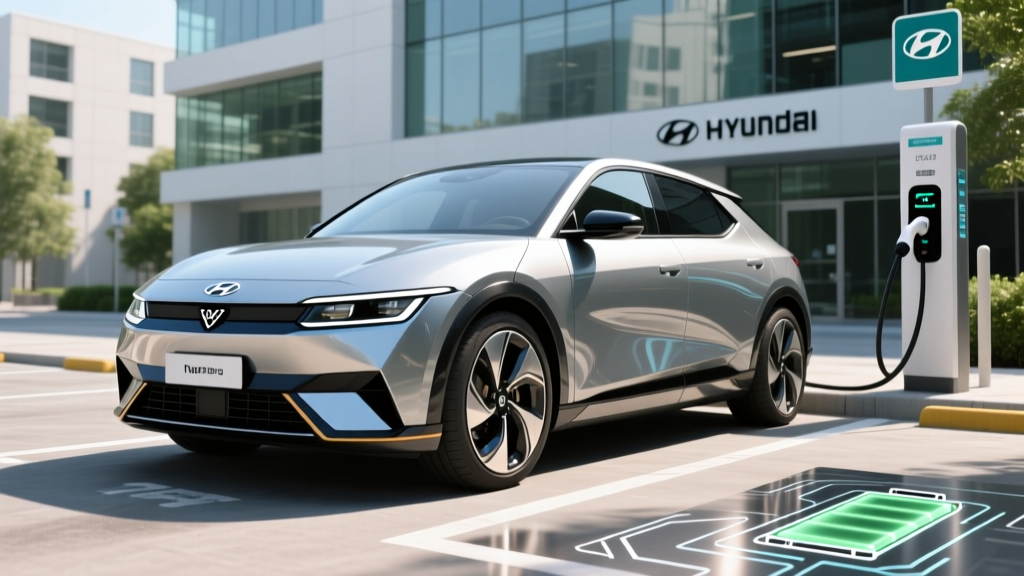
If you're evaluating a 2025 Ioniq 5 lease, you're likely weighing Hyundai's retro-futuristic crossover against the Tesla Model Y, Ford Mustang Mach-E, and Kia EV6. The Ioniq 5 remains one of the most compelling mid-size electric SUVs on the market thanks to its 800-volt architecture, spacious cabin, and competitive pricing — but the real question for 2026 shoppers is whether the lease math works in your favor and what ownership actually looks like day-to-day.
This profile covers everything you need: real-world range expectations, DC fast-charging performance, federal tax credit eligibility under current IRS §30D rules, and the practical trade-offs that spec sheets don't highlight. All figures reflect the 2025 model year as sold in the US market.
2025 Ioniq 5 Specifications at a Glance
| Spec | SE/SEL RWD | SE/SEL AWD | Limited AWD |
|---|---|---|---|
| EPA Range | 303 mi | 260 mi | 260 mi |
| Battery (usable) | 58 kWh (Standard Range) / 84 kWh (Long Range) | 84 kWh | 84 kWh |
| Battery Chemistry | NMC (Nickel Manganese Cobalt) | NMC | NMC |
| Motor / Drivetrain | Single motor RWD | Dual motor AWD | Dual motor AWD |
| Horsepower | 168 hp (SR) / 225 hp (LR) | 320 hp | 320 hp |
| 0-60 mph | 7.4s (SR) / 6.3s (LR) | 4.7s | 4.7s |
| Max DC Fast Charge | ~180 kW (peak) | ~240 kW (peak) | ~240 kW (peak) |
| 10-80% DC Time | ~22 min | ~18 min | ~18 min |
| Level 2 Home Charge | 10.9 kW | 10.9 kW | 10.9 kW |
| MPGe (Combined) | 117 MPGe (LR RWD) | 103 MPGe | 98 MPGe |
| Base MSRP | $42,600 (SE SR) | $46,100 (SE AWD) | $54,200 |
Real-World Range: What the EPA Sticker Doesn't Tell You
EPA Estimated: 260 miles
Real-World Highway (70 mph, mild weather): ~225-240 miles
Real-World Combined (mixed city/highway, moderate climate): ~245-255 miles
Cold-Weather Highway (below 32°F): ~190-210 miles
The Ioniq 5 includes a heat pump on AWD trims (standard on Limited, optional on SEL), which mitigates cold-weather range loss compared to resistive heating. Expect roughly 20-25% range reduction in sustained freezing temperatures.
The 84 kWh Long Range battery pack delivers its best efficiency in city driving, where regenerative braking recaptures energy at every stop. On the EPA's test cycles, the RWD Long Range model achieves 117 MPGe combined — translating to roughly 29 kWh per 100 miles. That's competitive with the Model Y Long Range but slightly behind the most efficient configurations of the Kia EV6.
For the AWD trims that most US buyers choose, plan on 225-240 miles of usable highway range in fair weather. If your typical commute is under 60 miles round-trip, you'll charge at home every 3-4 days and rarely think about range. Road trippers should budget charging stops every 200-210 miles to stay above 10% State of Charge (SoC) and avoid the steep charging-curve taper above 80%.
Charging Speed: The 800-Volt Advantage
The Ioniq 5's E-GMP platform supports 800-volt DC fast charging, which is the real differentiator against competitors still on 400V architectures. Here's what that translates to at the charger:
| Charging Level | Power (kW) | Speed | Notes |
|---|---|---|---|
| Level 1 (120V household) | ~1.4 kW | ~3-4 mi/hr | Emergency/trickle only; ~60+ hours for full charge |
| Level 2 (240V home) | 10.9 kW | ~30-33 mi/hr | Full charge in ~8 hours; ideal overnight setup |
| DC Fast Charge (350 kW station) | Up to 240 kW peak | 10-80% in ~18 min | Requires battery preconditioning; tapers significantly above 80% |
| DC Fast Charge (150 kW station) | ~130-150 kW sustained | 10-80% in ~25 min | More common station type; still fast |
A few ownership realities about the charging curve: the advertised 240 kW peak only holds between roughly 10-55% SoC. After that, the rate tapers to ~150 kW through 70%, then drops to ~80 kW from 70-80%. Charging from 80-100% on DC fast charge is painfully slow — plan to unplug at 80% on road trips and save the top-off for overnight Level 2.
The Ioniq 5 comes with a NACS (North American Charging Standard) port starting with the 2025 model year, replacing the previous CCS1 connector. This means native access to Tesla's Supercharger network — currently the most reliable DC fast-charging infrastructure in the US — without an adapter. For Electrify America, EVgo, and other networks, you'll use the same NACS connector as most new EVs entering the market.
At home, the 10.9 kW onboard charger is solid but not class-leading. A full 84 kWh charge from near-empty takes roughly 8 hours, which is fine for overnight replenishment. Home Level 2 installation typically costs $800-$2,500 depending on your electrical panel capacity and run distance — budget for a licensed electrician to install a 48-amp circuit (NEMA 14-50 or hardwired).
Pricing, Trims, and the 2025 Ioniq 5 Lease Question
| Trim | MSRP | Destination | Total Before Incentives |
|---|---|---|---|
| SE Standard Range RWD | $42,600 | $1,495 | $44,095 |
| SE Long Range RWD | $46,100 | $1,495 | $47,595 |
| SEL Long Range AWD | $49,600 | $1,495 | $51,095 |
| Limited Long Range AWD | $54,200 | $1,495 | $55,695 |
| Ioniq 5 N (Performance) | $66,200 | $1,495 | $67,695 |
When researching a 2025 Ioniq 5 lease, you'll encounter Hyundai Motor Finance promotional offers that frequently include lease cash incentives — sometimes $7,500-$10,000 in lease cash on select trims. These manufacturer-to-dealer incentives effectively reduce the capitalized cost and can make leasing significantly cheaper than financing, even when you factor in mileage restrictions.
Typical 2025 Ioniq 5 lease structures run 36 months at 10,000-12,000 miles/year, with monthly payments in the $350-$550 range depending on trim, down payment, and regional incentives. The SEL AWD often represents the sweet spot: you get dual-motor traction, 260 miles of range, and a strong feature set without the Limited's premium.
Federal Tax Credit Eligibility (§30D)
The 2025 Ioniq 5's eligibility for the federal EV tax credit under IRS §30D depends on several variables that change frequently:
- MSRP Cap: SUVs must be under $80,000 MSRP — all Ioniq 5 trims qualify.
- Buyer Income Cap: Modified AGI must not exceed $150,000 (single) / $300,000 (joint) / $225,000 (head of household).
- Battery Sourcing: Critical minerals and battery components must meet escalating domestic-content thresholds. Hyundai has shifted some battery cell sourcing to the LG/SK joint venture plant in Georgia, but eligibility for the full $7,500 vs. the partial $3,750 credit varies by build date and battery batch.
- Point-of-Sale Transfer: Eligible buyers can now transfer the credit to the dealer at purchase, reducing the vehicle price upfront — or apply it as a lease capital cost reduction.
Lease-specific note: When you lease, the tax credit technically goes to the lessor (Hyundai Motor Finance). However, Hyundai frequently passes this value through as lease cash, which is why lease deals can appear aggressively priced. Confirm with your dealer whether the quoted lease payment already factors in the federal credit.
Interior, Cargo, and Daily Livability
The Ioniq 5's flat floor (enabled by the E-GMP skateboard platform) creates an airy, spacious cabin that feels larger than its exterior dimensions suggest. Key measurements:
- Front legroom: 41.7 inches
- Rear legroom: 39.4 inches — best in class, beating the Model Y (~38 in) and EV6 (~38 in)
- Cargo behind rear seats: 27.2 cu ft
- Cargo with rear seats folded: 59.3 cu ft
- Front trunk (frunk): 0.85 cu ft (RWD) / 2.0 cu ft (AWD) — small, fits a charging cable bag
- Towing capacity: 1,650 lbs (AWD) — light-duty only; not rated for trailers
The dual 12.3-inch displays run Hyundai's latest infotainment with wireless Apple CarPlay and Android Auto, over-the-air updates, and a digital key feature. The center console slides fore and aft ("Universal Island"), which is genuinely useful for rear-seat passenger access in tight parking spots.
Notable drawbacks: the rear wiper is absent on most trims (a common complaint in rain/snow), the frunk is disappointingly small, and the touch-capacitive climate controls lack physical buttons — an ergonomic downgrade for drivers who prefer tactile feedback.
Driver Assistance and Technology
Hyundai's Highway Driving Assist 2 (HDA2) is a Level 2 driver-assistance system. It combines adaptive cruise control with lane-centering and can execute lane changes when the driver confirms with the turn signal. The driver must remain fully engaged — hands on or near the wheel, eyes on the road at all times. This is not autonomous driving.
HDA2 performs competently on divided highways but falls short of GM's Super Cruise or Ford's BlueCruise in hands-free capability. Hyundai does not currently offer a hands-off system in the Ioniq 5. The system handles stop-and-go traffic well, and the lane-centering is smooth, but expect occasional disengagements on faded lane markings or sharp curves.
Standard safety features include forward collision-avoidance assist with pedestrian/cyclist detection, blind-spot collision warning, rear cross-traffic collision-avoidance, and safe exit assist. The Ioniq 5 earned a 5-star overall rating from NHTSA and an IIHS Top Safety Pick+ designation.
Warranty Coverage
Hyundai backs the Ioniq 5 with one of the strongest warranty packages in the EV segment:
- Battery warranty: 10 years / 100,000 miles (capacity retention above 70% of original)
- Powertrain warranty: 10 years / 100,000 miles
- New vehicle limited: 5 years / 60,000 miles
- Roadside assistance: 5 years / unlimited miles
- Complimentary maintenance: 3 years / 36,000 miles
The 10-year battery warranty is a major advantage over Tesla (8 years / 120,000 miles) and most competitors. Hyundai defines battery failure as dropping below 70% State of Health (SoH) — meaning the 84 kWh pack would need to degrade to under ~59 kWh usable capacity for a warranty claim. Real-world degradation data from early Ioniq 5 owners suggests NMC packs in this platform lose roughly 5-8% capacity over the first 60,000 miles, which is in line with industry norms.
Pros, Cons, and Who Should Lease the 2025 Ioniq 5
Pros
- 800V architecture enables 10-80% in ~18 minutes on 350 kW chargers
- Class-leading rear legroom (39.4 in) and flat floor
- NACS port for native Tesla Supercharger access (2025+)
- 10-year/100,000-mile battery warranty
- Competitive lease pricing with manufacturer lease cash
- Vehicle-to-load (V2L) capability — power devices from the car
- Heat pump on AWD trims reduces cold-weather range loss
Cons
- AWD range limited to 260 miles EPA (below Model Y LR's 303 mi)
- No rear wiper on most trims
- Tiny frunk (0.85-2.0 cu ft)
- Touch-capacitive climate controls lack physical buttons
- HDA2 requires hands-on-wheel (no hands-free mode)
- 1,650-lb towing limit rules out most trailers
- Insurance premiums run 15-25% above comparable gas SUVs
- Daily commuters with home Level 2 charging who want a comfortable, spacious cabin and don't regularly exceed 200 miles between charges.
- Small families who value rear-seat space (two car seats fit easily with room for a front passenger) and strong safety ratings.
- Lessee-buyers who want to ride out the technology transition without long-term battery risk — the 36-month lease term keeps you under warranty and lets you upgrade as charging infrastructure and battery chemistry improve.
- Road trippers who plan routes around DC fast-charging corridors and appreciate the 18-minute 10-80% charge time.
Look elsewhere if: You need 300+ miles of range (consider the Model Y Long Range or Ioniq 5 RWD), you tow regularly (Rivian R1S or F-150 Lightning), or you want hands-free highway driving (GM Super Cruise or Ford BlueCruise vehicles).
2025 Ioniq 5 vs. Key Competitors
| Spec | Ioniq 5 SEL AWD | Tesla Model Y LR AWD | Kia EV6 GT-Line AWD | Ford Mach-E ER AWD |
|---|---|---|---|---|
| EPA Range | 260 mi | 303 mi | 282 mi | 290 mi |
| Battery | 84 kWh NMC | ~78 kWh NMC | 77.4 kWh NMC | 91 kWh NMC |
| 10-80% DC Time | ~18 min | ~25 min | ~18 min | ~35 min |
| 0-60 mph | 4.7s | 4.8s | 4.5s | 5.1s |
| Rear Legroom | 39.4 in | 38.0 in | 38.0 in | 38.9 in |
| Cargo (rear up) | 27.2 cu ft | 30.2 cu ft | 24.4 cu ft | 29.7 cu ft |
| MSRP (AWD mid-trim) | $49,600 | $48,990 | $52,400 | $51,375 |
| Battery Warranty | 10 yr / 100k mi | 8 yr / 120k mi | 10 yr / 100k mi | 8 yr / 100k mi |
The Ioniq 5's trade-off is clear: it sacrifices roughly 30-40 miles of EPA range compared to the Model Y Long Range and Mach-E Extended Range in exchange for dramatically faster DC charging. If your road trips involve 350 kW Electrify America or Tesla Supercharger stops, the 18-minute charge time is transformative. If you mostly drive in areas with only 50-150 kW chargers, the range advantage of the Model Y matters more.
Frequently Asked Questions
What is the real-world range of the 2025 Ioniq 5 AWD?
Expect 225-240 miles on the highway in mild weather, 245-255 miles in mixed city/highway driving, and 190-210 miles in sustained freezing temperatures. The EPA rates it at 260 miles, but highway speeds and cold weather consistently reduce that figure by 10-25%.
How fast does the 2025 Ioniq 5 charge?
On a 350 kW DC fast charger with battery preconditioning, the Ioniq 5 peaks at 240 kW and charges from 10-80% in approximately 18 minutes. On a typical 150 kW station, expect 10-80% in about 25 minutes. At home on Level 2 (240V, 48A), the 10.9 kW onboard charger adds roughly 30-33 miles per hour, fully replenishing the 84 kWh battery in about 8 hours.
How much does a 2025 Ioniq 5 cost after tax credits?
The SEL AWD starts at $51,095 including destination. If the vehicle and buyer qualify for the full $7,500 federal credit under IRS §30D (meeting income, MSRP, and battery-sourcing requirements), the effective price drops to ~$43,595. Lease buyers should confirm whether the dealer has applied the credit as lease cash to reduce monthly payments. State incentives vary — check IRS.gov and your state energy office for current eligibility.
Is the 2025 Ioniq 5 worth leasing vs. the Tesla Model Y?
Lease the Ioniq 5 if you prioritize fast DC charging, a more spacious rear seat, a traditional dealership experience, and Hyundai's 10-year battery warranty. Choose the Model Y if maximum range (303 mi), cargo volume (30.2 cu ft), and the mature Supercharger network are your top priorities. The Ioniq 5's NACS port narrows the charging-network gap significantly for 2025.
Does the 2025 Ioniq 5 qualify for the full $7,500 federal EV tax credit?
It depends on the specific vehicle's battery sourcing, the buyer's income, and the MSRP cap (all Ioniq 5 trims fall under the $80,000 SUV cap). Hyundai has been working to meet domestic battery-component and critical-mineral thresholds through its Georgia and partner facilities, but the split between the $7,500 full credit and the $3,750 half-credit varies by production batch. Verify eligibility using the VIN at fueleconomy.gov before signing.
What happens to the battery after a 36-month lease?
You return the vehicle. Hyundai's 10-year/100,000-mile battery warranty covers the next owner, and typical degradation over 36 months / 36,000 miles is approximately 3-5% — well within the 70% SoH warranty threshold. Leasing eliminates long-term battery replacement risk entirely, which is one reason the Ioniq 5 lease is popular among cautious EV adopters.